
Southport killer Axel Rudakubana charged with assaults on prison staff
Exactly one day before Southport fell silent for the second anniversary of the attack that killed three young girls, the country's most notorious prisoner was charged with a fresh litany of offences. Axel Rudakubana, 19, now faces four charges over alleged incidents at HMP Belmarsh — including an attack in which he is said to have poured boiling water over a prison officer — that prosecutors say spanned six months of violence behind bars.
Exactly one day before Southport fell silent for the second anniversary of the attack that killed three young girls, the country's most notorious prisoner was charged with a fresh litany of offences. Axel Rudakubana, 19, now faces four charges over alleged incidents at HMP Belmarsh — including an attack in which he is said to have poured boiling water over a prison officer — that prosecutors say spanned six months of violence behind bars.
Southport killer Axel Rudakubana charged with assaults on prison staff at HMP Belmarsh
London, UK – 31 July 2026 — The Metropolitan Police today confirmed that Axel Rudakubana, the teenager serving a life sentence for the murders of three girls in Southport, has been charged with four offences alleged to have taken place at HMP Belmarsh between May and October 2025. The charges were authorised on Tuesday 28 July 2026 — the day before the second anniversary of the attack on the Taylor Swift-themed dance class at The Hart Space in Southport, Merseyside. He is due to appear at Westminster Magistrates' Court via video-link on 11 September 2026.

The Charges
The Crown Prosecution Service has authorised four charges against Rudakubana, who turned 19 while in custody. The first, assault on an emergency worker, relates to an incident on 6 May 2025. Two days later, on 8 May 2025, he is alleged to have committed attempted grievous bodily harm. On 26 June 2025, he was allegedly found in unauthorised possession of an offensive weapon in prison. The final charge — another assault on an emergency worker — is dated 28 October 2025.
The most serious allegation was first reported in May 2025, when it emerged that Rudakubana had allegedly poured boiling water from a kettle in his cell over a prison officer. The officer was taken to hospital and discharged the same day. It is understood the attempted grievous bodily harm charge on 8 May relates to that incident, though the Metropolitan Police have not confirmed the specific details attached to each count. The offence of assault on an emergency worker, introduced under the Assaults on Emergency Workers (Offences) Act 2018, carries a maximum sentence of two years' imprisonment — a reflection of how seriously Parliament takes violence against those who serve the public.
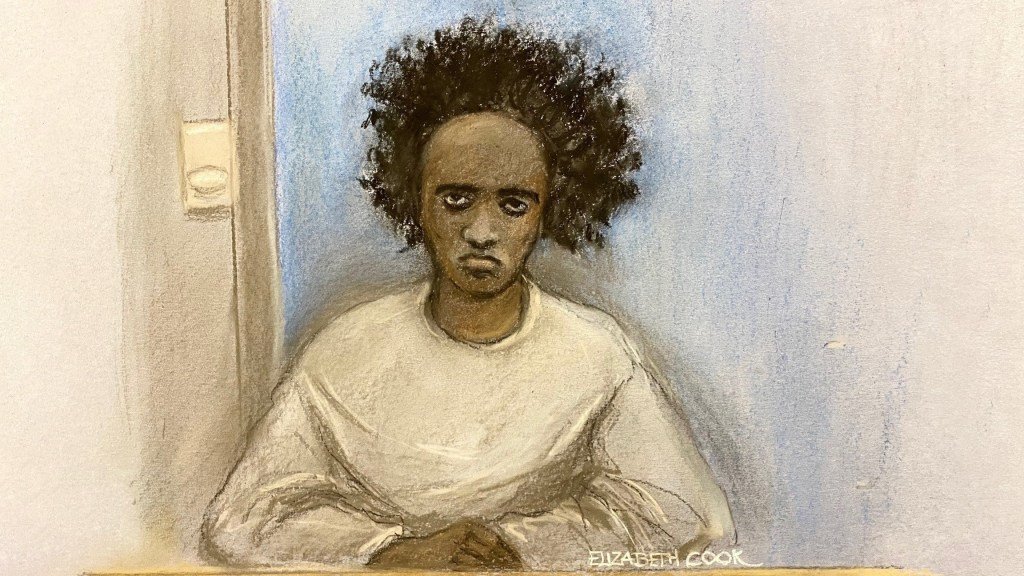
Rudakubana remains detained at Broadmoor Hospital, the high-security psychiatric facility in Crowthorne, Berkshire, where he was transferred on 23 July 2026, according to the Ministry of Justice. His appearance at Westminster Magistrates' Court — via video-link, as is standard for high-security detainees — will be the first time he has faced a court since his sentencing at Liverpool Crown Court on 23 January 2025.
A Monster in the System
That Rudakubana is alleged to have spent six months assaulting emergency workers while held in the country's most secure prison unit is a deeply uncomfortable fact for the Ministry of Justice and HM Prison and Probation Service. HMP Belmarsh, in southeast London's Thamesmead, is the nearest thing Britain has to a supermax facility — it holds terrorists, spies, and the most dangerous offenders in the land, from al-Qaeda operatives to serial killers. It is designed to contain the people the rest of the prison system cannot handle. Its Category A status means prisoners are locked down for up to 23 hours a day, with movement controlled by multiple locked gates and constant staff oversight.
And yet, according to the charges now before the courts, Rudakubana managed to injure staff, allegedly armed himself with an offensive weapon, and continued his pattern of violence even in the most tightly controlled environment British justice can provide. The allegations raise serious questions about staffing levels, supervision protocols, and the ability of the prison service to manage a prisoner whose capacity for violence appears undiminished by incarceration.
For the families of Alice da Silva Aguiar, nine, Bebe King, six, and Elsie Dot Stancombe, seven, the news lands with a particular cruelty. Their lawyer, Chris Walker, has been vocal in his concern that Rudakubana is using the legal and prison system to continue his campaign of harassment from his cell — a campaign that now appears to have included physical violence against the people paid to guard him.
Broadmoor Transfer Sparks Anger
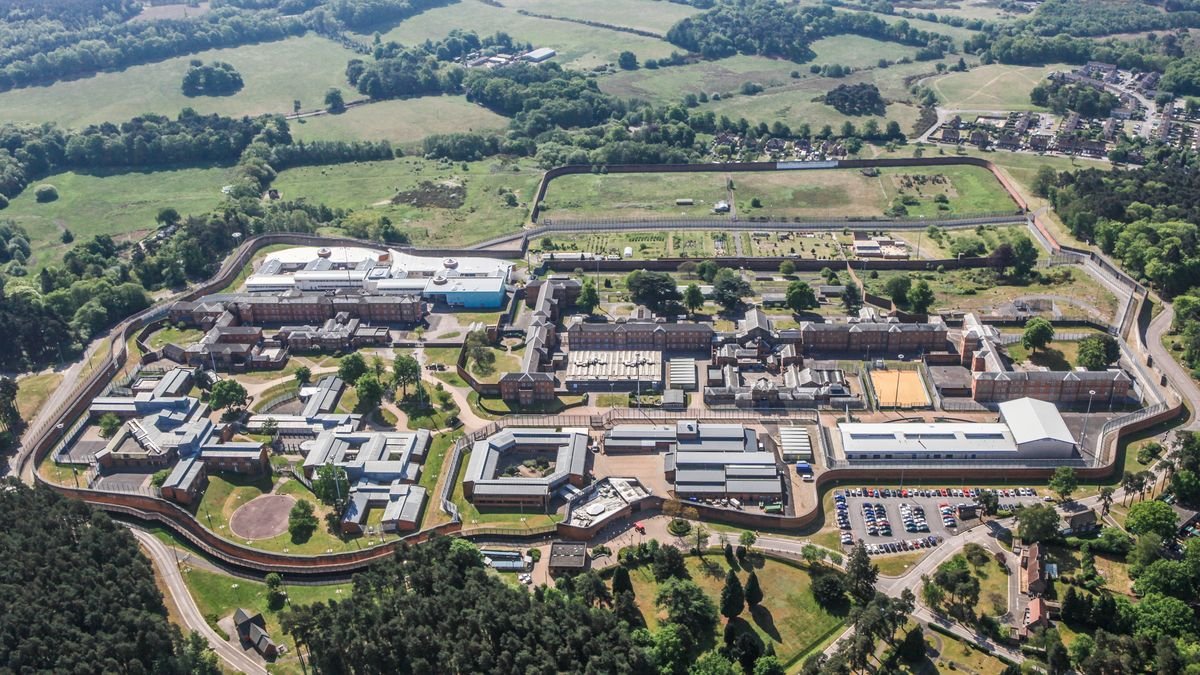
The charges come just eight days after the Ministry of Justice confirmed Rudakubana had been moved from HMP Belmarsh to Broadmoor Hospital. The high-security psychiatric hospital, the oldest of England's three secure hospitals, has housed some of the most infamous figures in British criminal history, including Ronnie Kray and Peter Sutcliffe, the Yorkshire Ripper. Its corridors are designed for the treatment of patients — not the punishment of prisoners. Patients there are treated under the Mental Health Act, with clinical teams responsible for their care, and the emphasis is on psychiatric treatment rather than penal discipline.
Under the Mental Health Act 1983, the Ministry of Justice is effectively bound by clinical recommendations. Once doctors determine that a prisoner requires hospital treatment for a mental disorder, the transfer must be authorised — the Secretary of State for Justice does not have a free hand to refuse. That may explain why the government accepted the move, despite the obvious political sensitivity. But the legal framework has not silenced the criticism.
Chris Walker, representing the families of the murdered girls, told BBC Breakfast that the pattern of behaviour was deeply troubling: "It's a deep concern of mine that this is a pattern starting to develop by him trying to retraumatise the families from his cell, and it's a deep concern that this is going to occur every anniversary." Walker had earlier accused Rudakubana of manipulating the system — a charge that gains weight given the timing of these latest offences, allegedly committed in the months between the first and second anniversaries of his crimes.
Broadmoor is far from a soft option. It is a locked, high-security facility with some of the most rigorous staffing ratios in the NHS, and its patients include some of the most dangerous people in England. But the distinction matters to the families. A prisoner is punished; a patient is cared for. The semantic shift, however small, is a bitter pill for those who watched Rudakubana receive a life sentence with a minimum term of 52 years — a sentence that means he will not be eligible for parole until he is 69, and which the judge imposed because he was under 18 at the time of the attack, making a whole-life order legally impossible.
Two Years On: Southport Remembers
On Wednesday 29 July 2026, Southport fell silent. A three-minute silence marked two years since the attack at The Hart Space, where Rudakubana — then 17 — walked into a Taylor Swift-themed dance class and murdered three children in a matter of minutes. Eight other children and two adults were also attacked and survived, carrying physical and psychological scars that will last a lifetime. The silence was observed across the town, with families, residents, and civic leaders gathering to remember Alice, Bebe, and Elsie.
Rudakubana pleaded guilty to all 16 charges on 20 January 2025, a decision that spared the families the ordeal of a trial but did nothing to soften the horror of what he had done. Three days later, on 23 January 2025, he was sentenced at Liverpool Crown Court to life imprisonment with a minimum term of 52 years.
The anniversary was always going to be painful. That it came a day after Rudakubana was charged with further offences only sharpened the sense of injustice felt by many in the town. The children's names have become a byword for a broader failure — a failure of the institutions that were supposed to protect them, and a failure that the state has now formally acknowledged.
Foreseeable and Avoidable: The Inquiry's Damning Verdict
The Southport Inquiry, chaired by Sir Adrian Fulford, published its Phase 1 report on 13 April 2026. Its findings were damning. The inquiry identified five fundamental failings and made 67 recommendations to prevent a similar tragedy. Its central conclusion was stark: the attack was foreseeable and avoidable. The report detailed missed opportunities, information that was not shared between agencies, and a system that repeatedly failed to act on warning signs.
On 2 July 2026, the government published its formal response. Home Secretary Shabana Mahmood stood before the House of Commons and accepted the "fundamental failures" identified by the inquiry — an admission that the state, in multiple forms, had failed to connect the dots before Rudakubana struck. The government has committed to implementing the 67 recommendations, though critics will be watching closely to ensure that commitment translates into action, not just consultation documents.
The 2024 attack also triggered nationwide far-right riots, as misinformation about the attacker's identity spread rapidly online within hours of the stabbings. Towns and cities across England — from Liverpool to Hull, from Bristol to Sunderland — saw violent disorder, with police officers injured, shops looted, and mosques attacked. The government deployed emergency measures to restore order, and hundreds of rioters were subsequently sentenced. The aftermath exposed deep fractures in British society: over immigration, over policing, over the influence of social media platforms that allowed the lies to spread unchecked. The Southport Inquiry has since examined the role of online misinformation in the disorder, adding another layer to its already substantial remit.
What the Charges Mean
The four charges now before the courts are, in legal terms, serious but straightforward. Assault on an emergency worker carries a maximum sentence of two years' imprisonment. Attempted grievous bodily harm can carry a life sentence. Unauthorised possession of an offensive weapon in prison is an offence under prison security regulations. Rudakubana is already serving a life sentence with a 52-year minimum term, so any additional custodial sentence would be largely symbolic — but the symbolism matters. It sends a message, to the families and to the public, that violence against prison staff will not go unpunished.
The fact that he is alleged to have committed these offences at all raises serious questions for the Ministry of Justice and HM Prison and Probation Service. How was one of the most closely monitored prisoners in the country able to allegedly attack staff, possess a weapon, and do so repeatedly over a six-month period? The Metropolitan Police have confirmed the charges were authorised on Tuesday 28 July — the day before the anniversary. Whether that timing was deliberate or coincidental has not been confirmed, but it has not gone unnoticed by those following the case.
Rudakubana's appearance at Westminster Magistrates' Court on 11 September 2026 will be via video-link from Broadmoor. The hearing will be procedural — the charges will be read, and the case will likely be sent to the Crown Court for trial. But it will be the first time the public has seen Rudakubana in any formal setting since his sentencing in January 2025, and it will be a moment of intense interest for the families, the media, and the prison officers whose union, the Prison Officers' Association, has repeatedly warned about the dangers of violence in high-security establishments.
The Bottom Line — What Comes Next
The uncomfortable truth is that Axel Rudakubana will likely never leave secure detention. His 52-year minimum term means he will not be eligible for parole until he is 69. Given the severity of his offences and the pattern of behaviour now alleged, release is almost unthinkable. But the question of where he serves his time — prison or hospital — remains live, and the Broadmoor transfer has opened a new front in the families' campaign for accountability.
Chris Walker has warned that Rudakubana may use his legal status to retraumatise the families on every anniversary. The charges confirmed today suggest that, even in the most secure settings Britain possesses, Rudakubana remains what he has always been: a violent offender who will use every means available to him to continue his campaign. The trial will test whether the system can contain him — and whether the families of Alice, Bebe, and Elsie can ever get the justice they were promised.
The full weight of the state is now focused on one prisoner in Broadmoor. The question is whether it is enough.
By Erica Thornton, Staff Writer
This article was produced with AI-assisted research and editorial support. Reporting is based on sources cited in the article.
What's Your Reaction?
 Like
0
Like
0
 Dislike
0
Dislike
0
 Love
0
Love
0
 Funny
0
Funny
0
 Wow
0
Wow
0
 Sad
0
Sad
0
 Angry
0
Angry
0

US Politics and Policy Correspondent at Global1.News. Based in Washington DC, covering American politics, policy, elections, and the courts. Knows how the system works and tells you what it actually means.














Comments (0)