
17-Year-Old Thai CEO Launches AI TGAT Prep Platform
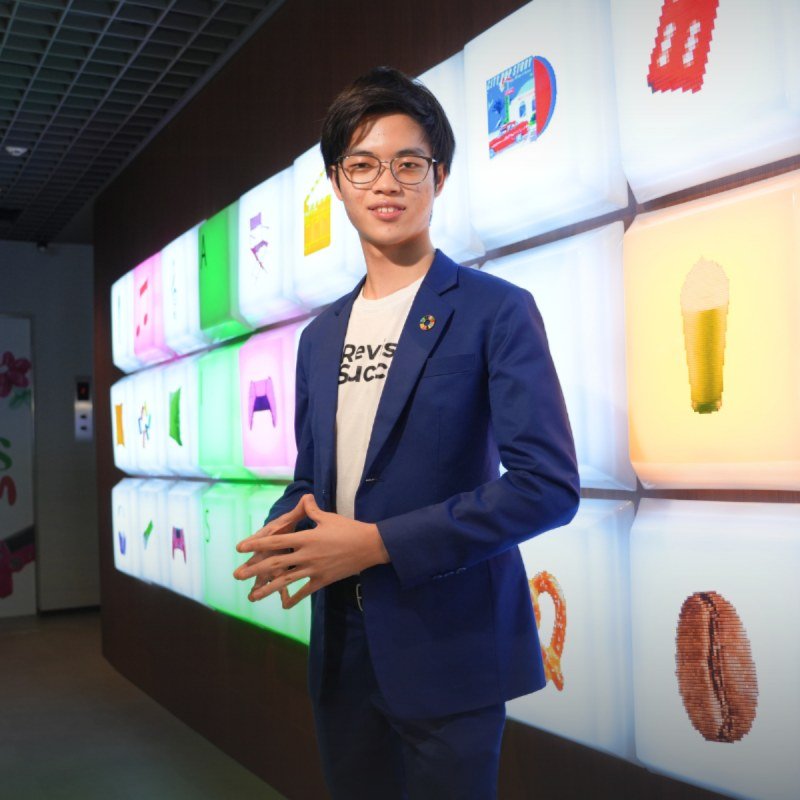
A 17-year-old Thai CEO is betting that artificial intelligence can fix one of the country's most stubborn problems: unequal access to quality exam preparation. Phonlawat "Beam" Sirajindapirom, who leads the EdTech startup RevisionSuccess and co-founded its new learning platform TuaTueng, officially launched the service on July 18 with more than 4,000 practice questions for the Thai General Aptitude Test (TGAT), the exam that shapes university admissions across Thailand.
A 17-year-old Thai CEO is betting that artificial intelligence can fix one of the country's most stubborn problems: unequal access to quality exam preparation. Phonlawat "Beam" Sirajindapirom, who leads the EdTech startup RevisionSuccess and co-founded its new learning platform TuaTueng, officially launched the service on July 18 with more than 4,000 practice questions for the Thai General Aptitude Test (TGAT), the exam that shapes university admissions across Thailand. His argument is simple: tutoring should not be a privilege of the wealthy, and AI can help close the gap.
17-Year-Old Thai CEO Launches AI TGAT Prep Platform
Bangkok, Thailand – this week — Phonlawat "Beam" Sirajindapirom, 17-year-old CEO of RevisionSuccess and co-founder of TuaTueng, released the AI-powered learning platform on July 18, 2026, to prepare high school students for the Thai General Aptitude Test. The TGAT measures English and Thai literacy and comprehension, problem solving, and workplace suitability, and its results carry heavy weight in university admissions decisions through the TCAS central admission system. Speaking to the Bangkok Post in an interview published this week, Sirajindapirom said students whose families can spend hundreds of thousands of baht on private tutors hold an unfair advantage over everyone else — and that AI can level the playing field.

The Story
Phonlawat "Beam" Sirajindapirom is a student himself. He leads RevisionSuccess, the EdTech startup behind TuaTueng, as its 17-year-old CEO while studying at Chulalongkorn University, Thailand's oldest and one of its most prestigious universities, located in central Bangkok. TuaTueng launched on July 18 with more than 4,000 practice questions for the TGAT, developed with input from top Thai students, optimized through AI, and verified by a human review team to match real exam formats as closely as possible.
His motivation comes from what he describes as a lacking and underfunded school system that underserves intelligent Thai students. In the interview, he pointed to the country's deeply entrenched tutor culture: private cram schools and one-on-one tutors form a large industry, and wealthy families routinely spend heavily on extra support ahead of university entrance exams. "I know people who spend hundreds of thousands on tutors, but it shouldn't be like this. And for the people who can't? How are they supposed to compete?" he said.
The launch follows a vote of confidence from the Thai government. In May 2026, the National Innovation Agency (NIA), an agency under the Ministry of Higher Education, Science, Research and Innovation, and Chulalongkorn University invested 1 million baht into RevisionSuccess, as part of the government's continued push into AI-based educational technology. The TuaTueng team is now working with its first cohort of interns to build out the platform.
The timing matters. TGAT sits inside the TCAS, Thailand's central university admission system, and thousands of high school students across the country sit the test every year. Because TCAS results feed directly into placement decisions at universities nationwide, demand for preparation materials is enormous — and the gap between students who can afford elite preparation and those who cannot has been a recurring complaint among educators for years.
How the Platform Works
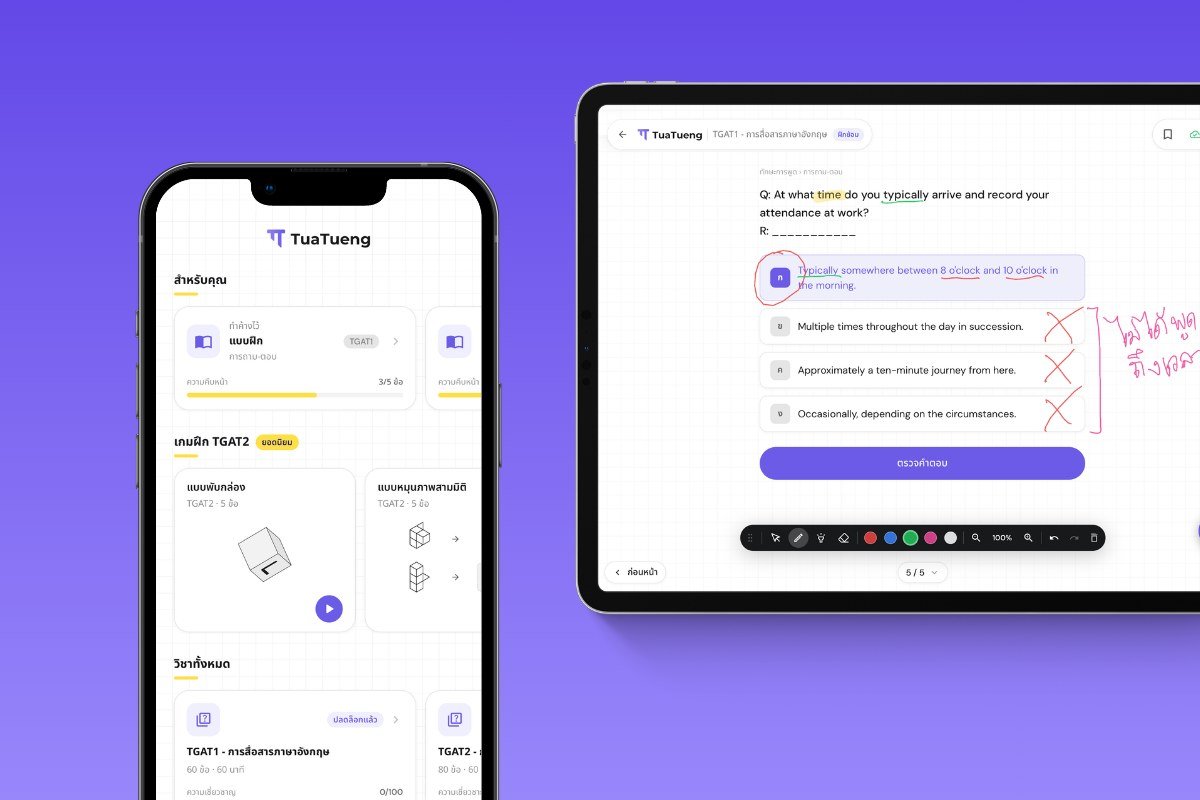
TuaTueng's core method is a hybrid of machine speed and human judgment. The company trains its AI models on past TGAT papers so the models can generate new questions in similar formats, then a human team fact-checks and verifies every item before it reaches students. "We take the practice questions on these past papers, we train our AI models to build similar questions in similar formats, and then we have a human team factchecking and verifying the accuracy of it to ensure that every question – from the question to the experience of using TuaTueng – is as exam-like as possible," Sirajindapirom said.
The platform also includes a personalised AI tutor that walks users through problems step by step rather than revealing answers immediately. That design choice is deliberate. The company says the tutor is intended to bolster rather than diminish users' cognitive abilities, responding to studies showing that heavy reliance on AI models can lower critical thinking skills — a concern that educators across Thailand and the wider region have raised as generative AI tools spread through classrooms.
For students, the pitch is practical: thousands of exam-style questions, immediate feedback, and guided tutoring at a fraction of the cost of private lessons. For the young team behind TuaTueng, it is also a proof of concept that Thai students can build the very technologies reshaping their own education system.
Thailand Context
The stakes are clear in the data. The 2025 EF English Proficiency Index ranked Thailand 116th out of 123 countries, placing the kingdom in the "Very Low Proficiency" band. Yet the national average hides deep internal divides: Bangkok, Pattaya, and Chiang Mai reached "Moderate Proficiency" levels, while remote, impoverished, and rural areas outside central Thailand scored significantly below the national average. Education inequality in Thailand is measured not only in baht but in geography.
Government initiatives have tried to close that gap from the top down. In June 2025, the Ministry of Education, the Ministry of Higher Education, Science, Research and Innovation, and Microsoft Thailand launched the TH AI Academy — an AI in Education project aimed at giving students and teachers equitable access to future-ready skills. Thailand's election to the UNESCO Executive Board for the 2025-2029 term has also strengthened cooperation with UNESCO on education reform and AI policy. The NIA's 1 million baht investment into RevisionSuccess is part of this same wave — official recognition that AI-driven tools belong in the national strategy for educational equity, not just in the private tutoring market.
For Ann's readers, the deeper point is cultural as much as technological. Thai families have long treated education as the surest path to security and social standing, with parents sacrificing to pay for tutors, cram schools, and exam prep. A platform that promises exam-grade practice at low cost touches something fundamental in Thai society: the hope that a child's future should not depend on the size of the family budget.
Implications for Southeast Asia
TuaTueng arrives as Southeast Asia's education technology scene is heating up. Countries across ASEAN are experimenting with AI-powered learning tools, from adaptive testing in Vietnam and Indonesia to government-backed digital literacy programmes in Malaysia and Singapore. Thailand's approach — a university-founded startup, backed by a state innovation agency, targeting a high-stakes national exam — offers a template that regional neighbours are watching closely.
For Thai readers, the platform's success or failure will send a signal about whether local EdTech can compete with international players that dominate the region's digital learning market. It also matters for the workforce of the future: if AI literacy becomes a core national competency, as the government's competitiveness strategy suggests, then tools like TuaTueng — built by Thai students for Thai students — could help the kingdom keep pace in the region's accelerating digital economy. For the wider region, the lesson is that homegrown AI education tools, rooted in local languages and local exam systems, may serve students better than imported platforms designed for other markets.
Expert Perspectives
Sirajindapirom's core argument, repeated throughout the Bangkok Post interview, is that learning to use AI and implementing it within Thailand's education system is critical for the country's future. He frames the technology not as a replacement for teachers but as a corrective to a system where access to quality preparation depends on income. Government funding from the National Innovation Agency and Chulalongkorn University reflects official support for that vision.
At the same time, the platform's design acknowledges the sceptics. By building a step-by-step AI tutor that guides rather than answers, TuaTueng responds to educators' concerns that generative AI can erode critical thinking. The human fact-checking team addresses worries about accuracy in exam preparation, where a single wrong answer can cost a student a university place. Those choices suggest the young founders understand both the promise and the peril of AI in education.
The broader lesson for Thai education is one of balance. Technology alone will not rebuild classrooms or raise English proficiency overnight, but the government's growing investment in AI-based tools — from the TH AI Academy to NIA-backed startups like RevisionSuccess — signals a clear direction. The question is whether these tools reach the students who need them most: those in rural provinces where tutoring is scarce, internet connections are slower, and the EF English Proficiency Index scores remain the lowest in the kingdom.
What to Watch For
The next TGAT testing cycle will be the first real test of whether TuaTueng users improve their performance in English literacy, problem solving, and workplace suitability. RevisionSuccess plans further growth following the 1 million baht investment from the National Innovation Agency and Chulalongkorn University, and its first cohort of interns signals early expansion ambitions.
Beyond the company itself, observers will track whether Thailand's broader AI education push — the TH AI Academy with Microsoft, the UNESCO Executive Board cooperation, and NIA-backed startups like RevisionSuccess — actually narrows the gap between high-scoring urban centres and lower-performing rural regions. If it does, Thai students from every province will have a stronger claim on the futures their families have always hoped for.
For a 17-year-old CEO, the ambition is large but the logic is simple: in a country where education is the ladder to a better life, AI should help more people climb. TuaTueng is the first rung of that ladder — and Thailand will be watching how high it reaches.
By Ann Srisawat, Staff Writer
This article was produced with AI-assisted research and editorial support. Reporting is based on sources cited in the article.
What's Your Reaction?
 Like
0
Like
0
 Dislike
0
Dislike
0
 Love
0
Love
0
 Funny
0
Funny
0
 Wow
0
Wow
0
 Sad
0
Sad
0
 Angry
0
Angry
0

Southeast Asia Correspondent at Global1.News. Based in Bangkok, covering Thai and Southeast Asian politics, economy, technology, and culture. Deep regional perspective on one of the world's most dynamic regions.














Comments (0)