
Russian Attacks Kill 9, Injure Dozens in Ukraine as Moscow Says It Hit Ships, Plants
Russian airstrikes across Ukraine on Saturday intensified a deadly pattern that has emerged over the past two months, killing nine civilians and wounding dozens while striking residential areas, critical infrastructure and commercial sites.
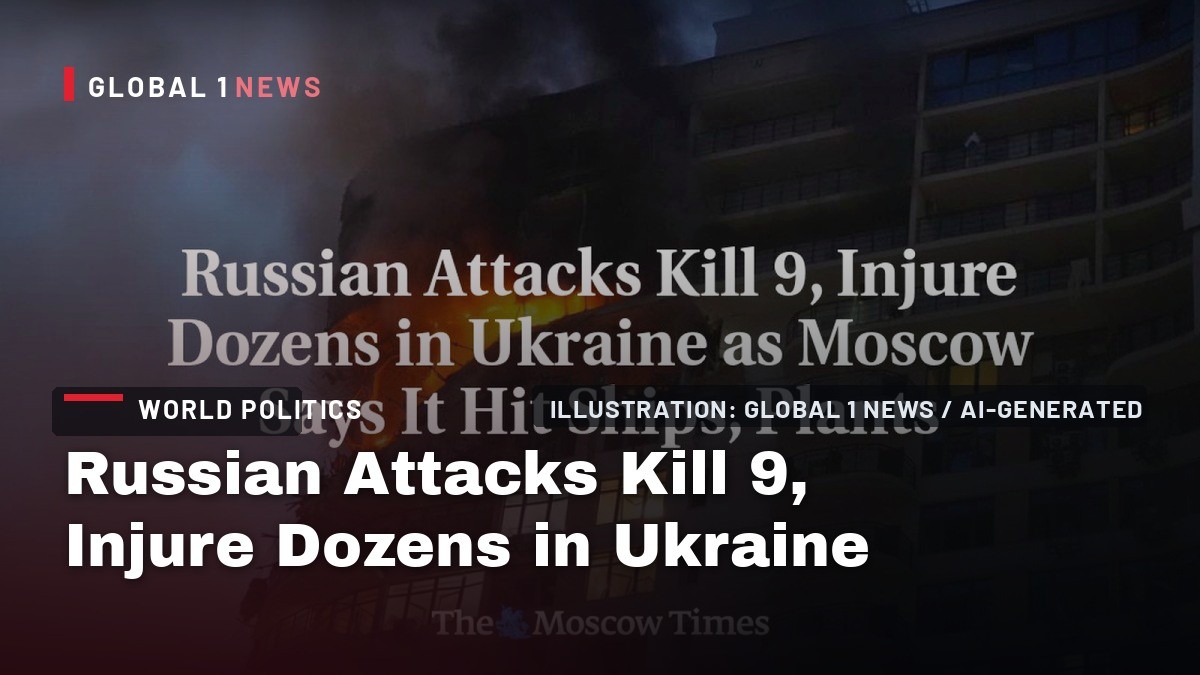
Russian airstrikes across Ukraine on Saturday intensified a deadly pattern that has emerged over the past two months, killing nine civilians and wounding dozens while striking residential areas, critical infrastructure and commercial sites. The attacks, confirmed by local officials in multiple regions, underscore Moscow’s expanding strategy of targeting the Ukrainian economy and civilian life, a shift that President Volodymyr Zelensky described as an effort to “kill the Ukrainian economy and break our resistance.”
Escalation of Civilian Casualties
The latest wave of strikes demonstrates a sharp rise in civilian deaths, a trend documented by regional authorities. In the frontline city of Kramatorsk, the city council reported three separate attacks on private cars within a 90‑minute window, resulting in three fatalities and four injuries. Council members emphasized that the targets were “ordinary civilian cars,” not military assets, highlighting the indiscriminate nature of the assaults.
Further south, the governor of Zhytomyr Region, Vitaliy Bunechko, confirmed a Russian strike on a grocery store in the town of Zvyahel that killed two shoppers. The same incident saw two gas stations and an “enterprise with foreign investment” also hit, suggesting a broader pattern of hitting commercial venues that serve everyday life.
Targeting of Industrial and Energy Facilities
Russia’s focus on Ukraine’s industrial base has intensified. The Russian Defence Ministry claimed successful hits on several key plants, including the Zaporizhstal steel mill in Zaporizhzhia, the Interpipe Steel complex in Dnipro, and the Northern Iron Ore Beneficiation Works in Kryvyi Rih. Ukrainian officials, however, reported that the attacks on these facilities coincided with civilian casualties, blurring the line between military and civilian targets.
In Zaporizhzhia, Governor Ivan Fedorov reported two deaths and eleven injuries across the city and surrounding areas. Similarly, Oleksandr Vilkул, head of Kryvyi Rih’s military administration, confirmed two civilian deaths in overnight drone and missile attacks on the city. These figures illustrate how industrial strikes are coupled with collateral damage to the civilian population.
Port Cities Under Fire
The Black Sea port of Odesa, a critical hub for Ukrainian exports and humanitarian aid, endured extensive attacks that left nearly 40 people injured, according to Governor Oleh Kiper. The Russian Defence Ministry asserted that a cargo ship in Odesa, allegedly carrying military goods, was struck, and that two cargo vessels in the nearby port of Chornomorsk were also hit during the night.
These claims align with a broader Russian narrative that frames civilian shipping as a conduit for military supplies, providing a pretext for targeting commercial vessels. Yet, independent verification of the cargo’s nature remains unavailable, as Reuters could not confirm the details offered by either side.
Cross‑Border Incursions and Regional Spillover
Russian drone activity has extended beyond Ukraine’s borders, affecting neighboring Moldova. Moldovan authorities temporarily closed national airspace for nearly an hour after detecting a drone near the border and shut seven border crossings as a precaution. The incident coincided with a reported delay of President Zelensky’s flight to Norway, allegedly caused by a Russian drone breach.
These cross‑border violations reflect a widening theatre of conflict, where Russian aerial assets operate with increasing impunity, challenging the airspace sovereignty of adjacent states and raising concerns about regional security dynamics.
Ukrainian Counter‑Strikes on Russian Industry
In response to Moscow’s intensified campaign, Ukraine has struck back at Russian industrial assets. Ukrainian forces reported a successful attack on the Tolyatti synthetic rubber plant in the Samara region, a facility that produces rubber and fuel additives used in Russian missile fuel. The strike caused a fire, according to Ukrainian statements.
Russian officials, including Samara Governor Vyacheslav Fedorishchev, acknowledged drone activity targeting industrial sites in the region but did not specify which facilities were damaged. The mayor of Tolyatti, Ilya Sukhikh, confirmed damage to several residential buildings and reported one injury, underscoring the reciprocal impact of the conflict on civilian populations on both sides of the front.
Strategic Implications of Economic Targeting
President Zelensky’s Telegram message framed the Russian escalation as a deliberate shift from battlefield engagements to economic warfare. By targeting power plants, warehouses, and commercial enterprises, Moscow appears to be attempting to erode public morale and undermine Ukraine’s capacity to sustain its war effort. The attacks on grocery stores, gas stations and foreign‑invested enterprises suggest a tactic aimed at disrupting daily life and the flow of essential goods.
From a Kremlin perspective, the narrative of “destroying every site that could help people cope with the conditions of war” serves to justify the expansion of the strike envelope. By labeling civilian infrastructure as “economic targets,” Russian officials can portray these actions as legitimate wartime measures, even as international observers note the growing civilian toll.
The Human Cost and the Road Ahead
The cumulative effect of these attacks is evident in the rising civilian death toll and the pervasive sense of insecurity across Ukraine’s urban and rural areas. Communities in frontline cities like Kramatorsk and Zaporizhzhia face repeated assaults that blur the distinction between combat zones and everyday life, while residents in western regions such as Zhytomyr endure attacks on basic services like grocery stores and fuel stations.
As the conflict enters its second year, the pattern of targeting civilian infrastructure is likely to persist unless diplomatic channels can re‑establish a ceasefire framework. The international community’s ability to verify and respond to these incidents remains hampered by limited access and the fog of war, but the documented accounts from regional governors and city officials provide a crucial record of the human impact of Russia’s expanding war strategy.
This article was produced with AI-assisted research and editorial support. Reporting is based on the source material cited below. Sources: The Moscow Times; themoscowtimes.com; Global1.News (14 September 2026).
By Irina Volkov, Staff Writer
What's Your Reaction?
 Like
0
Like
0
 Dislike
0
Dislike
0
 Love
0
Love
0
 Funny
0
Funny
0
 Wow
0
Wow
0
 Sad
0
Sad
0
 Angry
0
Angry
0

Russia/Eastern Europe Correspondent at Global1.News. Covering Russian politics, energy, security, and the shifting dynamics of the post-Soviet space. Provides clear-eyed analysis on one of the world's most opaque regions.












Comments (0)