
Russia Accuses Ukraine of Striking Nuclear Plant Fuel Convoy
Russia's Rosatom accused Ukraine of striking a diesel fuel convoy near the Zaporizhzhia nuclear power plant, killing two Russian servicemen, as the IAEA warns the plant's diesel reserves remain depleted.
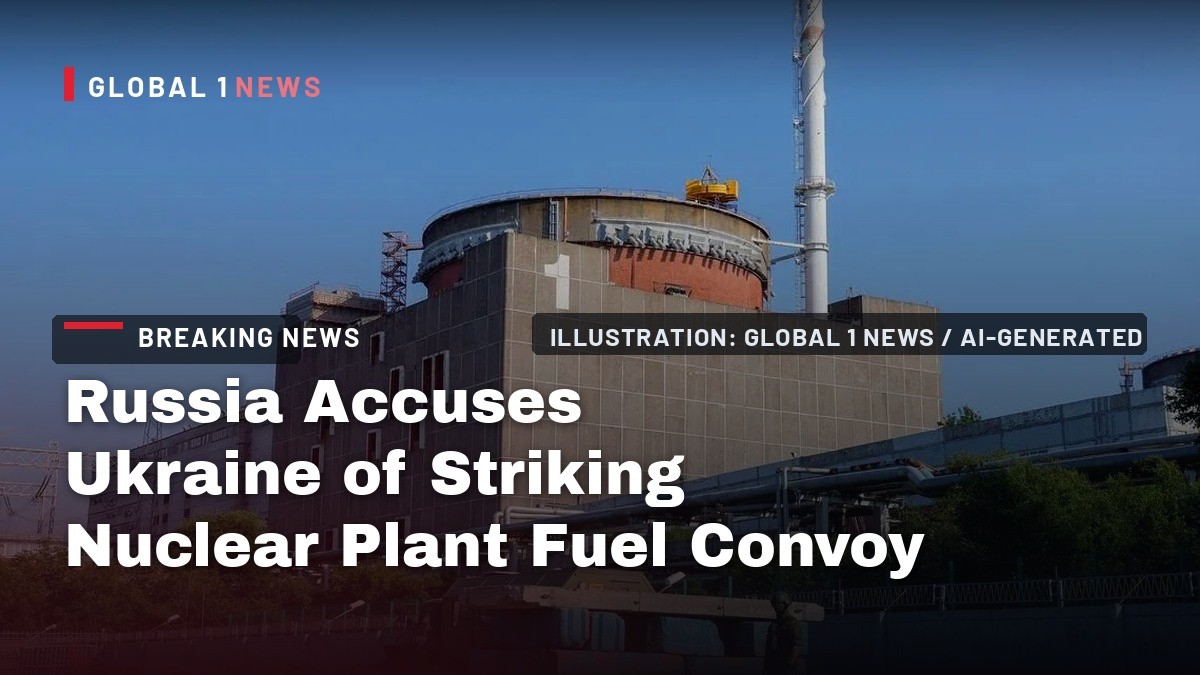
Russia's state nuclear corporation accused Ukraine on Sunday of striking a convoy of diesel fuel trucks near the Zaporizhzhia nuclear power plant, killing two Russian servicemen and wounding others. Rosatom director general Alexei Likhachev said the Friday attack hit "very close to the perimeter" of Europe's largest nuclear station. The strike has not been independently confirmed, and Ukraine has not claimed it.
Russia Accuses Ukraine of Striking Nuclear Plant Fuel Convoy
Kyiv, Ukraine - The accusation arrived by statement from Moscow early Sunday, two days after the strikes Likhachev described. According to the Rosatom chief, Ukrainian forces launched what he called "a series of combined strikes" on tanker trucks carrying diesel to the Russian-held plant. Two servicemen were killed, he said, and a large number of Russian soldiers were injured, some seriously. He said all of them were involved in what he called a purely civilian mission.
What Rosatom Says Happened at the Perimeter
Likhachev's account, carried by Russia's TASS news agency and reported by Reuters and RTE, places the attack on Friday, September 11. In his statement, he said the strikes targeted tanker trucks delivering diesel fuel to the Zaporizhzhia plant and landed in the immediate vicinity of the site's perimeter. He paid tribute to what he called the heroism of the Russian military.
The Rosatom director general went further than a simple account of the attack. He said Kyiv is "openly seeking to provoke a nuclear incident at Europe's largest nuclear power plant" and called on the International Atomic Energy Agency to condemn the action and identify those responsible. He also said Kiev's Western sponsors must find the courage to distance themselves from what he called the Zelensky regime's most horrific crimes.
None of this has been verified. The IAEA had issued no public response to Likhachev's statement as of Sunday morning. No third-party source has confirmed the strike, and Ukraine's government has not claimed it.
Why Diesel Is the Plant's Last Line of Defense
The Zaporizhzhia plant is Europe's largest, with six reactors, and it was seized by Russian forces in the early weeks of the war that broke out in February 2022. It has been in shutdown since September 2022, but its nuclear fuel still generates decay heat that must be removed. That job falls to pumps, and the pumps need electricity. Normally that power comes from the grid through external transmission lines. When those lines go down, diesel generators take over. The plant has 20 emergency diesel generators on site.
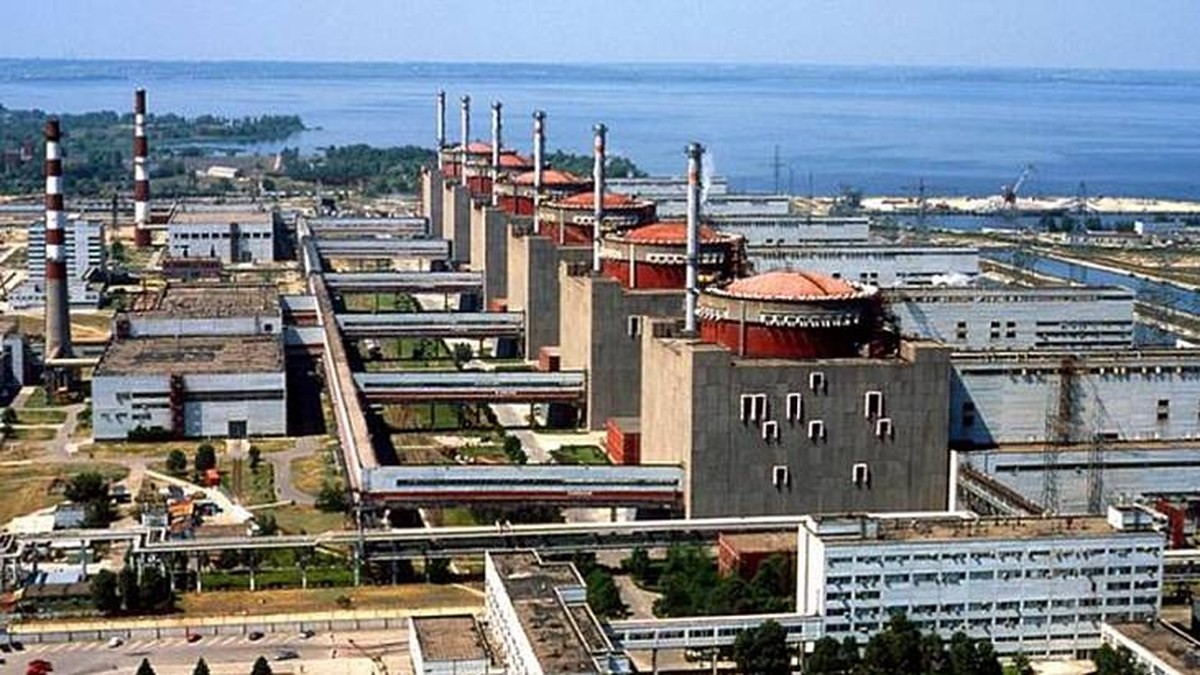
According to the IAEA, the plant was running on diesel alone for nearly three weeks in August and September, after its sole remaining external power line went down. During that stretch, emergency diesel generators powered the essential safety and security functions, most importantly the pumps that cool all six reactors and their spent fuel. The plant's other external line, the 750 kV Dniprovska line, remains unavailable despite repairs completed in June because of severe damage at its substation. Before the conflict, the plant had ten power lines available.
That is why the fuel trucks matter. Diesel is not a backup to the backup. It is the only thing standing between a lost grid connection and a station blackout.
Three Weeks on Emergency Generators
The timeline is documented in the IAEA's own updates. The plant lost connection to its sole remaining external power line, the 330 kV Ferosplavna-1, on August 20 following military activity on the northern side of the Dnipro River. For nearly three weeks, it ran on emergency diesel generators.
By August 28, the IAEA reported the plant had approximately ten days of diesel fuel available on site, which it described as the minimum regulatory requirement. The agency also reported that the most recent delivery of fuel to the plant's off-site fuel farm had taken place almost half a year earlier, in March. A further delivery planned for May had been delayed because of frequent military activity in the area.
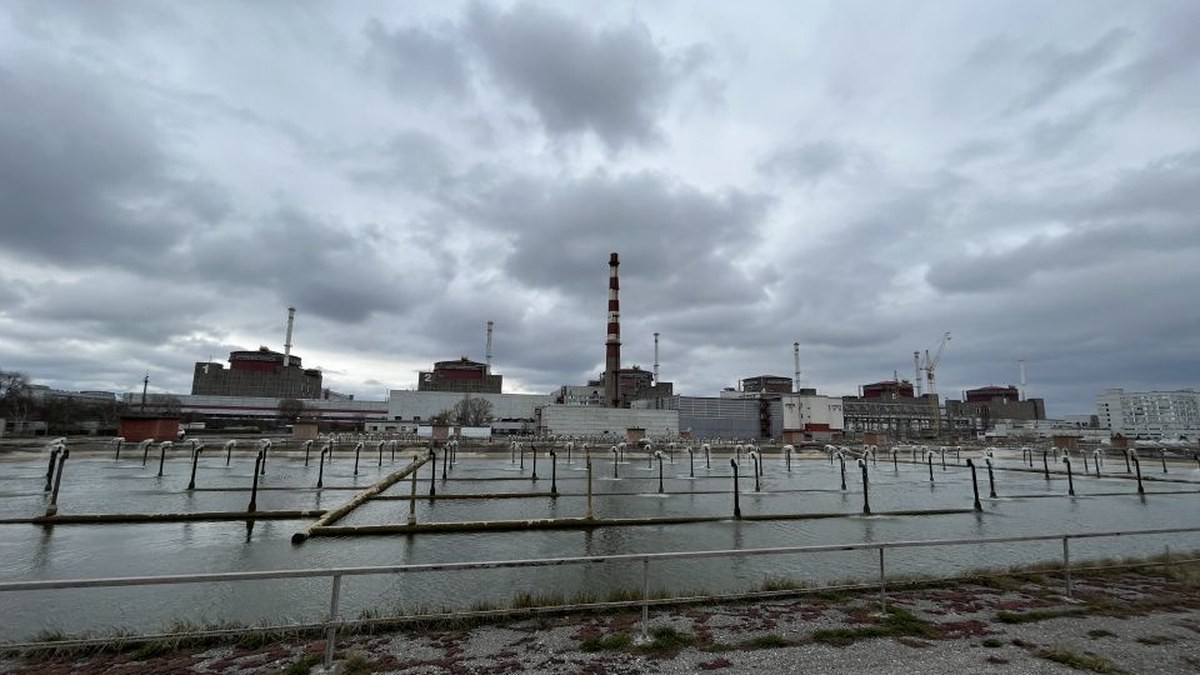
On August 29, IAEA director general Rafael Mariano Grossi warned plainly: without the restoration of off-site power or additional diesel fuel deliveries in the near future, the plant could face a station blackout within approximately ten days. The agency also reported that the plant had begun operating cooling pumps intermittently to conserve diesel.
The Seventh Ceasefire and the Line That Came Back
The IAEA negotiated a temporary localized ceasefire, the seventh such arrangement for urgent nuclear safety-related work during the conflict. It enabled demining and repair activities from September 5 to 7. An IAEA field team observed the work. The line was reconnected on the evening of September 7, ending the plant's 26th loss of off-site power during the war.
Grossi credited both sides. "Both sides have engaged constructively with the IAEA to help make this localized ceasefire possible, showing that practical steps can be taken, even in extremely difficult circumstances, to improve nuclear safety," he told the IAEA Board of Governors. Ukraine's Energoatom said the restoration was made possible by the professional work of Ukrainian energy workers, despite what it described as the unpredictable actions of the occupiers.
But Grossi stressed the plant remains vulnerable. Further measures are needed, he said, including the transport of additional diesel fuel to the site. The latest loss of off-site power had significantly depleted the plant's diesel reserves, increasing the risk of a station blackout if they are not replenished before any further cut in external electricity.
What the IAEA Has Not Said
The IAEA has stationed an observer team permanently at the Zaporizhzhia plant, along with Ukraine's three other working plants. Its updates document frequent military activity near the site and the nearby city of Enerhodar, where plant staff live. The team was informed of attacks in Enerhodar on September 6 that resulted in nine injuries and one fatality. It was informed of attacks on September 9 on a civilian vehicle in front of the site's training centre and on the training centre itself.
The reported timing of those attacks corresponded with explosions and drones heard by the IAEA team at the site. The team also heard several rounds of sustained gunfire at near distances on September 10 and were informed that drones were detected near the site's perimeter.
What the agency has not done is attribute responsibility for any single incident at the plant to either party in its public statements. That includes the July killing of the plant's Russia-appointed chief engineer, Oleksandr Yakovlev, and his driver. Grossi condemned that attack as unacceptable but did not assign blame. Ukraine's foreign ministry rejected the Russian account, saying there was no independent confirmation and that information from Russian occupation structures cannot be considered reliable.
Ukraine's Position: The Occupation Is the Root Cause
Energoatom, Ukraine's state nuclear company, maintains that it remains the only legitimate operator of the Zaporizhzhia plant and that appointments made by occupation authorities are legally void. The company says the plant was and remains a Ukrainian nuclear facility.
Its position on the cause of the danger is unambiguous. "The illegitimate occupation of the Zaporizhzhia NPP, the presence of Russian troops there, the representatives of Rosatom, and the Kremlin-created pseudo-administration are the sole root causes of all threats to nuclear and radiation safety," Energoatom has said. The company has called for increased pressure on Russia for the demilitarization and de-occupation of the plant and the city of Enerhodar.
Energoatom has also warned about the physical toll of the blackouts. It said emergency diesel generators had been used as primary power sources in non-design operating modes for more than two weeks, and that the risk of Common Cause Failure - one of the most critical threats to nuclear plant safety - is increasing. Constant cyclical starts and load switching, it said, significantly increase the probability of start-up automation failure.
The Wider Pattern Around Enerhodar
Likhachev said the Friday strike comes on top of what he called sustained Ukrainian efforts over recent months to destroy Enerhodar. There is a documented pattern of Ukrainian strikes on Russian fuel logistics in the region, though not at the plant itself.
On August 3, Ukraine's Unmanned Systems Forces struck a convoy of Russian fuel tankers in the occupied city of Prymorsk in Zaporizhzhia region, an operation announced by the commander of the Unmanned Systems Forces, Robert "Madyar" Brovdi, who published video of the strike. On July 10, Ukraine's General Staff confirmed strikes on fuel and lubricants facilities including a storage point near the settlement of Rozivka in Zaporizhzhia Oblast, describing such targets as supporting Russia's military logistics.
The IAEA has also documented drone activity at Ukraine's other nuclear sites. In one week, the South Ukraine plant detected 28 drones, some as close as three kilometres away. Chornobyl reported 17. Rivne reported three. Khmelnytskyy reported a drone six kilometres from the site, and the IAEA team there took shelter during an air raid alert.
What a Station Blackout Would Actually Mean
A station blackout means the plant loses both external power and its diesel backup. The pumps stop. The reactors are shut down, which matters: the IAEA notes that because the plant has been in shutdown since September 2022, there is significantly less decay heat to remove than at an operating reactor. In the event of a complete station blackout, it would take considerably longer before nuclear fuel could be damaged or potentially melt.
That is a question of time, not safety. Energoatom has warned that even with all units in cold shutdown, a power outage threatens the loss of control over primary safety systems, spent nuclear fuel storage pools and technological parameters. The company has previously said every blackout at the occupied plant worsens the condition of equipment, including the diesel generators that provide backup power.
Grossi has framed the stakes without qualification. "A reliable supply of electricity is essential to powering the ZNPP's safety and security functions, most notably the pumps that cool all six reactors and their spent fuel pools," he said. Frequent interruptions and reliance on emergency generators, the IAEA says, violate its Seven Indispensable Pillars for nuclear safety during armed conflict.
The Question Neither Side Will Answer
Consider what is established and what is not. It is established that the plant ran on diesel generators for nearly three weeks. It is established that its reserves fell to the regulatory minimum and that a delivery planned for May was delayed for months. It is established that the IAEA brokered a seventh ceasefire to restore one power line, and that the agency says more diesel is still needed.
What is not established is who struck the fuel trucks on Friday. Rosatom says Ukraine did. Likhachev says the strikes hit near the perimeter and killed two servicemen supporting a civilian mission. Ukraine has not claimed the operation. The IAEA has not commented. No independent confirmation exists.
Both sides have regularly accused each other of endangering the plant. The IAEA has repeatedly acted as an intermediary when disputes arise. The fuel currently generates no electricity, and Ukraine has demanded that Russia abandon the station and hand its operation back to Kyiv, a demand rejected by Moscow. On the one question that matters most this Sunday - who fired, and at what - the public record stops at an accusation.
By Jessica Ali, Staff Writer
This article was produced with AI-assisted research and editorial support. Sources: Reuters, TASS, RTE, IAEA, World Nuclear News, American Nuclear Society Nuclear Newswire, Ukrainska Pravda.
What's Your Reaction?
 Like
0
Like
0
 Dislike
0
Dislike
0
 Love
0
Love
0
 Funny
0
Funny
0
 Wow
0
Wow
0
 Sad
0
Sad
0
 Angry
0
Angry
0

Editor-in-Chief at Global1.News. Atlanta-based journalist who cuts through the BS and tells it like it is. Lead anchor, host, and the voice you hear when the spin stops and the truth starts.















Comments (0)