
Marine Le Pen launches presidential bid as unrest swells across France
In a crowded hall in Orléans, Marine Le Pen stepped onto the stage to announce her fourth attempt at the French presidency. DW’s Lisa Louis noted that the congress was not merely a rallying cry for supporters but also a strategic showcase.
In a crowded hall in Orléans, Marine Le Pen stepped onto the stage to announce her fourth attempt at the French presidency. The atmosphere, captured by DW News, was charged with both fervent support from National Rally members and a palpable tension that mirrored the streets outside, where protests have been simmering in recent weeks. Le Pen, the leader of the far‑right National Rally, used the moment to outline a platform she hopes will turn the party’s current poll lead into a decisive electoral victory. As the DW correspondent Lisa Louis reported from the conference, the scene was a microcosm of a nation grappling with economic strain, security concerns and a deepening political divide.
National Rally Congress sets the tone
The opening minutes of the video show Le Pen taking the podium amid a sea of red, white and blue banners emblazoned with the party’s emblem. Her speech emphasized sovereignty, immigration control and a promise to restore what she described as “the true spirit of France.” The crowd responded with enthusiastic applause, a signal that the party’s base remains energized despite the challenges of a long campaign trail.
DW’s Lisa Louis noted that the congress was not merely a rallying cry for supporters but also a strategic showcase. Le Pen positioned herself as a seasoned leader who has learned from previous electoral defeats, framing this campaign as a turning point where the National Rally moves from the periphery to the center of French politics. The tone was decidedly forward‑looking, with Le Pen promising concrete measures on security and economic revitalization.
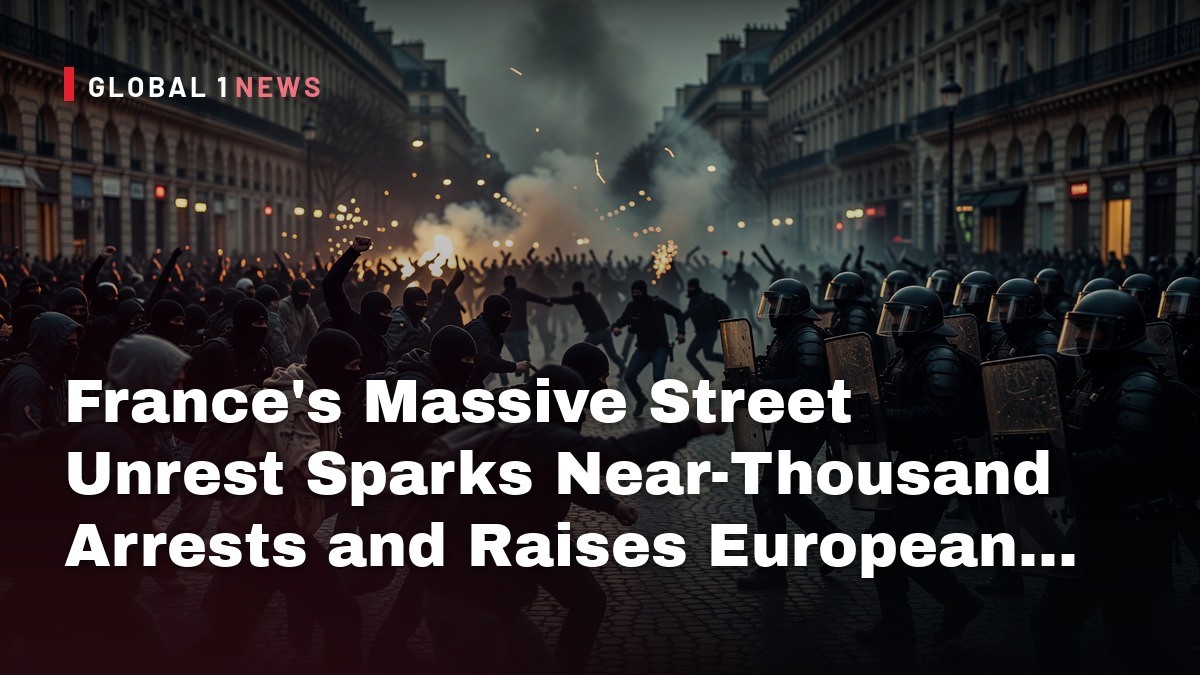
While the internal dynamics of the party were highlighted, the video also captured moments of protest outside the venue. Demonstrators, some waving flags of the Republic and others holding signs denouncing the far‑right, gathered in the streets of Orléans. Their presence underscored the broader social unrest that has marked the French political landscape in recent months.
Campaign messaging and expectations
Le Pen’s messaging, as described in the DW report, focused on three pillars: national sovereignty, law and order, and economic renewal. She pledged to renegotiate France’s relationship with the European Union, a stance that has resonated with voters skeptical of Brussels’ influence. On security, Le Pen vowed to increase police presence and give the Guardia Nacional‑style forces more authority to combat crime, echoing concerns that have risen since the wave of protests began.
In terms of economic policy, Le Pen promised to protect French industry, support small businesses and reduce taxes for the middle class. The DW correspondent highlighted that these promises aim to appeal to both traditional working‑class voters and middle‑class families worried about the cost of living. Le Pen’s rhetoric blended nationalist sentiment with promises of tangible economic relief, a combination that has helped the National Rally climb in recent polls.
The video’s timeline indicates that after the opening remarks, the focus shifted to a detailed presentation of the party’s platform. Le Pen’s team used visual aids and statistics—though specific numbers were not disclosed in the broadcast—to illustrate the perceived failures of the current government and to argue that her leadership would restore stability.
Protests and public mood in Orléans
The footage captured a sizable protest outside the congress venue, with participants chanting slogans that criticized the far‑right’s rise. According to the DW correspondent, the mood among demonstrators was one of frustration and fear, reflecting a broader national sentiment that many feel the country is at a crossroads. The protests were organized spontaneously, with citizens gathering in the town’s central plaza, a space reminiscent of traditional tianguis markets where community voices converge.
DW’s coverage noted that the protests were not limited to Orléans; similar gatherings have been reported in other cities, indicating a nationwide wave of dissent. The demonstrators’ demands varied, ranging from calls for greater social spending to demands for stronger protections of civil liberties. This diversity of grievances highlights the complex tapestry of public opinion that Le Pen must navigate if she hopes to convert unrest into votes.
The presence of the protests added a layer of tension to Le Pen’s launch. While her supporters cheered inside, the sounds of dissent outside served as a reminder that the path to the Élysée Palace is fraught with opposition. The DW report suggested that the government’s response to these protests—whether through dialogue or force—could shape the political climate in the months ahead.
Can Le Pen capitalize on nationwide unrest?
DW’s analysis, featuring insights from Philippe Maarek, Emeritus Professor at the Institute of Political Studies of Fontainebleau, explored whether Le Pen could turn the current unrest into electoral momentum. Maarek argued that the unrest, while a sign of societal strain, also creates an opening for a candidate who promises order and decisive action. Le Pen’s challenge, according to the expert, will be to present herself as a credible manager of crisis rather than merely a protest voice.
Maarek highlighted that the National Rally’s rise in the polls is tied to public dissatisfaction with the incumbent administration’s handling of economic and security issues. However, he cautioned that the far‑right’s historical baggage—particularly its association with xenophobia and authoritarian tendencies—remains a potent obstacle. The professor noted that Le Pen must balance her hard‑line rhetoric with a message of inclusivity if she hopes to broaden her appeal beyond the party’s core base.
The DW report underscored that Le Pen’s campaign will likely focus on regions hardest hit by unemployment and crime, where voters feel most vulnerable. By targeting these constituencies, she hopes to build a coalition that sees her as the only candidate capable of restoring confidence in the state’s ability to protect its citizens.
Expert analysis of strategy and poll numbers
In the segment where Maarek discussed poll numbers, he referenced the National Rally’s position as the current front‑runner without providing exact percentages. He emphasized that the party’s surge is a relatively recent phenomenon, linked to the escalation of protests and a perceived failure of traditional parties to address the public’s concerns. The professor suggested that if Le Pen can maintain this momentum, the party could solidify its status as a major political force.
Maarek also examined Le Pen’s strategic shift from an outsider narrative to a more establishment‑like posture. In earlier campaigns, Le Pen positioned herself as a challenger to the political elite; now, she seeks to present herself as a seasoned leader ready to govern. This evolution, according to the expert, reflects a broader trend among populist movements that move from protest to governance once they gain sufficient traction.
The analysis pointed out that Le Pen’s messaging on sovereignty and security resonates strongly in a climate where many citizens feel abandoned by both national and European institutions. By framing the election as a choice between stability and chaos, Le Pen aims to cast herself as the guarantor of order—a narrative that has historically proven effective in times of social upheaval.
The changing landscape of French politics
The DW video concluded with a reflection on how the French political arena is being reshaped. Le Pen’s launch, set against a backdrop of protests, symbolizes a moment where the traditional left‑right dichotomy is being challenged by new forces that blend nationalist rhetoric with populist appeal. The report suggested that the upcoming campaign will test whether the National Rally can translate its poll lead into a governing mandate.
For observers in Mexico and across Latin America, the French scenario offers a cautionary tale about the rise of far‑right movements in times of economic and social stress. As Rosa Martinez often notes, the struggle for democracy and human rights is a shared battle across our continent. The French experience, with its streets filled with demonstrators and its political parties vying for control, mirrors the dynamics seen in many Mexican colonias where citizens demand accountability from their leaders.
In the months ahead, the interplay between Le Pen’s campaign strategy, the government’s response to unrest, and the electorate’s appetite for change will determine the shape of France’s political future. DW’s coverage, as relayed here, provides a snapshot of a nation at a crossroads—one where the outcome of a single presidential race could reverberate far beyond the borders of Paris, influencing democratic movements throughout the Americas.
By Rosa Martinez, Staff Writer
This article was produced with AI-assisted research and editorial support. Reporting is based on the source material cited below. Sources: DW News video report (25 October 2026); DW News; Global1.News
What's Your Reaction?
 Like
0
 Dislike
0
 Love
0
 Funny
0
 Wow
0
 Sad
0
 Angry
0

Latin America/Andes Correspondent at Global1.News. Based in Bogota, covering politics, environment, energy, and social movements across the Andean region. Passionate about environmental journalism and communities protecting their land.












Comments (0)