
Kyiv's Deadliest Night: Russia's Missile Barrage Kills 21 as Ukraine Pleads for Interceptors
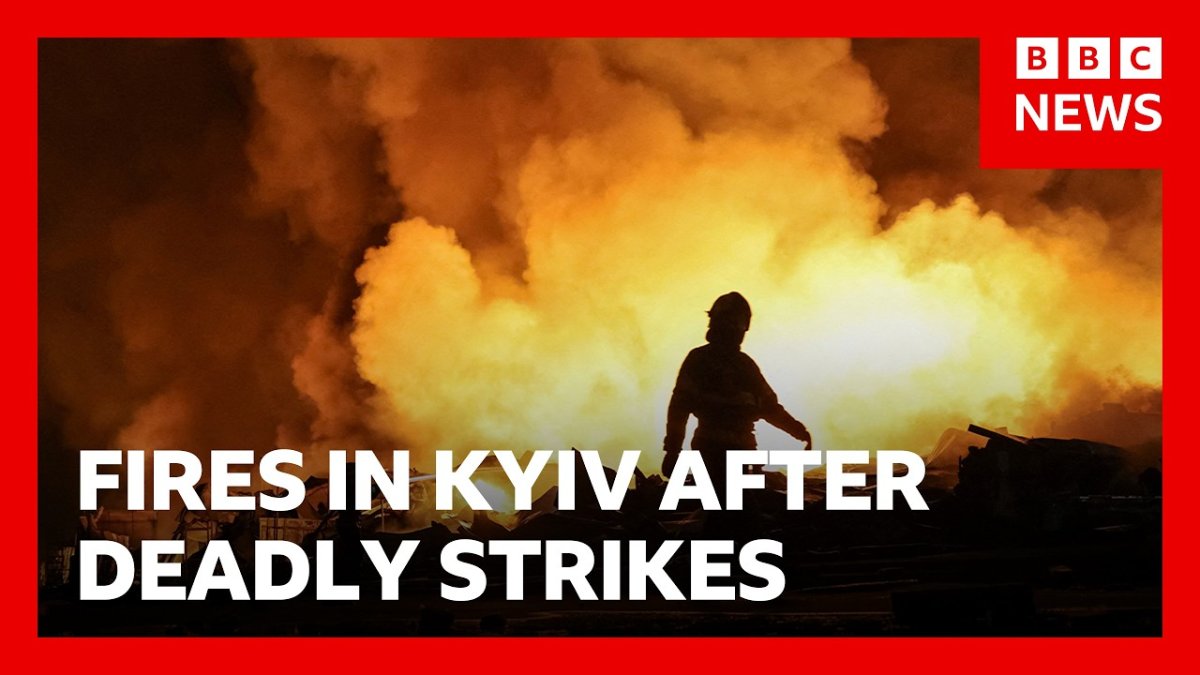
In a recent BBC News report, Russia's overnight assault on Ukraine — a barrage of ballistic missiles and drones that began shortly after midnight on Wednesday — left at least 21 people dead, including 17 in the capital region in one of the deadliest strikes on Kyiv this year.
In a recent BBC News report, Russia's overnight assault on Ukraine — a barrage of ballistic missiles and drones that began shortly after midnight on Wednesday — left at least 21 people dead, including 17 in the capital region in one of the deadliest strikes on Kyiv this year.
Kyiv's Deadliest Night: Russia's Missile Barrage Kills 21 as Ukraine Pleads for Interceptors
Kyiv, Ukraine – 5 August 2026 — Ukraine's President Volodymyr Zelensky said interceptors "could have saved lives" as emergency crews dug through rubble in the capital region, where residential buildings, a railway station and warehouses were hit. The attack, which Ukraine's air force said involved 24 ballistic missiles, four anti-ship missiles and 115 drones, underscored Kyiv's deepening vulnerability as allied interceptor supplies shrink.
The Night the Missiles Fell
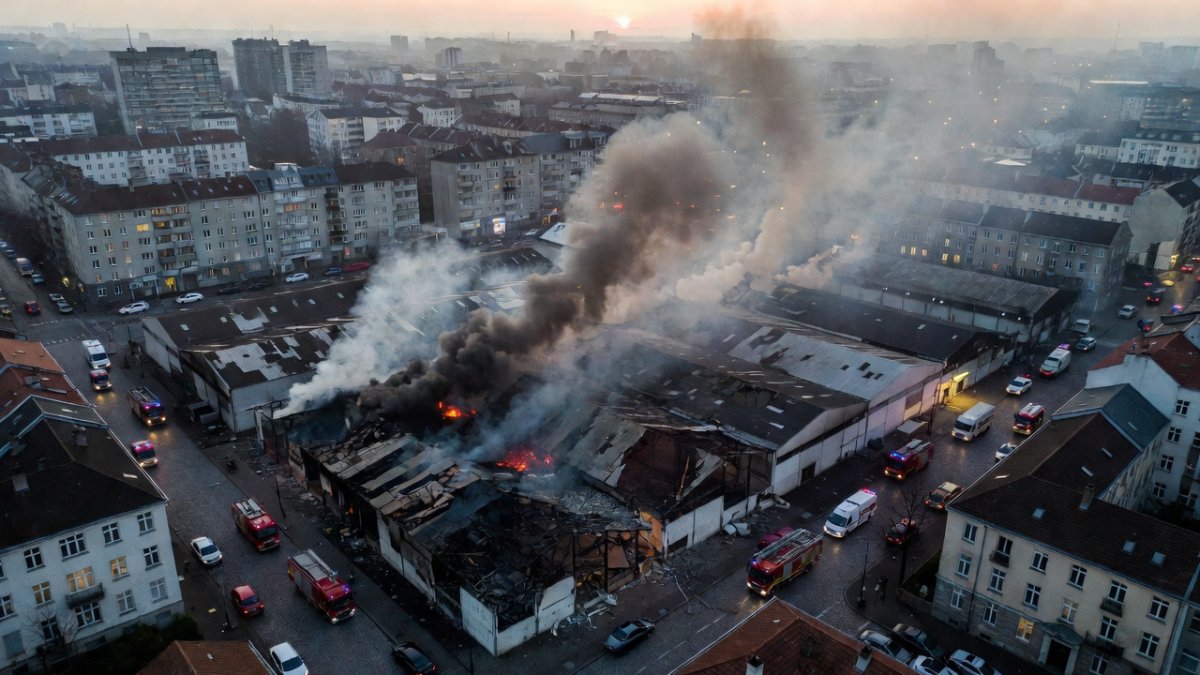
Ukraine's emergency services reported that at least 17 people died in Kyiv and the wider region — one in the city itself and 16 in surrounding districts — with dozens more wounded, including 16 injured in the capital and 29 in the region. The strikes began shortly after midnight on Wednesday, hitting residential buildings, a railway station and warehouses across the capital region. Kyiv Mayor Vitali Klitschko said there were fears people could still be trapped under the rubble as rescue teams worked through the morning. Fires were still being extinguished in five locations across the region on Wednesday, covering an area of approximately 230,000 square metres.
The toll extended beyond the capital. In Kharkiv, regional head Oleh Syniehubov said one person had died and several were injured — including one in a critical condition — from Russian shelling. In Donetsk, governor Vadym Filashkin reported three people killed and 27 injured. Together with the 17 dead in the Kyiv region, the attacks left at least 21 people dead across Ukraine in a single night, according to Ukrainian officials.
Ukraine's air force provided a detailed breakdown of the barrage. It stated that 24 ballistic missiles and four anti-ship missiles were directed at the capital, while 115 drones were launched overall, of which 98 were intercepted. Ukraine did not report intercepting any of the ballistic missiles. Kyiv residents described the night as one of sustained explosions and power outages, with air-raid sirens sounding continuously. Visual impact included thick plumes of smoke rising over multiple districts, with fires visible from several kilometres away as warehouses and residential blocks burned into the morning.
The air force statement, posted on its official Telegram channel, framed the barrage as a coordinated mix of high-speed ballistic threats and slower drone swarms, underscoring that none of the ballistic missiles were brought down while most drones were neutralised. This breakdown highlights the specific challenge posed by ballistic systems that outpace existing interceptors. In Kyiv itself, residents spent hours in metro stations as shelters while explosions echoed overhead and electricity flickered out across neighbourhoods, leaving families in darkness until dawn.
Zelensky's Plea: 'Interceptors Could Have Saved Lives'
President Volodymyr Zelensky stated that interceptors "could have saved lives" and that delays in receiving anti-ballistic systems lead to "horrific casualties and destruction." He noted that the supply of interceptors from allies has been "significantly reduced" this year. Ukraine has long requested more US-made Patriot missile interceptors to bolster its defences against ballistic threats.
BBC Verify data showed that missile interceptions over the last month fell by 22% compared with the same period last year, with 44.4% intercepted in 2026 versus 66.7% in 2025. Ukraine intercepted 156 of 351 Russian missiles between 6 July and 5 August 2026, compared with 128 of 192 in 2025. Russian missile launches rose 83% this month compared with last year, while drone interceptions declined only 3%, from 88.4% to 85.8%.
This falling interception rate could indicate mounting pressure on Ukraine's air defence stockpiles and gaps in allied resupply. Analysts suggest the trend signals a gradual erosion of Kyiv's ability to shield urban centres from high-speed ballistic attacks, particularly as winter approaches and Russian production remains steady.
Ukraine's campaign for additional Patriot systems has stretched across multiple years of diplomacy, yet deliveries from Western partners have noticeably slowed in recent months amid competing global demands and domestic political pressures in donor capitals. This pattern of reduced flows can be read as a signal of war fatigue in some allied governments, even as core commitments to Ukraine's defence remain intact; the result is a tightening constraint on Kyiv's ability to match the pace of Russian launches.
What Moscow Says It Was Targeting
Russia's defence ministry said it struck logistics hubs and supply centres in Kyiv and the surrounding region, claiming these centres were involved in the storage and delivery of weapons and military supplies, as well as the production and distribution of unmanned aerial vehicles. Moscow also said it hit three cargo vessels "which were transporting weapons and military equipment" near the Black Sea port of Odesa.
These statements are presented as official claims from Russia's defence ministry. Ukraine and its allies have repeatedly said Russia targets civilian infrastructure. Both sides have denied deliberately targeting civilians. Russia has intensified attacks on Kyiv in recent weeks while Ukraine has stepped up strikes on Russian infrastructure, reflecting a broader pattern of reciprocal escalation.
Ordinary Russians in regions such as Tula and Krasnodar have faced similar disruptions from Ukrainian drones, illustrating how the conflict's costs extend beyond the front lines into daily life on both sides of the border. Post-Soviet dynamics continue to shape these exchanges, with Moscow framing its actions as defensive responses to NATO expansion.
The ministry's reference to the three cargo vessels near Odesa stands as an official Russian claim without independent verification in this reporting. Both Moscow and Kyiv continue to issue competing narratives about the same strikes, each emphasising military targets while accusing the other of endangering civilians, a dynamic that sustains the information contest alongside the physical battlefield.
The Wider War: Warehouses, Beaches and the 'Human Safari' Video
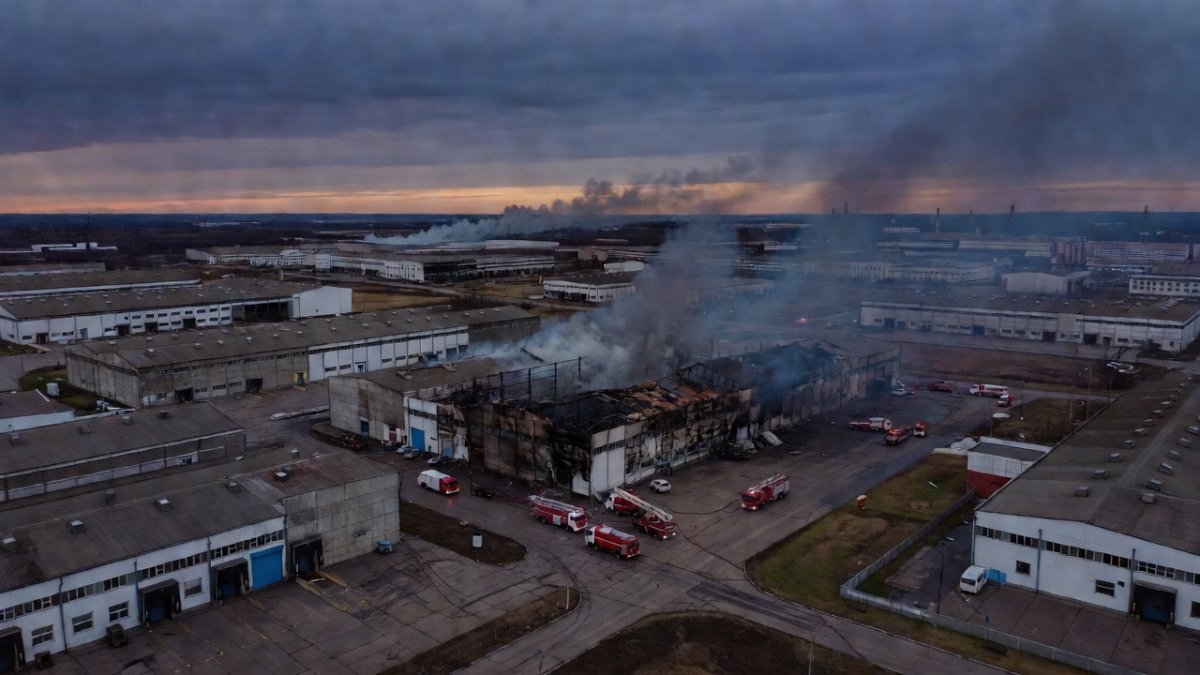
Ukraine's counter-campaign has included repeated strikes on Russian logistics, including Wildberries warehouses. Dmitry Milyaev, governor of Russia's Tula region, said a drone crashed into a Wildberries warehouse overnight causing a fire, with one person injured. Tuesday's Moscow region strikes killed five people and wounded 10 in the most recent attacks on warehouses.
The day before, Russian officials said seven people were killed after a drone hit a busy beach in the southern Krasnodar region. Ukraine expressed outrage over a video showing a man chased by a drone in Kherson, with Kyiv calling it a deliberate "hunt" and "safari" targeting civilians. This tit-for-tat pattern shows the war's expansion into civilian infrastructure and daily routines for both populations.
The domestic cost in Russia includes disrupted supply chains and civilian casualties far from the front, while Ukrainians endure nightly alerts and infrastructure strain. Kremlin power structures maintain tight control over narratives, presenting these strikes as necessary countermeasures.
Repeated hits on Wildberries facilities illustrate a sustained Ukrainian focus on Russian e-commerce nodes that underpin everyday consumer logistics, adding friction to domestic supply lines and raising costs for ordinary citizens. In parallel, the Krasnodar beach incident and the Kherson drone video have prompted Ukrainian officials to frame those events as potential war crimes, intensifying mutual accusations over civilian targeting and deepening the cycle of outrage on both sides.
Europe's Response and the Interceptor Gap
European Commission President Ursula von der Leyen said on Wednesday the EU had received €1.4bn (£1.2bn) from immobilised Russian assets, which would be used to support Ukraine. The interceptor gap remains a central issue in allied supply politics, with deliveries constrained by production limits and political debates in donor countries.
This situation could affect the coming weeks as winter approaches, Russian missile production appears undiminished, and Ukraine's stockpiles represent the central vulnerability. Analysts interpret the gap as a factor that may force Kyiv to prioritise certain cities over others in defence allocation.
The €1.4bn drawn from immobilised Russian assets forms part of a wider EU package that also includes direct budgetary aid and military assistance, yet the funds arrive against a backdrop of finite global production capacity for systems such as Patriot interceptors. Manufacturing lines for these complex munitions face bottlenecks in raw materials and skilled labour, limiting how quickly additional batteries can reach the front even when political will exists.
Analysis — A War of Attrition Over Air Defences
The strategic significance of the interception-rate decline lies in its potential to shift the balance of the air war. Analysts suggest this signals growing strain on Ukrainian systems and the need for accelerated Western deliveries. The trend connects to Kremlin power structures, where sustained missile output serves both military and domestic political goals by demonstrating resolve to the Russian public.
What to watch includes whether allied deliveries accelerate and whether Ukraine's drone campaign on Russian logistics forces Moscow to divert air defences. In the near term, the attrition over air defences will likely determine the scale of civilian impact in both countries as the conflict enters another season of intensified strikes.
The 22% drop in interception effectiveness points to a structural imbalance in which Russian launch rates increasingly outstrip Ukraine's defensive throughput, potentially allowing more ballistic threats to reach populated areas. Observers will monitor the timing of any fresh allied interceptor shipments, the intensity of Ukrainian drone operations against Russian rear-area logistics, and how winter weather affects both sides' operational tempo and civilian resilience.
By Irina Volkov, Staff Writer
This article was produced with AI-assisted research and editorial support. Reporting is based on sources cited in the article.
What's Your Reaction?
 Like
0
Like
0
 Dislike
0
Dislike
0
 Love
0
Love
0
 Funny
0
Funny
0
 Wow
0
Wow
0
 Sad
0
Sad
0
 Angry
0
Angry
0

Russia/Eastern Europe Correspondent at Global1.News. Covering Russian politics, energy, security, and the shifting dynamics of the post-Soviet space. Provides clear-eyed analysis on one of the world's most opaque regions.














Comments (0)