
China's Space Superiority Strategy: What It Means for the Korean Peninsula
China defines space superiority not by launch counts but by space logistics and orbital maneuverability. As Chang'e 7 nears its lunar south pole mission and Beijing builds refueling and planetary-defense capabilities, David Park examines what this means for South Korea's narrowing strategic window.
The concept of "space superiority" has moved from the margins of strategic studies to the center of great-power competition. While the United States Space Force (USSF) defines it as the ability to operate "without prohibitive interference from space or counterspace threats," the People's Republic of China has developed a distinctly different interpretation—one rooted not merely in the number of satellites deployed or the sophistication of counterspace weapons, but in the cultivation of space logistics, orbital maneuverability, and the institutional architecture to sustain protracted operations beyond Earth's atmosphere. For South Korea, a nation that has rapidly entered the space age while navigating an increasingly volatile regional security environment, understanding this divergence is not an academic exercise. It is a matter of strategic survival.
Redefining Space Superiority: Logistics Over Launch Counts
The prevailing Western analytical framework tends to measure Chinese space power through quantifiable metrics: satellite constellations, anti-satellite (ASAT) test frequencies, and the observable maneuvers of spacecraft like the Shijian 21 and Shijian 25, which conducted notable orbital operations in July 2025. However, as research into China's space program reveals, these indicators reveal only a fraction of the strategic picture. Beijing's conception of space superiority is fundamentally tied to the kind of war it anticipates fighting—whether a limited engagement, a protracted conflict, or a gray-zone confrontation—and the logistical backbone required to sustain that fight.
This is a critical distinction. Possessing and launching satellites is insufficient; a capable space force must understand its delta-v budget, its fuel reserves, and how trajectory choices trade vulnerability for opportunity. China has internalized this logic. Its focus on space logistics—rendezvous and docking, autonomous operations, standardized interfaces, and eventually orbital fuel depots—represents a maturation of its strategic thought. The United States, by concentrating on launch counts and kinetic counterspace capabilities, risks watching the wrong indicators and misjudging the pace and nature of China's progress.
Chang'e 7 and the Lunar South Pole: Strategic Geography
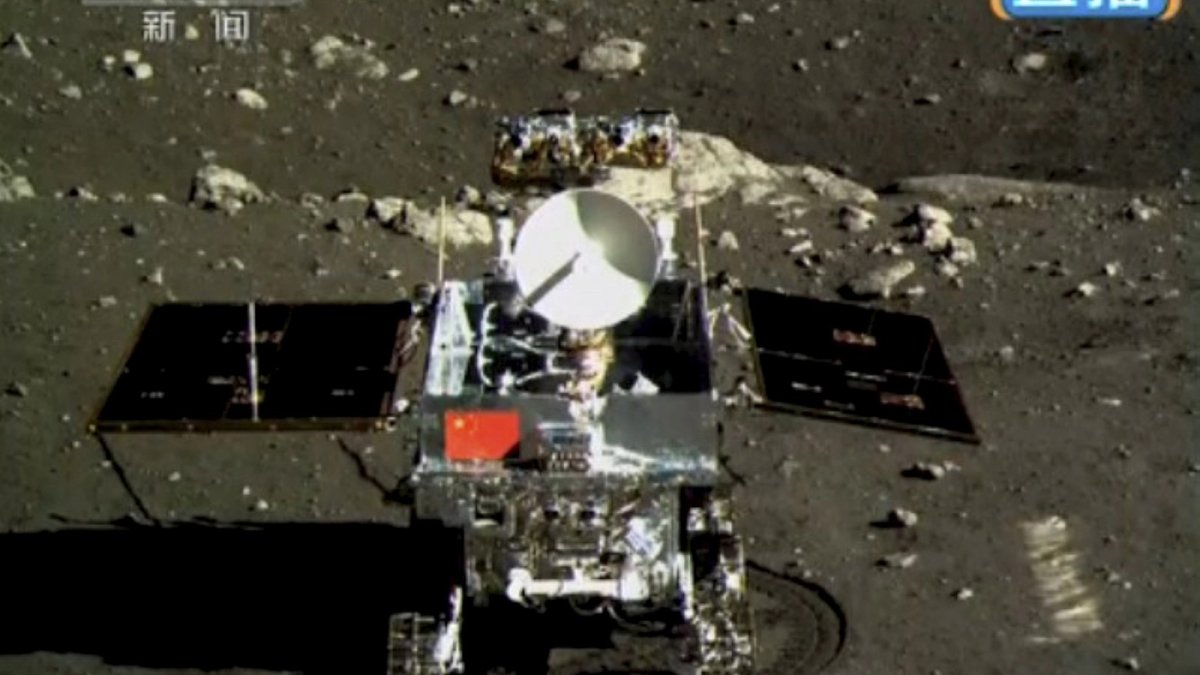
The most consequential near-term development is China's lunar program, specifically the upcoming Chang'e 7 mission, slated for launch later this year. The mission's objective is to survey the Lunar South Pole, searching for resources—most critically, water ice in permanently shadowed regions. This is not purely scientific curiosity. As Chi Wang and colleagues have noted, the mission will select the lunar south pole region as its preferred landing area, taking into account the future location of the proposed International Lunar Research Station, which China aims to construct by 2036.
The strategic implications are profound. If Chang'e 7 successfully identifies accessible water ice, it will provide China with a map of strategically useful lunar geography: where water is located, its concentration, and whether robotic autonomous systems can reach it. Transporting resources from Earth is prohibitively expensive; the ability to extract lunar water for life support, or to separate it into hydrogen and oxygen for propellant production, would fundamentally alter the economics of sustained lunar presence. This is space logistics in its purest form—the accumulation of scientific knowledge, surface experience, communications architecture, and robotic capability required for a persistent presence. For a nation-state, that presence constitutes the strategic high ground of the coming century.
Planetary Defense: The Dual-Use Imperative
China's planetary defense program offers an even clearer illustration of why the binary distinction between civilian and military space is obsolete. According to Nikola Schmidt and colleagues, China's planetary defense efforts have "evolved from scattered scientific initiatives into a strategically integrated component of its space policy." Wu Weiren, chief designer of China's lunar program and director of the Deep Space Exploration Laboratory, has stated that Beijing plans to launch a kinetic impact test against an asteroid in 2026.
The technical parameters are telling. China has identified asteroid 2015 XF261, estimated at approximately 30 meters in diameter, as a potential target. Simulation studies indicate that a 580-kilogram impactor traveling at roughly 9.3 kilometers per second—approximately Mach 26—could produce measurable orbital changes. Li Mingtao, chief scientist at the asteroid monitoring and early warning research center under the China National Space Administration (CNSA), announced on June 30 that China will establish a coordinated ground- and space-based monitoring system for near-Earth asteroids.
The dual-use capability is self-evident. To deflect a small asteroid, a spacecraft must find the object, characterize it, calculate its trajectory, navigate across deep space, conduct autonomous terminal guidance, and physically interact with the target at extreme velocity. Those competencies are indistinguishable from those required to strike an adversary's spacecraft in a conflict. Moreover, the tracking and monitoring infrastructure being developed for planetary defense constitutes a highly efficient space domain awareness system—one that can observe, characterize, and potentially target objects at enormous distances.
Orbital Refueling: Changing the Operational Calculus
Perhaps the most immediate military implication lies in China's work on orbital refueling. The Shijian 25 satellite, launched in January 2025, was specifically designed to test satellite fuel replenishment and mission extension technologies. This is a game-changer. Today's satellites carry finite propellant, and fuel scarcity shapes operational behavior. A People's Liberation Army (PLA) Aerospace Force commander knows that moving a satellite could improve survivability but also understands that repeated maneuvers shorten its operational life.
Refueling changes that equation. Consider a crisis over Taiwan: if Chinese spacecraft believed to support targeting, communications, or space-domain awareness could maneuver repeatedly, replenish propellant, and return to useful orbital positions, U.S. and allied planners would confront a considerably more dynamic problem than today's relatively predictable orbital architectures. China's 15th Five-Year Plan (2026-2030) explicitly supports these goals, treating in-space refueling and on-orbit logistics as critical infrastructure. Last year, Tsinghua University's Shenzhen International Graduate School demonstrated the operation of a flexible robotic arm in orbit, advancing the technology needed to extend spacecraft lifespans.
Institutional Adaptation: The PLA Aerospace Force
China's institutional reforms underscore the seriousness of its space ambitions. The 2024 dissolution of the PLA Strategic Support Force (PLASSF) and the establishment of separate Aerospace, Cyberspace, Joint Logistic, and Information Support Forces represents a significant doctrinal adaptation. The new PLA Aerospace Force consolidates space and counterspace capabilities under a unified command structure with direct reporting to the Central Military Commission (CMC). This enhances central control, reduces bureaucratic friction, and enables more rapid decision-making in crisis scenarios.
This restructuring aligns with China's broader concept of "systems warfare," which holds that modern conflict is a confrontation between opposing operational systems. To degrade an adversary's system of systems, one must be able to see, track, disrupt, and, if necessary, disable the space-based elements that hold that system together. The end goal is not the satellites themselves but the strategic effects they enable. China's military thought has matured to recognize that space capabilities such as maneuver and refueling are essential to a comprehensive military doctrine.
Implications for South Korea: A Narrowing Window
For South Korea, these developments carry profound implications. Seoul has made significant strides in its own space program. South Korea signed the Artemis Accords in May 2021, signaling its commitment to a rules-based international order in space. The Korea Pathfinder Lunar Orbiter (Danuri) launched in August 2022 aboard a SpaceX Falcon 9, and the domestically built Nuri (KSLV-II) rocket achieved successful launches in June 2022 and May 2023. The Korea Aerospace Administration (KASA) was established in May 2024, and Seoul has stated a goal of landing a spacecraft on the Moon by 2032. South Korea launched its first military reconnaissance satellite in December 2023 aboard a SpaceX Falcon 9, and space has been incorporated into the U.S.-ROK combined defense posture.
Yet the strategic environment is unforgiving. North Korea has pursued its own military reconnaissance satellite program, including a claimed successful launch in November 2023, adding another layer of complexity to an already fraught security landscape. Meanwhile, China's advances in orbital refueling, autonomous rendezvous, and deep-space tracking mean that the operational calculus in any future crisis—whether over Taiwan or on the Korean Peninsula—will be shaped by capabilities that Seoul does not currently possess.
South Korea's window for establishing a credible space posture is narrowing. The establishment of KASA is a positive step, but institutional creation alone is insufficient. Seoul must invest in the logistical and operational capabilities that China is prioritizing: on-orbit servicing, fuel replenishment, and space domain awareness. The alliance with the United States provides a foundation, but South Korea cannot rely solely on its partner's capabilities. The ability to observe, orient, decide, and act in the space domain will increasingly determine the credibility of its deterrence posture.
Conclusion: The Strategic High Ground of the Next Century
China's conception of space superiority is deeply interconnected with its ability to develop space logistics, economic power, an adaptable military, and a strategic understanding that maneuver and refueling are essential to mature military doctrine. The future of space power will depend on combining information superiority with sustained maneuver, grounded in a sound political understanding of why achieving space superiority matters.
For South Korea, the path forward requires a clear-eyed assessment of these developments. The next presidential election is scheduled for 2027, and the incoming administration will inherit a security environment in which space is no longer a peripheral domain but a central arena of strategic competition. Seoul must move beyond the binary distinction between civilian and military space and embrace a comprehensive approach that integrates its growing scientific capabilities with its defense requirements. The strategic high ground of the next century will be contested in cislunar space, and the nations that prepare for that contest today will shape the terms of conflict tomorrow.
This article was produced with AI-assisted research and editorial support. Sources: The Diplomat (Namrata Goswami, "China's Strategic Plan for Space Superiority," August 25, 2026).
By Prof. David Park, Staff Writer
What's Your Reaction?
 Like
0
Like
0
 Dislike
0
Dislike
0
 Love
0
Love
0
 Funny
0
Funny
0
 Wow
0
Wow
0
 Sad
0
Sad
0
 Angry
0
Angry
0

East Asia/Technology Correspondent at Global1.News. Seoul-based voice covering Korean politics, technology, business, and culture. Analyzes how technology and geopolitics intersect across East Asia.














Comments (0)