
Israeli elections: Arab voters weigh participation against abstention in bid to oust Netanyahu
Field interviews conducted by the Anadolu Agency in Arab towns and cities across Israel reveal a community divided by optimism and disillusionment, yet united by a shared sense that the upcoming vote could be decisive for their future.
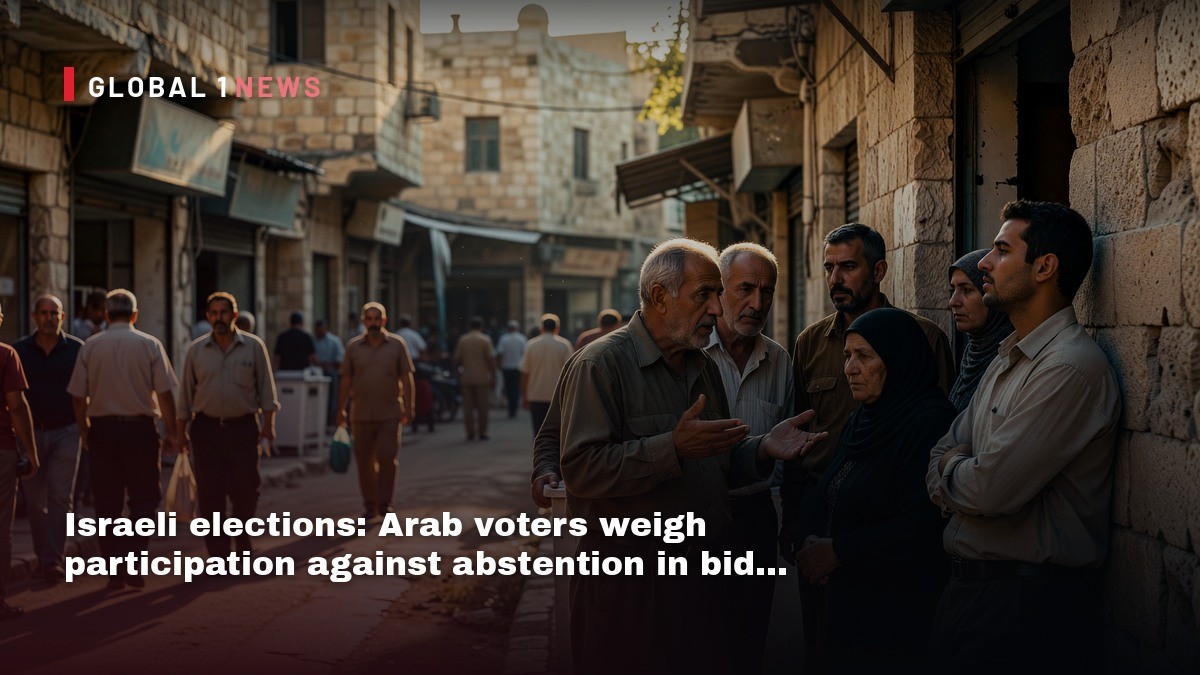
As Israel prepares for a national election on 27 October 2026, the Palestinian citizens of the state face a stark choice: to cast a ballot in hopes of curbing the hard‑line policies of Prime Minister Benjamin Netanyahu, or to abstain, weary of a political system they say has repeatedly failed to address their basic rights. Field interviews conducted by the Anadolu Agency in Arab towns and cities across Israel reveal a community divided by optimism and disillusionment, yet united by a shared sense that the upcoming vote could be decisive for their future.
Why the 2026 election matters to Arab Israelis
For many Palestinian citizens of Israel, the election is seen not merely as a routine democratic exercise but as a potential lever to halt what they describe as “worsening racism and marginalisation.” Imad Bashnaq, a Palestinian activist, called the vote “decisive and extremely important,” noting that the rise in racism and fascism since the events of 7 October 2023 has made daily life increasingly intolerable. He argued that Arab voices are the only ones capable of effecting change in the broader Middle East, underscoring the urgency of a collective political response.
Similarly, Areen Ghanayem, who plans to vote for the second time, stressed that “every vote makes a difference.” She framed participation as a way to demand the rights that should be theirs by virtue of citizenship, warning that the current government’s failure to address Arab concerns risks further marginalisation. These testimonies illustrate a growing belief that the ballot box may be one of the few remaining arenas where Arab Israelis can assert their presence.
Historical patterns of abstention and hope
Abstention has long been a feature of Arab electoral behaviour in Israel. Saeed Abu Sultan, a resident of Acre, reflected on three decades of voting without seeing tangible improvement, saying that many have grown “accustomed to things as they are.” His cynicism captures a persistent frustration: despite regular participation, successive governments have not delivered on promises of equality, land rights, or protection from discrimination.
Yet the same community also expresses a renewed willingness to vote. Experts anticipate that turnout among Palestinian citizens could rise to 60‑61 percent, up from 53 percent in the 2022 election. This projected increase suggests a shift from passive resignation toward active engagement, driven by the perception that the current right‑wing bloc poses a more dangerous threat than previous administrations.
The political stakes: Arab parties and the balance of power
Arab parties currently hold a modest share of the 120‑member Knesset, with polls indicating they could win around 15 seats overall. The Joint List, a coalition of the Democratic Front for Peace and Equality, the Arab Movement for Change, and Balad, is projected to secure nine seats under the leadership of Yousef Jabareen. The United Arab List, led by Mansour Abbas, may add five to six seats. While these numbers are not enough to form a government, higher Arab turnout could diminish the chances of small right‑wing parties that typically bolster Netanyahu’s coalition.
Arab lawmakers have outlined conditions for supporting any future government, including an end to ongoing wars and the advancement of a political process that addresses Palestinian rights. If Arab parties can leverage a stronger electoral mandate, they may force Netanyahu’s bloc to negotiate on issues such as settlement expansion, the “Judaization” of the Negev and Galilee, and the broader pattern of discrimination that many Arab Israelis experience.
Human‑rights concerns behind the vote
The urgency expressed by voters is rooted in a series of human‑rights violations that have intensified since Israel’s 2023 war on Gaza. Mohammed Ahmad Abboud highlighted “escalating violations” in the occupied West Bank, including the killing of Palestinians, the burning of homes and mosques, and the forced displacement of communities. He also cited statements by Finance Minister Bezalel Smotrich about “Judaizing” the Negev and Galilee, policies that many Arab Israelis view as an existential threat to their land and identity.
These grievances are not abstract; they translate into daily hardships for families who find their agricultural lands destroyed, their homes demolished, and their movement restricted by military checkpoints. The sense that the state is actively reshaping the demographic map fuels a determination among many Arab voters to oppose a government they see as complicit in these policies.
Voices from the ground: Personal motivations to vote
In the northern city of Acre, a resident known only as “Jojo” urged his community to vote, declaring that “we must vote to bring about change — real change.” His optimism reflects a belief that collective action can influence the political calculus, especially if Arab turnout reaches historic highs. By contrast, Abu Sultan’s resignation underscores a lingering skepticism that electoral participation alone can dismantle entrenched structures of inequality.
These divergent perspectives illustrate the internal debate within Arab society: whether to place hope in the democratic process or to seek alternative avenues for justice. The upcoming election forces each individual to weigh personal risk against the potential of a modest but meaningful shift in parliamentary representation.
Potential outcomes and the future of Arab‑Jewish relations
If Arab turnout rises as projected, the immediate effect could be a reduction in the number of small right‑wing parties crossing the electoral threshold, thereby weakening Netanyahu’s ability to assemble a majority. Opposition parties led by Gadi Eisenkot are also competing for seats, but most have ruled out formal alliances with Arab parties, limiting the scope for a broad coalition against Netanyahu.
Nevertheless, a higher Arab vote could compel the government to address some of the community’s core demands, even if only symbolically. International law obliges Israel to protect the civil and political rights of all its citizens, including the right to equality before the law and protection from discrimination. A stronger Arab presence in the Knesset could amplify calls for compliance with these obligations, potentially influencing both domestic policy and Israel’s standing in the global community.
Looking ahead: What the election could mean for peace prospects
The 2026 Israeli election arrives at a moment when the region’s stability hangs in a delicate balance. With the Palestinian territories still reeling from the aftermath of the 2023 Gaza conflict and the West Bank experiencing intensified settlement activity, the political direction Israel chooses will reverberate far beyond its borders.
For Palestinian citizens of Israel, the ballot is more than a civic duty; it is a plea for recognition, security, and an end to policies that they argue amount to systematic marginalisation. Their participation—or lack thereof—will shape not only the composition of the Knesset but also the broader narrative of how a democratic state can reconcile its Jewish character with the rights of its Arab minority. As the polls close on 27 October, the world will watch to see whether Arab Israelis can translate their collective voice into a tangible shift in power, or whether the entrenched political dynamics will continue to sideline their aspirations for equality and justice.
This article was produced with AI-assisted research and editorial support. Reporting is based on the source material cited below. Sources: Middle East Monitor; middleeastmonitor.com; Global1.News (25 October 2026).
By Fatima Al-Rashid, Staff Writer
What's Your Reaction?
 Like
0
 Dislike
0
 Love
0
 Funny
0
 Wow
0
 Sad
0
 Angry
0
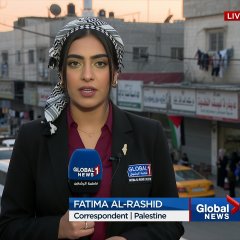
Gulf/MENA Correspondent at Global1.News. Based in Doha, covering Gulf politics, energy markets, diplomacy, and development across the Middle East and North Africa. Tracks the economic transformation of the Gulf states.










Comments (0)