
InstantID: Free AI Face Cloning Hits Every Desktop -- What It Means
InstantID, the open-source AI model from InstantX, Xiaohongshu and Peking University, clones any face from a single photo in seconds -- free, local, and one-click installable in Stable Diffusion WebUI. A new Aitrepreneur tutorial shows how easy it is, and Jessica Ali breaks down the tec...
Folks, cancel your plans, because the AI image wars just got a whole lot more personal. A new open-source model called InstantID is tearing through the tech world, and it does something that used to cost a Hollywood VFX budget: it takes ONE photo of a face, locks in that identity, and drops it into nearly any image you can imagine. In seconds. For free. On your own hardware. And a new tutorial from the AI channel Aitrepreneur shows exactly how easy it is to get running locally in Stable Diffusion WebUI with a single click.
InstantID Puts Hollywood-Grade Face Tech on a $1,000 GPU -- Free
Atlanta, GA -- August 2, 2026 -- Let's be real about what just happened. The research team behind InstantID -- a collaboration between the InstantX crew, Xiaohongshu Inc, and Peking University -- dropped a paper in January 2024 (arXiv 2401.07519) that rewrote the rules of identity-preserving image generation. Their claim, which has since been backed up by thousands of developers: you no longer need a stack of reference photos, hours of LoRA training, or a cloud subscription to put a specific face into a specific scene. One single facial image is enough. That is not incremental progress. That is a leap.
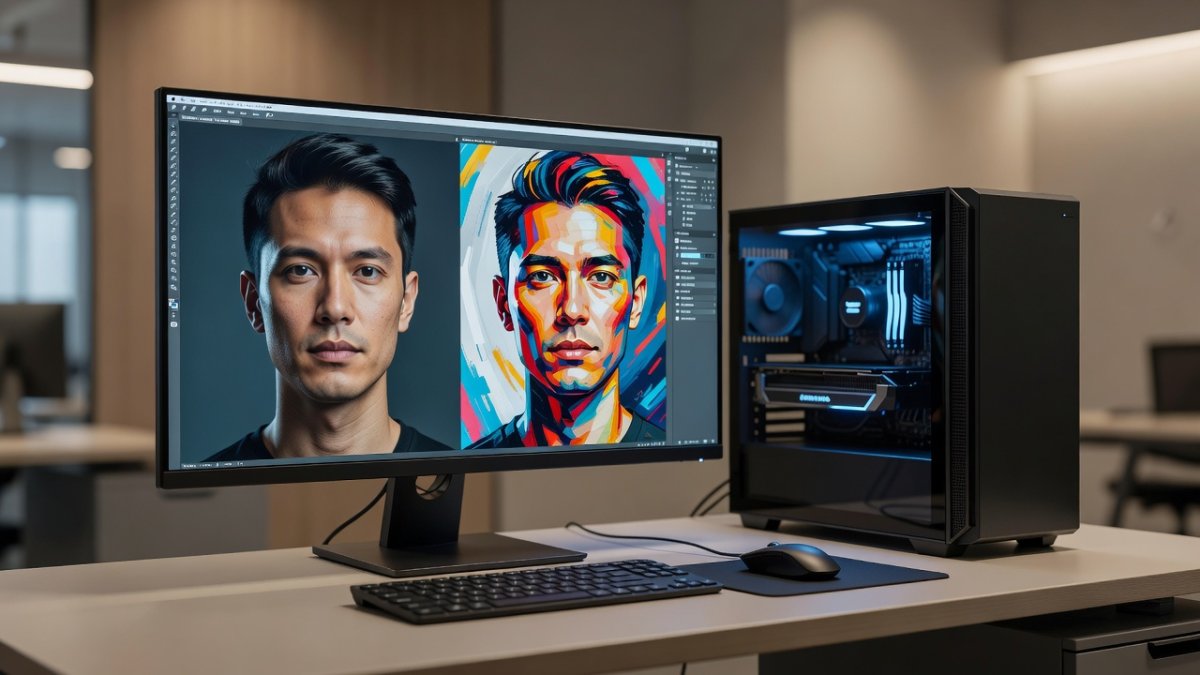
What Is InstantID, Exactly?
InstantID is a zero-shot, tuning-free method for ID-preserving generation. Translation for the rest of us: it preserves a person's identity in AI-generated images without any fine-tuning, without any training runs, and without needing dozens of photos. Give it a single clear face image, type a prompt, and it generates a new image where that same face appears in any style, pose, or setting you describe -- film noir, watercolor, cyberpunk, business portrait, whatever.
The project is fully open source, hosted on GitHub under instantX-research/InstantID, with pre-trained checkpoints released on Hugging Face in January 2024. Within a day of that release, the pipeline was merged into Hugging Face's diffusers library. That is how fast this thing caught fire. And unlike the gated, paywalled tools coming out of the big AI labs, this one runs local and runs free.
The Tech Under the Hood
Here's the part that should make every AI nerd sit up straight. InstantID doesn't reinvent the wheel -- it stacks proven parts into something far more powerful. It uses an IP-Adapter to inject face embeddings, a ControlNet-based IdentityNet to lock in facial structure and pose, and InsightFace's antelopev2 face encoder to extract the identity from that single image. The whole thing plugs directly into Stable Diffusion 1.5 and SDXL as a modular adapter. You are not locked into one model; you can bolt InstantID onto the base model of your choice.
The result, per the team's own benchmarks, beats previous tuning-free state-of-the-art methods on both fidelity and editability. It holds its own against character LoRAs trained on multiple images -- without doing any training at all. And compared to face-swap tools like InsightFace Swapper (better known as ROOP), it is dramatically more flexible, especially when you want a stylized or non-realistic result where the face needs to blend with the artwork instead of sitting on top of it like a sticker.
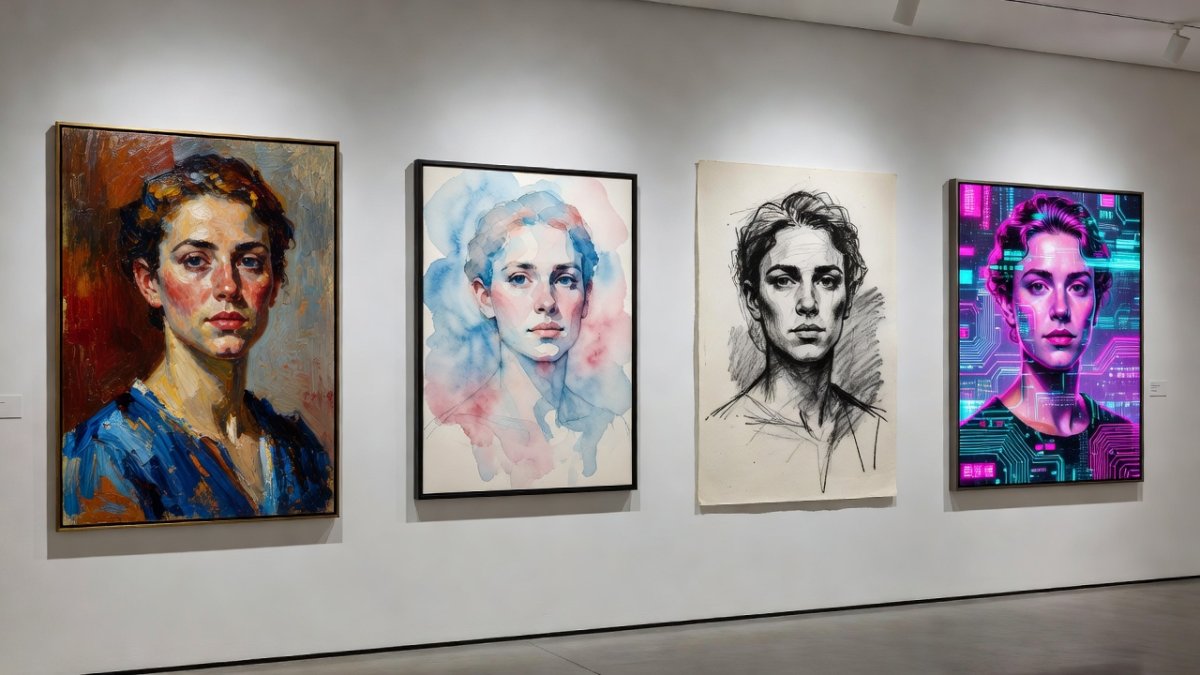
One Click, Zero Training: Why That Changes Everything
Here is the part the Aitrepreneur tutorial drives home: getting this running no longer requires a computer science degree. The video walks through installing InstantID into Stable Diffusion WebUI locally -- one click, a few minutes, and you are generating identity-preserving images on your own machine. The hardware bar is real but reachable: a consumer GPU in the 8GB VRAM class handles it, with CPU offloading and VAE tiling available for tighter setups.
Think about what that means. LoRA training -- the old way to get a consistent character -- took multiple images, a training run, and enough technical patience to make grown developers cry. InstantID vaporizes that entire workflow. For indie creators, that is a superpower: consistent characters for comics, branding, video thumbnails, marketing assets -- all generated locally, all without paying a subscription to a big AI lab, all without uploading a single personal photo to someone else's server.
The Democratization Angle: Big AI vs the Open-Source Underground
I have said it before and I will say it again: the most dangerous and the most liberating thing in AI right now is the open-source community, and this is a perfect example of why. While the corporate labs were busy building walled gardens -- subscription tiers, credit systems, content filters designed as much to protect their margins as their users -- the open-source crowd built the same capability and gave it away. InstantID is the tip of the iceberg. The InstantX team followed it with InstantStyle for style transfer, and they have adapted InstantID to Kolors, Kuaishou's open model, to generate identity AND text together.
That is the pattern of 2026: the closed giants move fast, but the open ecosystem moves faster and gives it away. And that is exactly why I refuse to let the big labs take credit for "democratizing AI." They sell access. The open-source community gives ownership.
The Dark Side: Face Cloning Without Consent
Now let me be the journalist who tells you the part nobody in the hype video wants to mention. The same technology that lets an indie artist create a consistent comic-book hero lets a bad actor put your face on content you never made. Identity-preserving generation is, functionally, the engine room of the deepfake economy. One stolen selfie is now enough to generate a convincing fake of a person in any scene. That is not hypothetical. That is the world we live in starting right now.
The people who built InstantID are not villains -- they released it openly, with research transparency, and the underlying paper is honest about capabilities and limitations. But the tool does not care who is holding it. Non-consensual deepfakes, identity fraud, political disinformation -- every one of those threats just got cheaper and more accessible. When the barrier to cloning a face drops to one photo and one click, the burden of verification shifts to all of us.
What This Means
Let me give it to you straight. First, for creators and businesses, this is a genuine unlock -- local, free, private identity tools mean small players can produce work that used to require a studio. Second, for the AI industry, it is a warning shot: the gap between paid frontier tools and free local models is closing, and closing fast. Third, and most importantly, for society, it is a stress test. The tools to fake reality are now in everyone's hands, which means the tools to verify reality are no longer optional. Provenance standards like C2PA, watermarking, and platform accountability are not a tech hobby anymore -- they are a civic requirement. Every time you see a shocking image, the question is no longer "is it real?" but "can you prove it?"
That is not fear-mongering. That is the price of admission to the era of free, local, one-click identity generation.
The Bottom Line
InstantID is a breakthrough, full stop. It is open, it is free, it is fast, and it runs on hardware you can actually afford. The Aitrepreneur tutorial makes it accessible to anyone willing to spend an afternoon learning. But access cuts both ways, and pretending otherwise is how we get burned.
So here is what you do. If you are a creator, go learn the tool -- it is a competitive advantage you should not ignore. If you are a regular person, start treating your photos like the sensitive data they are, and demand that platforms take deepfake takedowns seriously. And if you see an image that makes you feel something strong, verify it before you share it. That skepticism is not cynicism. It is survival.
Stay sharp, stay curious, and keep your eyes open -- because the future is being generated in real time, one click at a time.
-- Jessica Ali, Global 1 News -- cutting through the BS, one story at a time.
This article was produced with AI-assisted research and editorial support. Reporting is based on sources cited in the article.
What's Your Reaction?
 Like
0
Like
0
 Dislike
0
Dislike
0
 Love
0
Love
0
 Funny
0
Funny
0
 Wow
0
Wow
0
 Sad
0
Sad
0
 Angry
0
Angry
0

Editor-in-Chief at Global1.News. Atlanta-based journalist who cuts through the BS and tells it like it is. Lead anchor, host, and the voice you hear when the spin stops and the truth starts.















Comments (0)