
How Brazil's changing working class is reshaping the presidential race
In the shadow of São Paulo’s former factories, the streets of Osasco now buzz with delivery apps, shopping malls and open‑air markets. “We had strong deindustrialisation here,” he says, noting that metal, chemical and textile factories have closed, replaced by five new shopping malls.
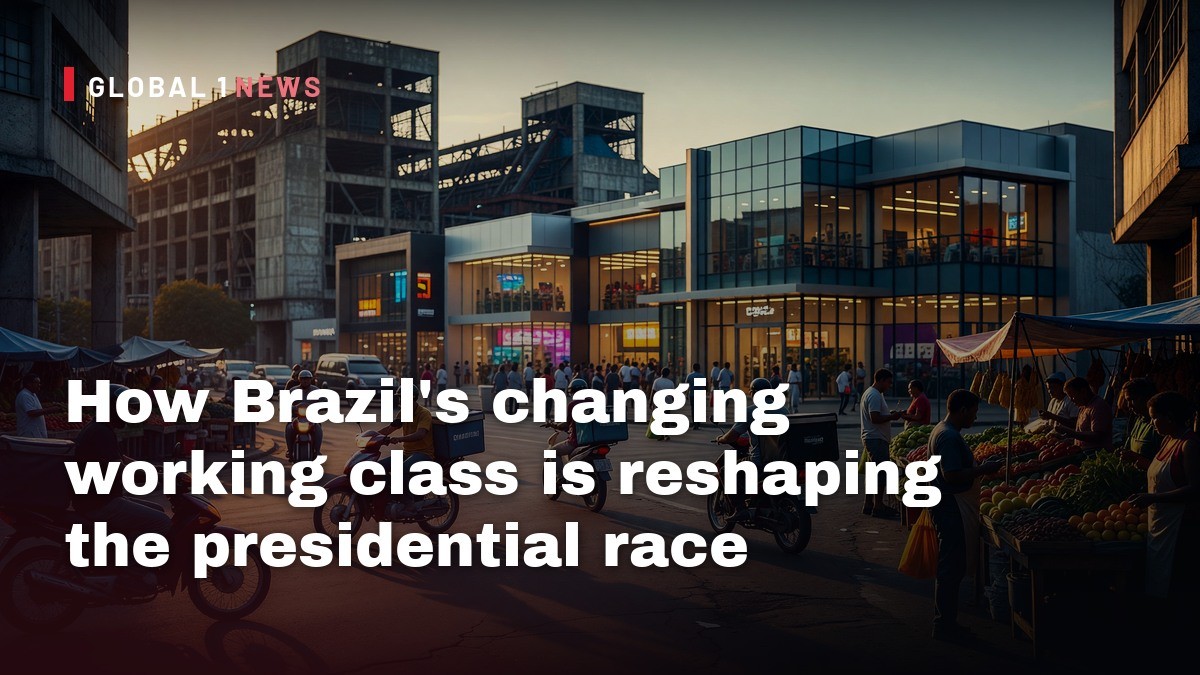
In the shadow of São Paulo’s former factories, the streets of Osasco now buzz with delivery apps, shopping malls and open‑air markets. The city, once a stronghold of metalworkers who propelled Luiz Inácio Lula da Silva to the presidency, has turned into a micro‑cosm of Brazil’s broader working‑class transformation. That shift is reshaping the presidential runoff scheduled for this Sunday, as voters who once saw Lula as a champion of labor now weigh the promise of “change” offered by Flávio Bolsonaro.
From steel to storefronts: the deindustrialisation of Osasco
Gilberto Almazan, leader of a local metalworkers’ union, describes a landscape that has been ripped from the industrial age and replanted in the service sector. “We had strong deindustrialisation here,” he says, noting that metal, chemical and textile factories have closed, replaced by five new shopping malls. The loss of factories has not only erased jobs but also altered the identity of the working class that once filled union halls and marched for Lula’s social agenda.
Almazan’s lament is echoed by many former factory workers who now find themselves in “Uber‑isation” – a term he uses to capture the rise of gig work, food delivery, and small‑scale market stalls. The flexibility of these jobs appeals to a generation that values “freedom, flexibility of days and hours,” yet it also fragments the collective power that unions once wielded.
The allure of “change” among Bolsonaro supporters
In the same neighborhoods where factories fell, the word “change” reverberates with a different urgency. Flávio Bolsonaro’s supporters, many of whom cannot name specific policies, are driven by frustration with the economy, crime and what they see as entrenched corruption. Lawyer Gisele Bonfim, who voted for Lula in 2022, explains her shift: “He brings the hope of change, that we can have a different Brazil.”
Even as Flávio faces accusations of corruption himself, his narrative of cutting government spending and reducing ministries resonates with voters like Tairine, a hot‑dog vendor who previously abstained from voting. She now intends to cast a ballot for Bolsonaro, citing “high taxes on everything” and “inflation” that make daily life “so difficult for a poor person.” Her stance illustrates how fiscal concerns are now as potent as the social promises that once secured Lula’s base.
Economic paradox: rising living standards amid rising costs
Under Lula’s current term, Brazil achieved a record low in unemployment and was removed from the UN’s Hunger Map, milestones that lifted millions out of poverty. Yet Richard Lapper, a biographer of both Lula and Jair Bolsonaro, warns of a “crisis of expectations.” He argues that while material conditions improved, price increases, household debt and high interest rates blunt the sense of progress.
Robson, a 53‑year‑old municipal civil servant from Pernambuco, captures this tension. He blames the “mismanagement” of the Lula government for a “worst phase” of tax burden, forcing families to choose between a car payment and food on the table. Such personal calculations are reshaping voting patterns, especially in municipalities like Osasco where the tax load feels increasingly oppressive.
The impact of abstention and voter fatigue
The first round of the election saw an unprecedented 33 million people stay home, the highest abstention since 1998. In Osasco, the phenomenon was palpable: many who once voted for Lula in 2022 chose not to cast a ballot, believing “it wouldn’t change anything.” This disengagement has forced Lula’s campaign to double‑down on mobilising students and activists, staging rallies that claim to have drawn up to a million participants in São Paulo.
Leila, a supporter at one of those rallies, underscores the strategy: “Our fight is to make those people believe their vote changes things.” The campaign’s reliance on viral imagery – from a topless man with a six‑pack waving a Lula flag to Lula’s own self‑branding as the “king of selfies” – reflects an attempt to re‑energise a disillusioned electorate.
Persisting loyalty among Brazil’s poorest
Even as middle‑class voters drift toward Bolsonaro, Lula retains deep support among Brazil’s poorest. In Rio’s Maré favela, 18‑year‑old mother Vitoria, who earns less than £300 a month, praises Lula’s policies that raised the minimum wage, guaranteed two days off per week and provided free essential medicines. For her, the tangible benefits of Lula’s welfare programmes outweigh abstract concerns about tax burdens.
Vitoria also expresses scepticism toward Bolsonaro’s plan to label the Comando Vermelho gang as a terrorist organisation – a move Bolsonaro lobbied the United States to adopt earlier this year. She fears a militarised response would “kill, destroy, ruin families,” recalling a recent police raid that left “blood and bodies on the ground.” Her perspective highlights the stark divide between those who view Bolsonaro’s hard‑line security proposals as necessary and those who see them as a threat to fragile community stability.
National implications of a local transformation
The story of Osasco is not isolated. Across Brazil, the decline of manufacturing and the surge of gig work are reshaping political allegiances. Lapper notes that Brazil’s late industrialisation and early deindustrialisation have made the shift “sharper here” than in other Latin American nations. As workers move from collective bargaining units to individualised contracts, the traditional union base that once underpinned Lula’s coalition erodes.
This structural change forces both candidates to adapt. Lula’s campaign leans on its legacy of social welfare and mass mobilisation, while Bolsonaro’s platform pivots on fiscal restraint and a promise of “different” governance. The runoff will therefore serve as a referendum not only on personalities but on the future of Brazil’s working class – whether it will remain tied to collective action or continue fragmenting into a service‑oriented, gig‑driven workforce.
What the runoff could mean for Brazil’s next chapter
If Lula secures a second round victory, he will need to reconcile the discontent of workers like Almazan and Tairine with the expectations of those who benefitted from his social programmes. Addressing the tax burden, perhaps by revisiting spending priorities, could be essential to stem the tide of abstention and regain the confidence of the newly‑service‑oriented electorate.
Conversely, a Bolsonaro win would likely accelerate cuts to government ministries and taxes, while preserving some of Lula’s flagship welfare programmes – a hybrid approach that could placate both his traditional right‑wing base and the service‑sector voters craving flexibility. However, the proposed terrorist designation for gangs like Comando Vermelho raises concerns about escalating violence in favelas, where Lula’s policies still hold sway.
As Brazil heads to the polls this Sunday, the streets of Osasco stand as a vivid illustration of a nation at a crossroads: a working class reshaped by deindustrialisation, a political landscape fractured by economic anxiety, and a populace torn between the promise of change and the comfort of familiar social safety nets. The outcome will determine whether Brazil leans into a new era of individualised labour or re‑asserts the collective spirit that once powered its most iconic social movements.
This article was produced with AI-assisted research and editorial support. Reporting is based on the source material cited below. Sources: BBC News Latin America; bbc.co.uk; Global1.News (25 October 2026).
By Elena Vasquez, Staff Writer
What's Your Reaction?
 Like
0
 Dislike
0
 Love
0
 Funny
0
 Wow
0
 Sad
0
 Angry
0

Latin America Correspondent at Global1.News. Based in Mexico City, covering politics, economics, energy, and culture across the region. Brings an on-the-ground perspective to stories spanning from the Rio Grande to Patagonia.











Comments (0)