
Haitian TPS Ends as Caribbean Faces Fresh Questions on Regional Responsibility
Temporary Protected Status for an estimated 300,000 to 350,000 Haitian nationals expired on July 27, 2026, after a 6-3 US Supreme Court ruling on June 25 cleared the main legal barriers to termination.
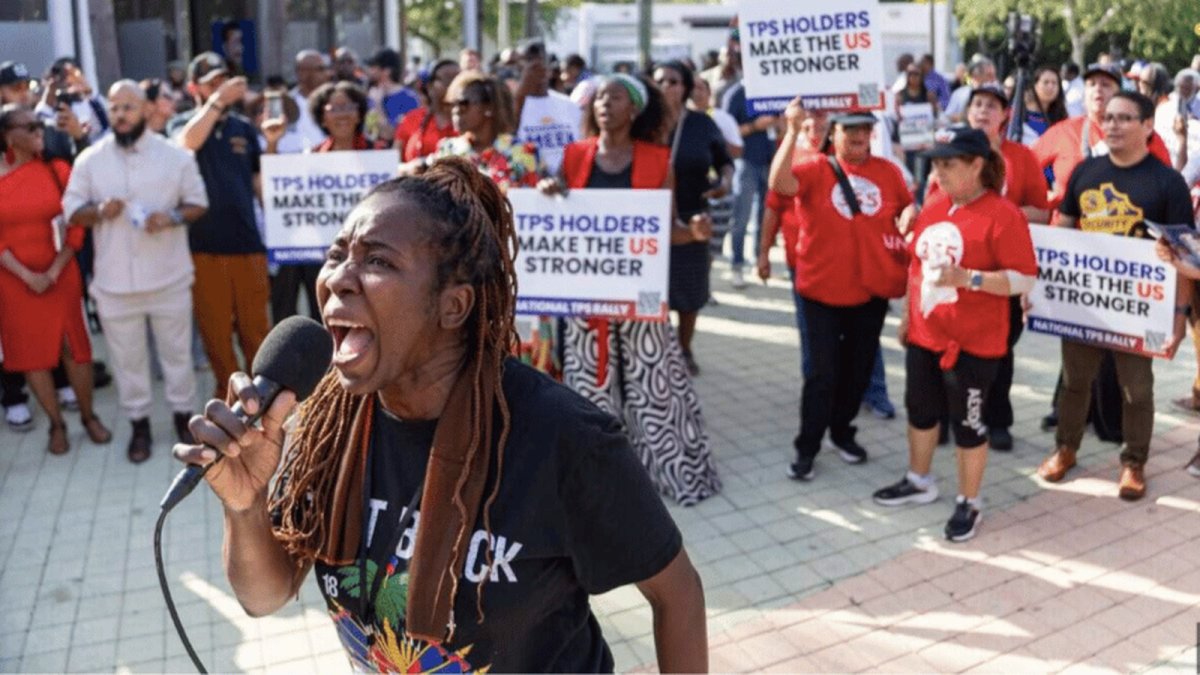
What Just Happened: The End of TPS
Temporary Protected Status for an estimated 300,000 to 350,000 Haitian nationals expired on July 27, 2026, after a 6-3 US Supreme Court ruling on June 25 cleared the main legal barriers to termination. A series of rolling court-ordered extensions had set deadlines of July 10, July 24 and finally July 27, leaving workers, employers and immigration attorneys in weeks of uncertainty before the protection lapsed.
ICE is now projected to move to a two-flights-per-week schedule for removals. Logistical and humanitarian constraints will slow but not stop the process, with Port-au-Prince airport largely closed to deportation flights due to gang activity, forcing operations through Cap-Haïtien in the north. The Senate has yet to vote on a House-passed bipartisan bill, approved 224-204 in April, to extend Haitian TPS through 2029. A July 22 attempt to advance it was blocked by Sen. Eric Schmitt, and the White House has signalled a likely veto even if it passes.
Families Torn Between Two Countries
About 158,000 Haitian TPS holders live in Florida alone, according to the Haitian Times, placing the state's care sector under particular pressure at a time when nearly half of US nursing homes already report staffing shortages. Massachusetts is home to some 66,600 Haitian immigrants, including 22,600 TPS holders. Advocates there describe families giving up guardianship of their American-born children and contemplating international moves while hoping ICE does not knock on their doors.
In Springfield, Ohio, the Haitian community helped revive the city. Ohio Governor Mike DeWine called the deportation plans a mistake, noting that losing these workers would be a blow to the city and the state. ICE has begun sending call-in check letters to Haitians, and some who arrive receive ankle bracelets. Vilès Dorsainvil of the Haitian Support Center in Springfield described the fear in the community as huge and the sight of parents fitted with ankle bracelets as humiliating.
In communities across the United States, families who stepped in to revive local industries now confront wrenching decisions about their American-born children. Some weigh leaving youngsters with trusted guardians while parents return, while others consider uprooting the entire household or even exploring options further north. These quiet contingency plans unfold amid a constant undercurrent of anxiety, as households hope enforcement actions pass them by.
The human cost deepens when parents who have built lives without criminal records find themselves fitted with monitoring devices. Advocates highlight how this shifts the matter beyond paperwork into questions of workforce stability, access to healthcare and secure housing for entire households. Pastor Dieufort Fleurissaint of the True Alliance Centre in Boston notes the strain now touches family bonds and community support systems in lasting ways.
The Contradiction Washington Can't Explain
The State Department maintains its highest-level Level 4 Do Not Travel advisory for Haiti, citing crime, kidnapping, terrorism and limited medical care. This stands in direct contradiction to the administration's position that conditions no longer warrant TPS. US Congressman Maxwell Frost said that if the Trump administration truly believes Haiti is too dangerous for Americans, it should also recognise that it is too dangerous to strip Haitians of their protected status.
Ten House Republicans crossed party lines to pass the TPS extension bill in April. Rep. Gimenez, whose South Florida district contains a large Haitian community, called mass deportation a huge mistake. Rep. Lawler warned that abruptly ending work permits would trigger a crisis in hospitals, nursing homes and disability-care settings. Human Rights First policy director Savi Arvey described escalating deportation flights to a country engulfed in violence and instability as an abomination.
What Haiti Is Being Asked to Absorb
Haiti first received TPS designation in 2010 after a 7.0 magnitude earthquake. The assassination of its last elected president in 2021 plunged the country into a violent crisis. Gangs have seized up to 90 per cent of Port-au-Prince, according to the United Nations, displacing some 1.5 million people nationally. The economy is in tatters and food insecurity is widespread.
Sending deportees back to a country where 26 gangs control 90 per cent of the capital and 1.5 million people are already internally displaced does not stabilise Haiti. It deepens the emergency the whole region eventually has to manage. The logistics of flight capacity, legal backlogs and individual case reviews mean this will not happen overnight, but the direction is set.
Many of those facing return bring valuable skills honed abroad, including in pharmacy, nursing, teaching and construction, after leaving when conditions at home grew impossible. Their arrival coincides with an economy already under severe pressure, where food remains scarce and hospitals and schools struggle to meet existing needs. The Inter-American Dialogue has warned that the added influx, combined with a decline in remittances, risks further economic contraction and higher rates of unemployment and informal work through 2026.
Remittances: The Billions at Stake
Haitians abroad sent over US$4 billion in remittances in 2024, more than one-fifth of Haiti's GDP. These funds support essentials such as food, healthcare, education and housing, with roughly 75 per cent covering basic needs. The Inter-American Dialogue has warned that Haiti will be among the countries most affected in 2026 by a decline in migration and remittances, accompanied by an increase in deportations, affecting economic growth and increasing unemployment and informality.
DHS has promoted voluntary departure with a US$2,600 payment and a free flight home, framing the programme as a de facto amnesty that Congress never intended. A DHS spokesperson stated that Temporary Protected Status is exactly that – temporary – and that for too long it has functioned as a de facto amnesty programme despite Congress never intending it to be permanent.
Will Caricom Step Up?
For Caribbean audiences this is not an abstract US immigration dispute. Haiti's neighbours – Jamaica, Trinidad, the Dominican Republic and the wider CARICOM family – already absorb the secondary weight of Haitian instability through displacement, humanitarian pressure and security spillover. Before the region gets too comfortable condemning Washington, it is worth asking how many Haitians Jamaica, Trinidad or any other CARICOM country has given similar protected or refugee status. To the nearest round number, the answer is zero.
If the Caribbean is genuinely worried about Haitians being sent back into danger, the region has an obvious lever it has not pulled: offering some of them a legal path to live and work elsewhere in CARICOM. Jamaica, facing its own declining birth rate, could use the skills these workers built in the US healthcare and agricultural sectors as much as America did. The US ending TPS while calling Haiti too dangerous to visit is a real contradiction, but the Caribbean's own silence on offering Haitians anywhere to go is its own. Criticising Washington means little if CARICOM will not do what it is asking America to keep doing.
For Trinidad and Tobago the issue strikes close to home, given the country's history of sheltering neighbours during earlier crises, from Grenada in the 1980s to more recent arrivals from Venezuela. Caribbean families with relatives holding work statuses in the United States feel the personal ripple effects, as remittances and household connections span borders. This shared experience turns the policy shift into a matter that resonates through extended family networks across the region.
CARICOM has already played a role in diplomatic efforts following the 2021 assassination, yet critics point out that public statements often focus on Washington without outlining concrete regional arrangements for receiving Haitians. The practical truth remains that Haiti's longer-term stability affects security and humanitarian conditions throughout the Caribbean, not solely as an external immigration concern.
By Sharon Sahatoo, Staff WriterThis article was produced with AI-assisted research and editorial support. Reporting is based on sources cited in the article.
What's Your Reaction?
 Like
0
Like
0
 Dislike
0
Dislike
0
 Love
0
Love
0
 Funny
0
Funny
0
 Wow
0
Wow
0
 Sad
0
Sad
0
 Angry
0
Angry
0

Caribbean Correspondent at Global1.News. Based in Port of Spain, Trinidad, covering Caribbean politics, economy, energy, climate, and culture. Amplifying the voices and stories of the Caribbean region.















Comments (0)