
Gov't Urged to Defer School Shooting Drills
Mental health groups PPA and PSCAP urge DepEd to defer Aug. 25 active shooter drills, citing trauma risks for students after the Zamboanga school shooting. DepEd has not yet changed the schedule.
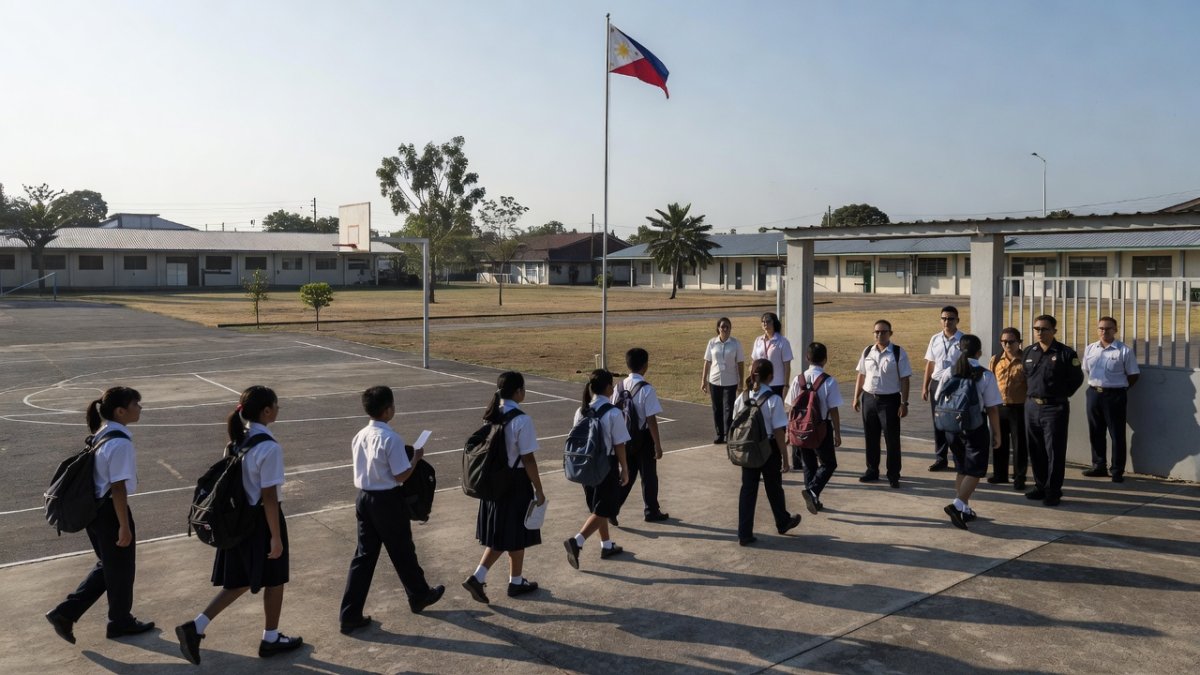
Gov't urged to defer school shooting drills
MANILA — Two leading mental health organizations are urging the Department of Education (DepEd) to postpone its scheduled nationwide active shooter simulation, warning that the hyper-realistic exercises could inflict lasting psychological harm on Filipino learners even as the country reels from a deadly school shooting in Zamboanga City.
The Philippine Psychiatric Association (PPA) and the Philippine Society for Child and Adolescent Psychiatry (PSCAP) issued a joint position statement this week calling on DepEd to defer the live shooter attack drill, citing a lack of evidence that such simulations prevent casualties and pointing to studies showing they may cause trauma in children and adolescents.
"The conduct of a simulation of a live shooter attack drill should be deferred," the organizations said in their statement, as carried by the Daily Tribune, Inquirer, and GMA News. They stressed that while preparedness is essential, the methods used must be trauma-informed and grounded in evidence, warning that the exercises expose learners to "hyper-realistic scenarios of violence."
The appeal comes just days before DepEd's scheduled simultaneous active attack safety drill, set for 9 a.m. on Tuesday, August 25, 2026, across all public and private elementary and secondary schools nationwide. The department issued a memorandum dated August 12, 2026, requiring the drill, and schools were earlier ordered to develop, review, or update their safety plans.
DepEd confirmed on Thursday, August 20, that the nationwide active-threat drill will proceed as planned to test how quickly schools can respond, evacuate, and reunite students with their families during an active human-induced threat, according to the Philippine News Agency and PTV.
A nation on edge after Zamboanga tragedy
The urgency behind the drill is painfully clear. On August 18, 2026, a shooting at Ateneo de Zamboanga University in Zamboanga City left at least two people dead, including the gunman, and nine others injured, according to initial accounts. Other early reports placed the death toll at four: two security guards and two high school students, with the shooter identified as a fourth-year high school student who reportedly brought firearms onto campus in his father's car, bypassing security checks, as reported by the Manila Times, GMA News, and the Inquirer. Philippine authorities have continued to refine the official figures as the investigation proceeds. The incident has shaken school communities across the archipelago, prompting DepEd and the Philippine National Police (PNP) to move swiftly to tighten school security, including new firearm safekeeping rules and vehicle inspections. For many Filipino parents, the image of a student — a classmate, a kapitbahay's anak — carrying weapons past security is a nightmare made real. But for mental health professionals, the response must not create a second crisis. In their joint statement, the organizations made clear they are not opposed to preparedness itself — only to methods that could retraumatize learners. The groups argue that children, especially younger ones, may not be able to distinguish between a simulation and a real threat, leading to anxiety, sleep disturbances, and a persistent sense of danger in what should be a safe space.Trauma-informed approach vs. rapid response
The tension between physical security and psychological safety is at the heart of the debate. DepEd Secretary Sonny Angara has stressed that school safety must include learners' mental and emotional well-being and accessible reporting mechanisms, alongside physical security measures, according to DepEd Club coverage of his statements. That acknowledgment, mental health advocates say, is precisely why the drill should be reconsidered. "Preparedness is essential, but it must not come at the cost of our children's mental health," the PPA and PSCAP statement read. They called on DepEd to engage with mental health professionals in designing age-appropriate, trauma-informed safety protocols that do not rely on hyper-realistic simulations of violence.What the evidence says
The call echoes a broader global debate. In the United States, where active shooter drills are common, research has shown that such exercises can increase anxiety and depression among students, particularly when they are unannounced or highly realistic. The PPA and PSCAP cited this evidence in their statement, arguing that the Philippines should learn from these findings rather than repeat them. The psychiatric groups are careful not to oppose safety preparation outright. Their position is more precise: drills that simulate an actual attacker in the building, with actors or loud gunfire effects, carry a different psychological weight than a standard lockdown practice. The distinction matters for schools trying to balance two equally urgent goals — protecting children from harm and protecting them from fear. For teachers, the drill presents a practical dilemma. Many educators in public schools, already stretched thin by large class sizes and limited resources, are now being asked to orchestrate a complex evacuation and reunification procedure. In rural areas, where schools may lack the infrastructure for such drills, the logistical challenges are even greater. A teacher in a remote barangay, for instance, must figure out how to reunite hundreds of students with their families when many parents are working in the fields or overseas.Parents caught between fear and hope
For Filipino parents, the drill is a double-edged sword. On one hand, they want their children protected. On the other, they worry about the psychological toll. In online forums and community groups, parents have shared the same anxious refrain: they want schools to be safe, but they also want their children to feel safe. The fear is palpable: after Zamboanga, no parent wants to send their child to school without some assurance of protection, but neither do they want their child to come home with nightmares. The timing of the drill — just one week after the Zamboanga shooting — adds to the sensitivity. Mental health experts argue that students are still processing the trauma of the event, and a live simulation could reopen wounds. They suggest that schools instead focus on non-simulated preparedness, such as lockdown drills that do not involve actors portraying shooters, and on strengthening reporting mechanisms so that students and teachers can flag concerns before they escalate.Mental health support in schools
The PPA and PSCAP also highlighted the importance of accessible mental health support in schools. They urged DepEd to ensure that guidance counselors and mental health professionals are available to students before, during, and after any safety exercise, and that parents are informed and involved in the process. For many public schools, that is a tall order. Guidance counselors are scarce in Philippine public education, where the ratio of counselors to students remains far below recommended levels and many schools in far-flung barangays rely on a single counselor — if they have one at all. Mental health advocates say the drill conversation is an opportunity to strengthen this backbone of support, not just rehearse an emergency.What happens next
As of this writing, DepEd has not announced any change to the August 25 schedule. The department's confirmation on Thursday suggests the drill will proceed, but the mounting pressure from mental health organizations — and the public discourse it has generated — may prompt a reconsideration. The joint position statement has been widely covered by major news outlets, including the Manila Bulletin, Daily Tribune, Inquirer, and GMA News, signaling that this is not a fringe concern but a mainstream call from the country's leading psychiatric bodies. The National Safe Schools Summit and Safety Drill, launched at Manila Science High School on July 15, 2026, with law enforcement simulating an active shooter response, was meant to be a model for the nationwide effort. But that event, held before the Zamboanga tragedy, may now be seen as a precursor to a more sensitive conversation about how far simulations should go. For now, Filipino school communities are bracing for Tuesday. Students will walk into classrooms knowing that at 9 a.m., alarms may sound, and they will be asked to hide, evacuate, and reunite with their families. Teachers will try to keep them calm. Parents will wait by their phones. And mental health professionals will watch closely, hoping that the lessons of the past week — and the evidence from around the world — will lead to a more thoughtful approach. The core question, as the PPA and PSCAP frame it, is not whether to prepare, but how. In a country where bayanihan — the spirit of communal unity — is a cherished value, the answer may lie in a collective approach that prioritizes both physical safety and emotional well-being. As Secretary Angara has noted, a safe school is one where children are protected from harm, but also one where they feel secure enough to learn, play, and grow. The decision now rests with DepEd. But the voices of psychiatrists, child advocates, and concerned parents are growing louder, urging a pause — not out of complacency, but out of care for the very children the drill is meant to protect. This article was produced with AI-assisted research and editorial support. Sources: Philippine Star, Philippine Daily Inquirer, Philippine News Agency, Manila Bulletin, Daily Tribune. By Bella Reyes, Staff WriterWhat's Your Reaction?
 Like
0
Like
0
 Dislike
0
Dislike
0
 Love
0
Love
0
 Funny
0
Funny
0
 Wow
0
Wow
0
 Sad
0
Sad
0
 Angry
0
Angry
0

Isabella "Bella" Reyes
Philippines/Southeast Asia Correspondent at Global1.News. Manila-based journalist covering Philippine politics, environment, maritime security, and social issues. Passionate about marine conservation and the communities protecting the Philippines' natural heritage.














Comments (0)