
Filipinos Adopt Wait-and-See Stance on VP Sara Trial
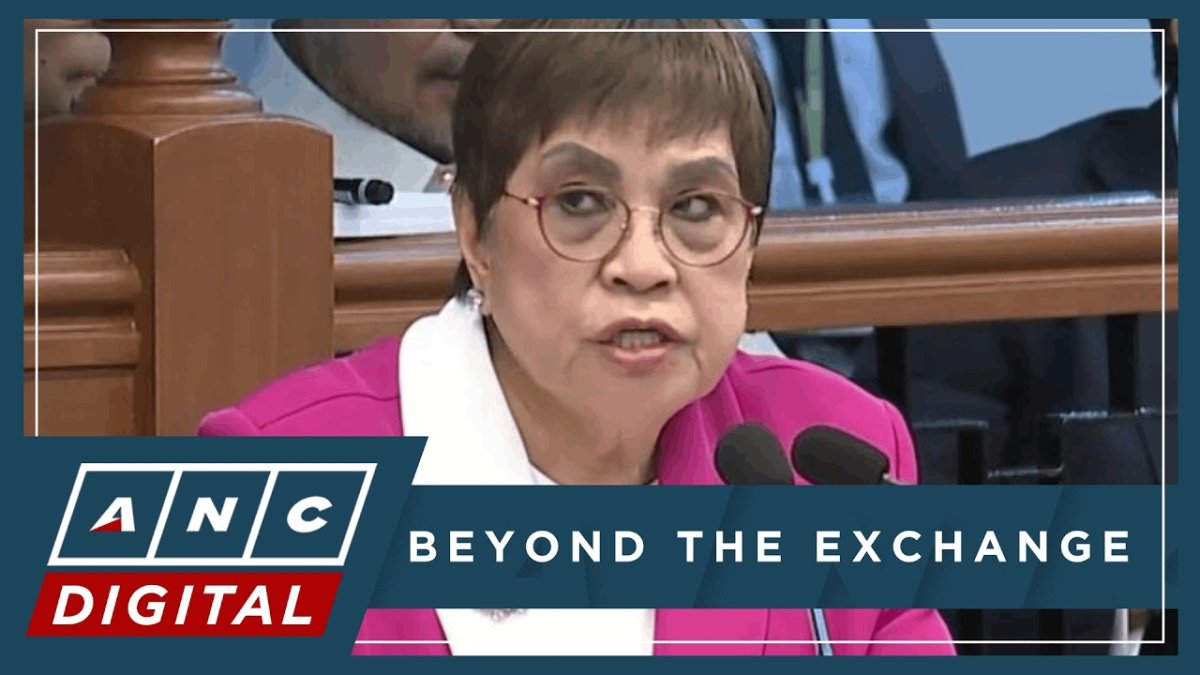
In a recent ANC 24/7 report from "Beyond the Exchange" (Episode 89), veteran anchor Rico Hizon sat down with OCTA Research founder Ranjit Rye and WR Advisory Group President and CEO Robin Garcia to dissect the nation's mood as the impeachment trial of Vice President Sara Duterte enters its third week.
In a recent ANC 24/7 report from "Beyond the Exchange" (Episode 89), veteran anchor Rico Hizon sat down with OCTA Research founder Ranjit Rye and WR Advisory Group President and CEO Robin Garcia to dissect the nation's mood as the impeachment trial of Vice President Sara Duterte continues its marathon proceedings. The consensus from the data and the analysts is striking: while the trial dominates headlines and government hallways, the Filipino public is largely adopting a "wait-and-see" posture, withholding final judgment until the evidence speaks for itself. From the jeepney lines of Quezon City to the sari-sari stores of Davao, the prevailing sentiment is not apathy, but a cautious, deliberate preference for due process over political theater.
Filipinos Adopt Wait-and-See Stance on VP Sara Trial
Manila, Philippines – this week — The latest OCTA Research "Tugon ng Masa" nationwide survey, conducted from July 4 to 11, 2026, reveals that a solid majority of Filipinos are refusing to rush to a verdict on Vice President Sara Duterte's impeachment trial. According to the poll, which surveyed 1,200 face-to-face respondents with a margin of error of ±3%, 55% of Filipinos prefer to see the evidence presented at trial before deciding on a verdict. This "evidence-first" position dwarfs the 21% who favor acquittal and the 17% who favor conviction, with 7% remaining undecided. As the Senate impeachment court resumed sessions on Monday after a two-day suspension due to Habagat monsoon flooding, the data suggests that the public is giving the proceedings a chance to prove their legitimacy.

The Story: A Nation Withholds Judgment
OCTA Research founder Ranjit Rye, speaking on "Beyond the Exchange," emphasized that the numbers point to a public that is engaged but not yet convinced. "There is currently no significant public mandate for either conviction or acquittal," Rye said, interpreting the survey results. The 55% who want to see evidence first, combined with the 7% undecided, suggests that "nearly two in three Filipinos have not yet settled on a verdict this early in the proceedings." Rye argued that this is not a sign of confusion or disengagement, but rather a reflection of a deeper cultural trait. "Rather than reflecting confusion or disengagement, this is consistent with a broader Filipino disposition toward due process — a preference to let the trial process run its course, and to treat conviction or acquittal as something that must be earned through evidence rather than assumed at the outset," he explained.
The trial itself resumed on Monday, marking Day 17 of the proceedings. Former Office of the Vice President (OVP) special disbursing officer Gina Acosta, a hostile witness fielded by the House prosecution panel, returned to the witness stand for continued direct examination under Article I. Acosta previously testified on August 17 that she released P500 million in confidential funds in 2022 and 2023 to Colonel Raymund Lachica, former chief of the Vice Presidential Security and Protection Group (VPSPG), on the orders of Duterte. This testimony is central to the first article of impeachment, which centers on the alleged misuse of confidential funds — specifically P500 million released to the OVP and P112.5 million released to the Department of Education (DepEd), where Duterte served as secretary from 2022 to 2024.
Philippine Context: A Historic Double Impeachment
The stakes of this trial are unprecedented in Philippine political history. Vice President Sara Duterte is the first public official to be impeached twice by the House of Representatives. The House formally impeached her on May 11, 2026, on charges of betrayal of public trust, culpable violation of the Constitution, graft and corruption, and bribery. The Senate, sitting as an impeachment court with Senate President Francis Escudero presiding, began the trial on July 6, 2026. To remove her from office, at least 16 of the 24 sitting senators must vote to convict on any single impeachable offense.
The public's cautious approach is rooted in a broader Filipino preference for due process, a value that resonates deeply in a nation that has seen its share of political upheavals. The OCTA survey notes that the evidence-first position leads in all regions: NCR (56%), Balance Luzon (58%), Visayas (53%), and Mindanao (48%). However, the regional breakdown reveals a fascinating political landscape. Mindanao, the Duterte family's political stronghold, records the highest preference for acquittal at 41%, while Balance Luzon posts the highest support for conviction at 22%. This geographic split mirrors the political fault lines that have defined Philippine politics since the 2022 elections, where the Duterte and Marcos alliances have both cooperated and clashed.
Impact on Filipinos: Trust, Class, and the Cost of Attention
For ordinary Filipinos, this trial is not just a political spectacle; it is a test of institutional credibility. The survey data shows that the evidence-first position leads among all socioeconomic classes, but with notable nuances. Among Class ABC, 64% prefer to see evidence first, compared to 54% in Class D and 50% in Class E. Class E, the poorest segment of society, is more likely to favor acquittal at 30%. This suggests that economic vulnerability may correlate with a greater inclination toward leniency, possibly reflecting a perception that the Vice President has been a champion of the poor or, conversely, a fear of political instability disrupting aid and governance.
Age also plays a significant role in shaping public opinion. The evidence-first position leads in every age cohort, from 49% among those aged 55-64 to 64% among those aged 35-44. However, younger Filipinos aged 18-24 record the highest support for conviction at 26%, while acquittal preference is highest among those aged 45-54 at 28%. Respondents aged 75 and older are the most likely to be undecided at 28%. These generational differences reflect varying levels of exposure to political narratives, historical memory, and trust in institutions.
The cost of this trial extends beyond the Senate halls. Robin Garcia of WR Advisory Group observed on ANC that fewer Filipinos are engaging with the trial because they are tired. "There is a fatigue setting in," Garcia said, noting that the constant barrage of political news, combined with economic pressures like rising prices at the palengke and the daily struggle for transportation, has led many to tune out. This fatigue is a double-edged sword: it protects the public from being swayed by political propaganda, but it also risks allowing the trial to proceed without the scrutiny it deserves.
Reactions and Responses: Analysts Weigh In
The OCTA survey is the latest in a series of polls tracking public sentiment on the impeachment. An earlier OCTA survey in June found that 81% of Filipinos were skeptical or withholding judgment on the trial's fairness. An April survey found that 69% backed holding the trial at all. A July 24 survey found that 71% want law and evidence, not politics, to guide the Senate vote. An SWS survey similarly found that 7 in 10 Filipinos believe Duterte should answer the impeachment charges. The consistency of these numbers suggests a public that is deeply engaged with the process but deeply skeptical of the actors involved.
On social media, the mood is polarized but not hysterical. In the barangay halls and carinderias, the conversation is more measured. "We just want to know the truth," said a vendor in Quiapo who preferred to remain anonymous. "We don't want another EDSA, we don't want chaos. We just want the senators to do their job." This sentiment captures the guarded hope that the evidence will speak for itself, a hope that the OCTA data suggests is widespread.
What to Watch For: The Road Ahead
As the trial resumes, the immediate focus is on the continued cross-examination of Gina Acosta. Her testimony regarding the release of P500 million in confidential funds to Colonel Raymund Lachica is a cornerstone of the prosecution's case. The defense is expected to challenge her credibility and the chain of custody of the funds. The Senate impeachment court must also navigate a schedule that has already been disrupted by two consecutive days of suspension due to Habagat flooding, a reminder that even the highest court in the land is not immune to the forces of nature.
The 16-vote threshold for conviction remains a steep hill for the prosecution to climb. With 24 sitting senators, the prosecution needs a supermajority that has rarely been achieved in Philippine political history. The defense, meanwhile, is banking on the public's "wait-and-see" attitude to translate into acquittal if the evidence fails to meet the high bar of proof required. The coming weeks will be critical, as both sides present their cases and the nation watches, with bated breath but open minds.
For Filipino readers, the takeaway is clear: this trial is not just about one woman's political future. It is about whether the institutions of the republic can deliver justice in a manner that the public can trust. The OCTA data suggests that Filipinos are willing to give the process a chance, but that patience is not infinite. If the trial is perceived as a political vendetta rather than a search for truth, the credibility of the Senate, the House, and the entire democratic system could suffer lasting damage. Conversely, if the evidence is presented clearly and the verdict is seen as just, the trial could strengthen the public's faith in the rule of law. As the sari-sari store owners and jeepney drivers of the nation watch, the senators carry a heavy burden: to prove that in the Philippines, justice is not just a word, but a promise that can be kept.
By Bella Reyes, Staff Writer
This article was produced with AI-assisted research and editorial support. Reporting is based on sources cited in the article.
What's Your Reaction?
 Like
0
Like
0
 Dislike
0
Dislike
0
 Love
0
Love
0
 Funny
0
Funny
0
 Wow
0
Wow
0
 Sad
0
Sad
0
 Angry
0
Angry
0

Philippines/Southeast Asia Correspondent at Global1.News. Manila-based journalist covering Philippine politics, environment, maritime security, and social issues. Passionate about marine conservation and the communities protecting the Philippines' natural heritage.














Comments (0)