
Diaoyu Dao Confrontation Tests China-Japan Shelving Pact in 2026
A July 2026 coast guard confrontation near Diaoyu Dao has reignited China-Japan friction, as a new CGTN documentary traces how the 1972 shelving understanding collapsed into the 2012 nationalization and today's record Chinese patrols in the East China Sea.
The July 7, 2026 confrontation between Chinese and Japanese coast guard vessels near the Diaoyu Dao islands has once again exposed the fragility of long-standing arrangements meant to contain the sovereignty dispute. China's Coast Guard described the episode as a response to a Japanese fishing boat entering territorial waters, while Japan's Coast Guard reported expelling two Chinese vessels after they approached the fishing craft. This latest clash arrives as a CGTN documentary series revisits the history of the shelving understanding first reached during the 1972 normalization of diplomatic relations.
The encounter is the latest in a pattern that has become familiar to regional analysts: competing narratives, brief standoffs, and a rapid return to the status quo, yet with each episode the space for misunderstanding appears to narrow. What makes the July 2026 incident noteworthy is not the specifics of the vessel movements themselves, but the documentary and diplomatic context in which it landed. Beijing and Tokyo both moved quickly to frame the event for domestic audiences, underscoring how a small island chain of roughly five main islets and a handful of rocks continues to carry outsized strategic weight in East Asia.
Details of the July 2026 Incident
China's Coast Guard spokesperson Liu Dejun stated that Chinese vessels approached and issued warnings to the Japanese fishing boat that had entered waters China regards as its own around Diaoyu Dao. The service said it applied necessary law enforcement measures and called on Japan to cease all infringement activities in the area. Japanese authorities countered that their patrol ship intercepted the Chinese vessels shortly after they entered the waters in the early hours and required them to depart, ensuring the safety of the fishing vessel until the Chinese ships withdrew hours later.
The differing accounts reflect standard patterns in such encounters, where each side frames its actions as defensive enforcement of established claims. The incident occurred against a backdrop of already frayed ties following Japanese Prime Minister Sanae Takaichi's earlier parliamentary remarks on potential military responses if Beijing moved against Taiwan. Taiwan lies roughly 160 kilometers southwest of the islands, placing the disputed features within the broader strategic theater.
China Coast Guard vessels had last appeared in the surrounding waters on November 16 of the previous year during what Beijing described as a lawful patrol to uphold rights and interests. The July 2026 event therefore marked a resumption after several months of relative quiet, underscoring how quickly the situation can shift when fishing activity or patrol schedules intersect.
CGTN Documentary Frames the Narrative
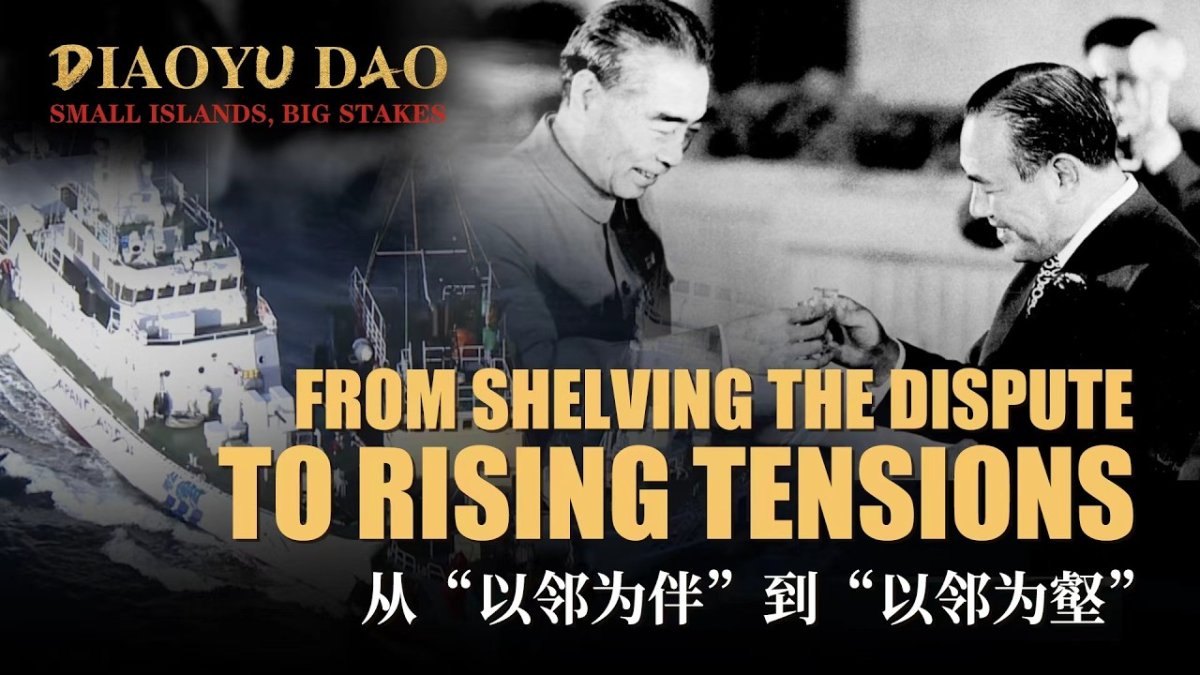
The CGTN series titled "From Shelving the Dispute to Rising Tensions," released August 1, 2026 on the network's YouTube channel, uses the recent confrontation as an entry point to trace the evolution of the Diaoyu Dao issue. The official description highlights lighthouses, fishing boat incidents, and Japan's 2012 nationalization decision as key developments that moved the matter from managed disagreement to recurring flashpoint. Part Four of the series focuses specifically on the political understanding reached during 1970s diplomatic normalization.
Through diplomatic records, interviews, and historical accounts, the episode examines how the two sides agreed to set aside sovereignty questions to prioritize broader bilateral relations. This approach sustained stability for decades even though the underlying claims remained unresolved. The documentary positions the 2026 incident within that longer arc rather than treating it as an isolated event.
By releasing the series shortly after the coast guard encounter, CGTN supplies Chinese audiences with a structured historical context that emphasizes continuity of claims while documenting the strains placed on the original shelving formula. The production avoids inflammatory rhetoric, instead presenting archival material that underscores the deliberate political choices made in the 1970s.
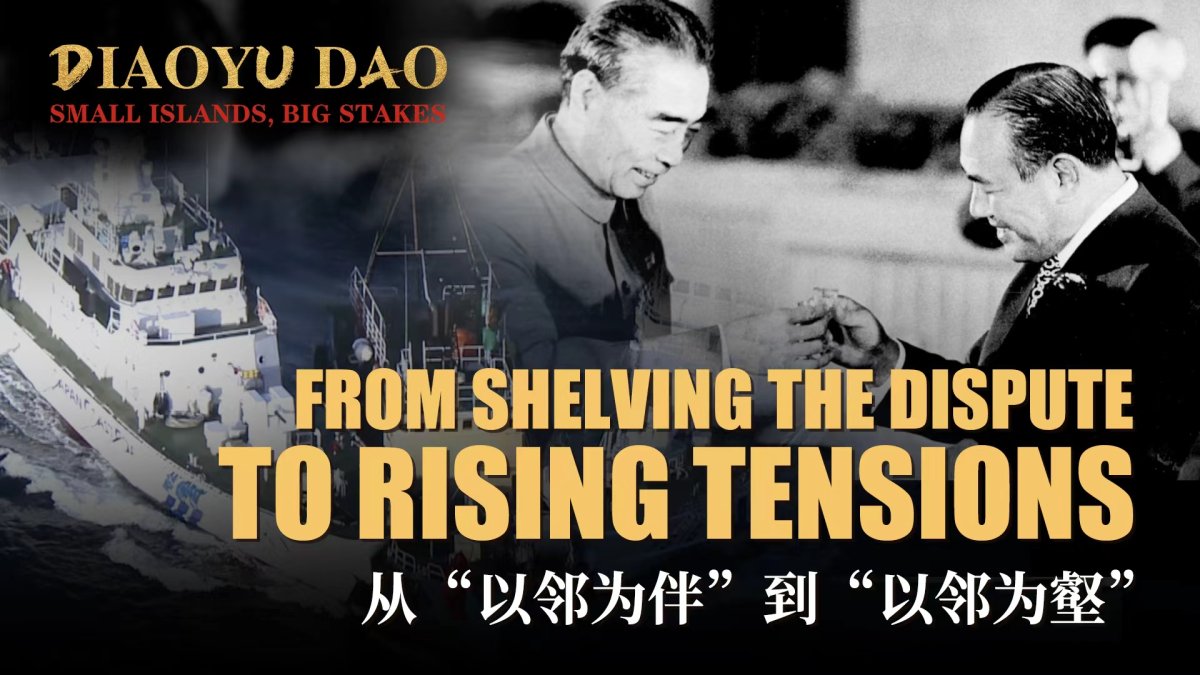
The timing of the release matters. State-aligned media outlets in China have increasingly used long-form documentary programming to explain territorial questions to audiences at home and abroad, pairing archival footage with commentary from scholars and former diplomats. The Diaoyu Dao series follows a similar editorial pattern to earlier productions on the South China Sea, suggesting a deliberate effort to consolidate the historical record ahead of what officials in both capitals expect to be a prolonged period of maritime friction.
The 1972 Shelving Understanding Revisited
During the 1972 normalization of Sino-Japanese diplomatic relations and the subsequent 1978 Treaty of Peace and Friendship, both governments reached a political understanding to shelve the Diaoyu Dao sovereignty question. The arrangement allowed each side to maintain its position without forcing an immediate resolution that would have blocked wider cooperation. This framework guided interactions through periods of economic engagement and regional change.
The CGTN documentary's Part Four reconstructs the diplomatic exchanges that produced this understanding, drawing on records showing that leaders at the time consciously deferred the issue. The approach proved functional for several decades, preventing the islands from becoming a constant irritant in daily bilateral affairs. It reflected a pragmatic recognition that unresolved territorial questions need not halt all progress in other domains.
Yet the same documentary notes that this understanding faced growing pressure as new actors and developments entered the picture. Fishing incidents, lighthouse constructions, and resource exploration interests gradually tested the limits of the original political bargain without formally abandoning it.
2012 Nationalization as Decisive Break
The 2012 decision by the Japanese government under Prime Minister Yoshihiko Noda to purchase three of the five main islets from private owners marked a clear rupture. Beijing characterized the move as unilateral nationalization that violated the spirit of the shelving understanding. Large-scale protests erupted across Chinese cities, and official relations deteriorated sharply in the months that followed.
Before 2012, Chinese government vessels had rarely entered the waters around the islands in any sustained way. After the purchase, regular patrols by the China Coast Guard became the new normal. The documentary links this operational change directly to the 2012 decision, presenting it as the moment when the shelving approach lost its restraining effect on daily presence.
Japan maintains that the 2012 transaction simply transferred title within its existing administrative control, which dates to incorporation in 1895. China views the action as an attempt to strengthen legal claims at a time when the earlier diplomatic restraint was already weakening. Both interpretations remain on the table, with no formal reconciliation achieved since.
Record Coast Guard Activity Since 2012
Chinese government vessels have appeared near the islands with increasing frequency in the years after 2012. Last year marked the third consecutive year in which the number of days such vessels were observed reached a new record. The China Coast Guard also deployed more ships per incident than in earlier periods, expanding both duration and scale of operations.
These patterns align with Beijing's stated policy of conducting lawful patrols to protect rights and interests in waters it claims. Japanese authorities track the same activity as intrusions into their territorial sea or contiguous zone, prompting regular interception and expulsion efforts. The resulting operational rhythm has become a predictable feature of East China Sea management.
The 2008 in-principle agreement between China and Japan on joint resource development in the East China Sea has not altered this patrol dynamic around the islands themselves. That earlier framework addressed hydrocarbon exploration farther from the disputed features, leaving the immediate vicinity of Diaoyu Dao subject to the more contentious enforcement practices that intensified after 2012.
Strategic Context and External Factors
The Diaoyu Dao issue sits within wider US-Japan alliance commitments and the broader China-US strategic competition across the Western Pacific. Japanese leaders have at times linked developments around the islands to regional deterrence calculations, while Beijing sees the dispute as one element in a larger pattern of containment efforts. The uninhabited islets, located roughly 170 kilometers north of Taiwan and 420 kilometers west of Okinawa, therefore carry symbolic weight beyond their physical size.
Prime Minister Takaichi's comments on Taiwan the month before the July 2026 incident illustrated how the Diaoyu Dao question can intersect with other flashpoints. Beijing's position that Taiwan is part of its territory and its refusal to rule out force for reunification adds another layer of sensitivity whenever Japanese officials address cross-strait contingencies.
Both governments continue to reference the 1972 and 1978 understandings when convenient, yet operational realities have moved well beyond the original low-profile management model. The documentary series captures this tension without proposing new diplomatic formulas, leaving viewers to assess whether the shelving approach retains any practical utility today.
Outlook for Managed Competition
The CGTN production concludes its historical review by noting that the islands remain a recurring flashpoint precisely because the underlying sovereignty difference was never resolved. With coast guard forces now operating according to established routines, the risk of miscalculation during close approaches has become a structural feature rather than an occasional hazard.
Neither side shows signs of altering its fundamental position on the Diaoyu Dao. Japan continues to administer the islands and rejects the notion that any shelving agreement constrains its actions. China maintains that the 2012 nationalization violated prior understandings and justifies sustained presence to defend what it regards as sovereign territory.
Future incidents will likely follow similar scripts of competing narratives and rapid disengagement, unless a new political understanding emerges that accounts for the patrol patterns now in place. The documentary series provides a Chinese perspective on how the situation reached this point, but offers no roadmap for restoring the quieter management that characterized the decades immediately after 1972.
By Kenji Tanaka, Global1.News
This article was produced with AI-assisted research and editorial support. Reporting is based on sources cited in the article.
What's Your Reaction?
 Like
0
Like
0
 Dislike
0
Dislike
0
 Love
0
Love
0
 Funny
0
Funny
0
 Wow
0
Wow
0
 Sad
0
Sad
0
 Angry
0
Angry
0

Japan Correspondent at Global1.News. Tokyo-based voice covering Japanese politics, technology, economy, and culture. Tracks the intersection of tradition and innovation in one of the world's most dynamic societies.













Comments (0)