
Day 18: Hostile Witness Exposes P150K Gap in VP Sara Duterte Trial
In a recent ANC 24/7 report, the Senate impeachment court in Pasay City wrapped up its 18th day of hearings in the trial of Vice President Sara Duterte, with a key prosecution witness delivering testimony that painted a stark picture of how confidential funds were allegedly handled under her watch.
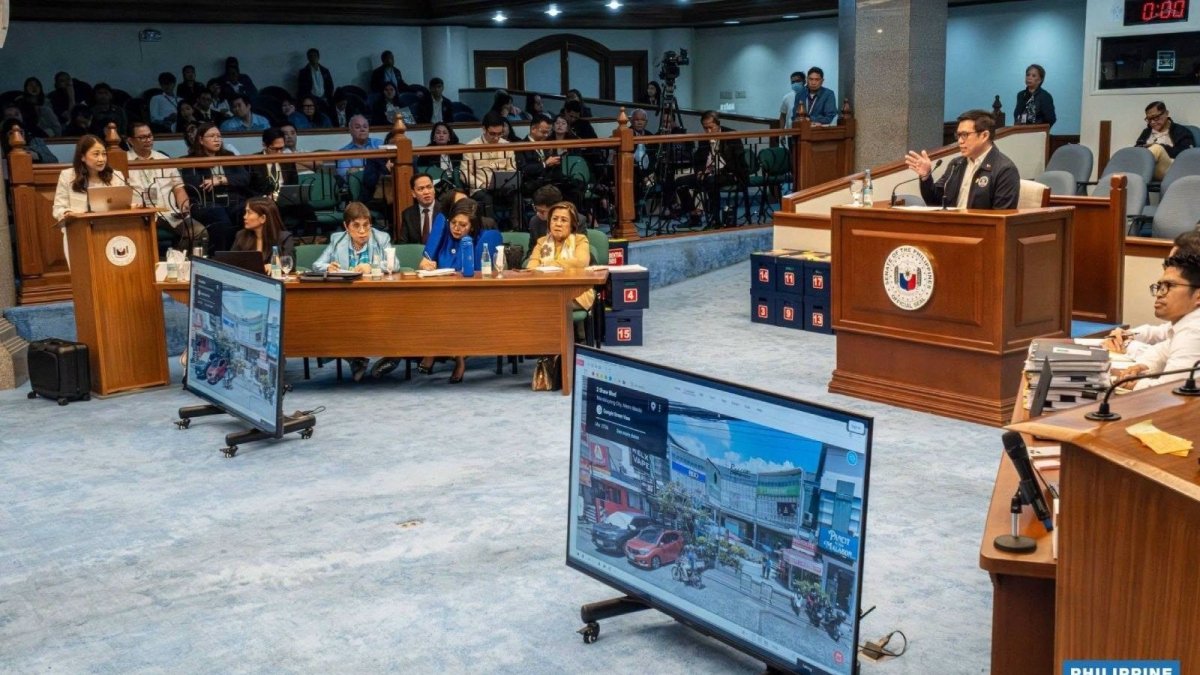
In a recent ANC 24/7 report, the Senate impeachment court in Pasay City wrapped up its 18th day of hearings in the trial of Vice President Sara Duterte, with a key prosecution witness delivering testimony that painted a stark picture of how confidential funds were allegedly handled under her watch. The court, presided over by Senate President Francis "Chiz" Escudero, declared OVP Assistant Secretary and Assistant Chief of Staff Lemuel Ortonio a hostile witness - the second in the trial - after he confirmed details about cash encashments, sealed intelligence reports, and a P150,000 liquidation gap he personally covered from his own pocket. The testimony came on the ninth trial day devoted to Article I, which accuses Duterte of misusing P612.5 million in confidential funds - P500 million under the Office of the Vice President (OVP) and P112.5 million under the Department of Education (DepEd) when she was secretary.
Day 18: Hostile Witness Exposes P150K Gap in VP Sara Duterte Trial
Manila, Philippines - Ortonio's appearance as the prosecution's sixth witness marked a significant escalation in the trial, as his coterminous appointment means he would lose his job if Duterte is removed from office. Escudero explained the court's decision to declare him hostile "based on his adverse interest vis a vis the respondent and the prosecution," allowing the prosecution to ask leading questions - though not misleading ones. Private prosecutor Atty. Mae Divinagracia conducted the direct examination, and what emerged was a narrative of a confidential fund system that operated with almost no paper trail, relying on cash handouts and personal reimbursements.

Ortonio confirms cash runs with Acosta and the 11-day spending spree
Ortonio confirmed he accompanied former OVP special disbursing officer Gina Acosta when she encashed checks for confidential funds, saying "Gina Acosta requested me to accompany her" and that he was with her on all four occasions. The aide allegedly helped transport the cash in traveling bags - a detail that directly ties him to the physical movement of the funds that the prosecution alleges were misused. This corroborates Acosta's earlier testimony, making Ortonio the second witness to place himself at the scene of the cash encashments.
More critically, Ortonio confirmed the OVP spent P125 million in just 11 days, from December 20 to 31, 2022. He initially avoided directly confirming the funds were disbursed within that tight window, referring instead to the liquidation for a cash advance. But under persistent questioning, he acknowledged the timeline. The prosecution has argued that this rapid-fire spending pattern - nearly P11.4 million per day - is inconsistent with legitimate confidential operations, which typically require careful planning and documentation.
Ortonio also admitted he submitted protective intelligence operations reports to the Commission on Audit (COA) in sealed envelopes WITHOUT reading them. "Unfortunately, I was not able to read the reports because these are sealed already... I submitted the documents only to the COA," he testified. Those intel reports were among the documents the OVP gave auditors to justify its 11-day spending of P125 million in December 2022. The admission raises serious questions about whether the OVP was submitting substantive documentation or merely sealed envelopes to satisfy audit requirements - a concern that resonates deeply in a country where COA findings have repeatedly exposed ghost projects and phantom expenditures across government agencies.
The P150,000 personal payout: A window into a broken system
Perhaps the most human detail of the day came when Ortonio revealed he personally covered a P150,000 liquidation gap from his own pocket in 2024 and was never reimbursed. COA had flagged a mismatch: the OVP's accomplishment report showed P125 million in confidential fund expenses, but documentary evidence of payments backing those expenses totaled P125,150,000 - a difference of P150,000. The OVP's supplemental reply stated that P50,000 in underpayment of reward and P100,000 underpurchase of supplies "were provided by Assistant Secretary Lemuel G. Ortonio out of his personal funds."
Asked "Were you able to recover over the P150,000?", Ortonio answered: "Unfortunately, I was not reimbursed anymore." Escudero pressed further: "Up to today?" Ortonio confirmed he was never reimbursed. This detail humanizes the trial in a way that statistics cannot - a mid-level official, tasked with drafting responses to COA, ended up paying out of pocket to make the numbers balance. For ordinary Filipinos who struggle with their own household budgets, the image of a government official covering a shortfall from personal funds - and never getting paid back - underscores the dysfunction at the heart of the OVP's confidential fund management.
Ortonio also testified that there was no paper trail for confidential fund spending: cash was handed directly to informants or agents, who bought their own medicine, food, and furniture such as chairs, and signed acknowledgment receipts. But when Escudero asked whether he had seen a single acknowledgment receipt, Ortonio said: "No, sir. At that time, I was not able to see any of the acknowledgment receipts." The absence of receipts - even acknowledgment receipts - for P125 million in spending is a staggering gap that the prosecution seized upon as evidence of a system designed to evade accountability.
Escudero's "bayarin" moment and the legal implications
One of the most telling exchanges came when Escudero pressed Ortonio on a letter the aide drafted and signed on Nov. 30, 2023, explaining that the OVP's 2022 confidential funds were not spent in just 11 days but that a cash advance was drawn on Dec. 20, 2022 to pay for "obligations already incurred" planned over October to December 2022. Escudero translated the phrase bluntly: "Obligations already incurred. Sa simpleng salita, bayarin" (in simple words, debts). The implication was clear - the OVP may have incurred financial obligations before the funds were legally released, a practice that violates government accounting rules.
Ortonio acknowledged that government accounting rules do not allow agencies to incur financial obligations without prior appropriations and that joint circular rules forbid using cash advances to reimburse past expenses. This admission is legally significant because it suggests the OVP may have operated outside established fiscal protocols. For a government that prides itself on transparency and accountability - and for a public that has seen countless COA reports flag similar practices - this testimony strikes at the heart of whether public funds were handled with the care the law demands.
The prosecution's framing was equally pointed. Divinagracia argued that Duterte's handprints "are on every document that mattered" - "Mula request hanggang liquidation, nasa mahahalagang dokumento ang kanyang awtoridad at pag-apruba" (from request to liquidation, her authority and approval are on the important documents). She alleged the confidential funds were intended for and answered to "no legitimate confidential public purpose," called the explanations a "sham," and said the failure to account "gives rise to the presumption of misappropriation." She also noted that 473 soldiers and police are guarding the Vice President, paid from other public funds, saying: "No Vice President in history has ever had this."
Defense pushes back, but questions linger
Defense counsel Atty. Kristine Ferrer pushed back, saying the prosecution's points "are all conclusions of fact and law," "mere speculations and conjectures, not being proven before this Honorable Court, and they are all theories, and with all due respect, soundbites." She said the defense will cross-examine the witness - a standard move, but one that signals the defense intends to challenge Ortonio's credibility and the prosecution's narrative.
Other Day 18 developments added further layers to the trial. House prosecutor Rep. Joel Chua questioned the OVP's handling of accomplishment reports bearing allegedly fictitious names, asking: "If AR names are fictitious, why keep them in vaults?" Bicol Saro Rep. Terry Ridon called on the Ombudsman to probe whether Duterte and OVP officials committed malversation. Lead prosecutor Gerville Luistro said she was "more inclined" not to call Col. Raymund Lachica as a witness, while Lachica himself said he never refused to testify and is ready to face the court. The court also reminded prosecutors not to use inflammatory terms, and Malacañang said the prosecution has already presented sufficient evidence.
The court is also expected to rule on public statements by lawyers from both sides discussing the merits of the trial, which are prohibited under impeachment rules. This is a critical procedural matter - if lawyers are allowed to try their cases in the media, the integrity of the trial itself could be compromised. For a nation watching closely, the court's ruling on this issue will signal whether the impeachment process will be conducted with the seriousness it demands.
What this means for Filipinos: Public money, public trust
For ordinary Filipinos, this trial is not just about one official - it is about whether public funds are being used for their intended purposes. The P612.5 million at stake is money that could have built classrooms, funded health programs, or supported farmers. Instead, the prosecution alleges it was spent in ways that defy explanation, with sealed envelopes, missing receipts, and personal reimbursements standing in for proper documentation.
The trial also raises broader questions about the confidential fund system itself. While confidential funds are a legitimate tool for intelligence and security operations, the lack of transparency in their use has long been a point of contention in Philippine governance. COA has repeatedly flagged issues with confidential funds across multiple agencies, and this trial could set a precedent for how such funds are audited and accounted for in the future.
As the trial moves forward, the Senate impeachment court - sitting as a tribunal in Pasay City - faces the weighty task of determining whether the evidence presented meets the constitutional threshold for removal. The prosecution has built a case around documentation, testimony, and the absence of a paper trail. The defense has countered with procedural objections and promises of cross-examination. But for the millions of Filipinos watching, the core question remains simple: Were public funds misused, and who is accountable?
What to Watch For
The coming trial days will test both camps. The defense is expected to cross-examine Ortonio, and the court has yet to rule on the propriety of public statements by lawyers on both sides discussing the merits of the case, which are prohibited under impeachment rules. Lead prosecutor Gerville Luistro has signaled she is "more inclined" not to call former security officer Col. Raymund Lachica, even as Lachica insists he is ready to testify. Separately, Bicol Saro Rep. Terry Ridon has asked the Ombudsman to investigate whether the Vice President and OVP officials committed malversation. With the court having rejected proposals to lower the 16-vote threshold required for conviction, the prosecution must persuade at least two-thirds of the senator-judges - and the absence of a paper trail may prove decisive.
After adjournment, Senate impeachment court spokesperson Atty. Reginald Tongol held a press briefing recapping what took place on Day 18, offering the public a clear summary of the day's proceedings. The trial continues, and with each witness, each document, and each admission, the picture becomes clearer - but the final verdict remains in the hands of the senators who will ultimately decide the Vice President's fate.
By Bella Reyes, Staff Writer
This article was produced with AI-assisted research and editorial support. Reporting is based on sources cited in the article.
What's Your Reaction?
 Like
0
Like
0
 Dislike
0
Dislike
0
 Love
0
Love
0
 Funny
0
Funny
0
 Wow
0
Wow
0
 Sad
0
Sad
0
 Angry
0
Angry
0

Philippines/Southeast Asia Correspondent at Global1.News. Manila-based journalist covering Philippine politics, environment, maritime security, and social issues. Passionate about marine conservation and the communities protecting the Philippines' natural heritage.














Comments (0)