
China Detains Myanmar Scholar U Min Zin in Kunming, Testing Fragile Regional Equilibria
The Circumstances of the Detention China’s Ministry of Foreign Affairs has confirmed the arrest of U Min Zin, a Myanmar national and scholar affiliated with the University of California, Berkeley. The detention occurred in early June in the southwestern city of Kunming, a key transport hub bordering Myanmar. According to reports, U Min Zin was taken into custody at the airport
The Circumstances of the Detention
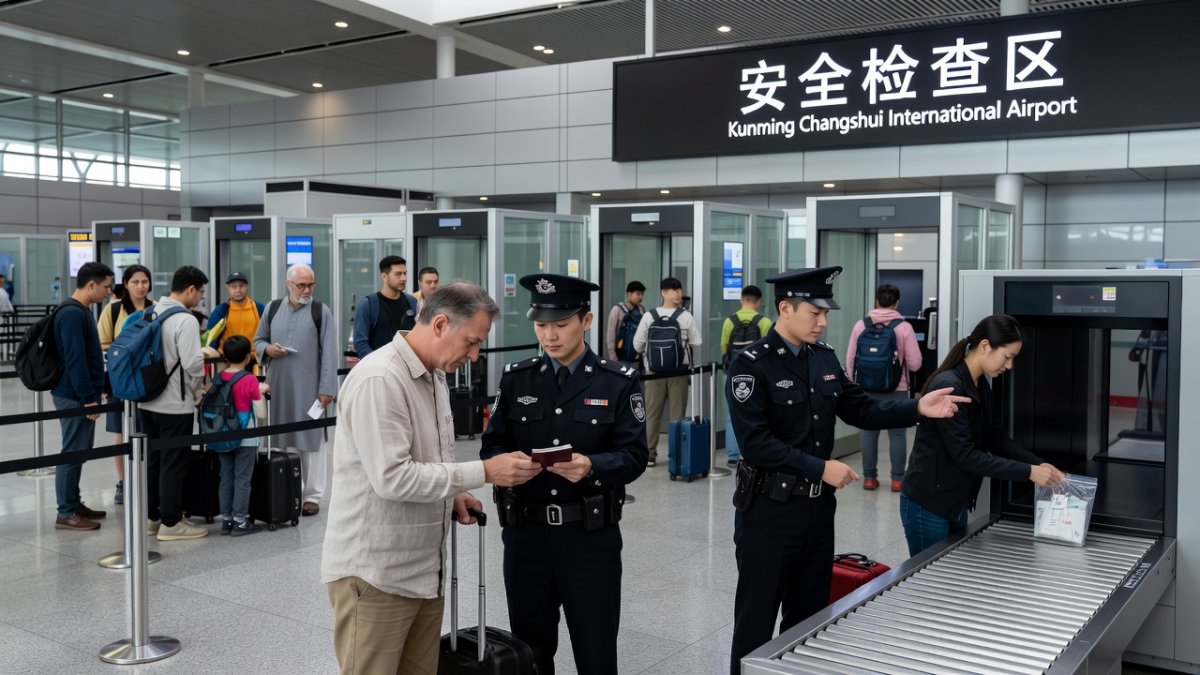
China’s Ministry of Foreign Affairs has confirmed the arrest of U Min Zin, a Myanmar national and scholar affiliated with the University of California, Berkeley. The detention occurred in early June in the southwestern city of Kunming, a key transport hub bordering Myanmar. According to reports, U Min Zin was taken into custody at the airport while attending a meeting on 3 June. The Ministry cited suspicions of espionage and threats to national security, though further operational details remain undisclosed. This action is notable given China’s typical restraint in applying national security charges to foreign academics.
Background and Academic Profile of U Min Zin
U Min Zin is a Myanmar national who has long been engaged in research on Myanmar’s political economy and external relations. He serves as executive director of the Myanmar Institute for Strategic and Policy Studies, a Thailand-based think tank that examines Chinese investment, infrastructure projects, and regional influence in Myanmar. As a PhD student at UC Berkeley, his work draws on academic networks in the United States, which explains references to him as a “US scholar” by institutional affiliation rather than citizenship. U Min Zin participated in Myanmar’s 1988 pro-democracy movement as a student activist before seeking refuge in Thailand; he later pursued studies abroad and returned to Myanmar in 2010. His current research focuses on the strategic implications of Chinese engagement for Myanmar’s sovereignty and development.
Myanmar’s Leadership Transition and the Planned Beijing Visit
The detention coincides with preparations for a visit to Beijing by Senior General Min Aung Hlaing, Chairman of the State Administration Council. The Council assumed power following the 2021 coup that ousted the previous civilian government. Senior General Min Aung Hlaing’s forthcoming trip is expected to address bilateral economic cooperation, border security, and infrastructure initiatives under the Belt and Road framework. Beijing maintains close institutional ties with Myanmar’s military authorities, viewing the relationship as essential for stability along its southwestern frontier and for securing access to the Indian Ocean.
China’s Foreign Policy Calculus in Myanmar
China’s Ministry of Foreign Affairs has framed the arrest strictly in terms of protecting national security, consistent with the broader mandate of the National Development and Reform Commission and security organs to safeguard strategic projects. Myanmar occupies a pivotal position in China’s southwestern periphery, hosting pipelines, ports, and mining ventures that reduce Beijing’s dependence on longer maritime routes. The Ministry’s public confirmation signals a deliberate choice to treat the case as a routine enforcement matter rather than a diplomatic incident, thereby preserving space for the upcoming high-level engagement with Senior General Min Aung Hlaing.
Strategic Implications for US-China-Myanmar Relations
The episode occurs against the backdrop of recent high-level US-China diplomacy, including President Donald Trump’s visit to Beijing. While the United States maintains sanctions and rhetorical pressure on Myanmar’s post-coup authorities, China’s approach emphasizes pragmatic engagement. U Min Zin’s research on Chinese influence makes him a figure whose activities could intersect with Beijing’s sensitivities regarding information flows and foreign-linked analysis. Second-order effects may include heightened caution among Myanmar researchers operating near the border and a temporary chilling of academic exchanges that touch on sensitive infrastructure or ethnic-minority issues in Myanmar’s northern states.
Longer-Term Regional and Doctrinal Context
China’s handling of the case aligns with its long-standing doctrine of non-interference paired with assertive defense of core security interests. By acting in Kunming rather than through extraterritorial means, authorities kept the matter within domestic jurisdiction. For Myanmar’s State Administration Council, the timing underscores the priority of maintaining functional channels with Beijing even when individual cases create friction. Observers will watch whether the Ministry of Foreign Affairs provides any further clarification before Senior General Min Aung Hlaing’s arrival, as the episode illustrates the delicate balance between economic interdependence and political control that defines contemporary Sino-Myanmar relations. By Prof. Marcus Chen, Staff Writer
This article was produced with AI-assisted research and editorial support. Reporting is based on sources cited in the article.
What's Your Reaction?
 Like
0
Like
0
 Dislike
0
Dislike
0
 Love
0
Love
0
 Funny
0
Funny
0
 Wow
0
Wow
0
 Sad
0
Sad
0
 Angry
0
Angry
0

World Politics Analyst at Global1.News. Based in Beijing, covering US-China relations, global trade, and geopolitical strategy. Brings deep analytical perspective to the power dynamics shaping international affairs.














Comments (0)