
Boritdol Bridge Collapse Exposes Korea's Infrastructure Governance Challenges
A sudden structural failure at Pohang's Boritdol Bridge on July 28 2026 stranded 17 visitors on a seaward outcrop yet produced no casualties, spotlighting persistent gaps in South Korea's oversight of aging coastal infrastructure despite the 2025 Facility Safety Act amendments.
A sudden structural failure at Pohang's Boritdol Bridge on July 28 2026 stranded 17 visitors on a seaward outcrop yet produced no casualties, spotlighting persistent gaps in South Korea's oversight of aging coastal infrastructure despite the 2025 Facility Safety Act amendments. The incident occurred just months after access restrictions were imposed following visible cracks, raising questions about enforcement and public compliance at popular marine sites.
Pohang Bridge Collapse Highlights Korea Safety Gaps
Seoul, South Korea – July 29, 2026 — Article continues...
The July 28 2026 Incident at Janggil-ri
On July 28 2026 at approximately 1:15 p.m. KST the central pier and upper deck of Boritdol Bridge gave way. The 170-meter-long, 4.5-meter-wide marine pedestrian bridge connects the shore to a rocky outcrop at Janggil-ri Complex Fishing Park in Guryongpo-eup, Nam-gu, Pohang, North Gyeongsang Province. The structure, completed in 2015 at a cost of 11.5 billion won, had served tourists and anglers seeking coastal views.
The collapse left 17 people stranded on the seaward side. Fire authorities from the Gyeongbuk Fire Service Headquarters and private fishing boats completed the rescue by 2:01 p.m. All individuals reached shore safely within roughly one hour. Search operations in the waters below found no one had fallen into the sea.
The event unfolded against a backdrop of heightened scrutiny for small-scale marine facilities managed under MOLIT guidelines. Korean municipalities often balance visitor revenue against maintenance budgets, and the Facility Safety Act's graded inspection system was designed in part to standardize oversight of such structures.
Local tourism operators in Guryongpo-eup had promoted the bridge as a scenic draw linking Janggil-ri fishing park to observation points, a marketing emphasis consistent with its popularity among visitors and anglers. The collapse nonetheless underscores how rapid regional development can outpace long-term durability planning, a concern shared by municipal governments across the country as they manage similar coastal tourist installations.
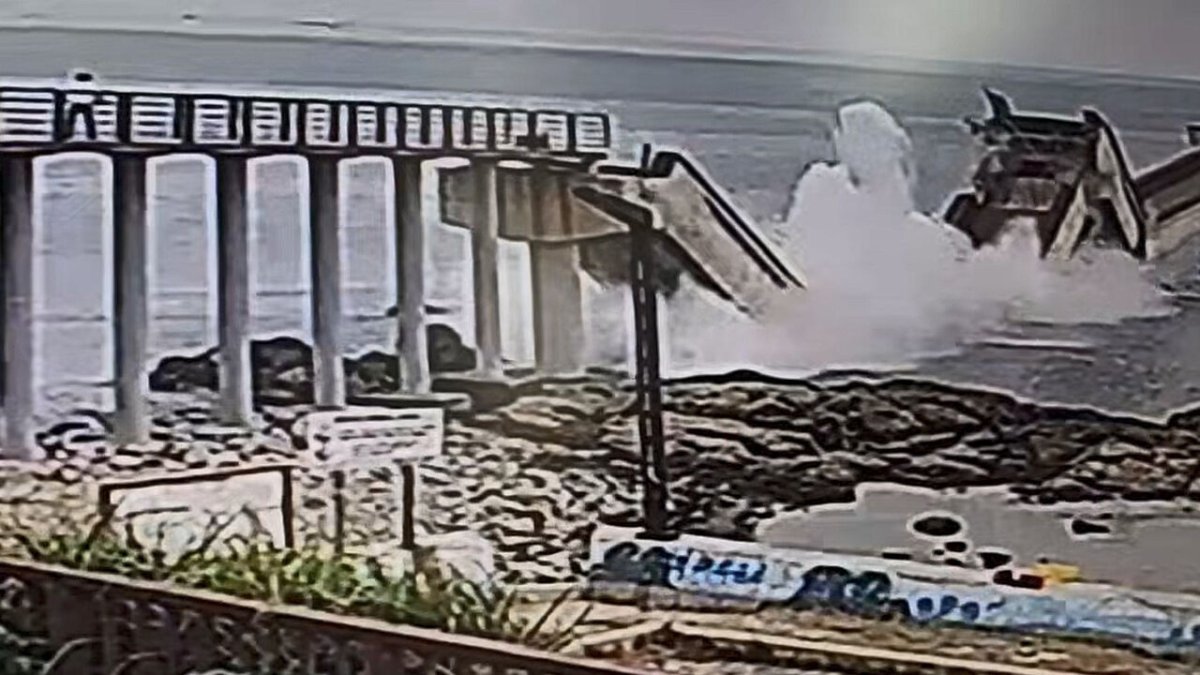
CCTV Evidence of a Narrow Escape
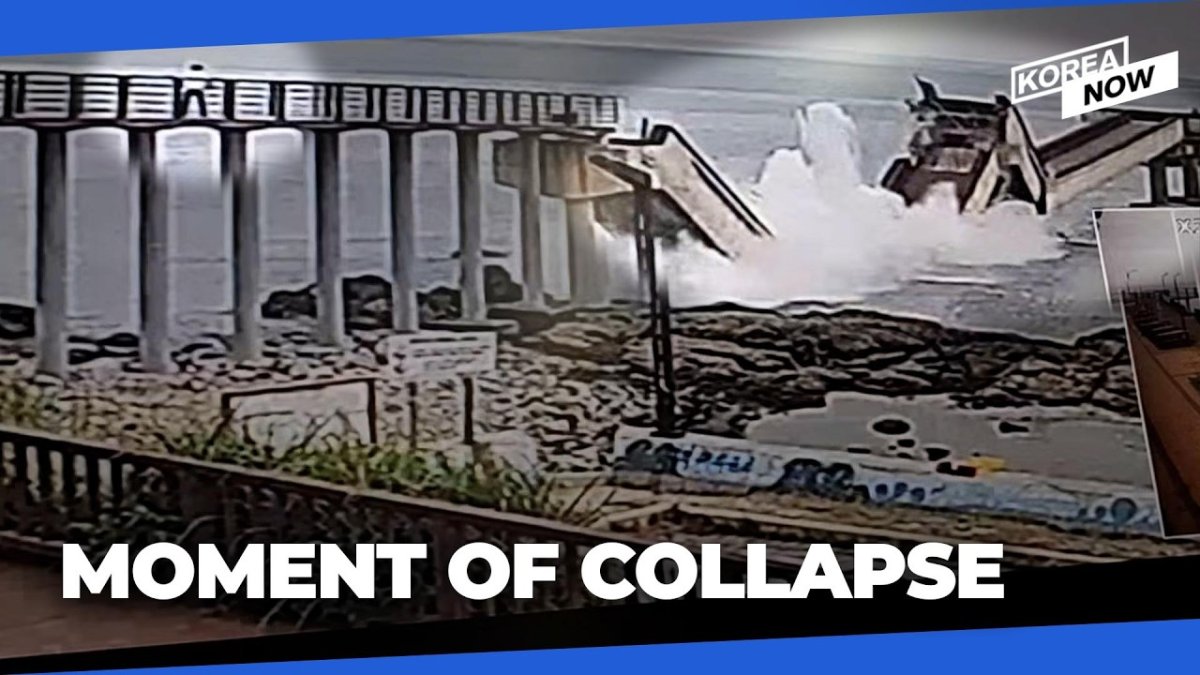
Surveillance footage released after the event showed that no pedestrians stood on the failing span at the moment of collapse. Reports described the timing as a narrow escape by a margin of approximately ten seconds. The final group of visitors had crossed moments earlier.
This detail underscores the random nature of the failure timing. The bridge had already faced access restrictions since May 29 2026 after cracks appeared in multiple sections. Officials noted that the stranded visitors appeared to have bypassed a closure sign at the entrance.
Analysis of the footage by Gyeongbuk authorities highlights how even brief lapses in signage visibility can lead to public disregard, a pattern observed in prior Korean facility incidents. The ten-second margin illustrates the thin line between routine use and catastrophe at Grade C structures, where progressive deterioration may accelerate without immediate visual cues to users.
Surveillance footage has become a standard evidentiary tool in Korean infrastructure investigations, and the Boritdol case demonstrates how such records can clarify the sequence of a structural failure. The findings are expected to inform the official inquiry into the collapse.
Safety Rating and Maintenance History
The bridge carried a Grade C safety rating from its most recent inspection. Under South Korea's grading system this classification indicates a structure that remains functional yet requires repair or reinforcement. Repair work had occurred prior to the collapse. Emergency inspections were ordered immediately afterward by Pohang City authorities.
The sea footbridge had received both national and municipal funding during construction, with Pohang City reporting total project costs of 11.5 billion won. Its location in a popular fishing and tourism area increased daily foot traffic and exposure to marine conditions that can accelerate structural wear.
Grade C designations under the Facility Safety Act require documented reinforcement timelines, yet the Boritdol case reveals potential gaps between inspection findings and sustained compliance monitoring by local governments. MOLIT's 2025 decree aimed to tighten these intervals for medium-scale assets, reflecting lessons from earlier collapses nationwide that prompted Cabinet-level reforms.
Coastal exposure in North Gyeongsang Province amplifies corrosion risks beyond inland benchmarks, a factor that typically requires higher maintenance frequency for marine projects. Such conditions test the limits of existing repair protocols and may drive future amendments emphasizing marine-specific diagnostics.
The Facility Safety Act and 2025 Amendments
South Korea's Special Act on Safety Control and Maintenance of Facilities assigns grades A through E to public structures. Grade C facilities must undergo targeted repairs within defined periods. On November 25 2025 the Ministry of Land, Infrastructure and Transport secured Cabinet approval for an amendment to the enforcement decree. The changes took effect on December 4 2025.
The amendment mandates precise safety diagnoses for aging small and medium facilities rated C, D or E. It shortens deadlines for repair and reinforcement work and broadens the scope of accident investigations. Policymakers introduced these measures after a series of prior infrastructure incidents across the country.
Implementation of the decree places additional obligations on municipal bodies like Pohang City to coordinate with expert panels. The reforms respond directly to vulnerabilities exposed in tourist-oriented infrastructure, where public access often continues despite known deficiencies.
Korea's shift toward mandatory diagnostics for lower-grade facilities could serve as a regional model if enforcement data demonstrates measurable reductions in incident rates over the coming years.
Investigation and Policy Implications
Police and Pohang City officials are reviewing the bridge's inspection records, maintenance logs and structural condition. Experts will assist in determining the precise cause. The process aligns with the expanded investigative powers introduced in the December 2025 decree, and the case feeds into broader academic discussions on how Facility Safety Act amendments translate into field-level accountability.
The Boritdol Bridge event illustrates ongoing challenges in managing aging coastal infrastructure. Marine structures in the region are exposed to salt-laden air and seasonal weather, conditions that can accelerate corrosion over time. The case echoes maintenance pressures documented at other Korean facilities built during the rapid infrastructure expansion of the 2010s.
Continued evaluation of repair deadline adherence across Gyeongsangbuk-do will provide empirical benchmarks for assessing whether the 2025 changes deliver intended preventive effects.
Regional Context in Northeast Asia
Comparable marine pedestrian bridges exist in Japan and coastal China, and Korea's December 2025 amendments to the Facility Safety Act enforcement decree shortened repair deadlines for Grade C facilities. The Pohang collapse may prompt regional authorities to review their own inspection regimes for small-scale tourist infrastructure.
Public safety policy in South Korea continues to evolve from reactive responses toward preventive diagnostics. The 2025 amendments represent one step in that direction, and continued monitoring of enforcement outcomes will determine whether shortened repair deadlines reduce future incidents at similarly rated structures.
Cross-border exchanges among regional governments could accelerate adoption of harmonized standards, especially for facilities facing identical environmental stressors. Transparent data sharing on inspection outcomes can help mitigate risks before they manifest in public spaces.
Looking Ahead
The investigation into the Boritdol Bridge collapse is expected to produce preliminary findings in the coming weeks, with police and Pohang City officials reviewing inspection records, maintenance logs and structural data. The outcome will likely inform MOLIT's guidance on prioritizing marine pedestrian assets within national safety frameworks, particularly where tourism revenue intersects with structural risk.
For South Korea, the episode serves as a practical test of whether the 2025 Facility Safety Act amendments translate into field-level accountability. If the probe identifies gaps between inspection findings and sustained compliance monitoring by local governments, further legislative refinement may follow. For the broader region, the case underscores the importance of preventive diagnostics for coastal tourist infrastructure — a lesson that extends well beyond the fishing park at Janggil-ri.
By Prof. David Park, Staff Writer
This article was produced with AI-assisted research and editorial support. Reporting is based on sources cited in the article.
What's Your Reaction?
 Like
0
Like
0
 Dislike
0
Dislike
0
 Love
0
Love
0
 Funny
0
Funny
0
 Wow
0
Wow
0
 Sad
0
Sad
0
 Angry
0
Angry
0

East Asia/Technology Correspondent at Global1.News. Seoul-based voice covering Korean politics, technology, business, and culture. Analyzes how technology and geopolitics intersect across East Asia.















Comments (0)