
Bennett Calls Qatar More Dangerous Than Iran, Vows Enemy-State Designation
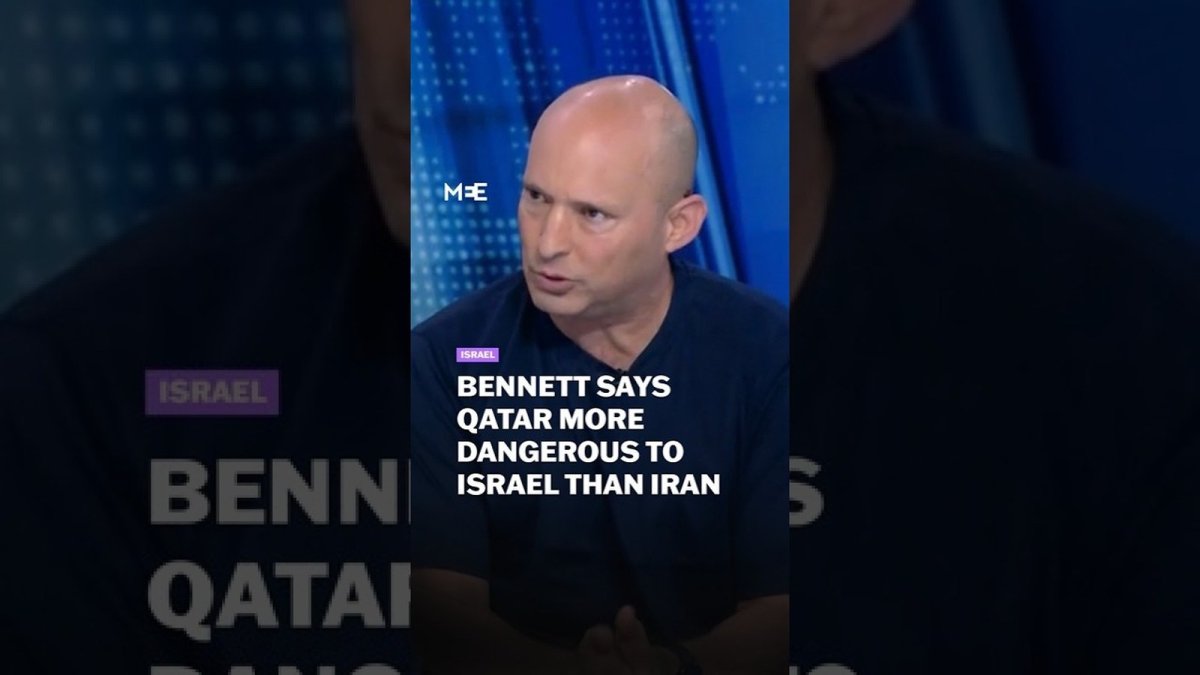
In a recent Middle East Eye report covering former Israeli prime minister Naftali Bennett's interview on Israel's Channel 12, Bennett described Qatar as more dangerous to Israel than Iran and vowed to designate it an enemy state if he returns to power. The remarks come as Bennett positions himself ahead of scheduled elections. Observers note the statements target internal influence channels rather than conventional military threats.
In a recent Middle East Eye report covering former Israeli prime minister Naftali Bennett's interview on Israel's Channel 12, Bennett described Qatar as more dangerous to Israel than Iran and vowed to designate it an enemy state if he returns to power. The remarks come as Bennett positions himself ahead of scheduled elections. Observers note the statements target internal influence channels rather than conventional military threats.
Bennett Calls Qatar More Dangerous Than Iran, Vows Enemy-State Designation
Tel Aviv, Israel - August 2, 2026 - Bennett spoke during an appearance on the program Meet the Press, aired on Saturday. He stated that Qatar funded the Nukhba terrorists of October 7, 2023, and operates Al Jazeera, which he called the most poisonous cancer hurting Israel. Bennett added that Qatar reaches places of influence in American universities and has access to the office of the prime minister of Israel. He described these actions as working against Israel and poisoning it from within, calling it unforgivable that Israel has not already defined Qatar as an enemy state.
The Channel 12 Interview
During the Channel 12 interview that aired on Meet the Press on Saturday August 1, 2026, Naftali Bennett framed Qatar as an existential threat that operates inside Israel without legal barriers. He stated, "With Iran, everyone knows that [it says], 'We'll destroy Israel.'" Bennett contrasted this with Qatar, arguing that the Gulf state exerts influence through payments to research institutes, influencers and possibly officials, a claim tied to the Qatargate allegations involving Netanyahu aides such as Jonatan Urich. The Times of Israel noted this marked the second time Bennett had raised the issue publicly within days.
Bennett warned that current law allows anyone to act as an agent for Qatar. He said, "According to the law today, anybody can work for Qatar. You can be an agent for Qatar." He added, "The most dangerous enemy to Israel is not defined as an enemy [state]." These remarks position Qatar's alleged access to Israeli decision-making circles as more insidious than open adversaries, shifting focus from battlefield threats to internal influence operations.
Palestinians in Gaza watch such rhetoric with concern because any move to label Qatar an enemy state would directly affect the mediation channels that have delivered fuel, salaries and humanitarian coordination. Bennett's language, delivered weeks before the October 27, 2026 elections, risks closing the very mechanisms that have allowed limited relief to reach families still living amid rubble and displacement.
Bennett's Earlier Remarks at Security Conference
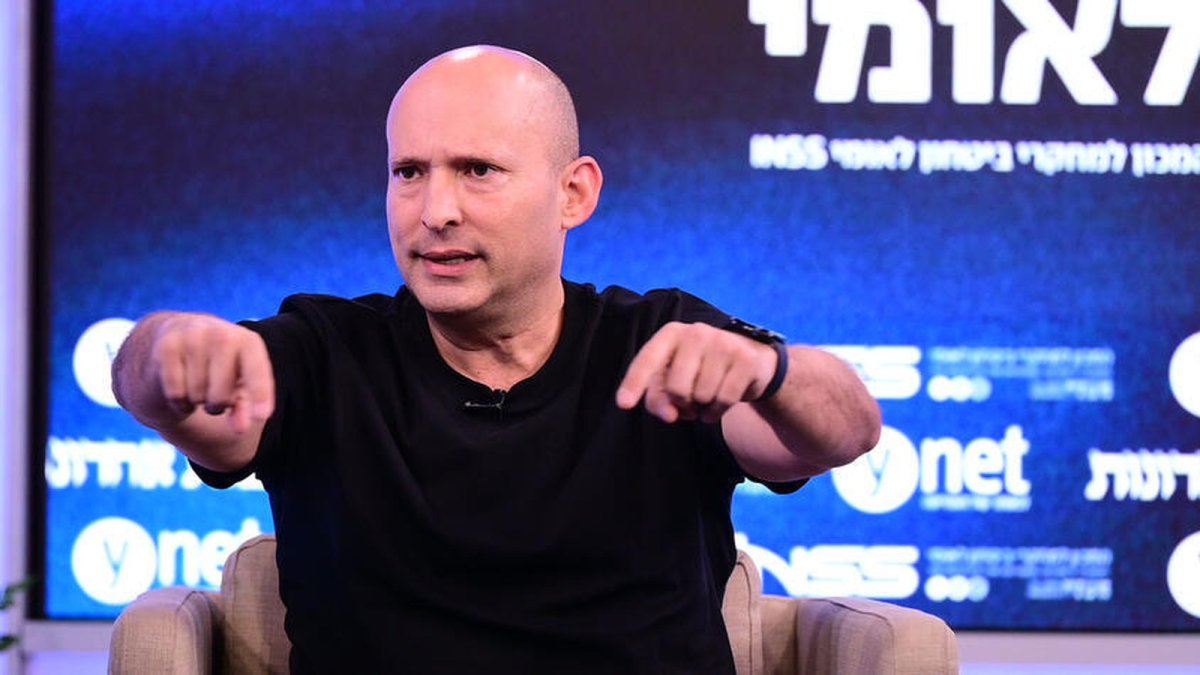
On July 27, 2026, at the ynet-Yedioth Ahronoth National Security Conference with the Institute for National Security Studies, Bennett repeated his pledge. He said that if elected prime minister he would immediately declare Qatar an enemy state clearly and unequivocally. Bennett described Qatar as a violent antisemitic cancer that sends its metastases throughout the West, even into the office of the prime minister of Israel, with the aim of destroying Israel. He claimed Qatar directly funded Hamas with a billion dollars in Netanyahu's cash suitcases and stated he had received intelligence that Qatar also funded Iran's Revolutionary Guards.
Qatar's Official Response
Qatar's Media Attaché in the United States, Ali Al-Ansari, issued a statement shared on X by Qatar's Embassy in the US on July 27-28. He condemned Bennett's statements as disinformation aimed at furthering his own political ambitions. Al-Ansari noted this was not the first time Bennett had attacked Qatar to score political points at home and suggested Israeli politicians focus on addressing their own domestic challenges. The statement affirmed that Qatar's efforts to support regional security and improve the humanitarian situation in Gaza have been recognized by regional and international partners and were carried out in coordination with relevant Israeli authorities.
Qatar's Mediation Efforts in Gaza
Qatar has mediated between Israel and Hamas alongside Egypt and the United States, helping secure ceasefires, humanitarian access and exchanges involving Israeli captives and Palestinian prisoners. In late July 2026, a Hamas delegation headed to Egypt for talks on implementing the second phase of the Gaza ceasefire agreement, with mediators from Egypt, Qatar and Turkiye. Qatar has repeatedly denied financing Hamas, stating its previous assistance to Gaza was delivered through mechanisms approved by Israel and the United Nations, directed toward fuel, public sector salaries and support for vulnerable families.
Bennett has complained that Qatar entered the negotiations "as a bridesmaid in the deal imposed on us," a direct criticism of Netanyahu's reliance on Doha. In late July 2026 a Hamas delegation traveled to Egypt for talks on the second phase of the Gaza ceasefire, with mediators from Egypt, Qatar and Turkiye expected to address a permanent ceasefire, Israeli withdrawal and the release of remaining captives.
The second phase of the ceasefire is expected to address a permanent truce, Israeli withdrawal and the release of remaining captives.Qatari assistance delivered through mechanisms approved by Israel and the UN has covered fuel, public sector salaries and support for vulnerable families. Analysts have long described the arrangement as "cash for calm." Under Bennett's own premiership in 2021-2022, Israeli officials coordinated Qatari cash deliveries to Gaza, a policy his critics now cite as evidence that his current stance contradicts earlier practice. Removing Qatar from this role would immediately disrupt humanitarian coordination that reaches civilians still recovering from months of bombardment.
Palestinian families in Gaza depend on these salary payments and fuel supplies to maintain basic services. Any abrupt exclusion of Qatar would leave hospitals, water systems and civil servants without the modest support that has prevented total collapse, placing the heaviest burden on households already facing shortages and displacement.
Al Jazeera Restrictions and Domestic Scandals
Israel's government voted in May 2024 to shut down the Qatar-owned broadcaster's operations in Israel, with the closure order extended for another 90 days in January 2026, signed by Communications Minister Shlomo Karhi. Israeli forces raided Al Jazeera's office in Ramallah in the occupied West Bank in September 2024. Israeli media have reported on Qatargate allegations that former and current aides to Netanyahu, including senior aide Jonatan Urich, are alleged to have taken money to run a public relations campaign casting Qatar in a positive light for over a year after the October 7, 2023 Hamas-led attack.
Israeli forces raided the network's Ramallah office in the occupied West Bank in September 2024 during a live broadcast and ordered a 45-day closure. The Committee to Protect Journalists called on Israeli authorities to stop harassing and obstructing the outlet, whose reporting has documented conditions inside Gaza that many international media have struggled to access.
Bennett has linked these measures to the Qatargate scandal, in which Netanyahu aides including senior aide Jonatan Urich are alleged to have taken payments to run a pro-Qatar PR campaign after October 7, 2023. He described Qatar as having "access to the most sacred place for the security of Israel - the office of the prime minister of Israel." This framing turns the scandal into an argument for designating Qatar an enemy state and removing it from any Gaza-related role.
Palestinian journalists and residents in the West Bank and Gaza rely on Al Jazeera for coverage that reaches global audiences when local outlets face restrictions. Further pressure on the network would narrow the flow of information about daily life under blockade and military operations, leaving families with fewer independent channels to document their circumstances.
Impact on Palestinian Civilians and Regional Diplomacy
More than 73,000 Palestinians have been killed and over 174,000 wounded in Gaza since October 2023, according to Gaza's health ministry, with the United Nations and humanitarian organizations believing the actual toll is higher. Israel launched the war on Gaza on October 8, 2023. Bennett leads the Together party and is a challenger to Prime Minister Benjamin Netanyahu ahead of Israeli elections scheduled for 27 October 2026. Bennett and former prime minister Yair Lapid announced in April 2026 that their parties would run together. Any move to remove Qatar from Gaza's humanitarian and political equation would affect fuel supplies, public sector salaries and ceasefire talks that directly touch the lives of people in Gaza.
Bennett's pledge, if implemented, would direct Mossad, Shin Bet and the IDF to act "forcefully against Qatari infiltration" and exclude Doha from Gaza mediation. Elections are scheduled for 27 October 2026, and Bennett has positioned his parties alongside Yair Lapid against Netanyahu's Likud while floating partnerships with Gadi Eisenkot, Avigdor Liberman and Yair Golan.
He has also floated potential governing partnerships with Gadi Eisenkot, Avigdor Liberman and Yair Golan.Bennett's Qatar offensive appears aimed at Netanyahu's right-wing base, yet the consequences would reach civilians first. Qatar's fuel grants, salary support and mediation directly sustain basic services in Gaza. Stripping Qatar from these arrangements would disrupt the limited humanitarian coordination that has allowed some fuel and payments to reach families living without reliable electricity or income.
Qatar's media attaché Ali Al-Ansari has called the attacks "disinformation" for domestic political gain, noting Doha's mediation role is recognized by regional and international partners. For Palestinians in Gaza, the loss of that channel would compound existing hardships, leaving communities already enduring displacement and shortages with even fewer avenues for relief or negotiation.
By Fatima Al-Rashid, Staff Writer
This article was produced with AI-assisted research and editorial support. Reporting is based on sources cited in the article.
What's Your Reaction?
 Like
0
Like
0
 Dislike
0
Dislike
0
 Love
0
Love
0
 Funny
0
Funny
0
 Wow
0
Wow
0
 Sad
0
Sad
0
 Angry
0
Angry
0

Gulf/MENA Correspondent at Global1.News. Based in Doha, covering Gulf politics, energy markets, diplomacy, and development across the Middle East and North Africa. Tracks the economic transformation of the Gulf states.










Comments (0)