
Beggars will lead revolution if Nigerians stop giving them alms — Seun Kuti
Afrobeat legend Seun Kuti sparked a fresh debate on the streets of Lagos this week when he argued that the nation’s habit of giving alms to beggars is unintentionally stalling the very revolution he has long championed.
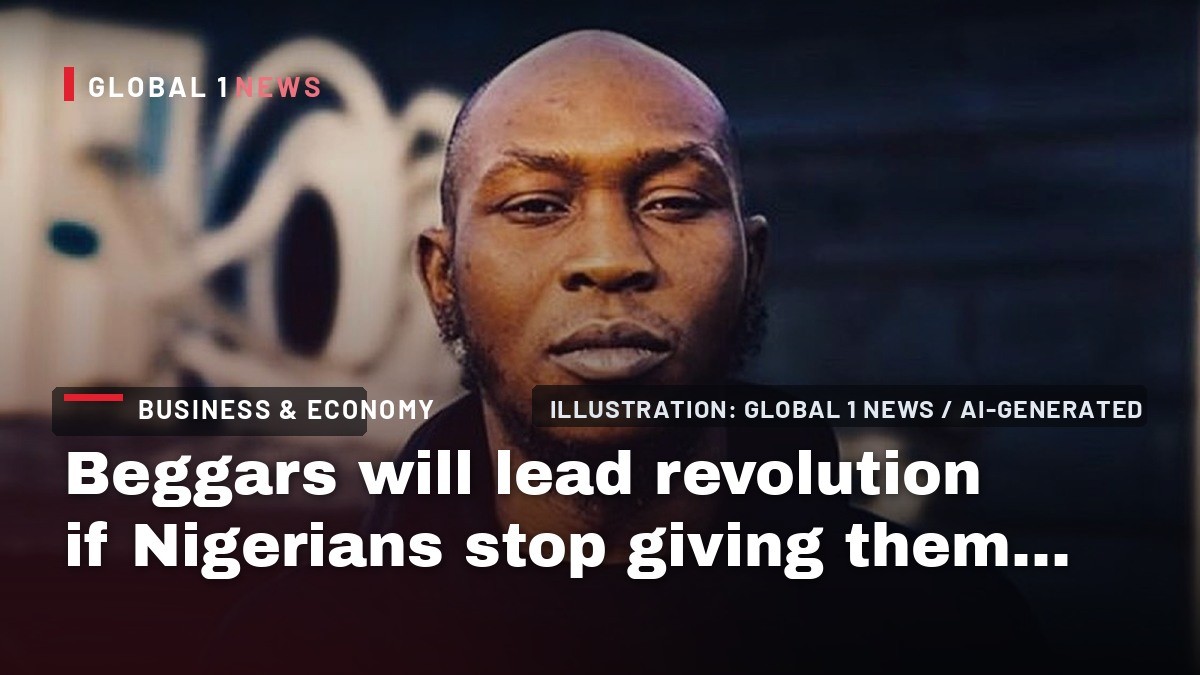
Afrobeat legend Seun Kuti sparked a fresh debate on the streets of Lagos this week when he argued that the nation’s habit of giving alms to beggars is unintentionally stalling the very revolution he has long championed. In a candid interview with ObjecTV, the son of Fela Kuti warned that the charity extended to street beggars is pacifying a potential source of anger that could otherwise fuel a broader demand for change. His remarks, though brief, have ignited a cascade of reactions across social media, prompting Nigerians to reconsider the political symbolism of everyday generosity.
The Provocative Claim: Alms as a Revolutionary Suppressant
Seun Kuti’s central thesis is simple yet striking: by regularly handing money to beggars, Nigerians are dulling the hunger that could translate into collective unrest. He framed beggars as a class that, if left to their own grievances, might become a catalyst for revolutionary fervor. “The beggars are the ones who are supposed to be angry in order to cause revolution, but since we give them money from time to time, they are not hungry enough to be angry,” he said during the ObjecTV interview. The musician’s metaphor of “hunger” taps into a long‑standing narrative in African protest movements, where economic deprivation often fuels political mobilisation.
While Kuti’s statement is rooted in a symbolic reading of poverty, it resonates with a segment of the public that sees everyday charity as a way of avoiding confronting deeper systemic failures. By feeding the immediate need of individuals on the street, the argument goes, society may be deflecting attention from the structural corruption and inequality that underpin those very needs.
Social Media’s Mixed Reception
The interview quickly went viral, with Twitter threads and Facebook posts dissecting the musician’s logic. Many users echoed Kuti’s concern, suggesting that constant almsgiving creates a comfort zone that dulls political consciousness. Others, however, warned against equating compassion with complacency, noting that “being uncharitable to beggars” is not a viable path to revolution. The debate has highlighted a tension between moral duty to the vulnerable and the desire for systemic change.
Commentators on platforms such as Nairaland and the diaspora‑focused forum NaijaTalk argued that the solution to poverty lies not in withholding charity but in demanding accountability from the political class. They pointed out that the practice of giving alms has deep cultural roots, often seen as a communal responsibility, and that any call to cease it must grapple with the ethical implications of abandoning the most destitute.
Kuti’s Historical Advocacy for Revolution
Seun Kuti is no stranger to political commentary. Over the years, he has repeatedly denounced the “corrupt” crop of politicians currently steering Nigeria’s destiny. His music and public statements have long called for a radical overhaul of governance, echoing the revolutionary spirit of his father’s Afrobeat legacy. The recent alms remark fits within this broader narrative of urging Nigerians to confront entrenched corruption.
In previous interviews, Kuti has warned that without a collective awakening, the nation risks remaining trapped in a cycle of patronage and mismanagement. By linking everyday charity to a larger political calculus, he is attempting to reframe personal acts of kindness as part of a national dialogue about power, poverty, and change.
The Role of Beggars in Nigerian Urban Life
Beggars are a ubiquitous presence in Nigeria’s bustling metropolises, from the traffic‑choked avenues of Lagos to the market squares of Kano. Their visibility makes them a potent symbol of the country’s socioeconomic divides. Kuti’s focus on this demographic underscores how the marginalized can become both a mirror and a catalyst for societal discontent.
Observers note that the daily struggle of street beggars often reflects broader failures in social safety nets, employment generation, and public service delivery. While the musician’s claim that they could spark revolution is speculative, it does draw attention to the lived realities of those left behind by Nigeria’s rapid urbanisation and uneven economic growth.
Economic Implications of Almsgiving
Charitable giving to beggars, while modest in individual amounts, aggregates into a notable flow of cash within informal economies. Economists caution that such cash transfers, though well‑intentioned, can create dependency cycles that mask the need for structural interventions. Kuti’s argument hints at this paradox: short‑term relief may inadvertently perpetuate long‑term stagnation.
Policy analysts suggest that redirecting private alms toward community‑based development projects—such as micro‑enterprise support or skill‑training programmes—could address both immediate need and longer‑term empowerment. While Kuti does not propose specific alternatives, his critique invites a re‑examination of how Nigerians choose to allocate their charitable impulses.
The Political Context: Corruption and Public Discontent
The musician’s reference to “corrupt” politicians is a shorthand for a deep‑seated frustration that many Nigerians share. Recent years have seen a series of high‑profile scandals, procurement irregularities, and allegations of embezzlement that have eroded public trust. Kuti’s call for revolution taps into a reservoir of anger that, according to his logic, could be amplified if the pacifying effect of alms were removed.
Yet, the relationship between economic hardship and political mobilisation is not linear. Historical movements across the continent have shown that while poverty can ignite protest, it also requires organisation, leadership, and a clear agenda. Kuti’s framing positions beggars as a symbolic spark, but the broader revolutionary potential hinges on how that spark is harnessed by civil society and opposition forces.
Looking Ahead: From Symbolic Debate to Concrete Action
Seun Kuti’s provocative statement has opened a space for Nigerians to reflect on the intersection of charity, poverty, and political agency. Whether the conversation translates into a shift in everyday behaviour—such as reduced almsgiving—or into organised advocacy for systemic reforms remains to be seen.
What is clear, however, is that the dialogue underscores a larger yearning for accountability and change. As the nation approaches the next electoral cycle, the resonance of Kuti’s message may influence how citizens frame their demands at the ballot box and beyond. In the meantime, the streets will continue to echo with the footsteps of beggars, the clink of spare change, and the restless pulse of a society wrestling with the paradox of compassion and revolution.
This article was produced with AI-assisted research and editorial support. Reporting is based on the source material cited below. Sources: Daily Post Nigeria; dailypost.ng; Global1.News (14 September 2026).
By Sarah Okafor, Staff Writer
What's Your Reaction?
 Like
0
Like
0
 Dislike
0
Dislike
0
 Love
0
Love
0
 Funny
0
Funny
0
 Wow
0
Wow
0
 Sad
0
Sad
0
 Angry
0
Angry
0

Africa Correspondent at Global1.News. Based in Lagos, covering politics, business, technology, and culture across the continent. Focused on telling African stories beyond the headlines — the innovation, entrepreneurs, and communities shaping the region's future.















Comments (0)