
Venezuela Accuses Trinidad and Tobago of Cross-Border Oil Spill Damage
On May 1, 2026, an oil spill was detected at Riser Platform No. 2 in the Main Soldado Field in the Gulf of Paria. State-owned Heritage Petroleum Company Limited estimated the release at approximately 10 barrels and contained it the same day, with repairs completed and the platform returned to service on May 2. Such rapid containment reflects the operational protocols that operators in the Gulf of Paria have refined over decades of shared resource
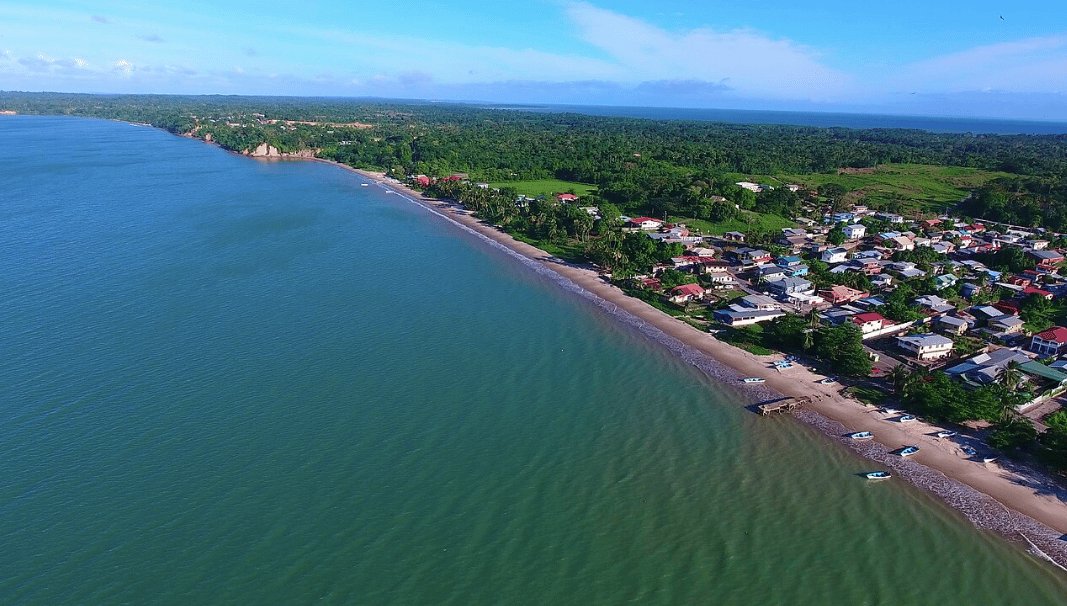
On May 1, 2026, an oil spill was detected at Riser Platform No. 2 in the Main Soldado Field in the Gulf of Paria. State-owned Heritage Petroleum Company Limited estimated the release at approximately 10 barrels and contained it the same day, with repairs completed and the platform returned to service on May 2.
Such rapid containment reflects the operational protocols that operators in the Gulf of Paria have refined over decades of shared resource management. Neighbouring communities on both sides of the maritime boundary often monitor these incidents closely because even modest releases can influence local marine conditions. Continued vigilance helps maintain the trust that underpins day-to-day cooperation between the two nations.
Trinidad and Tobago's Initial Assessment
The Ministry of Energy and Energy Industries stated that oil spill trajectory modelling indicated hydrocarbons could have crossed the maritime border if left untreated. Chemical dispersants were applied about 6 to 8 nautical miles from the border following approval. Follow-up inspections by drones and vessels found no visible hydrocarbons on the water's surface.
These modelling exercises draw on long-standing data sets that account for prevailing currents and seasonal wind patterns across the shared waterway. Prompt application of approved dispersants demonstrates adherence to established environmental response standards. The absence of surface hydrocarbons after inspection supports the view that early intervention limited wider dispersal.
Heritage Petroleum later confirmed through its SCADA monitoring system that all pipeline and operational parameters remained normal. Emergency vessel surveillance and deployments by the Trinidad and Tobago Coast Guard reported no visible slicks or marine abnormalities.
Real-time monitoring systems like SCADA provide operators with continuous oversight that reduces the window for undetected anomalies. Coast Guard deployments add a layer of on-water verification that complements satellite and aerial assessments. Together these measures reinforce the reliability of initial containment reports.
Venezuela's Formal Response
Late on May 9, 2026, Venezuela's government reported that a hydrocarbon spill originating from Trinidad and Tobago had affected coastal areas in the states of Sucre and Delta Amacuro, as well as the Gulf of Paria. Officials raised concerns about potential impacts on mangroves, wetlands, marine ecosystems and fishing communities.
Coastal wetlands in these regions serve as nurseries for species that support fishing livelihoods across the Gulf, making any hydrocarbon presence a matter of direct concern for those who depend on the sea. Mangrove systems also act as natural buffers against seasonal storms, so their protection carries implications beyond immediate spill effects. Cross-border notification therefore becomes essential for coordinated stewardship of these shared habitats.
Caracas instructed its foreign ministry to seek detailed information on the incident and mitigation measures, while demanding compliance with international environmental obligations and reparative steps for any damage.
Diplomatic channels remain the primary route for clarifying technical details and aligning expectations on follow-up actions. Requests for reparative measures highlight the importance of transparent documentation when incidents straddle maritime boundaries. Such exchanges help both governments maintain constructive relations even when environmental questions arise.
Bilateral Discussions Held
On May 22, 2026, the two countries held a bilateral-hybrid meeting to address cooperation on potential cross-border hydrocarbon spills. Venezuela's delegation was led by Minister of Popular Power for Ecosocialism Freddy Nanez and included Vice Minister Raul Li Causi Perez along with representatives of PDVSA.
High-level participation from both energy and environmental ministries signals a commitment to addressing technical and policy dimensions simultaneously. Hybrid formats allow experts located in different capitals to contribute without the delays of full travel arrangements. This approach can accelerate the exchange of data needed for joint assessments.
Trinidad and Tobago's side was headed by Energy Minister Dr Roodal Moonilal and included Minister Ernesto Kesar, permanent secretaries, Heritage Petroleum representatives and staff from the Institute of Marine Affairs. Both sides agreed to continue exchanging information as scientific work and technical investigations proceed.
Bringing together permanent secretaries and scientific institutes ensures that policy decisions rest on the latest field observations. Ongoing information exchange creates a foundation for future contingency planning that both nations can reference. Such continuity supports steady progress even when new data emerge over time.
Minister Moonilal's Proposals
Minister Moonilal proposed the establishment of a joint working committee and renewed talks on the Bilateral Oil Spill Contingency Plan. The Gulf of Paria remains an important oil and gas producing zone shared by the two nations and an ecologically sensitive area.
A standing committee could streamline the review of modelling outputs and dispersant approvals in future events. Renewed contingency planning would build on existing agreements while incorporating lessons from recent surveillance. These steps align with broader regional efforts to strengthen preparedness in an area where energy activities and marine ecosystems intersect daily.
Further Venezuelan Claims and Evidence
In mid-June 2026, Venezuela issued an official communique accompanied by multi-temporal satellite analysis that it said showed a major hydrocarbon slick originating near Trinidad and moving northwest. Imagery from PDVSA INTEVEP, derived from Sentinel-1 radar data, indicated affected marine areas as dark anomalies consistent with potential oil presence.
Satellite radar offers an all-weather tool that can detect surface features even when cloud cover limits optical observation. Multi-temporal comparisons help distinguish persistent anomalies from transient natural phenomena. Such technical evidence contributes to the wider record that both governments continue to examine.
Caracas warned that contaminants were moving toward both Venezuelan and Trinidad and Tobago waters and called on Trinidad and Tobago to account for a second, larger spill. Reports also referenced a slick reaching Point Fortin shores.
Warnings about movement across the boundary underscore the fluid nature of marine conditions in the Gulf. References to additional locations illustrate how information from multiple sources can shape the scope of an investigation. Continued dialogue allows each side to present its data for collective review.
Trinidad and Tobago's Rebuttal
Heritage Petroleum responded that no evidence supported the presence of large amounts of hydrocarbons. The Trinidad and Tobago Coast Guard's maritime surveillance corroborated these findings, reporting no visible slicks or abnormalities. The dispute occurs against a backdrop of deep energy interdependence between the two countries.
Energy interdependence creates mutual incentives to resolve technical disagreements efficiently so that long-term supply arrangements remain stable. Joint infrastructure projects in the Gulf illustrate how economic ties can encourage pragmatic cooperation even during periods of environmental scrutiny. This context suggests that both governments have reasons to pursue evidence-based conclusions.
Energy Interdependence and the bp Loran Gas Deal
Trinidad and Tobago is key to monetising Venezuelan gas, with the bp Loran gas deal advancing steadily. Oil and gas remain the backbone of Trinidad's economy, creating shared stakes that extend beyond immediate spill concerns into long-term supply arrangements. Officials from both nations have recognised that stable cross-border infrastructure supports mutual revenue streams and regional energy security.
Steady progress on the Loran deal demonstrates that commercial momentum can coexist with environmental dialogue. Revenue streams from these arrangements benefit communities on both sides through employment and related services. Regional energy security therefore depends on maintaining both operational integrity and open communication channels.
The Gulf of Paria's Strategic and Ecological Role
The Gulf of Paria is an important oil and gas producing zone and an ecologically sensitive fishing area shared by the two countries. Its waters host critical infrastructure such as the Main Soldado Field and Riser Platform No. 2, while also supporting marine habitats that sustain livelihoods across the maritime boundary. Any unresolved incident risks amplifying pressures on these shared resources.
Seasonal hurricane activity adds another layer of complexity, as storm surges can redistribute surface materials and complicate containment efforts. Climate pressures on small island developing states heighten the need for robust monitoring that anticipates such events. Coordinated preparedness therefore serves both economic and ecological priorities in the region.
CARICOM Framework for Coordinated Marine Response
CARICOM has long pushed for coordinated responses to marine pollution given shared waters, hurricane season risks, and climate change pressures on small island developing states. The organisation provides a platform for member states to align protocols, share technical expertise and develop joint contingency measures that address transboundary threats more effectively than unilateral action alone. This institutional backdrop shapes expectations for how Trinidad and Tobago and Venezuela might institutionalise future cooperation.
Trinidad and Tobago's diaspora communities in CARICOM member states often maintain close ties to coastal livelihoods and therefore follow such developments with personal interest. Their perspectives can enrich public understanding of how cross-border incidents affect families on multiple islands. This human dimension complements the technical discussions already under way between the two governments.
By Sharon Sahatoo, Staff WriterThis article was produced with AI-assisted research and editorial support. Reporting is based on sources cited in the article.
What's Your Reaction?
 Like
0
Like
0
 Dislike
0
Dislike
0
 Love
0
Love
0
 Funny
0
Funny
0
 Wow
0
Wow
0
 Sad
0
Sad
0
 Angry
0
Angry
0

Caribbean Correspondent at Global1.News. Based in Port of Spain, Trinidad, covering Caribbean politics, economy, energy, climate, and culture. Amplifying the voices and stories of the Caribbean region.













Comments (0)