
Seoul Arisu Refrigerators Aid Vulnerable Amid 2026 Heat Wave
Seoul Metropolitan Government has launched 18 Arisu Sharing Refrigerators at nine hubs to distribute free chilled municipal water to residents most exposed to extreme heat. The initiative supplies 160,000 of the 400,000 planned Arisu bottles through September 30, 2026, targeting delivery workers, outdoor laborers, elderly residents, and homeless individuals.
Seoul Metropolitan Government has launched 18 Arisu Sharing Refrigerators at nine hubs to distribute free chilled municipal water to residents most exposed to extreme heat. The initiative supplies 160,000 of the 400,000 planned Arisu bottles through September 30, 2026, targeting delivery workers, outdoor laborers, elderly residents, and homeless individuals. This program forms part of Korea's municipal climate adaptation framework, responding to heat wave days that rose from 7.7 in 2020 to 29.7 last year.
Seoul Expands Free Chilled Water Access as Heat Wave Threatens Vulnerable Populations
[Seoul, South Korea – August 3, 2026] — The Seoul Metropolitan Government activated its Arisu Sharing Refrigerator network on August 2 to counter the intensifying summer heat. Eighteen units now operate across high-traffic sites, maintaining water at 5 degrees Celsius for immediate distribution. Officials project daily output reaching 32,000 bottles while holding a 200,000-bottle emergency reserve.
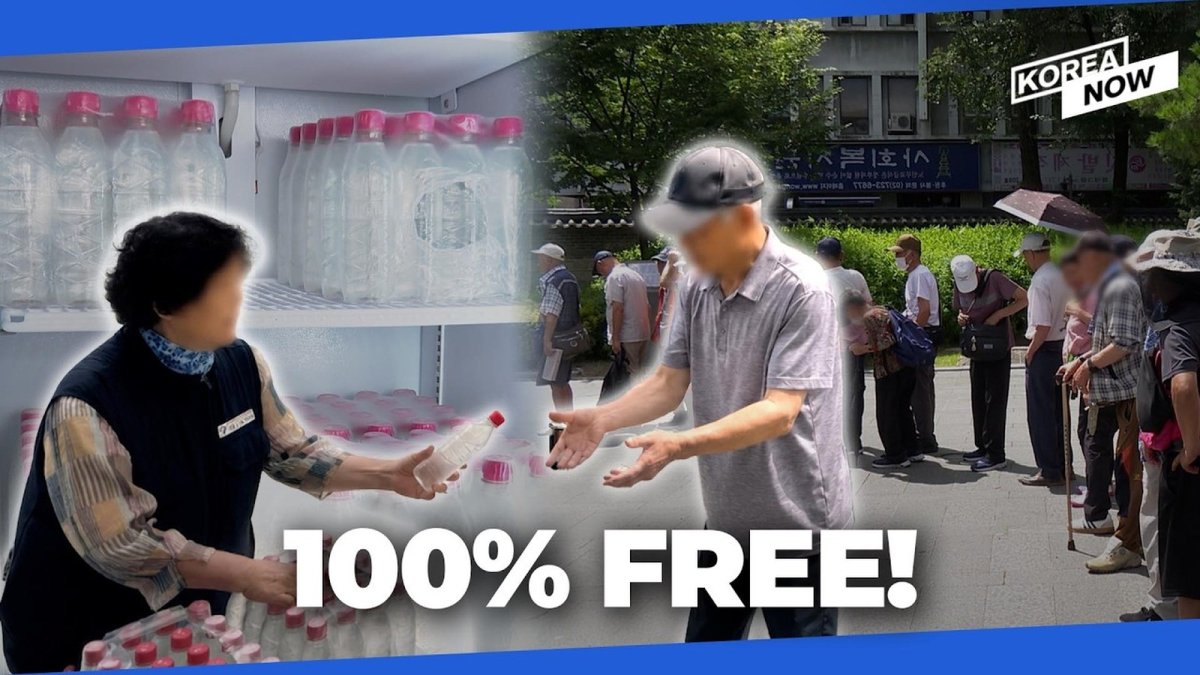
The Arisu Sharing Refrigerator Program
The program places six vending-machine-style dispensers and twelve commercial refrigerators at locations including Tapgol Park, the Yeongdeungpo Mobile Worker Rest Area, and Seoul City Hall. Each unit dispenses sealed Arisu bottles produced from Seoul's tap-water system. City planners allocated 160,000 bottles specifically to these refrigerators out of a total 400,000-bottle heat-response stock.
Kwon Min, head of the Seoul Arisu Headquarters, stated: "Heat waves are a major climate disaster that directly threaten public health, making proper hydration essential for preventing heat exhaustion. We will maintain thorough, on-the-ground support so that residents most vulnerable to extreme heat can stay safe and healthy through the summer."
Production capacity stands at 32,000 bottles per day, supported by a permanent 200,000-bottle reserve for rapid deployment. The refrigerators operate without charge or registration, removing barriers that often limit access for transient workers and older adults living alone.
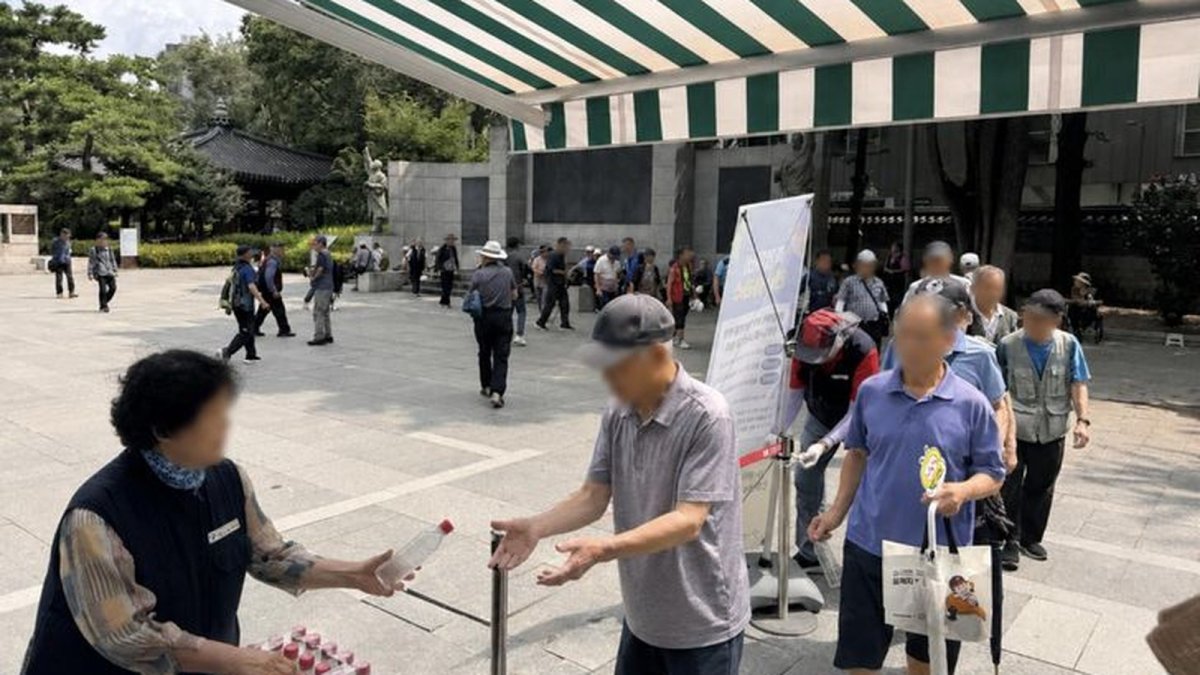
A Record-Breaking Heat Wave
The Korea Meteorological Administration issued heat-wave warnings for 19 of Seoul's 25 districts when perceived temperatures reached 35 degrees Celsius for two consecutive days. On August 2, Yangsan recorded 42.5 degrees Celsius at 1:26 p.m., the highest reading since modern observations began in 1904 across the Korean Peninsula's 97 long-term stations. Gyeongju reached 40.3 degrees Celsius, its highest mark in eight years.
The government activated Level 2 emergency operations at the disaster response headquarters on August 2 at 1 p.m., the first activation in three years and only the second since extreme heat was classified as a natural disaster. Prime Minister Han Seong-sook directed ministries and provincial governments to intensify safety checks on heat-vulnerable groups and secure power and water supplies.
National heat-related illness cases totaled 1,781 between May 15 and July 31, including 13 deaths. Last year, nationwide cases reached 4,460, quadrupling over five years. In Seoul alone, authorities recorded 378 cases, with heat exhaustion comprising 48 percent and most incidents occurring outdoors along roads and in parks.
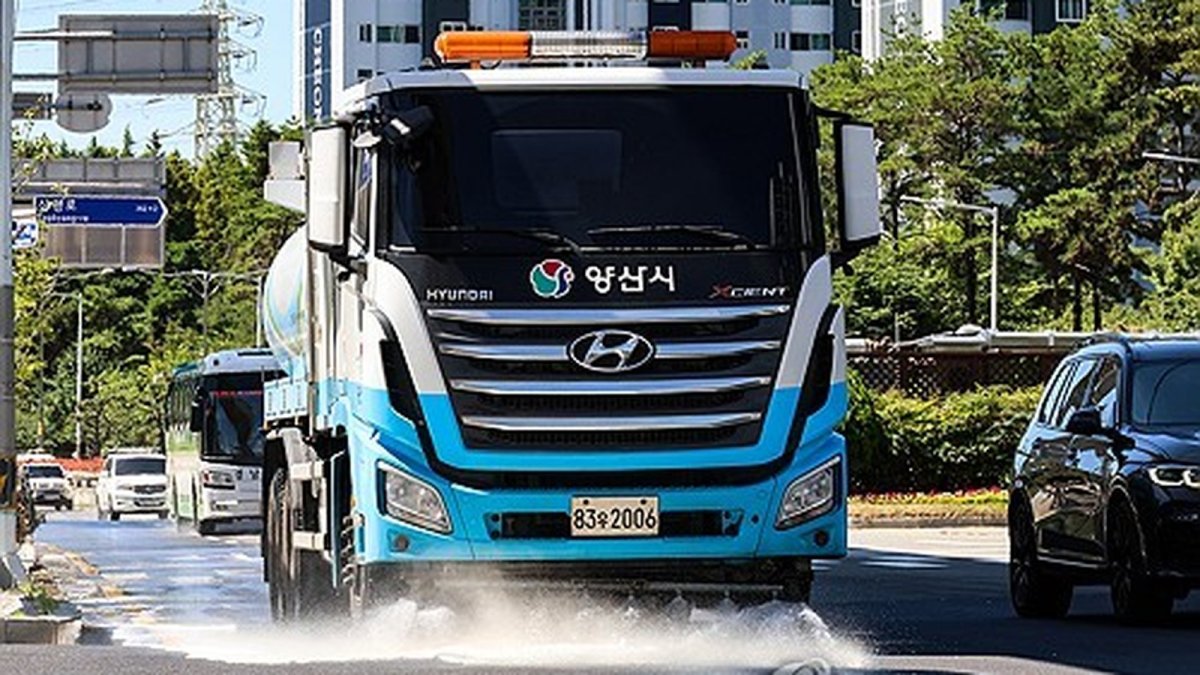
Protecting the Most Vulnerable
Seoul Mayor Oh Se-hoon ordered expanded protection for older adults living alone, gosiwon residents, homeless individuals, and mobile workers. The city opened additional cooling shelters, installed canopies, and deployed water-spraying trucks. Gangseo District maintains 161 cooling shelters for seniors, while Dongdaemun District conducts welfare calls or visits to older adults living alone every two days.
Yongsan District runs 19 free bottled-water stations, two in refrigerator format, installed in June. A Japanese-language social media post about these stations accumulated more than 5.3 million views. Comparable programs operate in Gunpo and Hanam in Gyeonggi Province and Gochang County in North Jeolla. Gunpo requires phone verification to enforce a one-bottle daily limit and prevent hoarding.
Municipal Hydration as Climate Adaptation
Seoul's Arisu brand, long promoted for its tap-water quality, now serves as a direct public-health tool during climate extremes. The sharing-refrigerator model integrates urban heat-island mitigation with the city's welfare-state obligations. By placing chilled water at sites frequented by delivery workers and elderly residents, the program reduces reliance on commercial purchases that strain low-income households.
Heat-wave days increased nearly fourfold between 2020 and last year, compelling municipalities to treat hydration infrastructure as essential rather than supplementary. The 400,000-bottle allocation and 200,000-bottle reserve demonstrate forward planning that links water security to disaster-response protocols.
Seoul's Arisu brand originated as a municipal initiative to build public confidence in treated tap water drawn from the Han River, positioning the city's water utility as a reliable public trust rather than a commercial product. Over successive administrations, this branding evolved from promotional campaigns emphasizing taste and safety into an operational asset deployed during climate emergencies, allowing the Seoul Metropolitan Government to convert existing purification infrastructure into a distributed hydration network without creating new supply chains.
Within Korea's disaster-management framework, the Arisu Sharing Refrigerators align with the Ministry of the Interior and Safety's heat-wave response system, which treats extreme heat as a natural disaster following its formal classification in 2019. The Framework Act on the Management of Disasters and Safety provides the legal basis for activating emergency operations centers and coordinating multi-level responses, enabling the current Level 2 activation to trigger both central directives and local welfare measures such as the refrigerator placements.
By supplying chilled Arisu bottles at no cost through fixed public sites, the program reduces the economic burden on low-income and transient populations who would otherwise purchase commercial bottled water at retail prices during prolonged heat events. This approach integrates hydration into the welfare-state obligations of municipal governance, shifting costs from individual households to the collective budget while maintaining quality control through the city's own production standards.
Administrative coordination occurs through the Seoul Metropolitan Government’s oversight of the Arisu Headquarters, which sets production targets and site selection, while the 25 district offices (gu) handle daily operations, volunteer deployment, and outreach to vulnerable groups such as elderly residents living alone. This division allows district-level knowledge of local demographics to inform placement decisions, ensuring the refrigerators reach high-traffic locations frequented by delivery workers and outdoor laborers.
Northeast Asian Context
Parallel heat extremes across Northeast Asia position Seoul's initiative as a regional case study in municipal governance. Korea's combination of centralized meteorological warnings, district-level welfare checks, and branded tap-water distribution offers a replicable template for cities facing similar urban heat-island pressures. The program's emphasis on outdoor laborers and single-room residents reflects Korea-specific demographic vulnerabilities.
Seoul's model of branded tap-water distribution through public refrigerators offers a distinct municipal response to the broader pattern of intensifying summer heat across Northeast Asia, where Japan and China have likewise expanded cooling centers and hydration points in response to recurring extreme temperatures. Korea's combination of centralized meteorological warnings, district-level welfare checks, and pre-positioned reserves provides a template that emphasizes rapid, no-cost access rather than reliance on commercial or voluntary systems.
Northeast Asian cities confront acute urban heat-island effects stemming from dense high-rise development and extensive impervious surfaces, conditions that amplify nighttime temperatures and disproportionately affect aging populations concentrated in older urban districts. Seoul's focus on single-room residents, mobile workers, and homeless individuals reflects these shared demographic pressures, where limited access to air-conditioned private space heightens the need for street-level public interventions.
The Arisu program implies potential for regional knowledge-sharing among municipalities facing comparable governance challenges, as cities exchange practices on integrating water infrastructure into disaster protocols and targeting welfare resources toward outdoor laborers and isolated elderly residents. Such exchanges could strengthen collective capacity to adapt to peninsula-wide and regional climate trends without requiring uniform national policies.
Looking Ahead
Distribution continues through September 30, with officials monitoring extended forecasts that may prolong the heat-wave period. The Level 2 emergency framework remains active, allowing rapid scaling of water reserves if additional districts reach warning thresholds. Seoul's experience will inform national guidelines on integrating hydration infrastructure into future climate-adaptation plans.
The Arisu Sharing Refrigerators illustrate how Korean municipal policy translates rising heat-wave frequency into concrete welfare measures. By securing chilled water access at street level, Seoul addresses both immediate health risks and longer-term governance challenges posed by intensifying summer extremes across the peninsula and the wider region.
By Prof. David Park, Staff Writer
This article was produced with AI-assisted research and editorial support. Reporting is based on sources cited in the article.
What's Your Reaction?
 Like
0
Like
0
 Dislike
0
Dislike
0
 Love
0
Love
0
 Funny
0
Funny
0
 Wow
0
Wow
0
 Sad
0
Sad
0
 Angry
0
Angry
0

East Asia/Technology Correspondent at Global1.News. Seoul-based voice covering Korean politics, technology, business, and culture. Analyzes how technology and geopolitics intersect across East Asia.









Comments (0)