
Morocco Stun Dutch in Shootout: Africa's World Cup Roar
The roar that shook Monterrey on a balmy June night wasn't just heard in Mexico — it echoed across the Atlantic, through the narrow streets of Casablanca and into the heart of The Hague. Morocco, the pride of African football, had just done the unthinkable, stunning European...
The roar that shook Monterrey on a balmy June night wasn't just heard in Mexico — it echoed across the Atlantic, through the narrow streets of Casablanca and into the heart of The Hague. Morocco, the pride of African football, had just done the unthinkable, stunning European heavyweights the Netherlands in a penalty shootout to storm into the last 16 of the 2026 World Cup.
Morocco Stun Dutch in Shootout to Reach Last 16
Monterrey, Mexico – late June — In a match that had everything — raw emotion, tactical warfare, and a goalkeeper who turned into a national hero — the Atlas Lions clawed their way past the Netherlands 3-2 on penalties after a 1-1 draw following extra time at the Monterrey Stadium in Guadalupe. This wasn't just a victory; it was a statement that African football has truly arrived on the world's biggest stage.
A Night of High Drama and Dutch Heartbreak
The narrative of this Round of 32 clash was written in tears before it was ever decided by spot-kicks. Midway through the second half, Liverpool forward Cody Gakpo broke the deadlock for the Dutch, but his celebration was one of profound sorrow. Days after his partner confirmed the death of their unborn son, Gakpo sank to the turf, overcome with emotion, surrounded by his teammates in a prolonged group embrace that transcended sport. It was a moment of raw humanity that silenced the stadium.
But football is a cruel mistress, and Morocco had other plans. In the first minute of stoppage time, with the Dutch dreaming of the last 16, substitute Chemsdine Talbi whipped in a cross, and Issa Diop glanced a dramatic equaliser past a stunned Bart Verbruggen. The Moroccan bench erupted; the red-and-green contingent in the stands went into orbit. The game was flipped on its head in a heartbeat.
The penalty shootout was a test of nerve that swung wildly. Morocco missed their first spot-kick when Neil El Aynaoui smashed the bar, and the Dutch sensed blood. But then came the moment of magic. Goalkeeper Yassine Bounou, the hero of so many past campaigns, guessed right to block Crysencio Summerville's fourth penalty, and Ismael Saibari blasted home the winning kick to seal a 3-2 shootout victory. The Netherlands, ranked among the tournament favourites, were heading home.
From Tense Silence to Deafening Roar in Casablanca
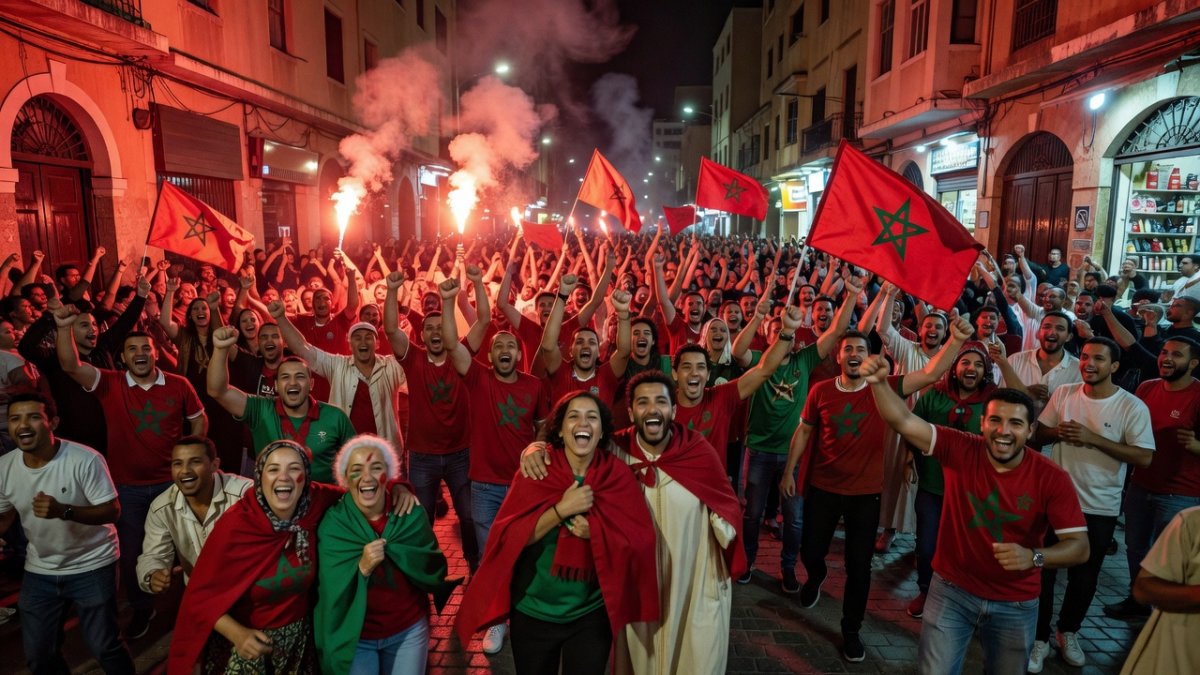
Back in Casablanca, Morocco's largest city, the emotional arc of the match was mirrored in a coffee shop popular with fans. Inside, there was a tense silence as the shootout unfolded, a collective holding of breath that felt like an eternity. When Saibari buried the decisive spot-kick, that silence gave way to a deafening roar that could likely be heard for blocks. Celebrations poured into the streets, with flares and fireworks cracking overhead, horns blaring and engines revving deep into the night.
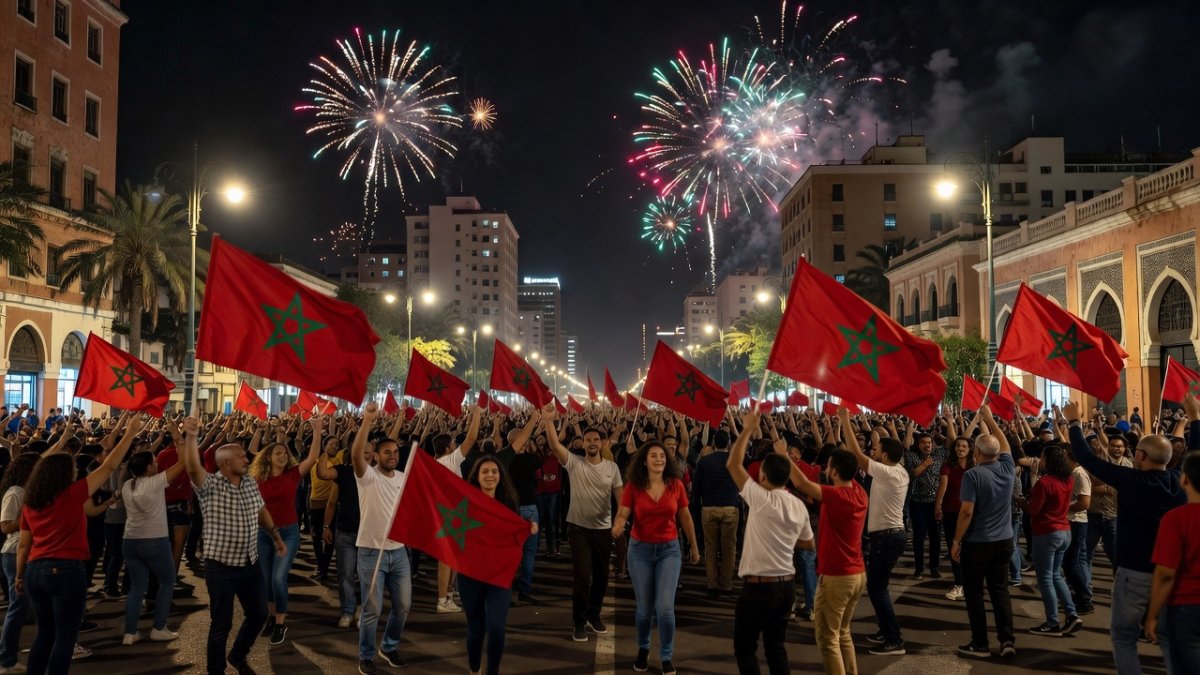
The party didn't stop at sunrise. Around 5 a.m., dozens of jubilant fans gathered on a main boulevard in Casablanca, dancing, waving Moroccan flags and chanting a warning to their next opponents: "Canada, we're coming for you." It was a scene of unbridled joy, a testament to what this team means to a nation that has fallen head-over-heels for its Atlas Lions.
Across the North Sea, the reaction was starkly different. In The Hague, Netherlands — a city with a sizable Moroccan community — the victory sparked clashes with police. Authorities reported that "heavy fireworks were set off" in the Schilderswijk district, with officers pelted with fireworks and stones. Riot squads charged the crowd and used a water cannon, with "a few individuals arrested for committing open violence." The joy of one community collided with the disappointment of another, a reminder that football's passions can sometimes spill over into the streets.
The Bafana Bafana Thread: A Historic Run Cut Short
For South Africans, this Morocco run carries a bittersweet edge. Our own Bafana Bafana returned to the World Cup for the first time since hosting in 2010, and they made history of their own. After a 2-0 loss to co-hosts Mexico in the opener and a 1-1 draw with Czechia, Bafana beat South Korea 1-0 thanks to a 63rd-minute strike from Thapelo Maseko on June 24 in Monterrey. That result saw them finish second in Group A on four points, sending them to the knockout stage for the FIRST TIME in their history.
But the dream died in heartbreaking fashion on June 28 at SoFi Stadium in Inglewood, California. Canada's Stephen Eustaquio struck in the 92nd minute, breaking Bafana's resistance in stoppage time and ending their historic run with a 1-0 defeat. It was a gut-wrenching end for a team that had captured the nation's imagination. And then, just days later, Morocco swept Canada aside 3-0 in the last 16 — the team that eliminated Bafana was then brushed off by the Atlas Lions with precision, patience and killer timing.
That juxtaposition stings for South African fans. It shows the gap between where we are and where we could be. Morocco didn't just beat Canada; they dismantled them, showcasing a level of tactical discipline and clinical finishing that Bafana couldn't match in their own moment of need.
Africa's Football Rise: A Record-Breaking Tournament
Morocco's run is part of a broader narrative that should fill every African football fan with pride. A record 10 African teams qualified for the 2026 World Cup, and the continent's representatives have been making waves. Morocco's journey began in Group C alongside Brazil, Scotland and Haiti. They drew 1-1 with Brazil — Raphinha scored for the Seleção — then beat Scotland 1-0 thanks to Saibari's fast start, and finished with a 4-2 win over Haiti on June 24 in Atlanta, scoring two goals after the 75th minute. Seven points, two wins, one draw, unbeaten.
This is a team that knows how to navigate a tournament. They were the first African team to reach a World Cup semi-final in 2022, and they previously beat Canada 2-1 in the group stage of that tournament. They have a blueprint, and they're executing it with ruthless efficiency. The victory over the Netherlands was not a fluke; it was the product of a well-drilled unit that believes it belongs among the world's elite.
For South Africa, this is both inspiring and instructive. The infrastructure, the player development pathways, the tactical sophistication — Morocco has built all of this over a decade. They have players plying their trade in Europe's top leagues, and they've created a national team culture that prioritises results over reputations. It's a model that SAFA and the PSL should be studying closely.
Lessons for South African Football: The Road Ahead
Bafana Bafana's return to the World Cup was a massive step forward, but the Round of 32 exit shows there's still work to be done. The difference between South Africa and Morocco isn't talent — we have plenty of that. It's in the details: the ability to manage a game when you're leading, the composure to see out stoppage time, the tactical flexibility to adapt when the opposition changes shape.
Morocco's goalkeeper Yassine Bounou was the difference-maker against the Netherlands, making a jaw-dropping save to deny Soufiane Rahimi in the 96th minute and then saving the crucial penalty. That's not luck; that's preparation. That's a goalkeeper who has been in these moments before, who trusts his process. South African goalkeepers need that same big-game experience, and that comes from playing in high-pressure environments week in and week out.
The PSL has improved, but our top players still need to be testing themselves against the best in Europe. Morocco has players in the Premier League, La Liga, Serie A — the full spectrum. South Africa has a handful. Until we bridge that gap, we'll continue to be a team that qualifies for tournaments but struggles to go deep. The talent is there; the pathway needs to be clearer.
What to Watch For: The Road to the Quarter-Final
Morocco's reward for their heroics was a last-16 clash with co-hosts Canada in Houston on Saturday, July 4. They dispatched the Canadians 3-0 with a display of precision, patience and killer timing — a performance that sent a chill through the rest of the tournament. But their journey would eventually end in the quarter-final, losing 0-2 to France at Gillette Stadium in Foxborough, Massachusetts on July 9, with Kylian Mbappe scoring in the 60th minute and Ousmane Dembele adding a second in the 66th.
That quarter-final exit will sting for Morocco, but it shouldn't diminish what they achieved. They went toe-to-toe with the world's best, eliminated a European giant in the Netherlands, and once again proved that African teams can compete at the highest level. The Atlas Lions have become the standard-bearer for the continent, and their performances in this tournament will inspire a generation of young players from Casablanca to Cape Town.
For South African fans, the takeaway is clear: this is what's possible when a nation commits fully to its football project. Morocco's success isn't an accident; it's the result of years of investment, planning and belief. Bafana Bafana have taken the first step by returning to the World Cup and reaching the knockout stage for the first time in their history. The next step is to build on that foundation, to create a system that produces players capable of performing on the biggest stage.
The 2026 World Cup has been a tournament of firsts for Africa. A record 10 teams qualified, Morocco reached the quarter-finals, and the continent's footballing credibility has never been higher. As the dust settles on this historic run, one thing is certain: the Atlas Lions have roared, and the world has listened. For South Africa, the challenge now is to find our own roar.
By Dante Williams, Staff Writer
This article was produced with AI-assisted research and editorial support. Reporting is based on sources cited in the article.
What's Your Reaction?
 Like
0
Like
0
 Dislike
0
Dislike
0
 Love
0
Love
0
 Funny
0
Funny
0
 Wow
0
Wow
0
 Sad
0
Sad
0
 Angry
0
Angry
0

Breaking News and Investigations Correspondent at Global1.News. Based in London, covering global breaking news, security, and investigative stories. Known for digging deeper and connecting the dots across continents.











Comments (0)