
Kuwait Analyst Warns Iran Seeks to Drag Region Into Continuous Conflict
Kuwaiti analyst Ghanim Alsulaimani warns that Iran's strikes are a deliberate strategy to drag the Gulf into continuous conflict, as Kuwait endures six months of missiles, drones and economic pressure at the heart of the US-Iran war.
The six-month-old US-Iran war has transformed the Persian Gulf into a crucible of fire, with Kuwait—a nation that has hosted American forces for over three decades—emerging as one of the most heavily targeted frontline states. As Tehran's missiles and drones continue to rain down on Kuwaiti soil, a prominent Kuwaiti political analyst has issued a stark warning: Iran's strikes are not about the American military presence, but a calculated strategy to plunge the entire region into continuous, multi-year conflict.
Kuwait's Frontline Ordeal: Analyst Warns Iran Seeks Regional Chaos, Not US Withdrawal
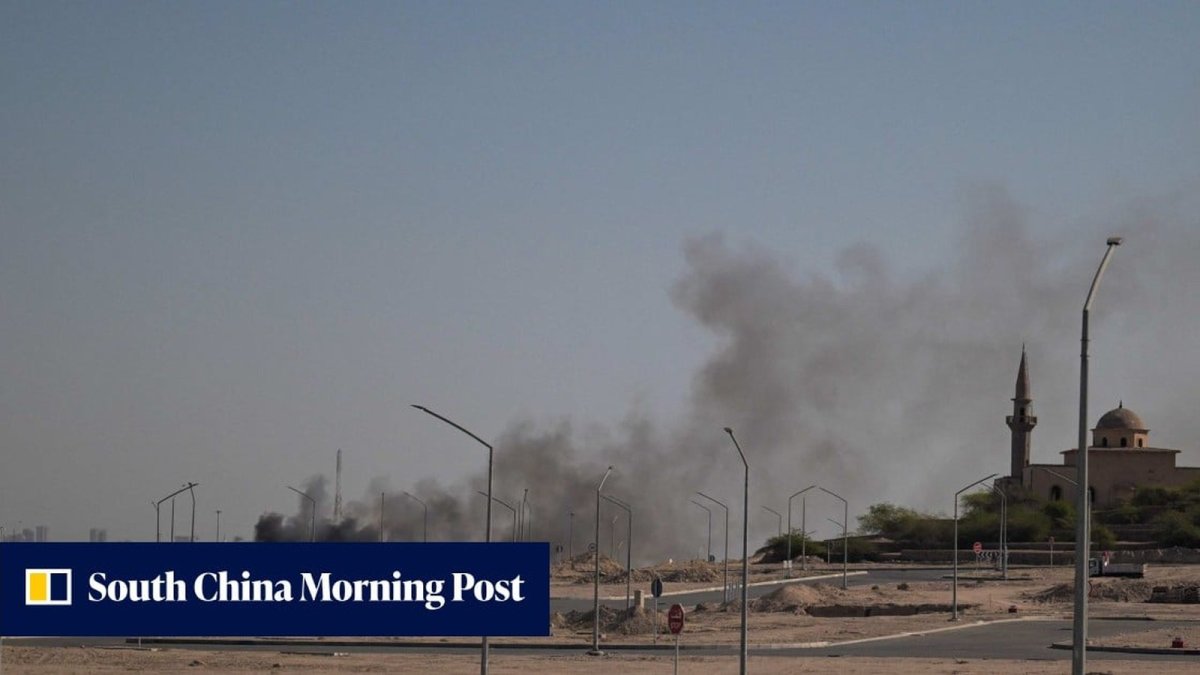
Kuwait City, Kuwait - August 25, 2026 - The smoke has barely cleared over Kuwait's damaged infrastructure, but the strategic picture is becoming increasingly clear. In an interview with Al Arabiya English published today, Kuwaiti political analyst Ghanim Alsulaimani delivered a sobering assessment of Iran's war aims, arguing that Tehran's relentless bombardment of Kuwait and other Gulf states is a deliberate attempt to transform the region into a permanent battleground. His warning comes as Kuwait reels from six months of unprecedented attacks that have killed 4 soldiers and 8 civilians, injured 190 more, and subjected the nation to 178 missiles and 154 drones—a relentless barrage that has tested the very fabric of Kuwaiti society.
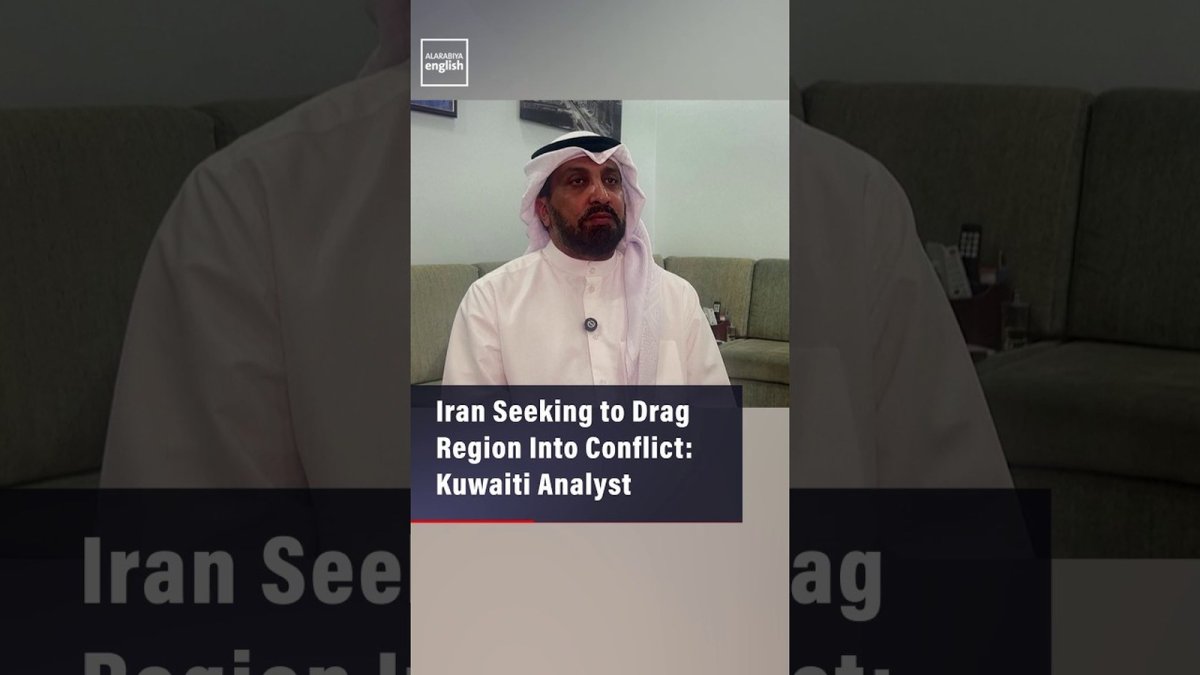
The Analyst's Warning: Iran's Strategy Beyond the US Presence
Alsulaimani's analysis cuts through the conventional narrative that Iran's attacks are merely a response to the American military footprint in the Gulf. "The aim [of Iran] is to use Gulf states as a theatre to pressure the US side into halting its attacks," he told AFP in a companion interview. "However, the reality is that the US president is unconcerned. He does not consider stopping or backing down simply because Kuwait is targeted." This assessment suggests that Tehran has fundamentally miscalculated the calculus in Washington, yet persists in its strategy of regional escalation—a paradox that Alsulaimani believes will have long-lasting consequences.
The analyst's warning that "tensions could take years to ease" reflects a grim reality for Gulf states caught between Iranian aggression and American resolve. The Institute for the Study of War (ISW) in its August 24 Iran Update assessed that Tehran's war aims include securing international recognition of Iranian control over the Strait of Hormuz, degrading the US ability and willingness to continue the war, and—critically—dividing the United States and Israel from the Arab states. This divide-and-conquer strategy is playing out in real-time across the Gulf, with Iran simultaneously threatening cooperation with Washington while offering rhetorical olive branches to regional capitals.
Kuwait's Six-Month Ordeal: A Nation Under Siege
The human and material toll on Kuwait has been staggering. From the very first day of the war on February 28, when Kuwait International Airport was struck, the nation has been on the frontlines of a conflict not of its making. The US embassy in Kuwait was hit on March 2 and closed indefinitely; a Kuwait City tower was engulfed in flames on March 8; and the Ali Al Salem air base—a critical hub for American operations—was left "all but uninhabitable" within the first two weeks of fighting. Iranian strikes have deliberately targeted civilian infrastructure, including water desalination plants and energy installations, with a Kuwaiti desalination plant damaged as recently as July 17.
Kuwait's military has responded with remarkable resilience. Kuwaiti forces have monitored and intercepted 178 ballistic missiles and 354 drones, according to a Kuwaiti spokesman in March. But the attacks have taken a psychological toll. As one Kuwaiti national told AFP: "Targeting locations where the Americans are stationed has created fear and anxiety among residents." This anxiety is compounded by the economic stranglehold of the Strait of Hormuz closure, which has hit Kuwait's oil revenues hard—a devastating blow for a nation locked into the Gulf waterway and heavily dependent on energy exports.
The Strategic Dilemma: Between American Protection and Iranian Retaliation
Alsulaimani's most poignant observation speaks to Kuwait's existential dilemma. "Kuwait recognises America's key role in liberating it from Saddam Hussein, but it also recognises that it is now coming under Iranian attack because it hosts American forces," he said. "The dilemma is that it faces challenges because of its geographical position and regional power dynamics, making it difficult to find alternatives to the United States." This statement encapsulates the tragedy of Gulf security architecture: the very presence that guarantees Kuwait's sovereignty also makes it a target.
The analyst's rhetorical question—"Just imagine if the American forces weren't in Kuwait"—cuts to the heart of the matter. Without the US security umbrella, Kuwait would likely face even greater Iranian pressure, potentially facing the kind of pervasive Iranian influence that Baghdad has had to manage. Yet with that umbrella comes a target on Kuwait's back. The May 7 abandonment of Trump's "Project Freedom" after Saudi Arabia and Kuwait suspended access to bases and airspace demonstrates the limits of Gulf cooperation with Washington—even as Iran's threats continue unabated.
Iran's Broader Gulf Strategy: Threats, Coercion, and Divide-and-Conquer
Iran's strategy extends far beyond Kuwait. On August 23, an op-ed aligned with Supreme Leader Khamenei warned that Iran would launch retaliatory attacks against the interests of states cooperating with the US, publishing an image of metal cages over reported Emirati fuel storage tanks—an implicit threat against Emirati energy infrastructure. This coercive diplomacy targets the UAE, the only Gulf country to have announced severing financial ties with Iran, while simultaneously pressuring other Gulf states to distance themselves from Washington.
The ISW assessment identifies a clear Iranian playbook: divide the United States and Israel from the Arab states, restore deterrence vis-a-vis Washington and its regional partners, and secure international recognition of Iranian control over the Strait of Hormuz. Tehran is also advancing plans for Hormuz service fees, effectively attempting to monetize its closure of the world's most important energy chokepoint—through which approximately 20% of global oil consumption transits, along with nearly 50% of global urea and sulfur exports. Meanwhile, Iraqi and regional governments are preparing land-based transregional pipelines to circumvent the Strait, a long-term strategic response to Iranian coercion.
Economic Warfare and the Regional Fallout
The economic dimensions of this conflict are profound. Brent crude, while falling 1.8% to about $93 a barrel on August 24, remains nearly 30% higher than when the war began. Kuwait, Iraq, Qatar, and the UAE have all seen export revenue declines due to the Hormuz closure, straining GCC economic diversification efforts that were already under pressure. Iran itself is feeling the pinch: the free-market dollar rate hit 200,000 tomans on August 24, and while Central Bank chief Hemmati insists "hardship is not the same as collapse," the Islamic Republic's economy is clearly under severe strain.
The United States has responded with expanded sanctions. On August 24-25, the US Treasury designated 60 individuals, entities, and vessels—excluding Chinese banks—in a move that Treasury Secretary Scott Bessent framed as a message of resolve: "We want to make clear here today that no one is above the reach of U.S. sanctions." This escalation suggests Washington is committed to economic warfare even as military operations continue. The war's cost estimate of $37.5 billion, cited by Defense Secretary Pete Hegseth on July 21, underscores the enormous financial burden of this conflict.
Kuwait's Resistance and the Path Forward
Despite the devastation, Kuwait has not been passive. The Wall Street Journal reported that Kuwait launched attacks on Iran-backed Iraqi militias from its own territory. On May 1, Kuwaiti soldiers exchanged fire with six IRGC members and arrested four during an Iranian raid on Bubiyan Island. In July, WSJ reported that Bahraini and Kuwaiti warplanes struck Iran in a rare Gulf retaliation—though Kuwait denied the claim. Even a tragic friendly fire incident, when a Kuwait Air Force F/A-18 accidentally shot down three US F-15E fighters in early March, has not broken the alliance.
Alsulaimani's words—"There is no place like the homeland, and no homeland like Kuwait"—resonate deeply in this context. His warning that tensions could take years to ease is not defeatism but realism. The path forward requires a nuanced understanding that Iran's strategy is not about the US presence per se, but about reshaping the regional order in Tehran's favor. As Pakistan's army chief and interior minister claimed "significant progress" in Tehran talks to revive a collapsed June 2026 framework agreement, the diplomatic track remains alive—but fragile.
For Kuwait and the Gulf states, the challenge is to navigate between Iranian coercion and American resolve while preserving their own sovereignty and economic interests. The legacy of the 1990-91 Gulf War, when a US-led coalition liberated Kuwait from Saddam Hussein, remains a powerful memory. But the current conflict is different: it is not about territorial conquest but about regional hegemony, energy security, and the future of the Gulf's security architecture. As Alsulaimani's warning makes clear, the road ahead will be long, and the region's stability will depend on the ability of Gulf states to chart a course that neither capitulates to Iranian pressure nor abandons the American security umbrella that has guaranteed their survival for decades.
By Malik Hassan, Staff Writer
This article was produced with AI-assisted research and editorial support. Reporting is based on sources cited in the article.
What's Your Reaction?
 Like
0
Like
0
 Dislike
0
Dislike
0
 Love
0
Love
0
 Funny
0
Funny
0
 Wow
0
Wow
0
 Sad
0
Sad
0
 Angry
0
Angry
0

Middle East Correspondent at Global1.News. Based in Beirut, covering politics, conflict, energy, and society across the Middle East. Brings context and depth to a region often reduced to headlines.










Comments (0)