
Brazil Blocks US Officials Over Election Fears
Brazil denies visas to two US State Department officials over election interference fears, as Lula da Silva and Flávio Bolsonaro gear up for October's presidential vote.
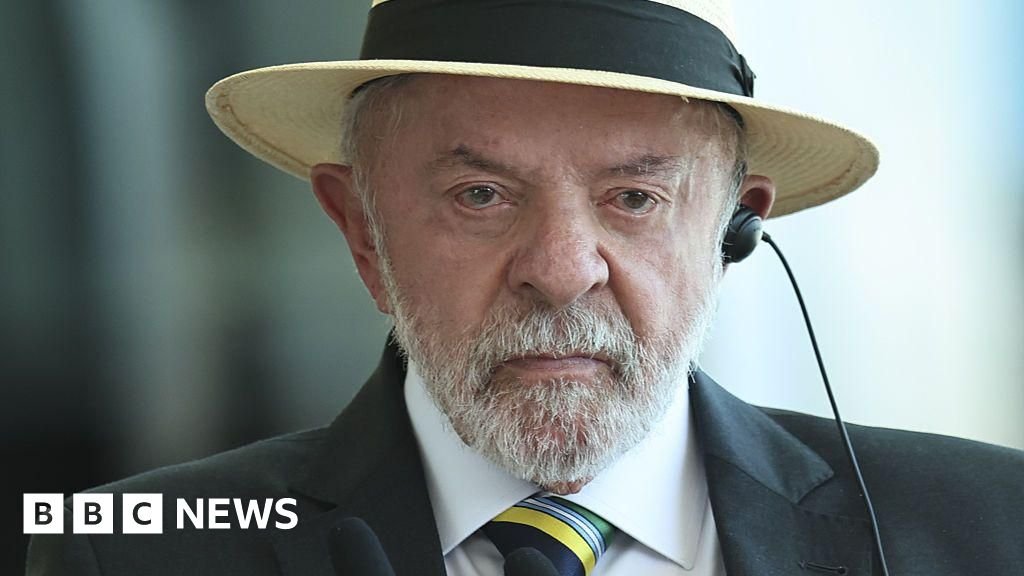
Brazilian President Luiz Inácio Lula da Silva announced this week that his government had blocked visas for two United States officials scheduled to arrive in late July. The decision stems from concerns that the visitors intended to question the integrity of Brazil's October presidential election. Lula stated on Wednesday that the officials were sent to meddle in domestic affairs at a sensitive time for the country's democratic institutions.
Brazil Blocks US Officials Over Election Fears
Brasilia, Brazil — The visa denials mark the latest point of friction between Brazilian authorities and foreign actors ahead of the contest between incumbent President Luiz Inácio Lula da Silva and challenger Flávio Bolsonaro. Government sources confirmed that the two State Department officials had planned meetings focused on freedom of expression, religion, and election integrity, including sessions with the right-wing candidate. The Brazilian government cited risks of unfounded claims that could undermine public confidence in the vote.
A Diplomatic Clash Over Election Integrity
The two officials identified in the matter are Riley M Barnes, assistant secretary of state for democracy, human rights, and labor, and Samuel Samson, a deputy assistant secretary in the same bureau. They were due to travel for discussions that Brazilian officials viewed as an attempt to cast doubt on the electoral process. The United States State Department has previously described similar suggestions of interference as baseless. Lula's government proceeded with the visa refusals after reviewing the planned itinerary and its potential impact on the October vote.
The planned visit by Riley M Barnes and Samuel Samson carried the nominal purpose of discussing freedom of expression, religion, and election integrity with Brazilian officials and the opposition candidate. Brazilian authorities interpreted the itinerary as an opening for external actors to plant doubts about the October vote, prompting the visa blocks through Itamaraty channels. This move aligns with Latin America's long-standing diplomatic principle of non-interference, where foreign commentary on domestic elections is routinely viewed as a threat to sovereignty rather than helpful oversight.
State Department descriptions of similar interference claims as baseless have done little to ease Brazilian concerns. Officials in Brasilia see the timing of the trip, coinciding with heightened campaign tensions, as particularly risky given past patterns of foreign statements being amplified by local actors to erode trust. Itamaraty's decision reflects a protective stance toward institutions that have managed national elections without external validation for decades.
Regional history reinforces this caution. Latin American governments have repeatedly pushed back against U.S. officials weighing in on voting processes, recalling episodes where such interventions coincided with political instability. Brazil's refusal to host the visitors underscores a determination to keep electoral matters internal at a moment when public confidence remains fragile.
Lula vs Bolsonaro: The Rematch
This diplomatic standoff arrives as Brazil prepares for a high-stakes presidential contest that pits the incumbent against a familiar political dynasty. The October election will feature 80-year-old incumbent President Luiz Inácio Lula da Silva facing Flávio Bolsonaro, son of former president Jair Bolsonaro. Flávio Bolsonaro has received public endorsements from Argentina's President Javier Milei and Israeli Prime Minister Benjamin Netanyahu. The contest occurs against a backdrop of ongoing tensions over Brazil's electronic voting system, which Flávio Bolsonaro has referenced in recent diplomatic meetings. Brazilian authorities have moved to limit external voices that could amplify questions about the machines before voters cast ballots.
Election Denialism and the January 8 Legacy
Jair Bolsonaro received a 27-year prison sentence for plotting a coup after his loss in the previous election and was already barred from running for office due to repeated unfounded claims about electronic voting machines. He voiced doubts about the system to foreign diplomats during his time in office. After the 2022 defeat, his supporters stormed Congress, the Supreme Court, and the Presidential Palace on January 8, 2023, in events that echoed patterns of post-election unrest seen elsewhere. Flávio Bolsonaro later told diplomats that Brazil's machines share origins with those in Venezuela and referenced a CIA report on fraud there, though he subsequently stated he sought more international observers rather than questioning the system outright.
Jair Bolsonaro's repeated challenges to electronic voting machines began during his 2018 campaign and intensified after the 2022 defeat, creating a persistent narrative that his son Flávio has carried forward. The 27-year sentence for coup plotting stems directly from efforts to undermine the certified results, including meetings with foreign diplomats where doubts were voiced. This record continues to shape current fears that any external questioning could reignite the same unrest that culminated in the January 8, 2023, invasion of Congress, the Supreme Court, and the Presidential Palace.
The events of that day mirrored the January 6 Capitol attack in the United States, with supporters of a defeated candidate targeting the very institutions responsible for certifying elections. Brazilian authorities remain alert to how similar rhetoric, even when framed as calls for observers, can mobilize groups already primed by years of unsubstantiated claims. The legacy of those actions makes any foreign involvement in election discussions especially sensitive.
Flávio Bolsonaro's references to Venezuelan voting technology and a CIA report on fraud there have kept the issue alive in diplomatic circles. Yet the underlying pattern remains one of repeated challenges to a system that has produced consistent outcomes without evidence of widespread manipulation, leaving institutions wary of outside voices that could lend credibility to old accusations.
A Voting System Praised by Experts
Brazil's Superior Electoral Court has rejected claims questioning the electronic voting machines, noting that the country has used them since 1996 without recorded systemic fraud. Each machine requires fingerprint verification to confirm voter identity and prevent multiple or proxy votes. The devices produce a paper tally that is displayed for comparison with official results, and independent audits occur after each election cycle. Experts receive invitations in advance to attempt to identify vulnerabilities, a process designed to build public trust in the independent system managed by Brazilian institutions.
Brazil's electronic voting machines, in use since 1996, incorporate multiple safeguards that experts have repeatedly tested and endorsed. Fingerprint verification prevents proxy or duplicate voting, while each machine generates a paper record displayed to the voter for immediate confirmation. Post-election independent audits and open invitations for specialists to attempt breaches have produced no documented cases of systemic fraud, establishing the system as one of the most scrutinized and resilient in the world.
These technical features carry political weight in a region where voting technology disputes have fueled unrest in several countries. By maintaining full control through the Superior Electoral Court, Brazil has avoided reliance on foreign vendors or observers, a point of national pride that resonates across Latin America. Defending this framework means protecting not only the October vote but also the institutional autonomy that has distinguished Brazilian elections from more contested processes elsewhere.
The decision to limit external commentary reflects an understanding that even well-intentioned foreign visits can be leveraged to question these safeguards. With experts already granted access to probe for weaknesses, Brazilian officials see little need for additional diplomatic scrutiny that could amplify unproven concerns rather than reinforce established trust.
What This Means for the Region
The visa decision reflects broader patterns of election-related polarization across Latin America, where domestic institutions often face external commentary on voting procedures. Brazil maintains its own electoral framework through the Superior Electoral Court, separate from direct foreign oversight. Similar tensions have appeared in neighboring countries where claims about voting technology have fueled unrest after results are announced. The episode underscores ongoing questions about the role of United States officials in regional electoral matters, particularly when such visits coincide with candidates who have questioned established national systems. Brazilian authorities have signaled they will continue to shield the October vote from outside efforts that could repeat the disruptions witnessed in early 2023.
Flávio Bolsonaro's endorsements from Argentina's Javier Milei and Israel's Benjamin Netanyahu illustrate how regional and international polarization now extends into Brazilian electoral debates. These connections raise the stakes for any perceived foreign involvement, as they link domestic candidates to external figures who have themselves questioned voting systems in their own contexts. The visa decision signals Brazil's intent to insulate its process from such cross-border influences.
Comparisons raised by Flávio to Venezuela's machines highlight ongoing regional sensitivities around voting technology and fraud allegations. Across Latin America, similar claims have contributed to democratic backsliding debates, with institutions in multiple countries facing pressure from both domestic opposition and outside commentary. Brazil's approach emphasizes self-reliance through the Superior Electoral Court to avoid repeating those patterns.
Foreign interference concerns resonate deeply because recent years have shown how external statements can accelerate local divisions. By blocking the visit, Brazilian authorities are asserting that electoral integrity remains a sovereign matter, consistent with broader Latin American resistance to outside actors shaping domestic political outcomes at critical moments.
By Elena Vasquez, Staff WriterThis article was produced with AI-assisted research and editorial support. Reporting is based on sources cited in the article.
What's Your Reaction?
 Like
0
Like
0
 Dislike
0
Dislike
0
 Love
0
Love
0
 Funny
0
Funny
0
 Wow
0
Wow
0
 Sad
0
Sad
0
 Angry
0
Angry
0

Latin America Correspondent at Global1.News. Based in Mexico City, covering politics, economics, energy, and culture across the region. Brings an on-the-ground perspective to stories spanning from the Rio Grande to Patagonia.














Comments (0)