
Indonesian stocks rise after measures to address recent rout
Indonesia’s equity market showed a modest rebound on Tuesday, reflecting a rapid policy response after a record‑breaking two‑day rout that erased roughly $82 billion in value.
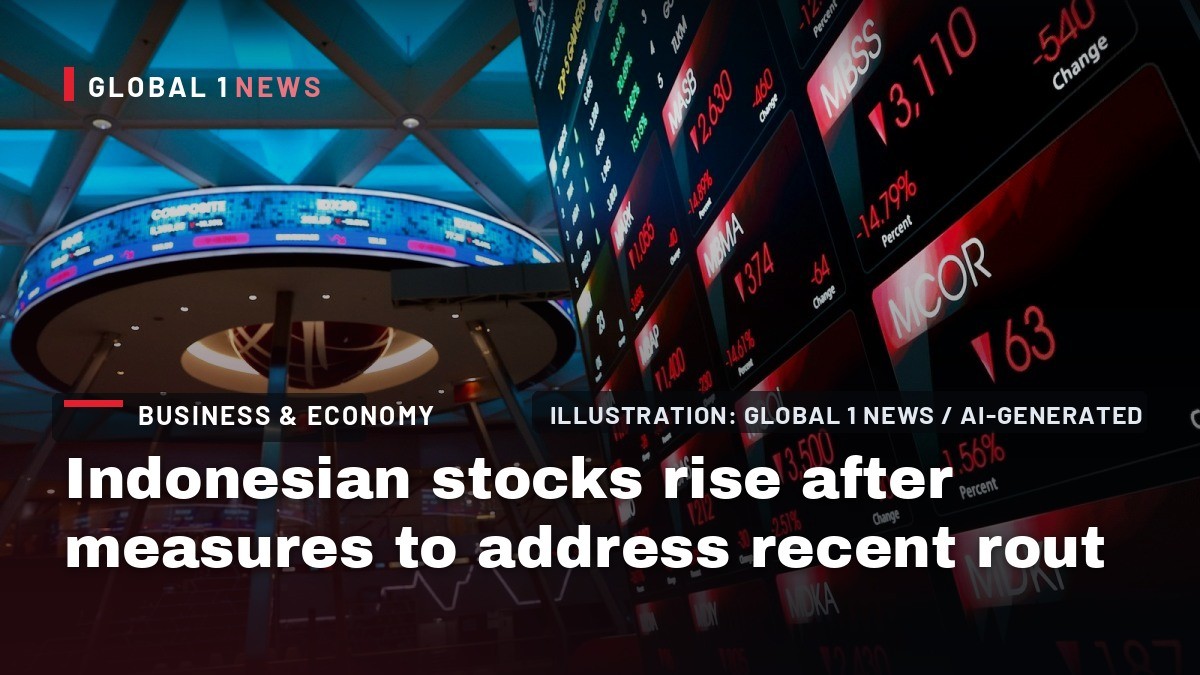
Indonesia’s equity market showed a modest rebound on Tuesday, reflecting a rapid policy response after a record‑breaking two‑day rout that erased roughly $82 billion in value. The Jakarta Composite Index climbed about 4 percent, yet the rally remains tentative against a backdrop of a 40 percent decline for the year and a broader regional malaise that has seen Indonesia emerge as the world’s worst‑performing market in 2026. The episode underscores how fragile investor confidence can become when global index providers signal a downgrade, and it highlights the delicate balancing act the Prabowo administration faces in safeguarding market integrity while preserving fiscal and monetary credibility.
MSCI’s “standalone” warning and its market shock
The catalyst for the sell‑off was MSCI’s Friday alert that Indonesia might be shifted from the “emerging markets” category to a “standalone” classification. This proposed downgrade is more severe than the earlier threat of a “frontier” status downgrade issued in January. MSCI’s concern centres on Indonesia’s lag in improving ownership transparency and curbing coordinated trading, issues it deemed “much worse” than previously flagged. The prospect of a “standalone” rating threatens to strip the country of passive fund inflows that track MSCI’s global benchmarks, amplifying fears of a prolonged capital outflow.
Investors and officials reacted sharply. The index provider’s warning triggered a wave of selling that drove the Jakarta Composite to a six‑year low on Monday, marking the market’s worst performance globally for the week. The rapidity of the decline illustrates how index‑linked funds can magnify market volatility when a jurisdiction’s classification is called into question.
Regulatory response: Excluding concentrated holdings
In an effort to address the transparency concerns highlighted by MSCI, the Indonesia Stock Exchange (IDX) announced that it would exclude from its benchmark any stocks with a high concentration of ownership by a single person or entity. IDX President Director Jeffrey Hendrik emphasized that the move is “what is best for our market,” noting that the affected stocks represent roughly 18 percent of the total index weight. By removing these heavily concentrated holdings, the exchange hopes to present a more accurate picture of market movements and mitigate the risk of coordinated trading that has drawn MSCI’s scrutiny.
Allspring Global Investments’ portfolio manager Gary Tan welcomed the step, stressing that the effectiveness of the exclusion will hinge on implementation. He warned that the “bigger incremental risk to flows is likely to come from active rather than passive funds,” suggesting that active managers may still target the excluded companies through direct holdings or alternative products, thereby sustaining exposure despite the index removal.
Market‑level safeguards: Adjusted price limits
Beyond the index composition changes, the IDX also tightened daily price‑movement controls to curb panic selling. The daily down‑limit on stock prices was halved from 15 percent to 7 percent, and a 1‑rupiah floor was introduced for shares priced at 14 rupiah or less. These measures aim to dampen volatility and give market participants a narrower window for orderly trading, a tactic reminiscent of circuit‑breaker mechanisms used in other emerging markets during periods of stress.
The efficacy of such limits remains uncertain. While they may reduce the speed of price collapses, they also risk constraining liquidity and potentially delaying price discovery, especially in a market already grappling with a sharp contraction in foreign inflows.
Policy coordination: Finance ministry and regulator actions
On Monday, President Prabowo Subianto convened a meeting with senior finance officials, including the head of the Financial Services Authority (OJK), the finance minister, and the governor of Bank Indonesia (BI). The gathering signalled a coordinated approach to the crisis, with OJK chief Friderica Widyasari Dewi pledging to advance capital‑market reforms focused on transparency, liquidity, and enforcement against coordinated trading and related violations.
Friderica’s remarks highlighted the regulator’s intent to strengthen law‑enforcement mechanisms, a critical step given the market’s perception of governance gaps. However, she also warned that delisting stocks from the Jakarta Composite would not automatically shield investors from concentration risk, as exposure could persist through mutual funds or other investment vehicles that continue to hold the affected equities.
Currency pressures and monetary policy outlook
The market turmoil has reverberated into the foreign‑exchange arena. The rupiah edged slightly stronger to 18,000 per U.S. dollar on Tuesday, yet it remains near the record low of 18,190 reached in June, a level that preceded a key policy decision by BI. The currency has depreciated about 7 percent this year, making it the worst‑performing in the region.
Bank Indonesia is expected to hold its policy rate steady on Wednesday, though some economists have floated the prospect of a rate hike to defend the rupiah. The central bank’s dilemma reflects a classic emerging‑market trade‑off: tightening monetary policy could buttress the currency but might also strain domestic growth at a time when fiscal pressures are already mounting.
Sovereign rating implications
Fitch Ratings’ sovereign team, represented by director George Xu, noted that the MSCI warning and the ensuing market sell‑off reinforce the risks identified when Fitch revised Indonesia’s outlook to negative in March. While the rating agency does not anticipate an immediate credit impact from the MSCI consultation announcement, it cautioned that sustained external pressure could elevate borrowing costs and erode external buffers, thereby tightening fiscal space.
Such rating dynamics are crucial for Indonesia, whose fiscal health and central bank independence have already been under scrutiny. A downgrade or a further negative outlook could raise the cost of sovereign borrowing, potentially curbing the government’s ability to finance infrastructure projects and social programmes that underpin its development agenda.
Strategic outlook: Balancing reforms and confidence
Indonesia’s short‑term trajectory will depend on how effectively the government and regulators can translate policy announcements into tangible market reforms. Excluding concentrated holdings from the benchmark is a visible step, yet the broader challenge lies in rebuilding investor confidence in the country’s governance standards and fiscal discipline.
In the medium term, the market’s recovery will also be shaped by external factors, including global risk sentiment and the actions of major index providers. If MSCI ultimately reclassifies Indonesia as “standalone,” the country may need to cultivate alternative channels for foreign capital, such as sovereign bonds or direct equity placements, to offset the loss of passive fund inflows.
For now, the modest rebound in the Jakarta Composite offers a tentative sign that policy measures can temper panic, but the underlying vulnerabilities—ownership concentration, perceived regulatory gaps, and currency weakness—remain. The Prabowo administration’s ability to navigate these intertwined challenges will determine whether Indonesia can regain its standing as Southeast Asia’s economic engine or slip further into a cycle of capital outflows and fiscal strain.
This article was produced with AI-assisted research and editorial support. Reporting is based on the source material cited below. Sources: Daily Sabah Middle East; dailysabah.com; Global1.News (20 October 2026).
By Malik Hassan, Staff Writer
What's Your Reaction?
 Like
0
 Dislike
0
 Love
0
 Funny
0
 Wow
0
 Sad
0
 Angry
0

Middle East Correspondent at Global1.News. Based in Beirut, covering politics, conflict, energy, and society across the Middle East. Brings context and depth to a region often reduced to headlines.














Comments (0)