
TP-Link tries to appease Trump admin with pledge to assemble routers in US
TP‑Link’s latest move—promising to assemble Wi‑Fi 8 routers in Mississippi—reads like a classic playbook for a Chinese‑origin tech firm trying to dodge a Trump administration that’s turned a cold shoulder on foreign‑made networking gear.
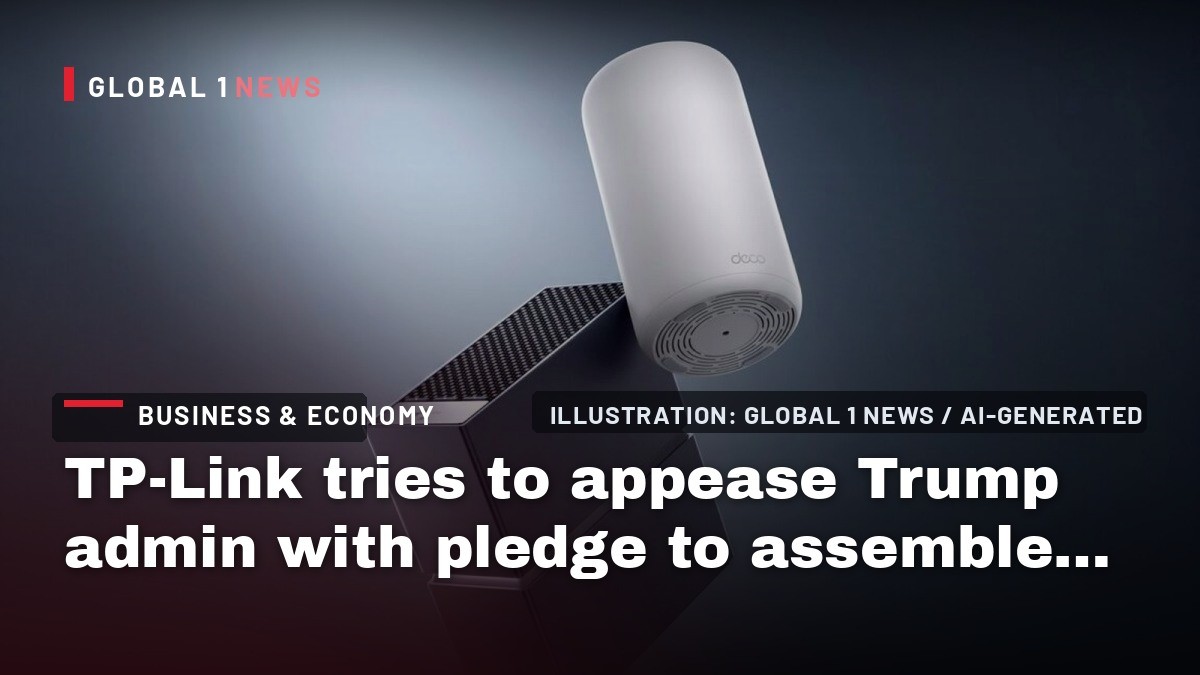
TP‑Link’s latest move—promising to assemble Wi‑Fi 8 routers in Mississippi—reads like a classic playbook for a Chinese‑origin tech firm trying to dodge a Trump administration that’s turned a cold shoulder on foreign‑made networking gear. The company’s press release says it will start domestic assembly “as early as” 2027, but the timing is tethered to a regulatory gamble: it needs an FCC exemption before it can even ship the new routers to American consumers. In practice, that means the whole on‑shoring promise is a lever to pull on the political gate‑keeper, not a hard‑won strategic shift.
Why the FCC ban matters to independent providers
The FCC’s ban on consumer‑grade routers that are wholly or partly manufactured abroad has turned into a choke point for anyone whose supply chain still leans on Chinese components. TP‑Link’s own admission that most of its parts come from China, even if final assembly moves to Vietnam or the U.S., underscores a broader industry reality: the domestic component market simply doesn’t exist at the scale needed for modern Wi‑Fi 8 devices. That’s why the agency has been handing out exemptions to the likes of Netgear, Asus, and even SpaceX’s Starlink division—companies that can point to a robust U.S.‑based design and firmware pipeline, even if the silicon still arrives from overseas.
For independent hosting providers and boutique networking firms, the lesson is stark. If you can’t prove a “U.S.‑only” supply chain, you’re stuck in a regulatory limbo that can stall product launches for months or years. The risk isn’t just a delay; it’s a loss of market relevance. In a world where Wi‑Fi 8 is being touted as the next leap for home and small‑business connectivity, waiting on an exemption can mean watching your customers jump ship to a competitor that already cleared the FCC hurdle.
The on‑shore assembly promise: hype or hedge?
TP‑Link’s Letter of Intent with Keytronic to assemble routers in Corinth, Mississippi, is framed as a “nearly $1 billion investment” that will create “hundreds of new jobs.” The numbers sound impressive, but the source material makes it clear that the move is conditional on regulatory approval. The company itself says the investment will only materialize if the FCC grants the exemption. That conditionality turns the Mississippi plant from a strategic asset into a bargaining chip.
From a founder’s perspective, the risk is two‑fold. First, you’re betting on a political outcome that can shift with a single press conference. Second, you’re tying your supply‑chain flexibility to a single domestic assembly line that still depends on imported components. If the FCC drags its feet—or if a state AG coalition forces a deeper audit of your supply chain—the whole plan can stall, leaving you with a half‑built factory and a product that can’t legally reach the market.
Security narratives and the reality on the ground
TP‑Link’s security pitch leans heavily on the claim that user data is encrypted and stored on AWS in Virginia, and that the company will not share data with foreign governments. The press release also stresses that firmware and software are developed in the United States. Yet the source material notes that TP‑Link routers have been part of high‑profile botnets linked to Chinese state actors, and that the Russian GRU has also compromised the same devices. The fact that a “AirSnitch” style attack works across a range of vendors—including Netgear, D‑Link, and Cisco—shows that the problem is systemic, not unique to TP‑Link.
For hosting providers, the takeaway is practical: you can’t rely on a vendor’s PR spin to guarantee security. You need to vet the firmware supply chain, enforce strict patching regimes, and consider network segmentation. The fact that the FCC requires a DoD or DHS determination on national‑security risk highlights that the agency sees the threat surface as real, not just political posturing.
The political firestorm: state AGs and the Trump administration
TP‑Link is not just wrestling with the FCC; it’s also in the crosshairs of a coalition of Republican state attorneys general from Florida, Montana, Iowa, and Nebraska, who have sued the company for allegedly misleading consumers about its Chinese ties. A broader group of 21 Republican AGs sent a letter to the FCC demanding stricter scrutiny of TP‑Link’s exemption request. This political pressure adds another layer of uncertainty for any company that depends on a clear regulatory path.
For independent providers, the lesson is to anticipate that political winds can shift the regulatory landscape overnight. If you’re building a business that relies on hardware that could become a political flashpoint, you need contingency plans—alternative hardware vendors, the ability to pivot to software‑only solutions, or even in‑house hardware design if you have the capital. Ignoring the political dimension is a recipe for sudden supply‑chain disruption.
What “domestic assembly” actually delivers
The FCC’s lack of clear guidelines on how much U.S. content is enough for an exemption is a problem the source material highlights. TP‑Link’s corporate affairs officer Steve Kovsky admits there are no published thresholds—no “25 percent U.S.” rule to aim for. This ambiguity means that “domestic assembly” can become a box‑checking exercise rather than a genuine shift in manufacturing risk.
In practice, assembling a router in Mississippi while still importing the majority of its silicon and RF components from China does little to mitigate the core security concerns that the FCC and DoD are flagging. For founders, the focus should be on the parts of the supply chain you can actually control: firmware integrity, secure boot, and transparent supply‑chain documentation. Those are the levers that will actually move the needle in an exemption review, not the number of screws you tighten in a Mississippi plant.
Business‑risk lens: evaluating the TP‑Link play
From a risk‑management standpoint, TP‑Link’s approach is a classic case of “regulatory appeasement” that may not translate into a competitive advantage. The company is betting that the political goodwill generated by a Mississippi job factory will outweigh the lingering security and supply‑chain concerns that have already landed it in lawsuits and FCC scrutiny. The conditional nature of the investment—only happening if the exemption is granted—means the plan is fragile.
Independent hosting providers should treat TP‑Link’s announcement as a cautionary tale. If you’re sourcing routers or networking gear, ask yourself: does the vendor have a clear, documented path to regulatory clearance? Are they transparent about component origins? And most importantly, can you afford to lose a product line if the FCC says “no”? If the answer is “no,” diversify your hardware stack now.
Actionable steps for founders and providers
First, map out the regulatory requirements for any hardware you plan to sell in the United States. The FCC exemption process is not a formality; it involves a DoD or DHS security determination and can be delayed by political actors. Second, audit your supply chain for component origin. If you can’t source critical parts domestically, be prepared to justify why imported components don’t pose a national‑security risk. Third, build a firmware security program that includes signed updates, secure boot, and regular third‑party audits—these are the hard facts the FCC looks at, not just press releases.
Finally, keep an eye on the political landscape. State AG lawsuits, like those filed against TP‑Link, can signal broader regulatory crackdowns that may affect your entire product line. Have a contingency plan: alternative vendors, a software‑only offering, or a rapid pivot to a different market segment. In a world where “Made in the USA” is becoming a regulatory requirement rather than a marketing tagline, the only way to stay ahead is to own the supply‑chain risk, not just hope political goodwill will smooth it over.
— Allan Ali, Founder
This article was produced with AI-assisted research and editorial support. Reporting is based on the source material cited below. Sources: Ars Technica; arstechnica.com; Global1.News (20 October 2026).
By Allan Ali, Global1.News
What's Your Reaction?
 Like
0
 Dislike
0
 Love
0
 Funny
0
 Wow
0
 Sad
0
 Angry
0

Publisher of Global1.News. Automation architect, systems builder, and the guy making sure the truth gets published.













Comments (0)