
Spain's Storm Adam Cuts Off a Coast and Leaves a Region Counting Its Dead
Storm Adam has cut off Spain's Marina Alta and La Safor coasts, forcing 145 municipalities to confine residents and sending helicopters to lift people from rooftops in Oliva and Pego, while the death toll remains provisional.
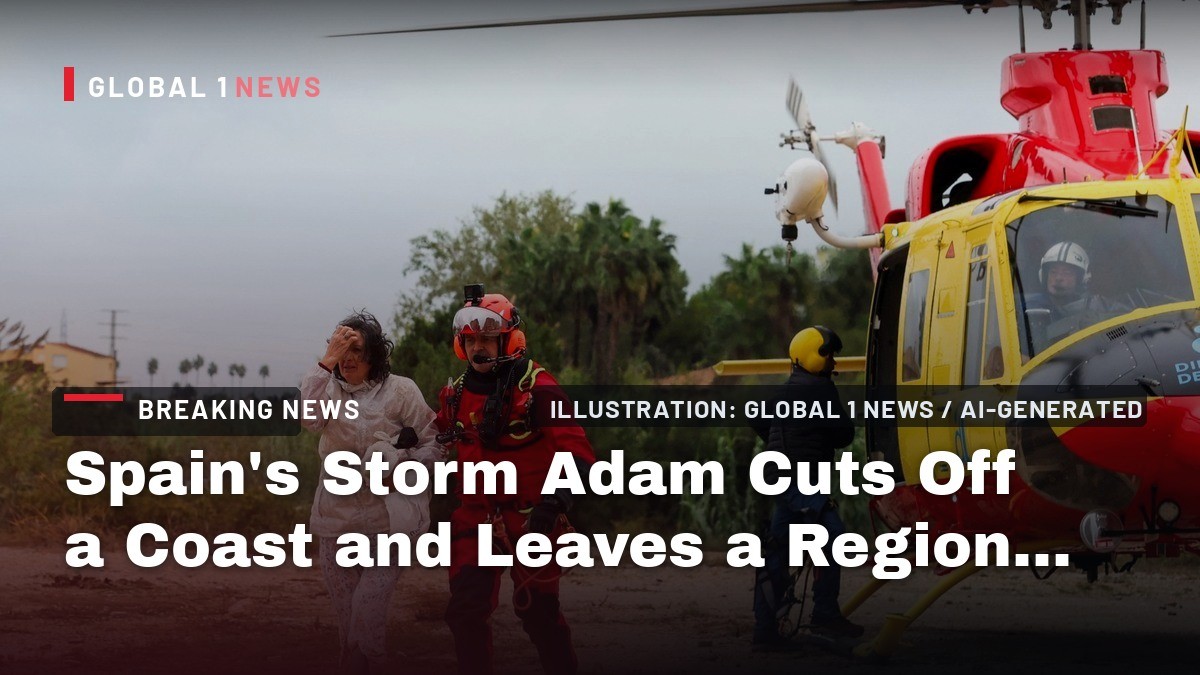
Storm Adam has cut a coastline in two. The DANA — a high-altitude isolated depression — has isolated towns along the Marina Alta and La Safor between Alicante and Valencia, turned streets into torrents and sent rivers over their banks. Rescuers are still winching people from rooftops. The death toll has changed through the day and remains provisional.
Spain's Storm Adam Cuts Off a Coast and Leaves a Region Counting Its Dead
OLIVA, Spain — This town on the southern Valencia coast is among the hardest hit, its streets submerged and its pavilion turned into a shelter. Eight municipalities, this one among them, remain under confinement orders. AEMET says Tuesday should be the storm's last day, but the emergency is not over.
A Coast Cut in Two
The DANA named Adam began on Saturday, 17 October, and by Monday it had isolated a stretch of Spain's eastern coast between Alicante and Valencia. The Marina Alta and La Safor bore the brunt, with towns cut off, rivers over their banks and streets turned into torrents. The Valencia emergency coordination centre logged incidents from 13:57 on 17 October to 16:00 on 19 October. Reuters and Al Jazeera both reach for the same comparison: the October 2024 flooding in the same region, which killed more than 230 people. AEMET issued several red alerts, warning people to avoid all travel and seek higher ground. The Generalitat Valenciana activated emergency situation 2 and convened CECOPI, its operational coordination centre. Meteorologists say human-driven climate change makes such extreme weather events more frequent and destructive.
The Toll Moved All Day, and It Is Not Final
The count has changed through the day and remains provisional. Reuters reported at least three dead on Monday morning, after the Military Emergencies Unit found the body of a woman in Oliva. Generalitat president Juanfran Pérez Llorca confirmed three deaths in the Valencian Community: "una mujer de 79 años, que ha muerto ahogada, un hombre que ha padecido un infarto y otra mujer en Sagunto, que falleció en el mar" — a 79-year-old woman who drowned, a man who suffered a heart attack, and another woman in Sagunto who died in the sea. The man, 64, died of a heart attack at a campsite in Oliva. RTVE counted four across Spain, adding the woman swept away by a ravine in Cabrera de Mar near Barcelona. Heraldo de Aragón reported at least five late on 19 October, adding a 41-year-old man killed by a rockfall onto a car in Benaoján, Málaga. Outlets are counting different scopes, and the totals differ.
145 Municipalities Told to Stay Inside
The Generalitat Valenciana ordered the confinement of 145 municipalities along the southern coast of Valencia and the northern coast of Alicante, affecting 800,000 residents. A new Es-Alert was sent overnight to those municipalities. By late afternoon the order had been reduced to 87,000 people in eight municipalities. Eight stayed confined: Bellreguard, Oliva, Daimús, Piles and Miramar on the southern Valencia coast; Xàbia, Pego and Els Poblets on the northern Alicante coast. Emergency and Interior minister Juan Carlos Valderrama said: "No se puede circular, deben permanecer en sus casas, se están produciendo lluvias intensas y continuadas que están provocando inundaciones importantes en municipios como Pego, Oliva, Piles o Miramar" — you cannot drive, you must stay in your homes. The government delegate in the Valencian Community, Pilar Bernabé, said the situation had been "muy complicada" during the early hours in La Safor and La Marina Alta, and asked for "máxima prudencia y respeto a esta norma". More than 100,000 students in the Valencia region had classes suspended, and Renfe halted commuter services on the C1 line to Gandia and the C2 line to Moixent.
Helicopters, Rooftops and Waist-Deep Water
Around fifteen helicopters worked on rescues in the Valencian Community, lifting dozens of people from rooftops. The Guardia Civil's balance issued late on Monday recorded 2,141 people evacuated and 496 rescued since the start of Storm Adam — 423 in Valencia, 73 in Alicante. Earlier on Monday the Civil Guard said authorities had carried out nearly 100 rescues in Valencia and Alicante. Its divers and air service moved from vehicle to vehicle in Pego to confirm nobody was trapped inside. The emergency centre logged 1,572 incidents in the Valencian Community between 13:57 on 17 October and 16:00 on 19 October, 664 of them in Oliva alone. A multipurpose pavilion opened in Oliva with capacity for 150 people; 130 people were in Red Cross shelters there. Oliva deputy mayor Salvador Llopis told TVE that elderly residents were trapped with water up to their waists: "They have to stay on top of tables and furniture to avoid getting wet."
Pego: Not Even the UME Could Get In
In Pego, in Alicante province, several people were still waiting to be evacuated by helicopter from their roofs, mayor Enrique Moll told A Punt radio and RNE. All access routes to the town were blocked, and even heavy-duty military vehicles were unable to move forward in some areas. On RNE he said: "Tenemos casas inundadas, gente en los tejados esperando a ser rescatada... Ni siquiera la UME puede acceder a la población. Mientras llueva, no se puede usar medios aéreos" — "We have flooded houses, people on the roofs waiting to be rescued. Not even the UME can get into the town. While it rains, aircraft cannot be used." Units of the UME's Third Intervention Battalion had been deployed to Oliva, and the unit was also sent to the Balearics. Alicante's provincial fire consortium sent up to 15 crews to Pego, Els Poblets and El Verger.
Els Poblets, Where the Water Stacked the Cars
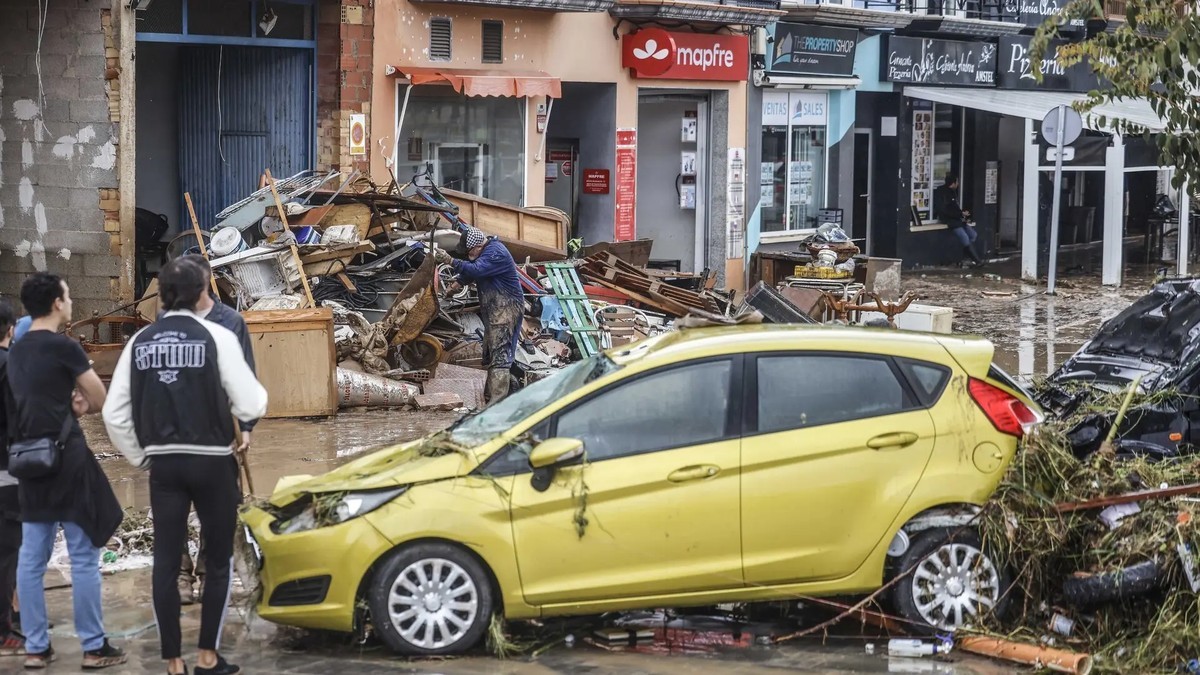
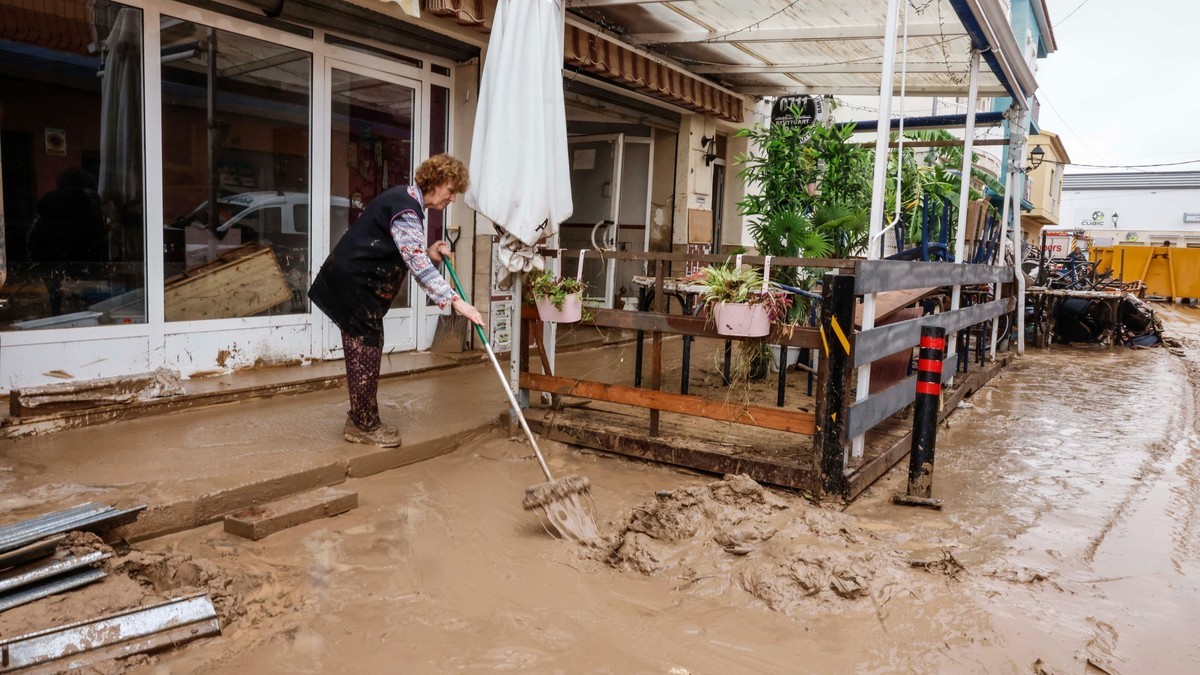
In Els Poblets, northeast of Alicante, cars and vans were piled on top of one another from the force of the water as residents tried to salvage what they could from their homes. The Girona river overflowed. Mayor José Luis Mas said the town was "patas arriba" — upside down — because practically half of the 900 residents of the urban centre had been affected, though "por suerte no hay víctimas mortales ni heridos graves", luckily there are no fatalities or serious injuries. Chef Javier Fornez, 49, said: "The village, well, it's a disaster. Some people have lost everything all over again, just like in 2007, when exactly the same thing happened." In Xàbia, the El Naranjal campsite was evacuated on Sunday and around 64 people were moved to a municipal multipurpose hall. In neighbouring Gandia, mayor José Manuel Prieto said the Beniopa ravine and the Serpis river, which had caused most concern, were controlled, though the Serpis still carried a significant flow.
A Rain Record Standing Since November 1987
More than 700 litres per square metre accumulated in places in the Marina Alta and La Safor. Pego recorded 632 mm in 36 hours, and several locations in southern Valencia and northern Alicante exceeded 500 mm over the same period. Between Pego, Real de Gandia, Villalonga and Barx, more than 500 litres fell in 48 hours, with some points above 600. The heaviest totals clustered between Pego and Forna in the Marina Alta, where AVAMET stations passed 600 litres in 36 hours and reached 651.0 litres at Forna by 06:30 on 19 October. AEMET said this would make it the most important rain episode in the area since November 1987. At the beach in Oliva, 131.9 litres per square metre fell in a single hour. Pilar de la Horadada recorded more than 130 litres during the episode, and 97 litres fell overnight in Xàbia.
Now the Storm Moves to Catalonia
The focus of the storm was expected to shift to Catalonia on Monday afternoon, especially Barcelona and Girona provinces, where more than 100 mm of rain could fall in less than twelve hours. Authorities warned the risk was heightened because the soil was already saturated. Catalonia's civil protection deputy director Sergio Delgado said the episode would be very intense but "nada tiene que ver" — nothing to do with — the Valencian Community episode, and asked for calm. Up to 40 litres per square metre could fall in half an hour, 60 in three hours and 100 in 24 hours, with an orange warning for rain intensity at danger level four out of six, short of red. In the Balearics, the red alert was downgraded to orange at 6am, with roads cut and services suspended in Ibiza and Formentera; Ibiza recorded 83.4 litres per square metre in 24 hours.
Madrid Arrives, and a Resident Asks About Prevention
Prime Minister Pedro Sánchez said: "Quiero dirigir un mensaje a las personas afectadas por la dana. Mensaje de solidaridad y de total apoyo, y también de alerta, porque la emergencia continúa. La prioridad es proteger vidas." He visited the National Centre for Emergency Monitoring and Coordination in Madrid at 12:30 on Monday with third deputy prime minister Sara Aagesen, and will visit the Advanced Command Post in Oliva at 12:30 on Tuesday with Aagesen, Interior Minister Fernando Grande-Marlaska, Science Minister Diana Morant, Pérez Llorca and Bernabé. The leader of the opposition Popular Party said he had spoken with the Valencian president to offer support. Virginia Zapater, trapped in Oliva with her mother and dogs on the roof and her father on the ground floor, told RNE: "La prevención hubiese sido muchísimo mejor" — prevention would have been much better. AEMET issued red alerts, the Generalitat ordered confinement and Es-Alert messages were sent; AEMET also announced that last month was mainland Spain's hottest September on record.
The Flood That Killed More Than 230
The October 2024 floods in the Valencia region killed more than 230 people, and this week's images carry that memory. In flooded Oliva, four people were arrested on Monday afternoon over burglaries in homes affected by the flood, according to Guardia Civil sources. In Almería, agricultural organisations estimate an initial 3,000 to 4,000 hectares flooded, concentrated in El Ejido, La Mojonera and Roquetas de Mar; in El Ejido initial damage is valued at about 5 million euros, with around 100 hectares of greenhouses affected. Beyond Spain, flooding in Istanbul killed eight, governor Davut Gül said, and flooding in Thailand killed 80 over the past month, its disaster prevention department said. AEMET spokesperson Rubén Del Campo said Tuesday would be "el último día del temporal asociado a la dana Adam", with showers still in northern Catalonia and on Menorca.
By Jessica Ali, Staff Writer
This article was produced with AI-assisted research and editorial support. Sources: Reuters, Al Jazeera, RTVE, Heraldo de Aragón, 20minutos, Levante-EMV, Euronews and EFE.
What's Your Reaction?
 Like
0
 Dislike
0
 Love
0
 Funny
0
 Wow
0
 Sad
0
 Angry
0

Editor-in-Chief at Global1.News. Atlanta-based journalist who cuts through the BS and tells it like it is. Lead anchor, host, and the voice you hear when the spin stops and the truth starts.















Comments (0)