
SpaceX Posts First Profit as a Public Company, Then Opens the Door to Tesla
SpaceX reported $4.4 billion in net income on $14.58 billion of revenue for the quarter ended September 30, its first profit since going public in June. Both its board and Tesla's have formed special committees to discuss a potential merger, though no terms are agreed and Musk said a deal is not certain.
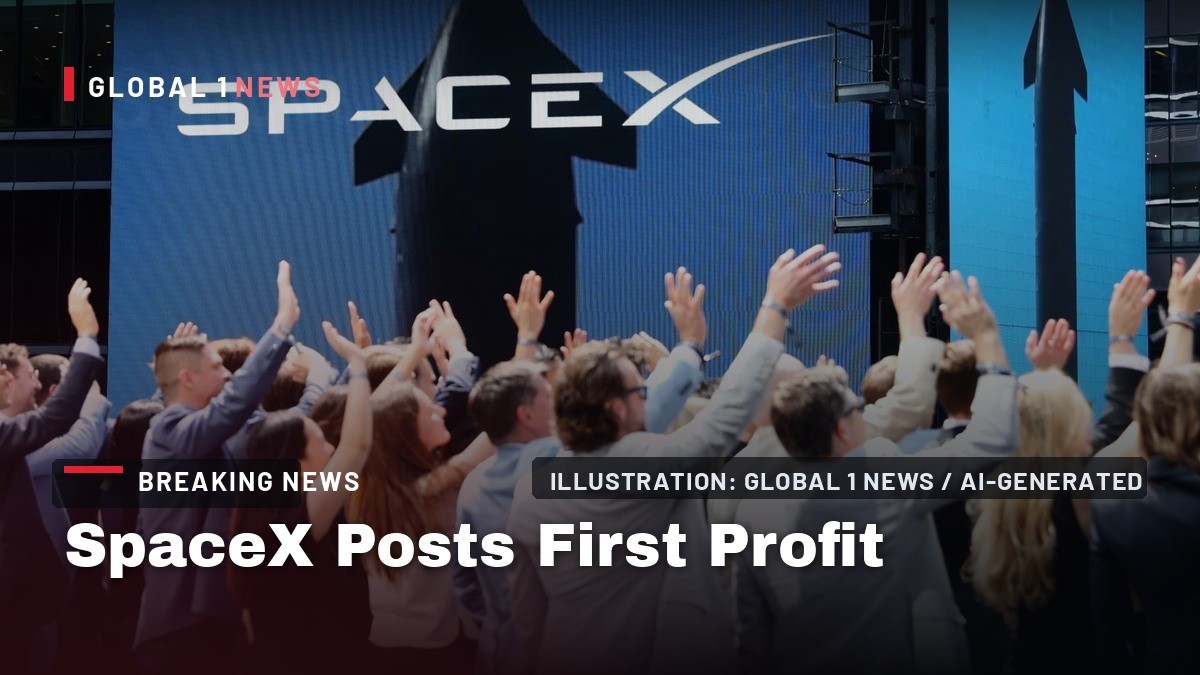
SpaceX just did something it had never done on the public ledger: it made money. Real money. $4.4 billion in net income for the quarter ended September 30, against a $1.05 billion loss a year earlier. But folks, the profit is not the story. The story is what SpaceX became on the way there, and what its chief executive said about Tesla on the very same call.
SpaceX Posts First Profit as a Public Company, Then Opens the Door to Tesla
STARBASE, Texas — The company reported $14.58 billion in revenue Tuesday, up 161 percent from $5.58 billion a year earlier, and beat consensus on revenue, operating income and adjusted EBITDA. Then, on the earnings call, Elon Musk confirmed that both boards have formed special committees to discuss a potential merger. No terms have been agreed. No deal has been signed. And Musk himself said a combination is not a certainty.
The Quarter That Changed What SpaceX Is
Look at the segment mix and the transformation is not subtle. Super Intelligence, the AI business, brought in $7.56 billion. That is nine times the $813 million it generated a year earlier, and it is now the company's largest segment by revenue. Connectivity, meaning Starlink, did $5.25 billion. Space, meaning rockets, did $1.77 billion.
So the company that went public in June as a launch provider is now, by revenue, an artificial intelligence compute landlord. It sells cloud capacity at data centres called Colossus. It owns an AI coding startup called Cursor, bought in the third quarter at an implied equity value of about $60 billion. It is planning a chip factory in Texas with Tesla and Intel. The rockets are the smallest line on the page.
That is the quarter. Not a profit. A reclassification.
The Beat Was Not Close
Revenue of $14.58 billion against a consensus of $12.72 billion, per LSEG. Operating income of $2.8 billion against $2.24 billion expected. Adjusted EBITDA of $8.81 billion, up 306 percent from $2.2 billion, against $6.59 billion expected. Total cash and securities: $89.85 billion.
The earnings per share figure is messier, and I am not going to dress it up. Reported EPS was 35 cents. CNBC cited 45 cents on an adjusted basis against a 13-cent consensus, while other trackers put the consensus at 15 cents. CNBC itself cautioned that it was "not immediately clear whether that figure was comparable to the consensus estimate." Three numbers, three trackers, one caution flag. On either tracker estimate, 35 cents is a beat.
The stock reaction was reported in two stages. Shares were up about 2 percent immediately after release, then nearly 8 percent later in the session, to $159.50. Both are true. The stock started the day down around 8 percent for the year.
Super Intelligence Is Now the Biggest Business
Here is the number that should stop you: $431 million. That is operating profit for the AI segment, against a $1.7 billion loss a year earlier and a $1.26 billion loss in the second quarter on $2.56 billion of revenue. A business that was bleeding a billion-plus a quarter is now in the black.
The company credited "activation of new cloud services agreements, the acquisition of Cursor and increased Grok adoption." The customers have names. Anthropic agreed in May to pay nearly $45 billion over three years for computing at the Colossus data centres. Google signed in June at $920 million a month from October through June 2029.
Capital expenditure tells you where the money is going. SpaceX spent $19.59 billion in the quarter, and $16.44 billion of it went to AI. Computing capacity hit 1.7 gigawatts at quarter end, up from 0.6 gigawatts a year earlier. That is the business now.
Starlink Got Relegated to Second Place
Starlink did nothing wrong. Revenue of $5.25 billion, up 69 percent, beat the $4.84 billion expected. Operating income roughly doubled to $2.37 billion. Subscribers reached 13.6 million, up from 12 million. President Gwynne Shotwell said the service is available in 174 markets with nearly 14 million customers, and that SpaceX has 22 million mobile users worldwide, up 37 percent from the second quarter.
But average revenue per user is the tell. It came in at $69. That is up from $66 in the prior quarter and down from $83 a year earlier. Both are true. Growth in subscribers is outrunning growth in revenue per subscriber, which is what happens when you push into cheaper markets.
Starlink is still the cash engine. It is just no longer the headline. Second place by revenue, first place by discipline.
The Rockets Are Still the Smallest Line
Space did $1.77 billion, up from $1.67 billion a year earlier and $962 million in the second quarter. The loss narrowed to $7 million from $542 million in the second quarter. Thirty-five launches in the quarter, 21 of them carrying Starlink satellites.
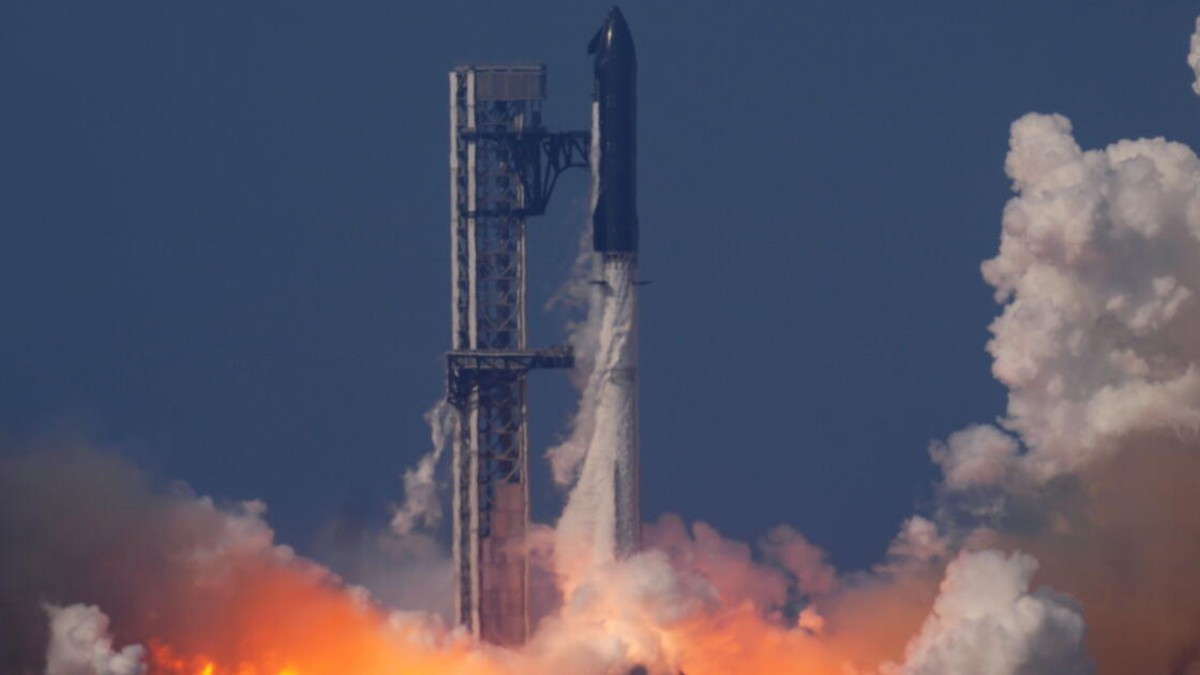
Musk said Starship Flight 14 reached orbit on September 28 for the first time but was cut short for safety reasons. The next flight will attempt to catch both the booster and the ship. He predicted weekly or twice-weekly launches by the end of next year. A $100 billion spaceport is planned for Louisiana, with Shotwell targeting a first launch in 2029 and Musk floating the end of 2028.
Ambitious. Also the smallest revenue line in the company. Keep the proportions straight.
Two Committees and a Conflicted Party
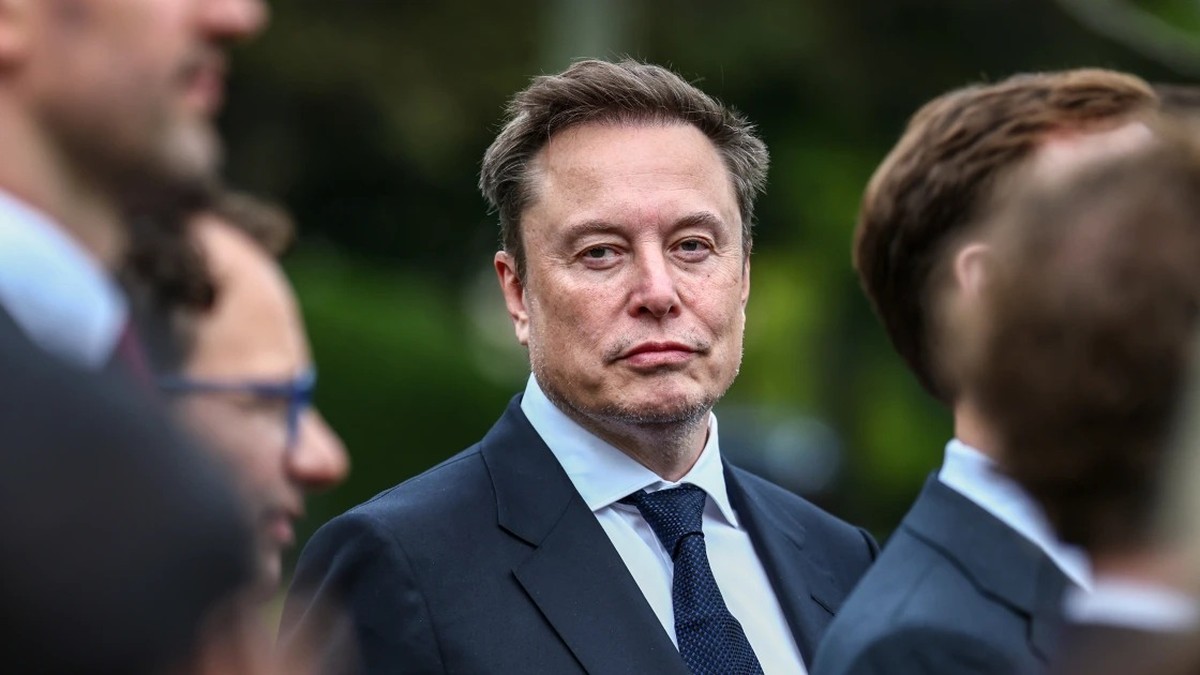
Now to the part that matters more than any of those numbers. Musk said the boards of SpaceX and Tesla have each formed special committees to discuss a potential merger, "at the request of shareholders," made up of "independent directors." He did not name the members.
His own description of his position: "Because I'm a conflicted party, I can't actually be in the discussions of the special committees. So it's an odd kabuki dance where two groups of people are talking and I can't be in the conversation."
He is chief executive of both companies. He sits on neither committee. The committees have not reached agreement on terms, and Musk said there is no guarantee they will. He said answering an analyst's question felt like "dancing through a minefield." That is the governance picture. Two independent panels, one excluded chief executive, zero agreed terms.
Why SpaceX Would Be the Buyer
To be clear: the direction of any deal is not established. That SpaceX would be the acquirer is the expectation of Wall Street analysts and legal experts, not a company statement. The reasoning is valuation. SpaceX has held a higher valuation since its June initial public offering, which priced at $135 a share.
The Verge said a merger would create "a mega-entity valued upwards of $3.6 trillion." That is a characterisation of potential value, not a negotiated price.
Barclays published a client note earlier in October suggesting a combination could be announced ahead of Tesla's annual shareholder meeting scheduled for December 3, 2026. That is a bank's speculation. Tesla has not commented. Tesla reports third-quarter results after the close on Wednesday.
The 50 Percent Wall
Musk put a hard number on the Tesla side: "we will need a 50% vote of all shares -- not just those who vote -- but of all shareholders, and that's quite a high hurdle." Read that again. Not a majority of shares voted. A majority of every share outstanding. That is a far higher bar than a standard merger vote, and it gives every passive holder a de facto veto.
He also poured cold water on the certainty trade: "I think some people out there assume that a SpaceX and Tesla merger is a certainty, and I think that would be overstating it."
His holdings cut both ways. He owned 48.4 percent of SpaceX as of June 30 and controls more than 82 percent of its voting power through super-voting shares, according to a regulatory filing cited by Agence France-Presse. He holds about 20 percent of Tesla. On the SpaceX side he is close to untouchable. On the Tesla side, that 50 percent threshold is the wall.
The Power Behind the Profit Went to Court
Here is the detail that ties the whole quarter together. The AI business runs on gas-burning turbines at the Colossus data centres in the Memphis area. On the same Tuesday, a federal judge in Mississippi refused the Justice Department's bid to dismiss a Clean Air Act citizen suit brought by the NAACP against SpaceX over those turbines.
The judge wrote there was "no 'fairly possible' interpretation of the Clean Air Act that would give the United States the right to unilaterally dismiss a citizen suit." The NAACP alleges SpaceX built and used turbines without proper permits or required pollution controls. The Justice Department had asked the court to throw the suit out, arguing it threatened "American national, economic, and energy security." The judge refused.
Musk said power, cooling and electrical equipment were "somewhat of a limiting factor." The profit's power supply is now before a judge.
What Wednesday Tells Us
Guidance is where this gets loud. Chief financial officer Bret Johnsen guided first-quarter 2027 revenue to $33 billion to $37 billion, against an average analyst estimate of $22.2 billion, per LSEG. He attributed it to "increased visibility into our compute contract pipeline over the next six months." Musk went further, saying annual recurring revenue by the end of next year would land between $500 billion and $1 trillion. Analysts project full-year 2027 revenue of about $110 billion.
On compute, the figures differ between accounts. Musk said he is "fairly confident" SpaceX can bring an additional 10 gigawatts online in 2027, on top of roughly 2.5 to 3.0 gigawatts expected by the end of 2026. The Los Angeles Times reported his goal as at least 13 more gigawatts by the end of next year. Both figures come from the same call and neither is a formal company forecast.
Watch three things Wednesday. Tesla's results after the close, and whether its board says anything about the committees. Any filing that names committee members. And the next hearing in Mississippi, because the AI segment's profit runs through those turbines. The profit is real. The governance is unresolved. Folks, that is the quarter.
By Jessica Ali, Staff Writer
This article was produced with AI-assisted research and editorial support. Sources: CNBC, The Verge, NBC News, TechCrunch, Los Angeles Times, The Guardian, Agence France-Presse, Investing.com earnings-call transcript and SpaceX's Form 8-K filing with the U.S. Securities and Exchange Commission. Photographs: CNBC, Los Angeles Times and NBC News.
What's Your Reaction?
 Like
0
 Dislike
0
 Love
0
 Funny
0
 Wow
0
 Sad
0
 Angry
0

Editor-in-Chief at Global1.News. Atlanta-based journalist who cuts through the BS and tells it like it is. Lead anchor, host, and the voice you hear when the spin stops and the truth starts.














Comments (0)