
Nexfibre rejects "fundamentally flawed" CMA verdict on £2bn Netomnia acquisition
When the CMA drops a verdict that looks more like a textbook exercise than a real‑world assessment, you know the regulator’s lost touch with the nuts‑and‑bolts of running a fiber network.
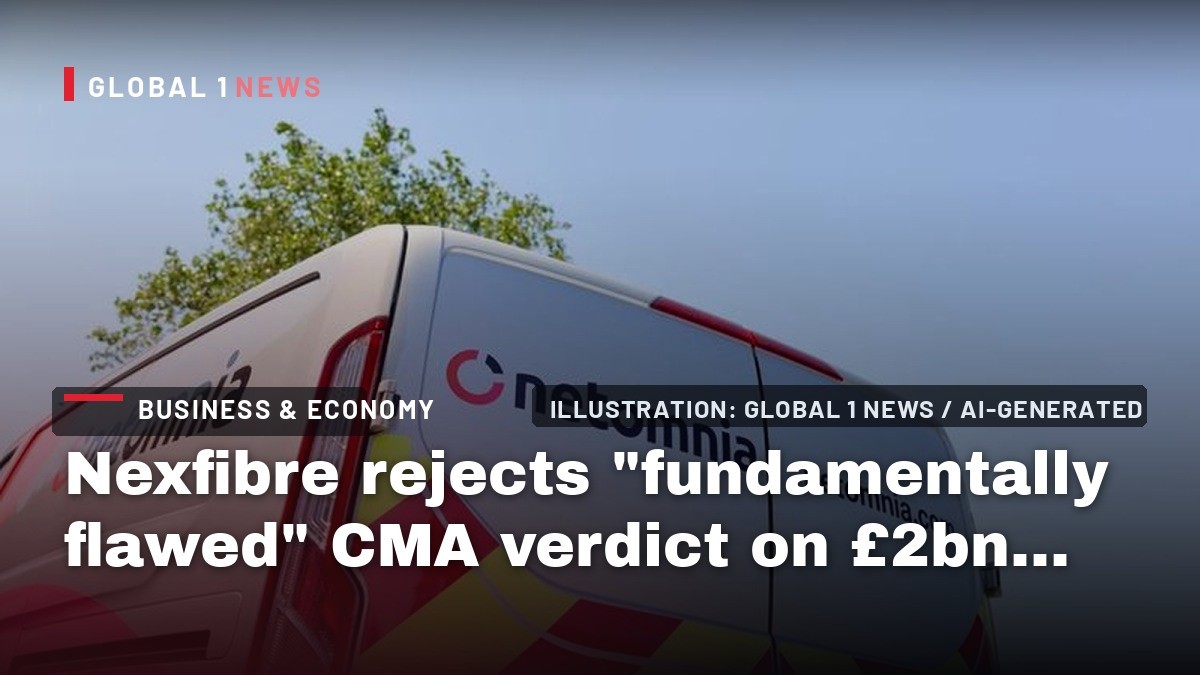
When the CMA drops a verdict that looks more like a textbook exercise than a real‑world assessment, you know the regulator’s lost touch with the nuts‑and‑bolts of running a fiber network. That’s exactly what we’re seeing with the Nexfibre‑Netomnia saga. The joint owners – InfraVia, Liberty Global and Telefónica – have flat‑out rejected the CMA’s “interim report,” calling it “fundamentally flawed.” As a founder who has spent a decade wrestling with wholesale access contracts and capex planning, I can tell you the stakes are far higher than a regulator’s spreadsheet.
Why the CMA’s “counterfactuals” miss the mark
The regulator’s interim analysis hinges on a series of hypothetical scenarios that simply don’t line up with the commercial reality of the UK fiber market. First, it assumes that CityFibre will swoop in and acquire Netomnia if the deal is blocked. That assumption is as shaky as a cheap splice joint – CityFibre’s own recent debt restructuring raises serious questions about its capacity to fund another large‑scale acquisition. The CMA’s report also treats the billions of pounds of investment that Nexfibre would unlock as a given, as if the money would magically appear elsewhere if the deal falls through. In practice, that capital is tied to the specific synergies of merging Nexfibre’s VMO2 footprint with Netomnia’s network.
From a founder’s perspective, those “counterfactuals” are a red herring. They ignore the fact that the combined entity would bring together over three million premises and 460,000 customers under a single wholesale platform. That scale is not just a brag‑sheet number; it translates into real‑world leverage for negotiating backhaul, bulk fiber, and equipment pricing – the very levers that keep wholesale margins viable for independent providers.
The overlap argument – a numbers game that obscures the bigger picture
The CMA points to a 14 percent overlap between Substantial Group (the vehicle that holds Netomnia) and Nexfibre’s network, and an 18 percent overlap with CityFibre. On the surface, that sounds like a significant duplication of infrastructure. But look closer: the overlap is measured against Openreach’s footprint, which already blankets the majority of the market. In other words, the “overlap” is really just a reflection of the fact that all three players are trying to reach the same premises in a market where Openreach dominates.
What the regulator fails to appreciate is that overlap in wholesale terms can actually be a source of competition, not a kill‑switch. When two providers share a fibre bundle, they can still compete on pricing, service levels, and value‑added offerings. The real risk is not the 14 or 18 percent figure, but the erosion of the independent wholesale pool if a single entity like Nexfibre were forced to divest Netomnia and leave the market fragmented.
BT’s TalkTalk move – a warning sign for the wholesale pool
BT’s recent announcement to acquire TalkTalk adds another layer of complexity. Virgin Media O2, the parent of Nexfibre, has already slammed that deal, and the CMA’s timing suggests a broader regulatory focus on consolidations that shrink the wholesale market. When BT swallows TalkTalk, the pool of wholesale capacity shrinks, leaving less room for independent providers to source fibre at competitive rates.
From a risk‑management standpoint, the combined effect of BT’s move and the CMA’s stance on Nexfibre‑Netomnia could dramatically tighten the wholesale market. Independent providers would face higher wholesale prices and fewer alternative routes, forcing many to either raise retail prices or cut back on expansion plans. That’s a direct threat to the business models of smaller ISPs that rely on affordable wholesale access to stay viable.
CityFibre’s financial health – why the regulator’s optimism is misplaced
The CMA’s interim report seems to treat CityFibre as a viable fallback buyer for Netomnia. Yet CityFibre’s latest accounts and debt restructuring, as highlighted by Nexfibre’s owners, cast doubt on its ability to fund a large acquisition. If CityFibre can’t step in, the market loses a potential competitor that could keep wholesale pricing in check.
For independent hosting and connectivity providers, the loss of CityFibre as a competitive counterweight means fewer options for wholesale capacity. That translates into higher risk of price squeezes and reduced bargaining power when negotiating backhaul contracts. In a market already dominated by Openreach, the disappearance of a second large independent player would tilt the balance even further toward the incumbents.
What the “no remedies” stance really means for the deal
By refusing to submit a remedies package, Nexfibre’s shareholders are sending a clear signal: the CMA’s counterfactuals are so detached from reality that any proposed fix would be meaningless. They have already engaged in “good faith” talks, offering commitments on investment and wholesale access, yet the regulator’s demands remain anchored in a scenario that assumes CityFibre will acquire Netomnia and that the investment would simply materialise elsewhere.
In practical terms, this stalemate puts the £2 billion acquisition in limbo. Without a clear path forward, both parties risk losing momentum, and the market stays in a state of uncertainty. For independent providers, that uncertainty translates into planning risk – you can’t commit to new roll‑outs or capital expenditures when the wholesale landscape might shift dramatically depending on the regulator’s next move.
Business‑risk lens: the bottom line for independent providers
From a founder’s seat, the key takeaway is that regulatory uncertainty is a hidden cost that can erode margins and stall growth. The Nexfibre‑Netomnia deal, if blocked, would keep the market fragmented, preserving a modest level of competition but also limiting the scale economies that could drive down wholesale prices. Conversely, a successful merger would create a larger, more efficient wholesale platform that could challenge Openreach’s dominance and provide a healthier ecosystem for smaller ISPs.
What matters most for independent providers is to hedge against both outcomes. Diversify your wholesale sources where possible, lock in long‑term capacity contracts before the regulator’s decision lands, and keep an eye on the financial health of the larger players – especially CityFibre, whose debt restructuring could signal future constraints on capacity supply.
Actionable advice – how to navigate the regulatory cross‑fire
First, audit your current wholesale contracts and map out the proportion of capacity sourced from each provider. If you’re heavily reliant on Openreach, start negotiating backup capacity with Nexfibre or other emerging players now, before the CMA’s decision crystallises. Second, factor the regulatory risk into your financial models. Add a contingency line for potential price hikes or capacity shortages that could arise if the deal is blocked.
Finally, stay engaged with the regulator’s process. While the CMA’s interim report may be flawed, it still shapes the final decision. Submit comments, highlight the real‑world impact on wholesale pricing, and point out the financial constraints of alternative buyers like CityFibre. A well‑argued, data‑driven submission can help tilt the balance toward a decision that preserves a competitive wholesale market.
In the end, the Nexfibre‑Netomnia story is a reminder that the UK fiber market is at a crossroads. The regulator’s approach may be out of step, but the outcome will ripple through every independent provider’s bottom line. Stay sharp, keep your contracts flexible, and don’t let a regulator’s hypothetical dictate your real‑world strategy.
— Allan Ali, Founder
This article was produced with AI-assisted research and editorial support. Reporting is based on the source material cited below. Sources: Data Center Dynamics; datacenterdynamics.com; Global1.News (21 October 2026).
By Allan Ali, Global1.News
What's Your Reaction?
 Like
0
 Dislike
0
 Love
0
 Funny
0
 Wow
0
 Sad
0
 Angry
0

Publisher of Global1.News. Automation architect, systems builder, and the guy making sure the truth gets published.













Comments (0)