
The Proliferation of Illicit Drones in Southeast Asia
In recent years, the proliferation of commercial‑off‑the‑shelf (COTS) drones has reshaped security calculations across Southeast Asia, echoing the broader diffusion of unmanned aerial systems observed in conflict zones from Ukraine to the Sahel.
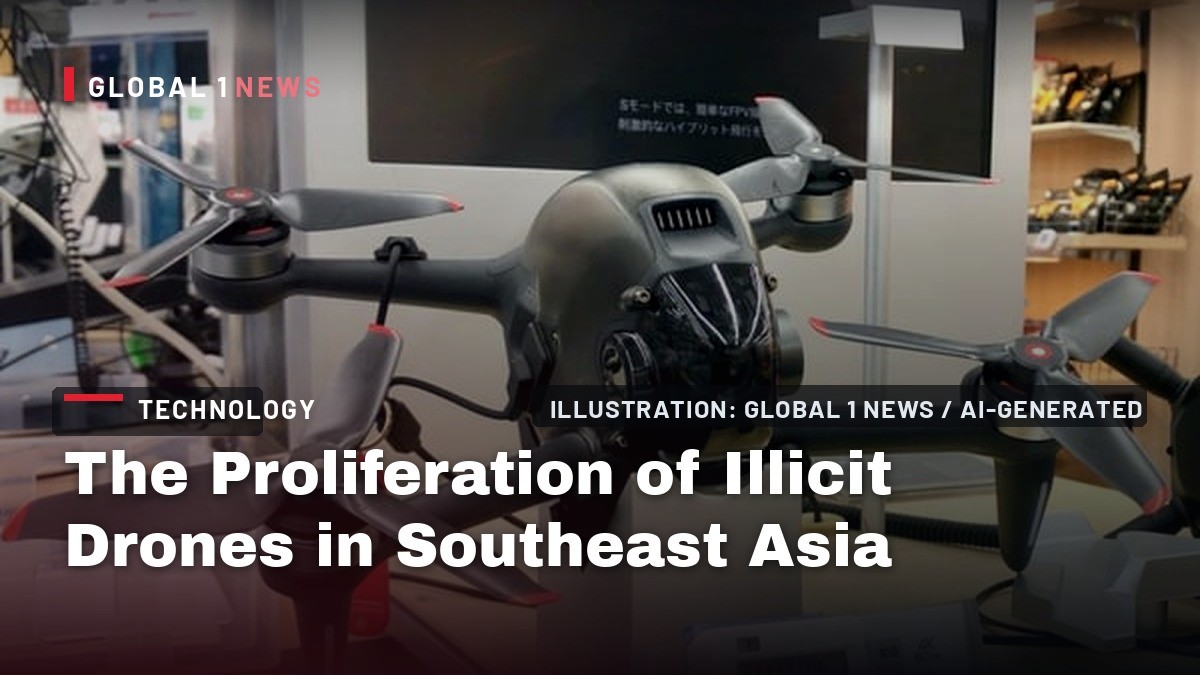
In recent years, the proliferation of commercial‑off‑the‑shelf (COTS) drones has reshaped security calculations across Southeast Asia, echoing the broader diffusion of unmanned aerial systems observed in conflict zones from Ukraine to the Sahel. While the Russia‑Ukraine war has spurred technical innovation, the region’s own experience with illicit drone use—particularly for narcotics trafficking and contraband smuggling—has unfolded along porous borders and within prison complexes. This analysis draws on a dataset of 22 open‑source incidents compiled up to August 2026, and situates the phenomenon within the policy frameworks of ministries, law‑enforcement agencies, and regional think tanks such as the Asan Institute and the Korea Institute for International Economic Policy (KIEP), which have highlighted the security implications of dual‑use technologies in the Indo‑Pacific.
Scope and Methodology of the Illicit Drone Dataset
The source material identifies 22 reported incidents of illicit drone activity that exclude battlefield deployments in Myanmar, the Philippines, or other active conflict zones. The dataset, assembled from media reports, is subject to reporting bias and likely under‑represents the true scale of the problem. Nonetheless, it provides a baseline for tracking trends: the majority of cases involve COTS quadcopters and small hexacopters, and the incidents are concentrated in Malaysia, Thailand, Indonesia, and the Philippines.
Within this sample, approximately 86 percent of illicit drone use is linked to criminal activity, with narcotics‑related operations accounting for the largest share. The remaining incidents involve contraband smuggling, signal‑jamming equipment, and the trafficking of drones themselves across borders. This distribution underscores the centrality of drug‑related motives in the emerging drone‑enabled black market.
Drug‑Smuggling Operations via Drones
The most salient pattern is the deployment of drones to deliver narcotics into correctional facilities and across national frontiers. In August 2024, a commercial quadcopter was used to smuggle narcotics into Tapah prison in Malaysia, marking the first recorded instance of illicit drone use in the country. The Malaysian Home Ministry subsequently reported 55 cases of drone‑facilitated narcotics smuggling into prisons that year, indicating a rapid escalation.
Subsequent incidents illustrate the diffusion of the tactic. In July 2026, two individuals attempted to use a DJI Air 2S drone to smuggle tobacco into Sungai Udang Prison in Malacca, while a comparable case occurred at Machang prison in Kelantan in 2025. Indonesia also experienced drone‑enabled drug deliveries: a June 2025 incident involved a drone transporting narcotics into a Class IIIA prison in Bandung, with transactions coordinated via social‑media platforms. Earlier cases in Sragen (2023) and Nusa Kambangan (2019) reflect a longer‑standing pattern of drone‑mediated contraband ingress.
Cross‑Border Narcotics Trafficking and Drone Technology
Beyond prison incursions, drones have become integral to cross‑border drug‑smuggling syndicates along the Malaysia‑Thailand, Thailand‑Myanmar, and Thailand‑Laos corridors. The United Nations Office on Drugs and Crime has noted an uptick in the use of small commercial drones for such purposes. A notable joint operation in June 2020 saw Singaporean and Malaysian authorities dismantle a syndicate that employed a COTS drone to ferry narcotics from Malaysia into Singapore.
More sophisticated operations involve larger hexacopter platforms. In June 2025, Thai authorities uncovered two large hexacopters buried in Sadao district, Songkhla, linked to three Chinese nationals alleged to be part of a narcotics network. In Vietnam, a couple was arrested for using a DJI quadcopter to deliver drugs and collect payments, illustrating the regional diffusion of the model.
Drone Seizures and the Emerging Illicit Supply Chain
Thailand’s law‑enforcement agencies have documented a series of large‑scale drone seizures that reveal an organized supply chain. A December 2025 raid on a warehouse in the 2nd Army Area resulted in the confiscation of 2,500 drones believed to have been smuggled into the country. A subsequent March 2026 operation in Lat Krabang seized 2,083 drones that were being redistributed on social‑media platforms.
Additional raids in August 2025 (Samut Prakan) uncovered drones, signal‑jamming devices, and a van equipped with signal‑disruption equipment, suggesting that trafficking networks may also be facilitating the movement of electronic counter‑measures. The December 2025 raid was followed by the arrest of four Myanmar nationals suspected of transporting ten Chinese drones into Myanmar for resale to the junta, indicating a nexus between illicit commercial trafficking and state‑aligned military procurement.
Myanmar’s Dual‑Use Drone Landscape
Myanmar presents a unique case where illicit drone trafficking intersects with armed conflict. Academic studies have documented over 2,100 drone strikes by non‑state armed groups (NSAGs) across more than 600 locations in Myanmar by 2024, reshaping battlefield strategy. The military junta, in turn, has intensified its own air‑strike campaigns since late 2023, narrowing the capability gap with NSAGs.
Evidence from July 2026 shows a Myanmar national arrested in Mae Sot while attempting to smuggle four first‑person‑view (FPV) drones and related components across the Thai border. These “advanced systems” are suitable for military applications, and their origin in Chiang Mai points to a domestic production or modification hub. A prior discovery of a one‑way attack drone with an explosive warhead in the same province underscores the potential for these illicit channels to feed the junta’s aerial capabilities, circumventing export controls on dual‑use items.
Policy Responses and Counter‑Drone Initiatives
Regional ministries have begun to articulate counter‑drone strategies, though the source material does not detail specific legislative measures. Malaysia’s Home Ministry has publicly quantified the scale of prison‑related drone incidents, suggesting an emerging regulatory focus on aerial contraband. Thailand’s repeated warehouse raids, coupled with arrests of foreign nationals, indicate a law‑enforcement‑driven approach that targets both the hardware and the logistical networks.
Think‑tank analyses, such as those from the Asan Institute, have highlighted the need for coordinated cross‑border intelligence sharing to disrupt smuggling routes. The Korean Institute for International Economic Policy (KIEP) has previously warned that the diffusion of dual‑use drone technology could erode non‑proliferation regimes in the Indo‑Pacific, a concern echoed by Conflict Armament Research’s finding that hardened navigation systems are being diverted through commercial resale channels to Myanmar.
Forward‑Looking Assessment and Recommendations
Looking ahead, the trajectory of illicit drone use in Southeast Asia is likely to remain upward, propelled by the affordability of COTS platforms and the ingenuity of criminal networks. The convergence of drug‑smuggling, contraband delivery, and the supply of advanced drone components to conflict actors creates a multidimensional security challenge. Policymakers should consider a layered response: tightening export controls on dual‑use drone components, enhancing real‑time monitoring of drone traffic near correctional facilities, and expanding regional information‑sharing mechanisms through bodies such as ASEAN’s senior officials meeting on trans‑national crime.
Moreover, investment in counter‑UAS (Unmanned Aerial System) technologies—such as radar detection, jamming, and geofencing—could mitigate the immediate threat to prisons and border checkpoints. Academic collaborations with institutions like the Korea Institute for National Unification (KINU) may yield predictive models of illicit drone diffusion, informing proactive interdiction strategies. As Southeast Asian states grapple with the twin imperatives of public safety and economic openness, the balance between regulation and innovation will define the region’s capacity to contain the illicit drone phenomenon.
This article was produced with AI-assisted research and editorial support. Reporting is based on the source material cited below. Sources: The Diplomat; thediplomat.com; Global1.News (21 October 2026).
By Prof. David Park, Staff Writer
What's Your Reaction?
 Like
0
 Dislike
0
 Love
0
 Funny
0
 Wow
0
 Sad
0
 Angry
0

East Asia/Technology Correspondent at Global1.News. Seoul-based voice covering Korean politics, technology, business, and culture. Analyzes how technology and geopolitics intersect across East Asia.














Comments (0)