
How the Fossil Fuel Industry ‘Captured’ Australia and Maintains Its Political Dominance
Australia’s status as one of the world’s largest coal and gas exporters is inseparable from its political landscape. The fossil‑fuel sector has woven itself into the fabric of national policy, shaping energy strategy, climate discourse and even public identity.
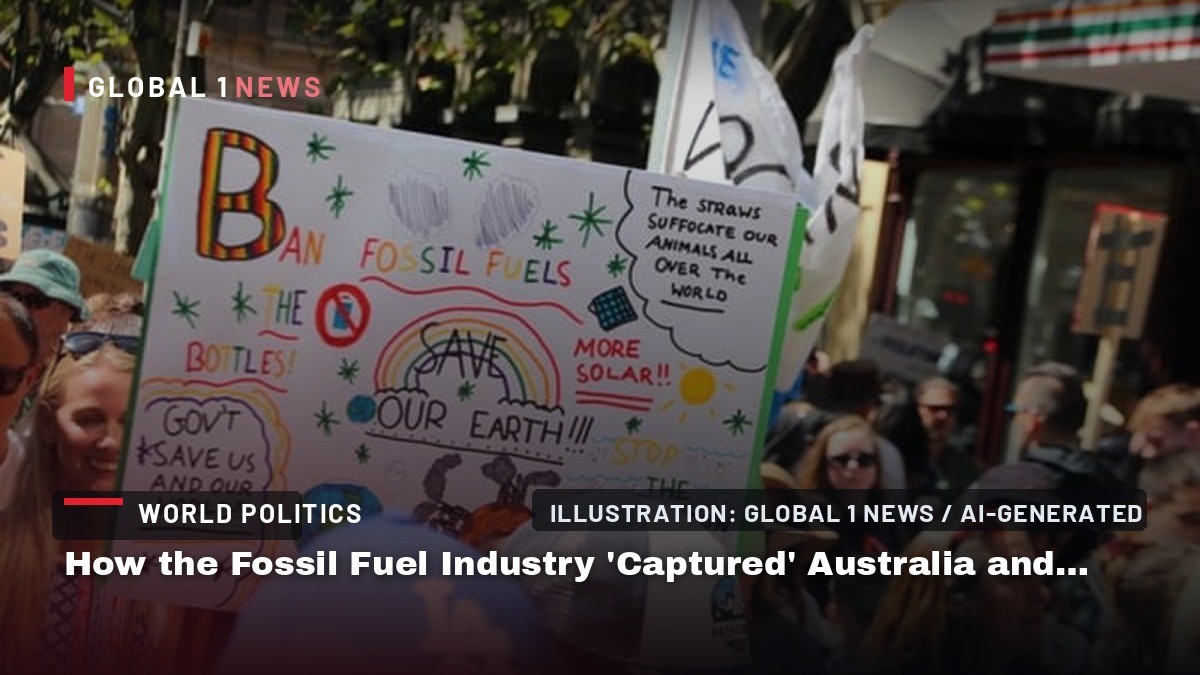
Australia’s status as one of the world’s largest coal and gas exporters is inseparable from its political landscape. The fossil‑fuel sector has woven itself into the fabric of national policy, shaping energy strategy, climate discourse and even public identity. As the Albanese Labor government confronts a global push toward decarbonisation, the entrenched influence of the industry—often described as a “greenhouse mafia” or a “revolving door” between corporate and political elites—remains a decisive factor in Australia’s climate trajectory.
Historical roots of political capture
The relationship between fossil‑fuel interests and Australian politics dates back to the Howard era (1996‑2007). Former political staffer Guy Pearse, in his book *High and Dry*, identified a “greenhouse mafia” of corporate executives and lobbyists that actively opposed early climate regulation. This network continued to block carbon‑pricing initiatives under the subsequent Rudd and Gillard Labor governments (2007‑2013) and persisted throughout the nine‑year conservative rule that followed. The pattern demonstrates that the industry’s resistance to emissions controls is not a recent phenomenon but a long‑standing strategic effort to preserve its market dominance.
Even under the current Albanese administration, fossil‑fuel interests retain significant sway. Their influence is manifested through direct lobbying, industry association representation and, crucially, financial contributions to political parties. In the 2024‑25 fiscal year, fossil‑fuel corporations donated close to AU$4 million to Australia’s major parties, a figure that includes the most recent federal election. Such monetary support amplifies the sector’s ability to shape policy outcomes in its favour.
Mechanisms of influence: lobbying, networking and donations
The industry’s political leverage operates on several fronts. Corporate executives and paid lobbyists regularly meet senior ministers and senior public‑service bureaucrats, presenting coal and gas as indispensable to national prosperity. Informal interactions in parliamentary corridors further cement these relationships, allowing industry representatives to frame their narrative as one of public value—highlighting employment, tax revenue and broader economic growth.
Financial donations act as a force multiplier. The near AU$4 million contributed during 2024‑25 underscores how money bolsters access and amplifies the sector’s voice in policy debates. While the source material does not break down the exact allocation of these funds, the sheer scale suggests a concerted effort to maintain a foothold across the political spectrum, ensuring that both major parties remain receptive to industry positions.
The revolving door: personnel exchanges between government and industry
A distinctive feature of Australia’s fossil‑fuel capture is the “revolving door” phenomenon. Retiring politicians and senior bureaucrats often transition into senior roles within mining firms or consulting agencies, while industry executives take up advisory positions within government ministries. This bidirectional flow creates a cadre of individuals who carry overlapping loyalties and insider knowledge, blurring the line between public duty and private profit.
Reports cited in the source material list numerous career trajectories that illustrate this pattern, though specific names are not provided. The practice is not confined to a single party; both Labor and conservative parties have benefitted from this capital‑state nexus. The result is a policy environment where fossil‑fuel interests are embedded within the decision‑making apparatus, making substantive reform structurally challenging.
Public narratives: framing fossil fuels as national identity
Beyond institutional influence, the industry has cultivated a cultural narrative that positions coal and gas as central to Australia’s identity. Executives have publicly proclaimed the sector’s historical role in fueling industrial revolutions and digital economies, framing it as “the pride of Australia’s past, and the pride of its future.” Such rhetoric aligns fossil fuels with national pride, making any policy that threatens the sector appear as an attack on the nation’s heritage.
Political figures reinforce this narrative through symbolic gestures. A federal treasurer once displayed a lump of coal in parliament, declaring its national benefits, while a former resources minister posted a heartfelt farewell to the mining sector on social media. These public acts embed the industry within the national story, reinforcing the perception that Australia’s success is inseparable from its fossil‑fuel output.
Economic arguments: employment, royalties and regional development
The industry’s economic case rests on three pillars: job creation, fiscal contributions and regional development. Coal mining, despite being capital intensive, is portrayed as a major employer, especially in regional communities where alternative opportunities are scarce. Industry‑funded community programs—sponsorship of local sports teams, schools, hospitals and Indigenous employment initiatives—serve to cement the sector’s role as a benefactor of regional welfare.
Fiscal contributions are highlighted through mining royalties and tax revenues, which the industry argues fund essential government services. By emphasizing these financial flows, fossil‑fuel firms position themselves as indispensable to the national budget, a claim that resonates with policymakers concerned about fiscal stability.
Strategic public relations: inoculation and the “fossil fuels forever” myth
The sector’s PR strategy extends beyond highlighting immediate benefits. It employs what critics term “inoculation PR,” a technique designed to pre‑emptively counter negative perceptions by showcasing community goodwill and environmental stewardship. Advertising campaigns feature local conservation projects, worker family stories and educational programs that promote the benefits of fossil‑fuel energy, aiming to win the hearts and minds of the public.
Simultaneously, the industry projects a future narrative in which coal and gas remain central. Even as renewable energy costs decline globally, fossil‑fuel executives and aligned politicians continue to promote a “fossil fuels forever” imaginary, asserting that the sector will continue to expand and drive economic growth. This forward‑looking narrative seeks to lock in policy decisions that favour long‑term investment in coal and gas infrastructure.
Implications for Australia’s decarbonisation pathway
The entrenched influence of the fossil‑fuel sector poses a formidable obstacle to Australia’s transition to a low‑carbon economy. The combination of financial donations, revolving‑door personnel exchanges, and a culturally embedded narrative of energy as national identity creates a policy environment resistant to rapid change. While global trends push toward renewable adoption, Australia’s internal dynamics suggest that any meaningful decarbonisation will require dismantling the capital‑state nexus that currently underpins the industry’s dominance.
Unpicking this web will demand transparent lobbying registers, stricter donation caps and a concerted effort to diversify regional economies away from coal‑dependent models. Moreover, reshaping public perception—by presenting renewable energy not as a threat to national pride but as a new source of employment and fiscal revenue—will be essential to counter the industry’s entrenched narrative. Only through such systemic reforms can Australia hope to align its energy policy with the urgent climate imperatives of the 2020s.
This article was produced with AI-assisted research and editorial support. Reporting is based on the source material cited below. Sources: The Diplomat; thediplomat.com; Global1.News (21 October 2026).
By Kenji Tanaka, Staff Writer
What's Your Reaction?
 Like
0
 Dislike
0
 Love
0
 Funny
0
 Wow
0
 Sad
0
 Angry
0

Japan Correspondent at Global1.News. Tokyo-based voice covering Japanese politics, technology, economy, and culture. Tracks the intersection of tradition and innovation in one of the world's most dynamic societies.














Comments (0)