
Public healthcare workers plan more protests this week to demand better pay and working conditions
In the bustling streets of Mexico City, the echo of hospital corridors has turned into a chorus of protest. Origins of the current unrest The discontent that fuels today’s protests stems from a series of grievances that have been mounting since the pandemic.
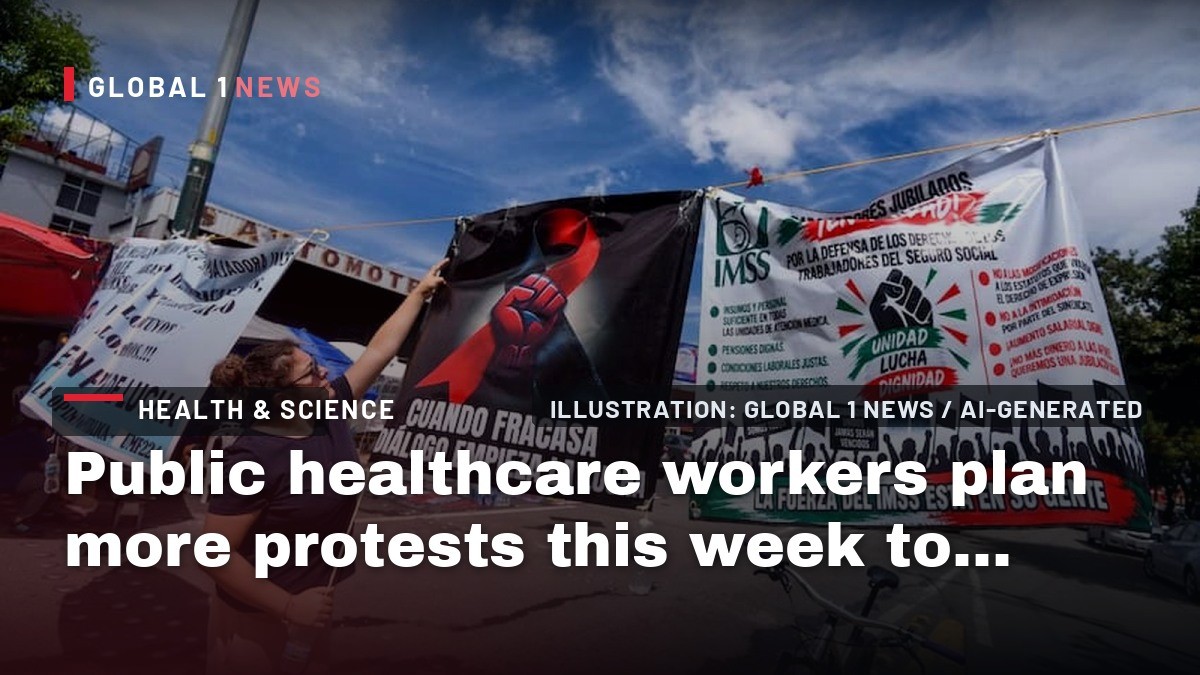
In the bustling streets of Mexico City, the echo of hospital corridors has turned into a chorus of protest. Eight days after a massive march that filled the avenues of the capital, workers of the Mexican Social Security Institute (IMSS) are gearing up for another demonstration, this time dubbed “La Gran Marcha en CDMX.” The rally, set to begin at 3 p.m. from the Siglo XXI National Medical Center in the Doctores neighborhood, reflects a growing frustration among public‑health personnel who feel their contributions during the COVID‑19 pandemic have been eclipsed by stagnant wages and chronic shortages of medicines and supplies.
Origins of the current unrest
The discontent that fuels today’s protests stems from a series of grievances that have been mounting since the pandemic. Workers recall being celebrated as “heroes” for their tireless effort on the front lines, only to find themselves “forgotten on the payroll” once the crisis receded. This sentiment was voiced loudly during the large march held ten days ago, where participants demanded higher pay, better working conditions, and a decisive end to the scarcity of essential medical supplies.
At a meeting held on Sunday outside the IMSS offices, both current and former employees reaffirmed their resolve. They called on social organizations, fellow labor groups, and ordinary citizens to join the upcoming march, echoing a broader call for solidarity that had already sparked protests in other states across the country the previous Tuesday.
Key demands of the IMSS workers
The protestors have articulated a clear set of demands. Central among them is a 10 percent pay rise, a figure they argue is necessary to compensate for the heavy workloads and the risk they continue to shoulder. They also demand a reliable supply chain for medications and medical equipment, noting that shortages have become a daily obstacle in hospitals and clinics nationwide.
Beyond immediate material needs, the workers are pressing for structural changes: the hiring of additional doctors, nurses, and support staff to alleviate excessive workloads; an allocation of resources amounting to 7 percent of the nation’s Gross Domestic Product to healthcare; reforms to the pension system; and the resignation or dismissal of Rafael Olivos Hernández, the head of the National Social Security Workers Union, whom they view as an impediment to meaningful progress.
The planned march and its symbolism
“La Gran Marcha en CDMX” is slated to start from the Siglo XXI National Medical Center, a symbolic location that underscores the health sector’s central role in the protest. While the endpoint of the march has not been formally announced, it is widely expected that participants will head toward the IMSS offices on Paseo de la Reforma, where a protest camp was established ten days ago. The camp has become a visual reminder of the workers’ persistence, with banners and makeshift shelters marking the space as a temporary headquarters for the movement.
The march’s timing—coinciding with President Claudia Sheinbaum’s daily morning press briefing (mañanera) at the National Palace—signals a strategic effort to place the workers’ grievances directly in the line of sight of the nation’s highest political authority. By aligning their protest with the president’s own communication platform, the IMSS workers hope to force a more immediate response to their demands.
The “IMSS resistance mañanera” press conference
In addition to the street demonstration, the protest movement has organized a press conference for Tuesday, deliberately scheduled to run parallel with President Sheinbaum’s mañanera. Dubbed the “IMSS resistance mañanera,” the gathering aims to present “verifiable information about the real state of [IMSS] medical facilities, [their] operational deficiencies and the status of our demands.” Representatives intend to use this forum to document the shortages and systemic issues they contend have been overlooked.
The decision to hold a press conference at the same time as the president’s briefing underscores the workers’ desire to claim a share of the national discourse. By offering concrete data and testimonies, they seek to transform abstract grievances into undeniable evidence that can no longer be dismissed as mere rhetoric.
President Sheinbaum’s response
President Claudia Sheinbaum has publicly acknowledged the legitimacy of the IMSS workers’ demands. She noted last week that the “legitimate demands” are being addressed and that IMSS director Zoé Robledo has been instructed to draft an “action plan” to immediately tackle these concerns. She also affirmed that Robledo’s tenure at the helm of IMSS remains secure, signaling continuity in leadership while promising reforms.
Sheinbaum contrasted the current state of the IMSS with the period when Mikel Arriola directed the institute during the presidency of Enrique Peña Nieto (2012‑18). She described the present system as “better” and emphasized that resources and money are not lacking; rather, the challenge lies in modernizing outdated processes that date back five or six decades. Her administration has pledged to hire more doctors and nurses and to guarantee the supply of medications, framing these steps as part of a broader effort to modernize the public health sector.
Future outlook: universal health and modernization
Looking beyond the immediate protests, President Sheinbaum has outlined an ambitious vision for Mexico’s health system. In an address in Umán, Yucatán, she announced plans to “completely modernize” public healthcare, encompassing not only IMSS but also the Institute for Social Security and Services for State Workers (ISSSTE) and IMSS Bienestar, which serves patients without social security coverage.
Central to this modernization agenda is the forthcoming launch of Mexico’s Universal Health Service, slated for January 1, 2027. The rollout will begin with the issuance of universal health cards to seniors, followed by younger Mexicans and eligible foreigners. Sheinbaum emphasized that by the end of the current six‑year term, any Mexican should be able to access any healthcare center, doctor’s office, or hospital regardless of the institution they belong to, signaling a shift toward a more integrated and equitable health network.
While the president’s promises of modernization and universal coverage aim to address the systemic issues raised by the protestors, the upcoming march and press conference will test whether the government’s action plan can translate into tangible improvements. For families in colonias, for workers in tianguis‑adjacent clinics, and for patients waiting in line at the local tortillería‑nearby health post, the outcome of these negotiations will shape daily life across the nation.
This article was produced with AI-assisted research and editorial support. Reporting is based on the source material cited below. Sources: Mexico News Daily; mexiconewsdaily.com; Global1.News (20 October 2026).
By Rosa Martinez, Staff Writer
What's Your Reaction?
 Like
0
 Dislike
0
 Love
0
 Funny
0
 Wow
0
 Sad
0
 Angry
0
Latin America/Andes Correspondent at Global1.News. Based in Bogota, covering politics, environment, energy, and social movements across the Andean region. Passionate about environmental journalism and communities protecting their land.














Comments (0)