
Moscow to Build ‘Veterans Palace’ Rehab Center for Ukraine War Vets
Mayor Sergei Sobyanin announced on 22 October 2026 that Moscow will convert the former war‑veterans social rehabilitation centre into a new “Palace of Veterans” for soldiers who fought in the war against Ukraine.
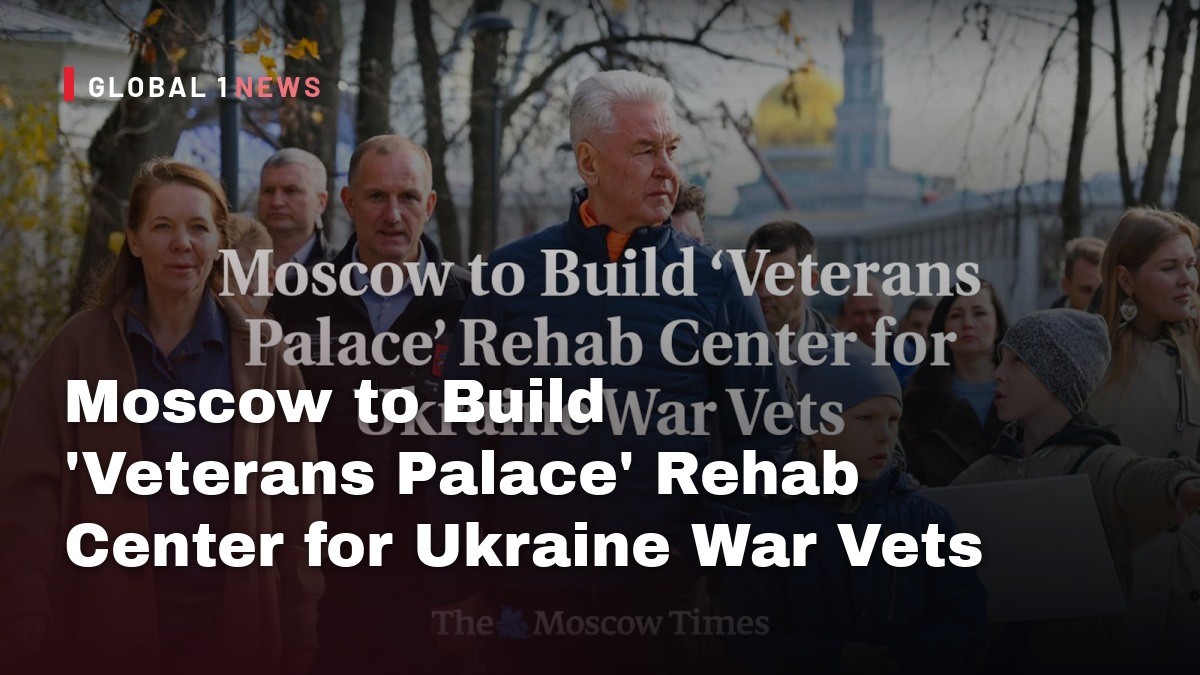
Mayor Sergei Sobyanin announced on 22 October 2026 that Moscow will convert the former war‑veterans social rehabilitation centre into a new “Palace of Veterans” for soldiers who fought in the war against Ukraine. The project, described by the mayor as a “first‑of‑its‑kind full‑fledged infrastructure for the recovery and rehabilitation of [Ukraine war] veterans,” is positioned as a flagship social‑policy initiative in a city still grappling with the human cost of the conflict.
Scope and Physical Layout of the Palace
The renovated complex will occupy two reconstructed buildings that together cover 22,000 square metres (approximately 236,800 sq ft). Sobyanin’s Telegram post emphasised that the facilities will combine medical, physical, social and creative services under one roof, a design meant to streamline the rehabilitation process for veterans who require short‑term or daytime care.
According to the mayor, the centre will host diagnostic equipment, a “walking school,” physical‑therapy and kinesitherapy halls, as well as a water‑wellness complex. Additional spaces will be dedicated to yoga, martial arts, art‑therapy workshops, libraries, and music and dance classrooms, indicating an ambition to address both physical injuries and psychological trauma.
Timeline and Construction Milestones
Renovation work on the Palace began in January 2026, with the mayor setting a target for completion by the end of 2027. This schedule suggests a phased approach, allowing parts of the complex to become operational while other sections are still under construction. The timing aligns with broader municipal projects aimed at revitalising public spaces in central Moscow.
In parallel, the nearby Yekaterininsky Park is undergoing its own refurbishment. The park’s upgrades include a family centre, sports fields, a refurbished waterfront with a boat station and an amphitheatre, slated for completion by late 2026. The proximity of these two projects may be intended to create a contiguous recreational and therapeutic zone for both veterans and the wider public.
Political Context and Kremlin Priorities
The launch of the Palace of Veterans must be read against the backdrop of the Kremlin’s ongoing effort to manage the social fallout of the Ukraine war. By investing in high‑profile rehabilitation infrastructure, the state signals a willingness to care for those who served, while simultaneously reinforcing the narrative of a “just war” that demanded sacrifice.
Such initiatives also serve a political function: they provide visible evidence of the government’s commitment to veterans, a constituency that has historically wielded significant influence in Russian politics. The timing of the announcement—just weeks before the Moscow Times was labelled an “undesirable” organisation—suggests a coordinated effort to showcase state benevolence amid tightening control over independent media.
Veteran Welfare and Rehabilitation Policy
The Palace’s emphasis on “daytime and short‑term” rehabilitation reflects a broader shift in Russian veteran policy from long‑term institutionalisation towards outpatient, community‑based care. This mirrors trends in other post‑Soviet states, where budgetary constraints and the sheer volume of wounded soldiers have prompted a re‑evaluation of traditional sanatorium models.
By integrating physical therapy, creative workshops and wellness facilities, the complex aims to address both the physical injuries sustained on the front lines and the psychological scars of combat. The inclusion of art‑therapy, music and dance spaces indicates an acknowledgment—however tentative—of the need for holistic mental‑health support, a topic that has long been under‑discussed in Russian public health discourse.
Urban Development and Symbolic Messaging
Locating the Palace in central Moscow, adjacent to the renovated Yekaterininsky Park, carries symbolic weight. The central placement conveys that the sacrifices of veterans are part of the city’s core identity, not a peripheral concern. It also transforms a former Soviet‑era veterans’ centre into a modern, state‑of‑the‑art facility, signalling a break from past austerity while preserving the narrative of continuity.
The surrounding park upgrades, with family‑friendly amenities and leisure infrastructure, are likely intended to create a “veteran‑friendly” environment that normalises the presence of former soldiers in everyday urban life. This integration may also serve to soften public perception of the war by framing veterans as contributors to communal wellbeing rather than as symbols of a contentious conflict.
Media Landscape and Independent Reporting Risks
The Moscow Times, the source of this information, disclosed that Russia’s Prosecutor General’s Office has designated the outlet an “undesirable” organisation, criminalising its work and exposing its staff to prosecution. This follows earlier labelling as a “foreign agent.” The outlet’s statement frames these actions as attempts to silence independent journalism, a claim that aligns with broader patterns of media repression observed since the start of the Ukraine war.
Despite these pressures, the outlet continues to publish details about state projects such as the Palace of Veterans, underscoring the importance of independent reporting in documenting how Kremlin policies translate into concrete urban developments. The Moscow Times’ appeal for financial support highlights the precarious financial position of independent media in Russia, a factor that may affect the breadth and depth of future coverage of similar state‑driven initiatives.
Implications for Future Veteran Services
If the Palace of Veterans meets its projected timeline, it could become a model for similar facilities in other Russian regions. The complex’s blend of medical, physical and creative services suggests a template that could be replicated in provincial centres, potentially standardising veteran care across the federation.
However, the success of the project will depend on funding allocations, staffing levels and the broader economic climate, all of which remain uncertain amid international sanctions and domestic budgetary pressures. Moreover, the political utility of such high‑visibility projects may be contingent on the Kremlin’s ability to maintain public support for the war narrative; any shift in public sentiment could alter the priority given to veteran welfare in state budgeting.
This article was produced with AI-assisted research and editorial support. Reporting is based on the source material cited below. Sources: The Moscow Times; themoscowtimes.com; Global1.News (23 October 2026).
By Irina Volkov, Staff Writer
What's Your Reaction?
 Like
0
 Dislike
0
 Love
0
 Funny
0
 Wow
0
 Sad
0
 Angry
0

Russia/Eastern Europe Correspondent at Global1.News. Covering Russian politics, energy, security, and the shifting dynamics of the post-Soviet space. Provides clear-eyed analysis on one of the world's most opaque regions.












Comments (0)