
European Unrest Fuels Radical Politics and Antisemitism, Experts Warn
In a recent JNS TV broadcast, journalist Fiamma Nirenstein sat down with European affairs commentator Eldad Beck to dissect the wave of street protests sweeping France, Italy and other parts of Western Europe.
In a recent JNS TV broadcast, journalist Fiamma Nirenstein sat down with European affairs commentator Eldad Beck to dissect the wave of street protests sweeping France, Italy and other parts of Western Europe. The discussion, recorded on 22 October 2026, linked the visible unrest to deeper currents of radical politics, rising antisemitism and shifting foreign‑policy calculations across the continent. While the footage focused on the demonstrations themselves, the experts argued that the true danger lies in how domestic turmoil is reshaping Europe’s strategic outlook, a development that carries implications for Israel and the broader Middle‑East region.
From Economic Grievances to Political Explosion
The conversation opened with an acknowledgement that the protests in France and Italy are rooted in genuine economic hardship and social discontent. Beck noted that the demonstrators’ grievances have become “entangled with radical political movements,” suggesting that ordinary economic anger is being channeled into more extreme ideological frames.
Both participants emphasized that the protests are not isolated incidents but part of a broader pattern across Western Europe. The unrest, they argued, reflects a “growing turmoil” that is spilling over national borders, creating a climate in which traditional parties struggle to retain legitimacy.
Beck warned that the escalation of street action could become a catalyst for more entrenched radicalization. He pointed out that when economic frustration meets organized political narratives, the result is a “surreal” environment where ordinary protest can quickly morph into a platform for extremist voices.
Radical Politics and the Resurgence of Cold‑War Ideologies
One of the striking observations in the report was the revival of political ideas that trace back to the Cold War era. Beck described this as a “surprising resurgence,” noting that some groups are re‑appropriating old anti‑communist rhetoric to frame contemporary economic grievances as battles against a perceived “globalist” agenda.
The experts highlighted how these narratives are being weaponized by both far‑right and far‑left factions, each seeking to claim the mantle of defending national sovereignty against external influences. This dynamic, according to Beck, fuels a “polarized electorate” that is increasingly distrustful of established institutions.
In the context of Israel, the discussion suggested that European leaders may be overlooking lessons from the region’s own experience with ideological polarization. The Israeli political landscape, with its own history of navigating extreme positions, offers a case study in how societies can manage, or fail to manage, the pull of radical ideas.
Rising Antisemitism as a By‑Product of Unrest
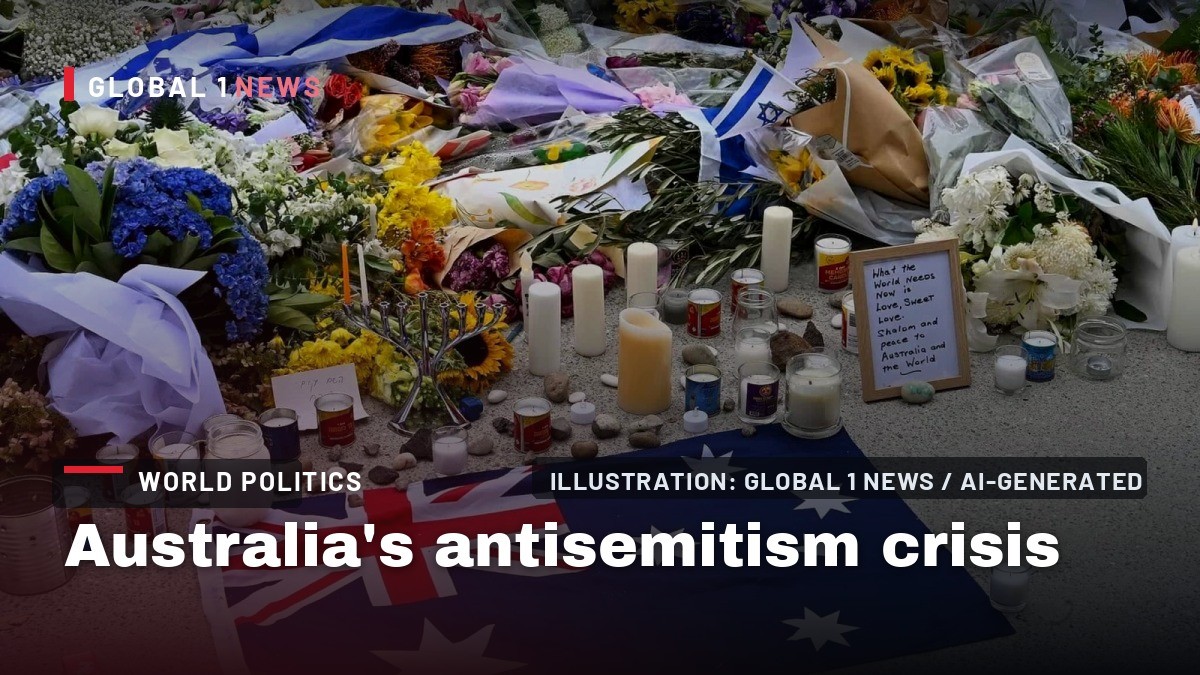
Both Nirenstein and Beck agreed that the protests are accompanied by a worrying increase in antisemitic incidents. The video description explicitly links the street turmoil to “rising antisemitism,” indicating that the social fabric is being strained not only by economic concerns but also by hate‑driven attacks.
Beck warned that the European political establishment’s response to domestic pressures may inadvertently amplify these trends. By allowing the protests to shape foreign‑policy decisions without a clear stance against hate, governments risk legitimizing extremist rhetoric that targets Jewish communities.
The experts underscored that Israel’s own experience with antisemitism, both within and beyond its borders, provides a stark reminder of the consequences when hate is left unchecked. They suggested that European leaders could benefit from studying Israel’s legal and security measures aimed at curbing hate crimes.
Turkey’s Growing Influence in the Regional Equation
The discussion turned to Turkey’s expanding role in European affairs, a factor that Beck described as part of the “broader geopolitical shift.” He noted that Turkey’s influence is being felt in the context of migration flows, energy politics and diplomatic outreach to European capitals.
According to the experts, Turkey’s positioning offers both opportunities and challenges for Israel. While Ankara’s relationship with Israel has fluctuated, the two countries share concerns about regional stability, especially regarding the Syrian front and the broader Middle‑East security environment.
Beck cautioned that European governments, preoccupied with domestic unrest, might underestimate Turkey’s capacity to shape policy outcomes that affect Israel’s strategic interests. He urged a more nuanced assessment of Turkey’s ambitions, particularly as they intersect with the continent’s internal debates over immigration and security.
The Muslim Brotherhood’s Role in Shaping the Narrative
Another focal point of the interview was the influence of the Muslim Brotherhood on the current wave of protests. Beck argued that the organization’s ideological framework is being leveraged by certain activist groups to frame economic grievances within a broader anti‑Western, anti‑Israeli narrative.
The experts pointed out that the Brotherhood’s outreach extends beyond the Middle East, finding resonance in diaspora communities across Europe. This transnational dimension complicates the European response, as authorities must balance civil liberties with the need to counter extremist propaganda.
In the Israeli context, the discussion highlighted how the Brotherhood’s activities have historically informed Israel’s security assessments. The experts suggested that Europe’s current struggle with Brotherhood‑linked narratives underscores the importance of intelligence sharing and coordinated diplomatic efforts between Israel and European partners.
Lessons for Europe and Israel: Institutional Resilience and Policy Choices
Concluding the segment, Nirenstein and Beck reflected on what the unfolding unrest means for the future of European governance and for Israel’s diplomatic posture. Beck warned that European governments risk “repeating dangerous mistakes” by allowing domestic pressures to dictate foreign‑policy choices without a clear strategic vision.
The experts argued that the resilience of legal institutions and the capacity of political establishments to manage polarized electorates will be decisive. They stressed that Europe’s ability to contain the surge of antisemitism and radical ideologies will shape not only its internal cohesion but also its external relationships, including with Israel.
From Israel’s perspective, the interview underscored the value of sharing its own experiences in navigating a politically divided society while confronting external threats. The Israeli model of integrating security considerations with democratic norms offers a potential template for European leaders seeking to balance civil liberties with the need to counter hate‑driven movements.
By Hannah Berg, Staff Writer
This article was produced with AI-assisted research and editorial support. Reporting is based on the source material cited below. Sources: JNS TV video report (22 October 2026); JNS TV; Global1.News
What's Your Reaction?
 Like
0
 Dislike
0
 Love
0
 Funny
0
 Wow
0
 Sad
0
 Angry
0

Israel Correspondent at Global1.News. Based in Tel Aviv, covering Israeli politics, security, technology, and society. Provides balanced, deeply-sourced reporting on one of the most closely-watched regions in the world.











Comments (0)