
Revived Eilat-Ashkelon pipeline could introduce new dynamics in the politics of the Middle East
Israel’s renewed push to resurrect the Ashkelon‑Eilat pipeline has resurfaced at a time when the Gulf’s oil routes are under unprecedented strain. After the 1979 Islamic Revolution, the partnership collapsed and the pipeline fell into disuse.
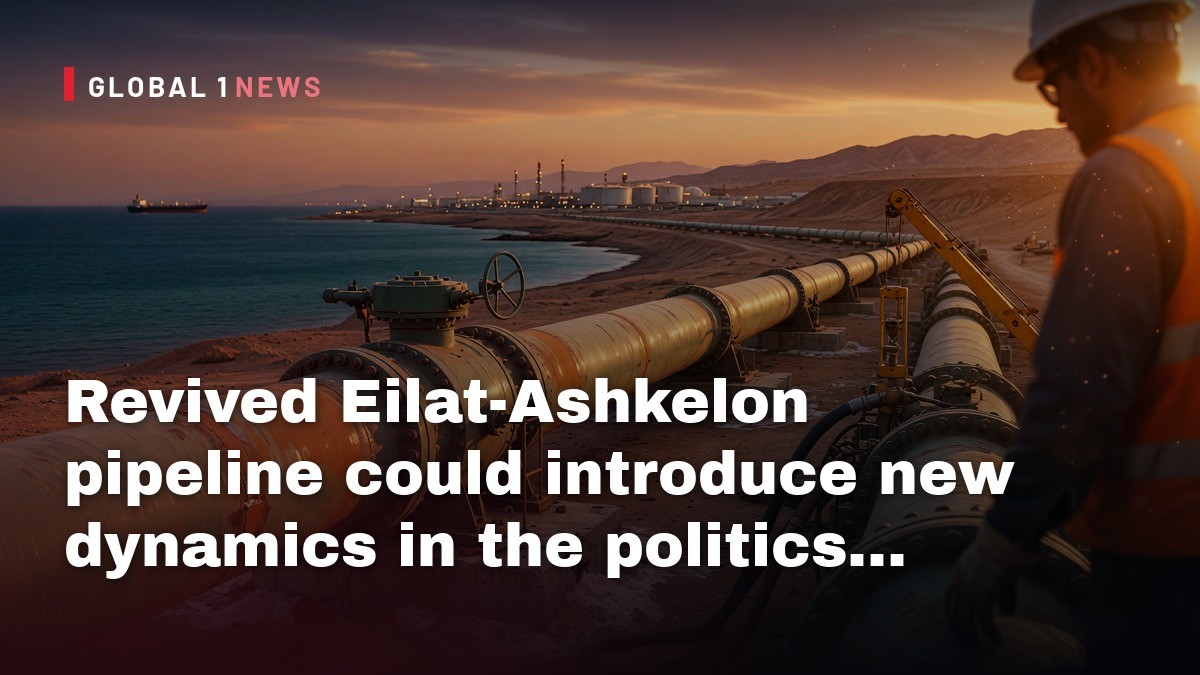
Israel’s renewed push to resurrect the Ashkelon‑Eilat pipeline has resurfaced at a time when the Gulf’s oil routes are under unprecedented strain. The proposal, first outlined by Prime Minister Benjamin Netanyahu and his Energy Minister Eli Cohen, envisions a new inland conduit that would link Saudi‑produced crude to Israel’s Red Sea port of Ashkelon via Jordan. If realised, the pipeline could divert oil shipments away from the increasingly volatile Strait of Hormuz and the Bab al‑Mandeb, offering a land‑based alternative for Gulf exporters. Yet the plan is entangled in a web of regional rivalries, humanitarian concerns, and the broader struggle for legitimacy that defines Middle Eastern geopolitics.
Strategic motivations behind the pipeline revival
The original Ashkelon‑Eilat line was built in 1968 as a secret joint venture between Israel and Iran under the Shah. After the 1979 Islamic Revolution, the partnership collapsed and the pipeline fell into disuse. Netanyahu’s current advocacy rests on a stark strategic calculus: the war between Saudi Arabia and the Iran‑backed Ansar Allah Houthis has repeatedly disrupted oil exports from Saudi ports, especially Yanbu on the Red Sea. By offering a land bridge that bypasses the Red Sea’s chokepoints, Israel hopes to position itself as an indispensable partner in the Gulf’s energy logistics.
Netanyahu has also framed the offer as a diplomatic overture. Reports in Haaretz and other outlets note that he extended Israeli military assistance to Saudi Arabia to help combat the Houthis, hoping the gesture would open a path toward normalisation with Riyadh. The proposal therefore serves a dual purpose: it addresses an immediate logistical need for Gulf oil exporters while simultaneously seeking a political breakthrough that could reshape Israel‑Saudi relations.
The humanitarian dimension of the Red Sea conflict
The ongoing hostilities between Saudi forces and the Houthis have exacted a heavy toll on civilian populations. The Houthis’ attacks on strategic facilities, including the port of Yanbu, have disrupted not only oil flows but also the flow of essential goods for communities dependent on maritime trade. The Petroline pipeline—1200 kilometres long, carrying up to 7 million barrels of oil per day from Abqaiq to Yanbu—has become a focal point of conflict, with repeated targeting threatening both economic stability and civilian safety in the region.
Any shift of oil traffic to the Ashkelon‑Eilat corridor would also have indirect humanitarian implications. By reducing reliance on the Red Sea routes that are vulnerable to missile strikes and naval blockades, the pipeline could lessen the risk of collateral damage to nearby coastal towns, including the resort cities of Eilat and Aqaba. However, the plan also raises concerns about the environmental impact of increased oil traffic through the fragile Red Sea ecosystem, a factor that must be weighed against any potential security gains.
Saudi Arabia’s calculus and internal pressures
Saudi Crown Prince Mohammed bin Salman (MBS) faces a delicate balancing act. On the one hand, the disruption of oil exports from Yanbu threatens the kingdom’s revenue and its ability to fund domestic projects and the war effort in Yemen. On the other, accepting Israeli assistance—whether military or logistical—could be perceived as a capitulation to a state that many in the Muslim world view as an occupier. The source material notes that MBS rejected Netanyahu’s direct offer of military aid, fearing a backlash that could undermine his leadership within the broader Muslim community.
Nevertheless, the pipeline proposal continues to be floated, suggesting that Saudi decision‑makers are keeping the option open as a pragmatic response to the Houthi threat. The prospect of a new export route that bypasses the Strait of Hormuz—a chokepoint that has historically been a flashpoint for regional tension—offers a strategic hedge against future disruptions. Yet any move toward cooperation with Israel would likely provoke criticism from domestic constituencies and could jeopardise Saudi Arabia’s standing as a leader of the Muslim world.
International involvement and the broader security context
The United States, Pakistan, and other traditional Saudi allies have been active in supporting Riyadh against the Houthis. According to the source, the U.S. has deployed between 100 and 200 military advisers to provide intelligence and targeting support, alongside billions in weapons and missile‑defence systems such as Patriot and THAAD batteries. Pakistan’s contribution, framed under the Mecca Joint Defense Agreement, remains limited to defensive deployments aimed at protecting Saudi territory.
Israel distinguishes itself by offering a “blanket assistance” package that goes beyond the limited support provided by other allies. While the U.S. and Pakistan have refrained from committing to a broader partnership, Israel’s willingness to integrate its own infrastructure into a Gulf oil corridor could be seen as a more comprehensive form of aid. This distinction underscores why Saudi Arabia finds itself at a crossroads: the potential security benefits of Israeli cooperation must be weighed against the diplomatic costs of aligning with a state that remains isolated by much of the Arab and Muslim world.
Economic implications for Israel and the Gulf
For Israel, the pipeline could become a new source of revenue at a time when U.S. funding for the country faces increasing scrutiny. By facilitating the transit of Gulf oil, Israel could collect transit fees and potentially secure a share of the profits from the export of Saudi crude. This financial incentive is particularly salient given the broader context of diminishing external aid and the need for Israel to diversify its economic base.
From the Gulf’s perspective, the pipeline promises a strategic diversification of export routes. By reducing reliance on the Strait of Hormuz and the Bab al‑Mandeb—both of which have been targeted by Iranian‑aligned forces—the Gulf states could safeguard a critical component of their economies. However, the success of the project hinges on the willingness of Saudi Arabia to permit oil to pass through Jordan and Israel, a step that would require significant diplomatic concessions and assurances regarding security and political legitimacy.
Potential regional fallout and the path forward
The revival of the Ashkelon‑Eilat pipeline sits at the intersection of security, economics, and identity politics. If Saudi Arabia were to accept the proposal, it could trigger a realignment of regional alliances, potentially marginalising Iran’s influence while elevating Israel’s strategic standing. Conversely, the move could provoke strong backlash from other Arab and Muslim nations, leading to diplomatic isolation for Riyadh and possibly igniting internal dissent.
Human‑rights observers must also monitor the impact on civilian populations. The redirection of oil traffic could reduce the frequency of attacks on Red Sea ports, but the construction and operation of a new pipeline across Jordanian territory raise questions about land rights, environmental safeguards, and the displacement of communities. As the conflict in Yemen drags on and the Houthis continue to target strategic infrastructure, any solution that seeks to mitigate the humanitarian toll must be accompanied by robust safeguards for civilians and the environment.
Conclusion: A crossroads of desperation and opportunity
The Ashkelon‑Eilat pipeline proposal encapsulates the desperation of a region under siege and the opportunism of actors seeking leverage. For Israel, it offers a chance to transform a dormant piece of infrastructure into a lifeline that could reshape its economic and diplomatic fortunes. For Saudi Arabia, it presents a pragmatic, albeit politically fraught, avenue to secure oil exports amid a protracted war with the Houthis. Yet the human cost of the broader conflict—disrupted livelihoods, threatened ecosystems, and the spectre of further militarisation—remains the ultimate measure of any policy decision.
As the October 2026 negotiations continue, the world will watch whether the pipeline becomes a symbol of cooperation that eases humanitarian suffering, or a flashpoint that deepens divisions across the Middle East.
This article was produced with AI-assisted research and editorial support. Reporting is based on the source material cited below. Sources: Middle East Monitor; middleeastmonitor.com; Global1.News (22 October 2026).
By Fatima Al-Rashid, Staff Writer
What's Your Reaction?
 Like
0
 Dislike
0
 Love
0
 Funny
0
 Wow
0
 Sad
0
 Angry
0

Gulf/MENA Correspondent at Global1.News. Based in Doha, covering Gulf politics, energy markets, diplomacy, and development across the Middle East and North Africa. Tracks the economic transformation of the Gulf states.












Comments (0)