
Exclusive-Senior UAE diplomat Lana Nusseibeh enters race for UN chief
Nusseibeh, a former UAE ambassador to the UN for more than a decade and currently the UAE minister of state for foreign affairs, framed her bid as a bid to restore the world body’s role as a diplomatic problem‑solver at a time of mounting global crises.
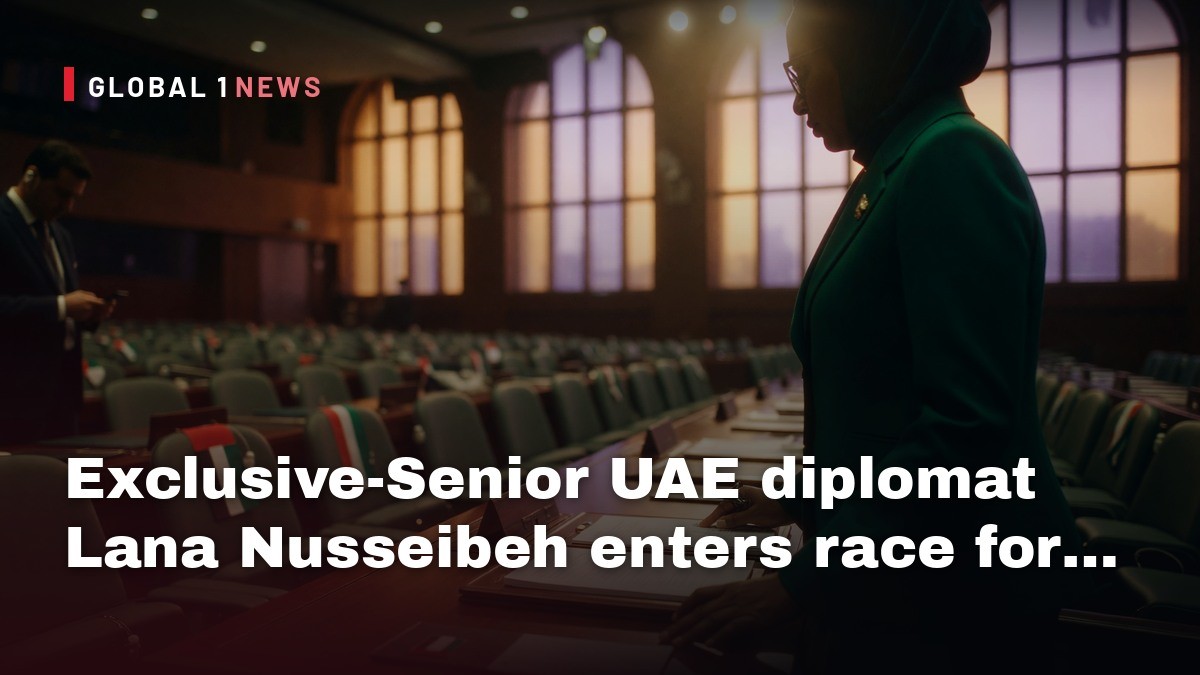
Senior United Arab Emirates diplomat Lana Nusseibeh announced her candidacy for the United Nations secretary‑generalship on 21 October 2026, adding a high‑profile Middle Eastern contender to a race that has struggled to coalesce around a single favorite among the Security Council’s permanent members. Nusseibeh, a former UAE ambassador to the UN for more than a decade and currently the UAE minister of state for foreign affairs, framed her bid as a bid to restore the world body’s role as a diplomatic problem‑solver at a time of mounting global crises.
From Abu Dhabi to New York: A diplomatic career built on “creative entrepreneurial diplomacy”
Nusseibeh’s entry into the contest comes after a long tenure in New York where she oversaw the UAE’s diplomatic engagement during some of the most turbulent moments in recent UN history. Her time at the UN overlapped with the outbreak of the Gaza war in 2023, during which she secured the adoption of Resolution 2720 – a measure that paved the way for the delivery of humanitarian aid to Gaza. She described the process of gaining support for the resolution as “creative entrepreneurial diplomacy,” noting that she arranged a visit by council members to the Rafah border crossing so they could see the situation on the ground firsthand.
Colleagues in New York have described Nusseibeh as a competent manager who can navigate the complex dynamics of the Security Council. Her reputation for “creative entrepreneurial diplomacy” has become a hallmark of her approach, blending on‑the‑ground fact‑finding with strategic lobbying to build consensus among the world’s most powerful states.
The Security Council’s current stalemate and the impact of a late entrant
At the time of Nusseibeh’s announcement, an informal poll of the Security Council’s permanent members had placed former Costa Rican Vice President Rebeca Grynspan as a narrow frontrunner. However, the poll revealed that Grynspan and all other candidates had received two or more opposing votes from the five permanent members – Britain, China, France, Russia and the United States – a sign that no clear consensus has yet emerged.
Diplomats say the council is now debating whether to hold another straw poll this Friday or to postpone the vote to a later stage. Nusseibeh’s late entry adds a new variable to the negotiations, especially as she told Reuters she had been approached by multiple countries during the last UN General Assembly to put herself forward. Her candidacy could reshape the calculus of the permanent members, who have traditionally looked for a candidate able to balance competing geopolitical interests.
Regional implications: A potential second Middle‑Eastern UN chief
If elected, Nusseibeh would become the second UN secretary‑general from the Middle East, following Egypt’s Boutros Boutros‑Ghali, who served from 1992 to 1996. She highlighted the symbolic weight of that possibility, noting that “I come from a country that is younger than the United Nations but our region is one that has been facing severe challenges.” Her bid therefore carries not only personal ambition but also a broader regional narrative about the Middle East’s capacity to contribute to global governance.
The UAE’s foreign policy, which Nusseibeh has championed, emphasizes an assertive stance against political Islam and a focus on counter‑terrorism. While these priorities align with many Western security concerns, they also intersect with ongoing regional disputes, such as the controversy over the UAE’s alleged support for Sudan’s Rapid Support Forces. Nusseibeh said she had taken leave from her UAE post to focus on Sudan’s humanitarian crisis, attempting to separate the humanitarian dimension from the political accusations.
Gender dynamics: The prospect of the first female UN chief
Nusseibeh would also be the first woman to lead the United Nations. While she downplayed the gender aspect of her campaign, stating she is “not running because I am a woman,” she acknowledged that a female secretary‑general would be “great.” Her emphasis on stubborn optimism and relentless pursuit of diplomacy suggests she intends to be judged on competence and vision rather than identity politics.
The potential historic breakthrough for gender representation adds another layer to the diplomatic calculations of member states, many of which have signaled support for greater female leadership in international institutions. Whether this factor will sway the permanent members remains uncertain, but it undeniably enriches the narrative surrounding the race.
Economic and innovation credentials: Linking diplomacy to Israel’s tech ecosystem
From an Israeli perspective, Nusseibeh’s background offers an interesting parallel to Israel’s own emphasis on “innovation diplomacy.” Israel’s Ministry of Economy and the Israel Innovation Authority have long promoted the idea that technological leadership can be a lever of soft power, a concept mirrored in Nusseibeh’s “creative entrepreneurial diplomacy.” Both approaches seek to translate on‑the‑ground realities into strategic influence at the highest diplomatic levels.
Should Nusseibeh win, her familiarity with leveraging technology for diplomatic ends could open avenues for deeper cooperation between the UN and Israel’s thriving tech sector, especially in areas like humanitarian logistics, disaster response and data‑driven peace‑building initiatives. Israeli startups that specialize in AI‑enabled humanitarian tools could find a more receptive UN environment under a secretary‑general who values innovative problem‑solving.
Potential challenges: Balancing UAE controversies with global expectations
The UAE’s recent scrutiny over alleged military support to Sudan’s paramilitary Rapid Support Forces adds a complicating factor to Nusseibeh’s candidacy. UN sanctions monitors have described the allegations as credible, although the UAE denies them. Nusseibeh’s response – taking leave from her ministerial post and focusing on Sudan’s humanitarian crisis – is an attempt to distance herself from the controversy while demonstrating a commitment to humanitarian issues.
Member states will weigh how the candidate’s national affiliations intersect with the UN’s impartiality mandate. The ability of Nusseibeh to convincingly separate her personal diplomatic record from the UAE’s foreign policy controversies will be a key test in the Security Council’s deliberations.
Looking ahead: What Nusseibeh’s candidacy signals for the UN’s future
Nusseibeh’s entry into the race underscores a growing desire among some member states for a secretary‑general who can revitalize multilateralism through proactive problem‑solving. Her emphasis on “generational change” and her track record of securing humanitarian resolutions suggest she intends to steer the UN toward a more hands‑on, results‑oriented posture.
As the Security Council prepares for its next straw poll, the contest will likely focus on three core questions: Can a candidate bridge the divergent interests of the permanent members? Does the candidate bring a fresh diplomatic toolkit that matches the scale of today’s crises? And can the candidate’s personal credibility withstand scrutiny of their national government’s actions? Nusseibeh’s candidacy, anchored in a blend of seasoned UN experience and a reputation for innovative diplomacy, positions her as a serious contender in a race that remains wide open.
This article was produced with AI-assisted research and editorial support. Reporting is based on the source material cited below. Sources: Al-Monitor; al-monitor.com; Global1.News (22 October 2026).
By Hannah Berg, Staff Writer
What's Your Reaction?
 Like
0
 Dislike
0
 Love
0
 Funny
0
 Wow
0
 Sad
0
 Angry
0

Israel Correspondent at Global1.News. Based in Tel Aviv, covering Israeli politics, security, technology, and society. Provides balanced, deeply-sourced reporting on one of the most closely-watched regions in the world.










Comments (0)