
Actyus, Adequita, and Nethits launch fund for Edge data centers - report
Edge data centers are getting a fresh injection of cash, but the hype around them needs a reality check from someone who’s been wiring up servers in the trenches.
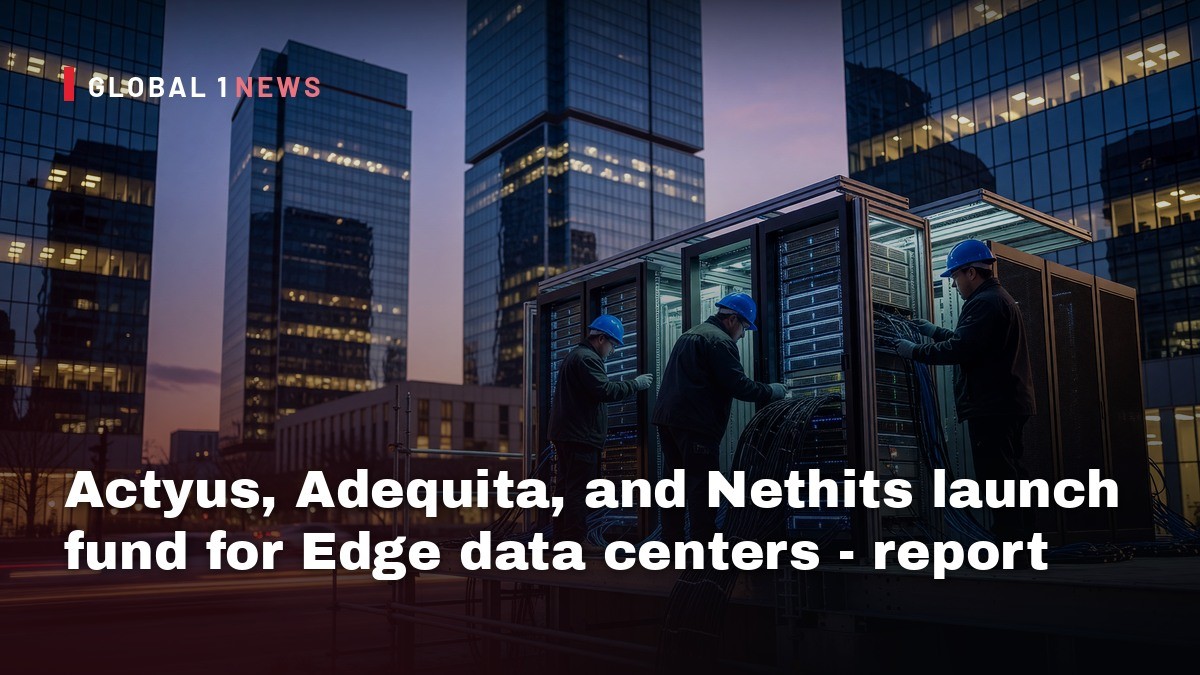
Edge data centers are getting a fresh injection of cash, but the hype around them needs a reality check from someone who’s been wiring up servers in the trenches. Actyus, Adequita Capital, and Nethits Telecom have banded together to launch a €20 million fund aimed at building edge facilities across Spain and Portugal. On paper it looks like a tidy, forward‑thinking play – bring compute closer to businesses and government agencies, tap into renewable mandates, and ride the wave of 5G‑enabled services. In practice, the devil is in the details, and the details are still being sketched out. As a founder who runs real hosting infrastructure, I’m watching this with a mix of curiosity and caution.
Why the Edge is Getting the VC Spotlight
The fund’s focus on “smaller‑scale infrastructure” is a direct response to the growing demand for low‑latency services. Enterprises in Spain and Portugal are looking to shave milliseconds off transaction times, and governments want data residency close to home for compliance reasons. The venture capital angle is obvious: investors see edge as the next frontier after the hyperscaler‑dominated core. Actyus, the alternative investment arm of Andbank España, is positioning itself as the manager of this €20 million pool, while Adequita Capital takes the role of founding financial partner and developer.
From a business‑risk perspective, the edge promise is attractive because it sidesteps the massive capex and power bills that come with building mega‑scale hyperscaler campuses. A smaller footprint means lower upfront costs, and the ability to locate sites near customers can translate into premium pricing. But the edge market is still nascent, and the regulatory environment is shifting underfoot, especially with Spain’s pending royal decree on renewable energy usage for larger data centers. The decree could set a precedent that filters down to edge sites, potentially adding compliance overhead that many founders aren’t prepared for.
The Players and Their Motives
Actyus will manage the fund, leveraging its alternative‑investment expertise to allocate capital across the Iberian Peninsula. Andbank will handle distribution to high‑net‑worth individuals and institutional investors, giving the fund a ready pool of capital. Adequita Capital, already a founding partner in the data‑center joint venture NXN, brings development chops to the table. Nethits, a Valencia‑based telecoms outfit founded in 2006, contributes its fiber‑optic and systems‑integration know‑how, a critical piece for any edge operation that needs to hook into existing carrier networks.
The synergy makes sense on paper: finance, development, and telecom expertise under one roof. Yet the real test will be how quickly they can move from “fund launch pending CNMV approval” to “operational edge sites delivering revenue.” In my experience, the bottleneck is rarely the money; it’s the ability to secure land, obtain permits, and stitch together the network fabric without hitting regulatory roadblocks. The fact that the fund’s launch is still awaiting clearance from Spain’s National Securities Market Commission (CNMV) adds a layer of uncertainty that could delay the first build‑out by months, if not longer.
Regulatory Headwinds: Spain’s Renewable Mandate
Spain is finalising a royal decree that would require larger data centres to cover 80 percent of their electricity consumption with new renewable generation, with hourly certification. While the decree targets “larger” facilities, the National Commission for Markets and Competition (CNMC) has suggested relaxing the requirement to avoid inefficiencies. Industry voices have warned that a strict interpretation could jeopardise project viability.
For edge operators, the line between “large” and “small” is blurry. A 10‑rack edge site can still consume enough power to attract regulator scrutiny, especially if it’s co‑located with other tenants. If the CNMC’s call for flexibility is heeded, edge projects may escape the most onerous compliance costs. But if the decree tightens and the definition of “large” expands, developers could face additional renewable‑energy procurement obligations that eat into margins. The risk is real, and any fund‑backed edge rollout must factor in the potential for extra CAPEX or OPEX to meet renewable targets.
From Fund to Facility: The Development Pipeline
We know that Adequita and Nethits formed the data‑center firm NXN in 2023, and that NXN is developing a facility in Valencia. That site will likely serve as the pilot for the new fund’s investment thesis. Valencia offers a strategic location with existing fiber routes and a growing tech ecosystem, making it a sensible first stop. However, the source material does not disclose the size, power density, or tenancy mix of the Valencia project, leaving us to guess how it aligns with the fund’s “smaller‑scale” focus.
In practice, scaling from a single pilot to a portfolio of edge sites across two countries requires a repeatable playbook. That includes standardising rack layouts, power distribution, and cooling solutions to keep OPEX low. It also means securing long‑term carrier contracts to guarantee bandwidth – a domain where Nethits’ telecom pedigree could be decisive. Yet without concrete details on the fund’s investment criteria, the risk remains that each site will be a bespoke project, inflating costs and stretching the €20 million budget thin.
The Competitive Landscape: Hyperscalers vs. Independent Edge
Hyperscalers like Amazon, Microsoft, and Google have already begun to dip their toes into edge with micro‑data centres and pop‑up sites. Their advantage is the ability to bundle edge capacity with a broader suite of cloud services, often at a discount that independent providers can’t match. The new fund is essentially a bet that localized, carrier‑backed edge will still command a premium over hyperscaler offerings.
From a founder’s lens, the key differentiator is service depth. Edge sites that can offer managed hosting, colocation, and bespoke connectivity – especially to industries like hospitality where Nethits already has a foothold – can carve out niche revenue streams. The challenge is avoiding the “best practice” trap of copying hyperscaler playbooks that don’t translate well to smaller facilities. For instance, hyperscalers rely on massive economies of scale for power and cooling; trying to replicate that in a 100‑rack edge node is a recipe for inefficiency.
Risk Management and Capital Allocation
The €20 million fund size is modest by data‑centre standards, but it’s adequate for a handful of edge deployments if managed prudently. The risk profile, however, is skewed toward regulatory and execution risk rather than pure market demand. The source material notes that full investment details have not been shared, which suggests the fund may still be calibrating its risk‑adjusted return expectations.
For independent hosting providers watching this move, the lesson is clear: don’t chase the hype without a hard‑nosed financial model. Edge projects must be underpinned by guaranteed revenue streams – whether from long‑term government contracts, telecom backhaul agreements, or industry‑specific tenancy. Without that, the capital burn can outpace cash flow, especially if renewable compliance adds unexpected OPEX.
Actionable Takeaways for Founders
First, keep an eye on the CNMV approval timeline. Any delay in fund deployment pushes the start‑up window further out, giving competitors a chance to lock down prime sites. Second, map out the regulatory landscape in both Spain and Portugal, focusing on renewable‑energy obligations that could affect even “small” edge sites. Third, leverage existing carrier relationships – Nethits’ expertise in fiber and systems integration is a blueprint for how to secure the connectivity backbone that makes edge viable.
Finally, build a disciplined rollout plan that starts with a pilot (like the Valencia NXN facility), validates the financial model, and then scales with a repeatable design. Don’t let the allure of “edge” cloud‑first thinking override the hard realities of power, cooling, and compliance. If you can lock in predictable revenue and keep capex under control, the edge market can be a profitable niche. If not, you’ll end up chasing a hype‑driven fund that never materialises into cash‑flowing assets.
— Allan Ali, Founder
This article was produced with AI-assisted research and editorial support. Reporting is based on the source material cited below. Sources: Data Center Dynamics; datacenterdynamics.com; Global1.News (24 October 2026).
By Allan Ali, Global1.News
What's Your Reaction?
 Like
0
 Dislike
0
 Love
0
 Funny
0
 Wow
0
 Sad
0
 Angry
0

Publisher of Global1.News. Automation architect, systems builder, and the guy making sure the truth gets published.















Comments (0)