
Winner's Song Min-ho to Fulfill Missed Military Service Obligation
In a development reported by the Korea Now channel on 19 October 2026, the former vocalist of the K‑pop ensemble Winner, Song Min‑ho, announced his intention to make up for previously missed military service.
In a development reported by the Korea Now channel on 19 October 2026, the former vocalist of the K‑pop ensemble Winner, Song Min‑ho, announced his intention to make up for previously missed military service. The brief video, posted at 08:00 UTC, underscored the legal and cultural significance of compulsory service in the Republic of Korea, a duty that remains a cornerstone of national security policy under the Ministry of National Defense (MoND). The footage, while succinct, invites a broader scholarly examination of how military obligations intersect with the entertainment industry, public sentiment, and the evolving jurisprudence surrounding deferments and exemptions.
Legal Framework Governing Conscription
The Republic of Korea maintains a universal conscription system, codified in the Military Service Act, which mandates that all able‑bodied males between the ages of 18 and 28 serve a period of active duty. The Ministry of National Defense, in coordination with the Ministry of Justice, administers the enlistment process, and the Military Manpower Administration (MMA) oversees individual eligibility assessments. Legal scholars note that the Act allows for limited deferments on the basis of health, education, or exceptional circumstances, yet the criteria are strictly interpreted to preserve the integrity of the system.
In recent years, the Ministry of National Defense has faced heightened scrutiny over perceived inconsistencies in deferment approvals, particularly concerning high‑profile entertainers. The case of Song Min‑ho, whose service was previously missed, raises questions about the procedural mechanisms that led to his exemption and the subsequent decision to rectify it. While the video does not disclose the precise legal rationale, the Ministry’s standard practice involves a review by the Military Manpower Administration, which may recommend a make‑up service if prior service was deemed incomplete or improperly granted.
Legal analysts at the Asan Institute for Policy Studies have argued that the enforcement of make‑up service serves both a corrective function and a symbolic one, reinforcing the principle that no citizen is above the law. In the context of Winner’s Song Min‑ho, the decision to fulfill the missed obligation aligns with this jurisprudential perspective, signaling a reinforcement of egalitarian obligations irrespective of celebrity status.
Cultural Context of Military Service in South Korea
Compulsory military service occupies a unique place in South Korean collective consciousness. It is widely regarded as a rite of passage that affirms citizenship and national solidarity. Public opinion surveys, frequently cited by the Korea Institute for National Unification (KINU), reveal that a majority of citizens view service as a unifying experience that bridges socioeconomic divides. Consequently, when public figures postpone or evade service, the reaction can be severe, often manifesting in public criticism and calls for accountability.
The entertainment sector, particularly K‑pop, has historically been a flashpoint for such debates. Notable cases, such as the enlistment of members from groups like BTS and EXO, have been closely monitored, with fans and media outlets tracking compliance with the Military Service Act. In this cultural milieu, the announcement by Song Min‑ho to make up missed service is likely to be interpreted as an act of responsibility, potentially mitigating any lingering public disapproval.
Moreover, the Ministry of Culture, Sports and Tourism (MCST) has, in recent policy statements, emphasized the importance of aligning cultural production with national duties. While the MCST does not directly administer conscription, its coordination with the MoND reflects a broader governmental intent to ensure that cultural ambassadors also embody civic obligations.
Implications for Winner and the K‑pop Industry
The group Winner, formed under YG Entertainment in 2013, has maintained a prominent presence in the Korean music scene. The departure of a member for military service can affect group dynamics, promotional schedules, and fan engagement. Industry analysts at the Korea Development Institute (KDI) note that agencies often adjust marketing strategies to accommodate enlistment periods, employing solo projects or sub‑unit activities to sustain public interest.
Song Min‑ho’s decision to fulfill his missed service may therefore have operational implications for Winner’s upcoming releases. While the video does not specify the timeline for his enlistment, the standard active duty period for the Army, Navy, or Air Force remains approximately 18 months, with variations for the Marine Corps. During this interval, the group’s agency may need to recalibrate its promotional calendar, a process that has precedent in prior cases where members enlisted mid‑promotion cycle.
From a broader industry perspective, the episode underscores the ongoing tension between the commercial imperatives of the K‑pop market and the civic expectations of military service. Scholars at the Korea Institute for International Economic Policy (KIEP) have highlighted that the industry’s rapid globalization intensifies scrutiny of how Korean idols navigate national duties while pursuing international careers. Song Min‑ho’s compliance may thus serve as a reference point for future negotiations between agencies, idols, and the MoND.
Public and Media Reaction to the Announcement
The Korea Now video, though brief, was accompanied by a description that referenced copyright concerns and the involvement of Yonhap News, indicating the broader media ecosystem’s engagement with the story. The description’s inclusion of hashtags such as #winner, #songminho, and #militaryservice suggests a social media discourse that likely amplified public awareness.
In the Korean digital sphere, fan communities often mobilize to either defend or criticize idols’ service decisions. The presence of the #court hashtag hints at potential legal proceedings or appeals that may have preceded the current announcement. While the video does not elaborate on any judicial outcomes, the implication of a court process aligns with prior instances where idols have contested deferment decisions before administrative tribunals.
Media scholars at Seoul National University’s Department of Communication have observed that such hashtag-driven narratives can shape public perception, especially when amplified by major news agencies like Yonhap. The interplay between official statements, fan commentary, and investigative reporting creates a multifaceted narrative that influences both domestic and international audiences.
Historical Precedents and Policy Evolution
South Korea’s conscription system has undergone several reforms since its inception in the post‑Korean War era. Notably, the 1997 amendment introduced alternative service options for individuals with certain disabilities, while the 2009 revision tightened criteria for deferments related to education and overseas study. These policy shifts reflect an ongoing effort to balance national security needs with societal changes.
In the context of entertainers, the most prominent historical precedent is the 2009 case of actor Lee Byung‑hun, who faced public backlash after receiving a medical exemption that was later rescinded, prompting a mandatory service period. The subsequent public discourse contributed to stricter enforcement guidelines by the MMA, as documented in Ministry of National Defense white papers.
Song Min‑ho’s situation can be situated within this continuum of policy evolution. The decision to make up missed service indicates a possible re‑evaluation of prior exemption criteria, suggesting that the MoND continues to refine its enforcement mechanisms to address perceived inequities.
Forward‑Looking Assessment and Regional Significance
Looking ahead, the case of Winner’s Song Min‑ho may have implications beyond the immediate sphere of entertainment. The Ministry of Foreign Affairs (MOFA) has, in recent diplomatic briefings, highlighted the role of cultural diplomacy in strengthening South Korea’s soft power. Ensuring that cultural figures comply with national duties reinforces the credibility of such diplomatic initiatives, presenting a consistent image of civic responsibility.
Furthermore, the Northeast Asian geopolitical environment, marked by ongoing tensions on the Korean Peninsula, underscores the strategic importance of a fully mobilized reserve force. Each eligible male’s completion of service contributes to the depth of the reserve pool, a factor considered by defense analysts at the Korea Institute for Defense Analyses (KIDA). While an individual’s service may appear marginal, the cumulative effect of ensuring universal compliance enhances overall deterrence posture.
In sum, the announcement captured in the Korea Now report reflects a convergence of legal, cultural, and strategic dimensions. Song Min‑ho’s forthcoming make‑up service not only addresses a personal legal obligation but also resonates within broader discourses on equality before the law, the responsibilities of public figures, and the integration of cultural influence with national security imperatives. As the Ministry of National Defense continues to enforce conscription standards, and as the entertainment industry adapts to these mandates, the episode will likely serve as a reference point for future policy considerations and scholarly analyses of the interplay between popular culture and state obligations in South Korea.
By Prof. David Park, Staff Writer
This article was produced with AI-assisted research and editorial support. Reporting is based on the source material cited below. Sources: KOREA NOW video report (19 October 2026); KOREA NOW; Global1.News
What's Your Reaction?
 Like
0
 Dislike
0
 Love
0
 Funny
0
 Wow
0
 Sad
0
 Angry
0
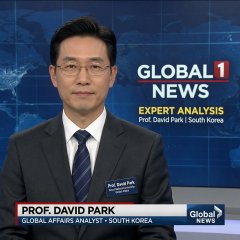
East Asia/Technology Correspondent at Global1.News. Seoul-based voice covering Korean politics, technology, business, and culture. Analyzes how technology and geopolitics intersect across East Asia.












Comments (0)