
US official: Russia's stalker satellite sure looks like an orbital weapon
The United Nations hearing, the US State Department’s alarm, and Russia’s denial all play out on a stage where the real risk is not a laser‑blasting satellite but the erosion of trust in the orbital commons that underpins today’s global connectivity.
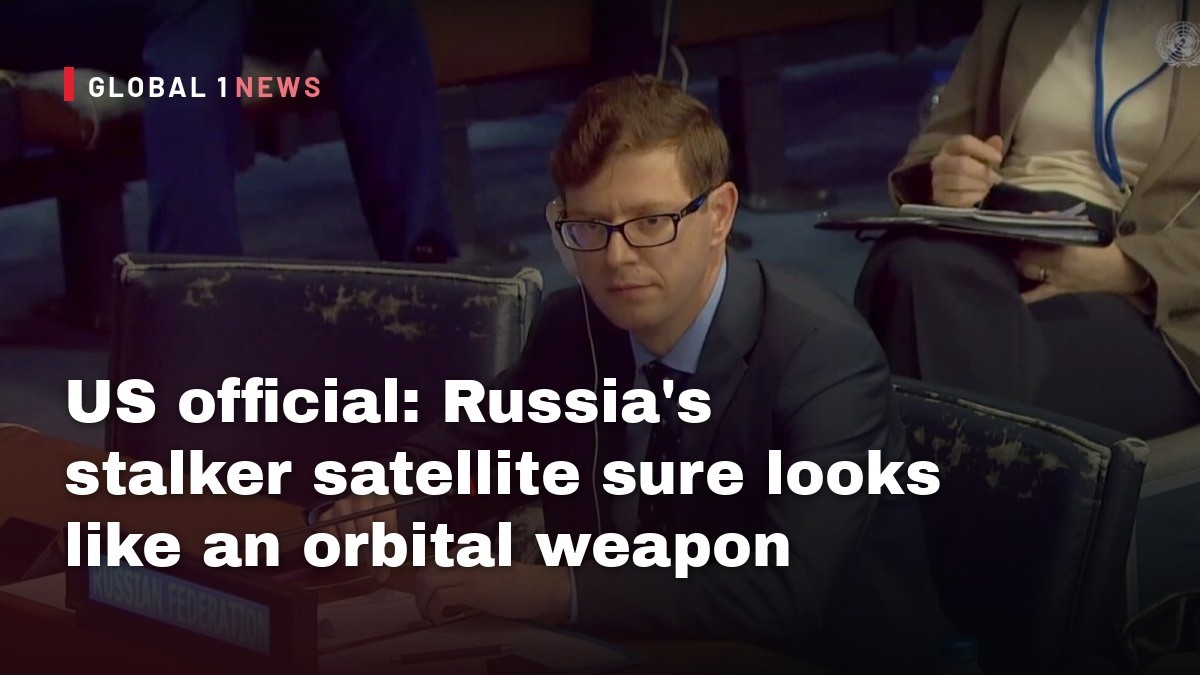
When a Russian military satellite drifted within a few hundred metres of a commercial radar‑imaging platform last weekend, the headlines screamed “orbital weapon.” The reality, as I see it from ten‑plus years of running real hosting infrastructure, is that the whole episode is a textbook case of geopolitical posturing that could spell trouble for any independent provider that relies on commercial space assets. The United Nations hearing, the US State Department’s alarm, and Russia’s denial all play out on a stage where the real risk is not a laser‑blasting satellite but the erosion of trust in the orbital commons that underpins today’s global connectivity.
What actually happened in orbit?
The incident centres on Kosmos 2612, a Russian military craft that, according to US State Department official Brian Hardesty, “exhibited threatening behaviour by intentionally maneuvering dangerously close to a commercial satellite.” The target was ICEYE‑X36, a radar‑surveillance satellite owned by the US subsidiary of the Finnish remote‑sensing firm ICEYE. Orbital‑intelligence firm LeoLabs reported that Kosmos 2612 closed to within about 500 metres of ICEYE‑X36, with other tracking data suggesting the gap may have narrowed to as little as 100 feet. The Russian side, represented by deputy UN delegate Konstantin Vorontsov, dismissed the US concerns as “unfounded” distractions and insisted that all Russian activity, including Kosmos 2612, was “purely peaceful in character.”
While the satellite ultimately backed off without firing a shot, the manoeuvre itself violated long‑standing safety thresholds in low‑Earth orbit, according to US Deputy Permanent Representative Jessup Taylor. The episode is not an isolated glitch; it follows a pattern of Russian co‑orbital anti‑satellite (ASAT) tests dating back to the Soviet era, including recent experiments with the Nivelir system, which can launch a high‑speed projectile to smash another object in orbit.
Why the diplomatic fireworks?
The timing of the maneuver is significant. It came just days after Vorontsov’s 2022 statements that commercial satellite networks used by Ukraine could be “legitimate targets for a retaliatory strike.” Those comments were made when Ukraine was increasingly dependent on commercial satellite communications for drone operations and battlefield intelligence. The US, via Under Secretary of State Thomas DiNanno, highlighted the incident on X, marking the first official US comment since the close approach. Meanwhile, Russia used the UN platform to deny any malicious intent, framing the US alarm as “loudspeaker diplomacy” and “absurd accusations.”
Both sides are playing a classic game of signalling. The US wants to cement a narrative that Russia is testing weapons in orbit, thereby justifying its own space‑weapon disclosures and rallying allies around stricter norms. Russia, for its part, seeks to cast doubt on US motives while positioning itself as a proponent of a ban on space weapons—a proposal that is, in practice, a diplomatic smokescreen given its own covert ASAT activities.
Implications for the commercial satellite market
For providers like us who lease satellite bandwidth for back‑haul, the incident underscores a growing vulnerability. Commercial constellations such as ICEYE, Starlink, and the emerging Starshield service are now on the radar of great‑power militaries. The article notes a slowdown in SpaceX’s Starlink service in Ukraine, which directly affects the country’s ability to run drone operations. Whether that slowdown was driven by political pressure from former US President Trump and Elon Musk or by operational security concerns, the outcome is the same: commercial satellite services are not immune to geopolitical leverage.
When a state actor can maneuver a military satellite within a kilometre of a commercial payload, the risk of accidental collision or intentional interference spikes. The “long‑established safety thresholds” mentioned by US officials are not just bureaucratic niceties; they are the thin line that keeps the orbital traffic jam from turning into a chain‑reaction collision cascade. Any breach, intentional or not, threatens to raise insurance premiums, force providers to add costly redundancy, and potentially force customers to seek alternative, perhaps less capable, connectivity solutions.
What this means for independent hosting and data centre operators
From a business‑risk perspective, the episode forces us to re‑evaluate our reliance on a single satellite provider. If a commercial satellite can be threatened by a state‑run ASAT test, the continuity of service is no longer a technical issue but a geopolitical one. We have to ask: do we have fallback paths—ground‑based fibre, terrestrial microwave links, or diversified satellite contracts—that can survive a sudden denial of service?
In practice, that means building multi‑provider redundancy into our network architecture. It also means negotiating service‑level agreements that explicitly address “force‑majeure” events tied to geopolitical actions, not just natural disasters. Many providers still treat space‑based risk as a low‑probability, high‑impact outlier, but the Kosmos 2612 incident is a reminder that the outlier is becoming more likely as great‑power competition intensifies.
How the US and Russia are shaping the rules of the game
The UN debate highlighted two competing visions for space governance. Russia and China pushed for a blanket ban on any weapons in space, a proposal the US dismissed as “ineffectual and unrealistic.” The US, citing the 1967 Outer Space Treaty, argues that only weapons of mass destruction are prohibited, leaving a grey zone for kinetic ASAT tools, jamming, and other non‑explosive capabilities. The difficulty, as Jessup Taylor noted, is that “observable and confirmable behaviours are hard to deny,” meaning that any overt ASAT test will be visible to commercial trackers and can be used as evidence in diplomatic forums.
This regulatory uncertainty feeds directly into business risk. Without a clear, enforceable norm, providers must assume that any state could, at will, conduct a close approach or a jamming operation that disrupts services. That uncertainty translates into higher capital costs for redundancy, more complex compliance processes, and a need for real‑time space‑situational awareness tools—capabilities that many smaller operators simply cannot afford.
Practical steps for founders and operators
First, invest in space‑situational awareness. Services like LeoLabs and Vantor provide near‑real‑time tracking data that can alert you to suspicious manoeuvres. Integrating those feeds into your network‑operations centre gives you a heads‑up before a potential collision or interference event.
Second, diversify your satellite contracts. Relying on a single provider—be it a US‑based constellation or a European one—creates a single point of failure. Spread traffic across multiple orbits (LEO, MEO, GEO) and multiple national jurisdictions to dilute the geopolitical risk.
Third, embed geopolitical risk assessments into your business continuity planning. Treat state‑run ASAT tests as a credible threat, not a hypothetical scenario. Run tabletop exercises that simulate a sudden loss of a key satellite link and test your fallback mechanisms.
Finally, engage in industry advocacy. Collective pressure on governments to define clearer norms around kinetic ASAT activities can help level the playing field. The more we can push for transparent reporting of manoeuvres and enforceable safety thresholds, the less room there is for “absurd accusations” to be used as diplomatic cover for aggressive actions.
Bottom line: the orbital commons are under siege
The Kosmos 2612 episode is a micro‑cosm of a larger trend: great‑power competition spilling into the commercial space domain. For founders running real hosting infrastructure, the lesson is clear—treat space as a contested resource, not a free utility. The risk is no longer just about hardware failure; it’s about geopolitical volatility that can knock out a critical link in seconds. By building redundancy, investing in awareness, and lobbying for clearer rules, we can keep our services running even when the big powers start playing chicken in orbit.
— Allan Ali, Founder
This article was produced with AI-assisted research and editorial support. Reporting is based on the source material cited below. Sources: Ars Technica; arstechnica.com; Global1.News (23 October 2026).
By Allan Ali, Global1.News
What's Your Reaction?
 Like
0
 Dislike
0
 Love
0
 Funny
0
 Wow
0
 Sad
0
 Angry
0

Publisher of Global1.News. Automation architect, systems builder, and the guy making sure the truth gets published.













Comments (0)