
Naveen Patnaik questions Odisha government’s 'silence' on Andhra's poll notification for disputed Kotia villages
Former Odisha chief minister and Biju Janata Dal (BJD) president Naveen Patnaik has publicly questioned the silence of the state government over Andhra Pradesh’s recent notification to hold panchayat elections in three villages of the disputed Kotia Gram Panchayat.
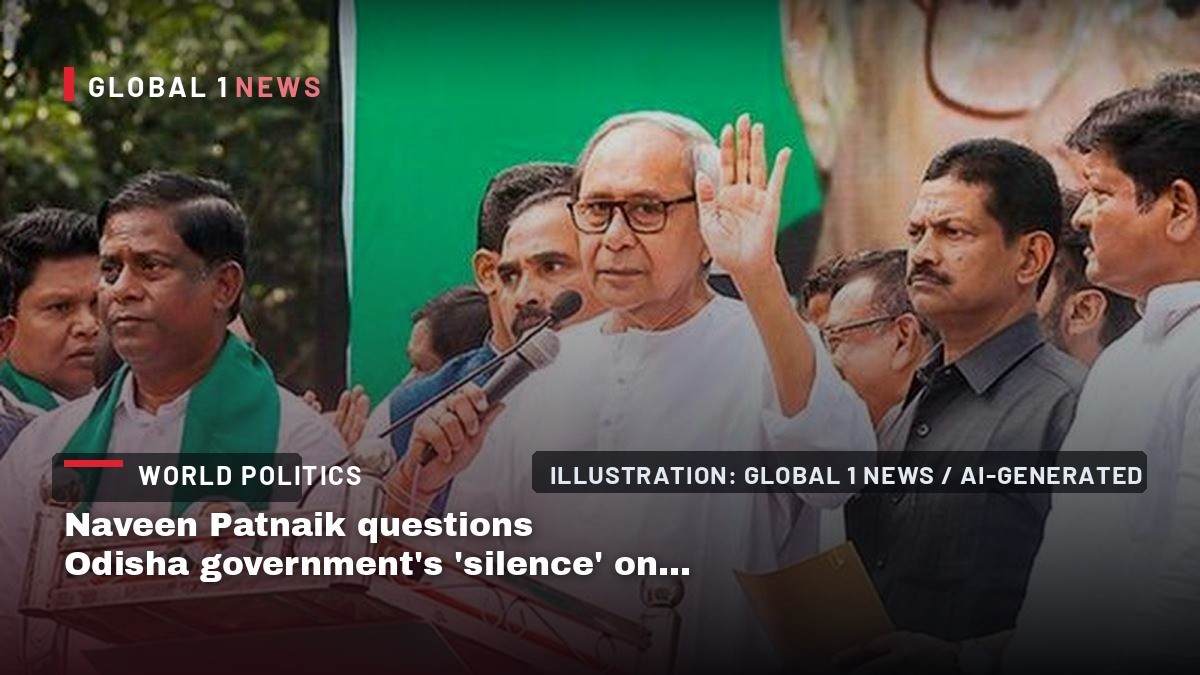
Former Odisha chief minister and Biju Janata Dal (BJD) president Naveen Patnaik has publicly questioned the silence of the state government over Andhra Pradesh’s recent notification to hold panchayat elections in three villages of the disputed Kotia Gram Panchayat. The issue, rooted in a decades‑old inter‑state boundary dispute, resurfaced on 19 October 2026 when Patnaik sent a letter to Odisha chief minister Mohan Charan Majhi, demanding answers on why the BJP‑led “double‑engine” administration appears to be yielding to political pressure from its central ally, the Telugu Desam Party (TDP).
Historical backdrop of the Kotia dispute
The Kotia controversy dates back to a Supreme Court ruling in 1968 that instructed both Odisha and Andhra Pradesh to maintain the status quo over the 28 villages of Kotia Gram Panchayat. Since then, the two states have repeatedly contested ownership of 21 of those villages, a matter that the apex court has consistently deferred to parliamentary mechanisms under Article 131 of the Constitution. In 2006, the court reiterated that inter‑state boundary disputes are best settled by Parliament, leaving the Kotia question in a legal limbo.
Odisha’s latest legal maneuver came in January 2022, when the state filed a fresh original suit in the Supreme Court. The suit remains under consideration, underscoring the protracted nature of the conflict and the limited progress achieved through judicial channels.
Political dimensions: BJP, TDP and the “double‑engine” promise
Patnaik’s criticism centres on the perceived clash between the BJP’s national alliance commitments and its state‑level assurances. He highlighted that the TDP, which governs Andhra Pradesh, is a crucial ally of the BJP‑led National Democratic Alliance (NDA) at the Centre. By referencing the “double‑engine” promise made before the 2024 elections—where the BJP pledged to resolve the Kotia issue once and for all—Patnaik suggests that the current silence may be a concession to political dependence on the TDP.
He asked directly whether “political dependence” is the reason for the BJP government’s reluctance to confront Andhra Pradesh’s notification. The implication is that the alliance dynamics at the national level could be influencing state policy, a charge that resonates with opposition parties who accuse the ruling coalition of double standards.
Odisha’s administrative response
State minister Suresh Pujari, responsible for revenue and disaster management, has taken a firm stance, stating that the BJP government is prepared to “thwart any provocative attempts” by the neighbouring state. He emphasized that Kotia Gram Panchayat is an integral part of Odisha and that the Revenue Divisional Commissioner of the southern division has been tasked with monitoring the situation closely.
The district collector of Koraput has also been instructed to keep a vigilant eye on developments, ensuring that Kotia does not become part of Andhra Pradesh’s election process. These administrative measures reflect a coordinated effort to assert Odisha’s claim on the ground, even as the legal battle continues in the Supreme Court.
Opposition voices and intra‑state criticism
Congress Legislature Party Leader Rama Chandra Kadam, an MLA from Koraput, accused the BJP‑led state government of “double standards,” alleging that its inaction has allowed Andhra Pradesh to advance its claim. His remarks echo Patnaik’s concerns about the erosion of Odia pride and territorial integrity, framing the dispute as not only a legal matter but also a political liability for the ruling coalition.
The opposition narrative is anchored in the symbolism of “Go Back Andhra,” a slogan repeatedly used by BJP leaders in Odisha to assert the state’s sovereignty over Kotia. By invoking this chant, opposition figures aim to galvanise public sentiment around a perceived betrayal of Odia identity by the state’s own leadership.
Implications for federal‑state relations
The Kotia episode illustrates the friction that can arise when inter‑state disputes intersect with national coalition politics. If the central government’s reliance on the TDP influences Odisha’s response, it could set a precedent for how the NDA navigates similar conflicts in other regions. The situation also tests the resilience of India’s federal structure, where state governments must balance local interests against the strategic imperatives of a coalition at the Centre.
Moreover, the Supreme Court’s guidance that Parliament should resolve such disputes raises questions about legislative action. As the current suit remains pending, the lack of a parliamentary resolution leaves states to manage the dispute through administrative and political means, potentially heightening tensions.
Potential impact on local governance and development
Beyond the political theatre, the dispute directly affects the residents of the 21 villages in question. The notification for panchayat elections in Phagunasineri, Ganjeipadar and Phatusineri could alter the administrative alignment of these villages, influencing the delivery of government schemes, health services, and educational programmes. Odisha’s claim that the villages are integral to the state underscores the importance of continuity in governance, especially for health and education initiatives that rely on stable jurisdictional authority.
If Andhra Pradesh proceeds with its election schedule, the resulting administrative overlap could create confusion over resource allocation, school affiliations, and health infrastructure management. Such uncertainty may impede the implementation of central and state schemes, from vaccination drives to rural development projects, thereby affecting the well‑being of the local populace.
Looking ahead: legal, political and administrative trajectories
With the Supreme Court yet to deliver a verdict on the 2022 suit, the Kotia dispute remains in a legal stalemate. Patnaik’s letter, coupled with the statements from Suresh Pujari and Rama Chandra Kadam, signals that the issue will continue to dominate Odisha’s political agenda. The forthcoming months are likely to see heightened diplomatic engagement between the two states, possibly involving central mediation given the NDA’s coalition dynamics.
From a policy perspective, the episode highlights the need for clearer mechanisms to resolve inter‑state boundary disputes, especially when they intersect with electoral processes. Whether the “double‑engine” promise materialises into concrete action or remains a political talking point will depend on the willingness of both state and central actors to prioritise constitutional integrity over short‑term political calculus. For the people of Kotia, the outcome will determine not just administrative jurisdiction but also the continuity of essential services that underpin health, education and rural development in the region.
This article was produced with AI-assisted research and editorial support. Reporting is based on the source material cited below. Sources: The Hindu; thehindu.com; Global1.News (20 October 2026).
By Dr. Raj Patel, Staff Writer
What's Your Reaction?
 Like
0
 Dislike
0
 Love
0
 Funny
0
 Wow
0
 Sad
0
 Angry
0

India/South Asia Correspondent at Global1.News. Analytical voice with a background in science and health journalism. Based in New Delhi, covering Indian politics, education, healthcare, technology, and policy. Breaks down complex data into clear, actionable reporting.











Comments (0)