
France's Curfews Hold for One Night, and a Government Admits It Lost Control
Targeted curfews kept parts of Paris, Lyon, Bordeaux and Lille quiet for one night after France's worst rioting in years, as President Macron refused his interior minister's resignation and arrest totals remained disputed.
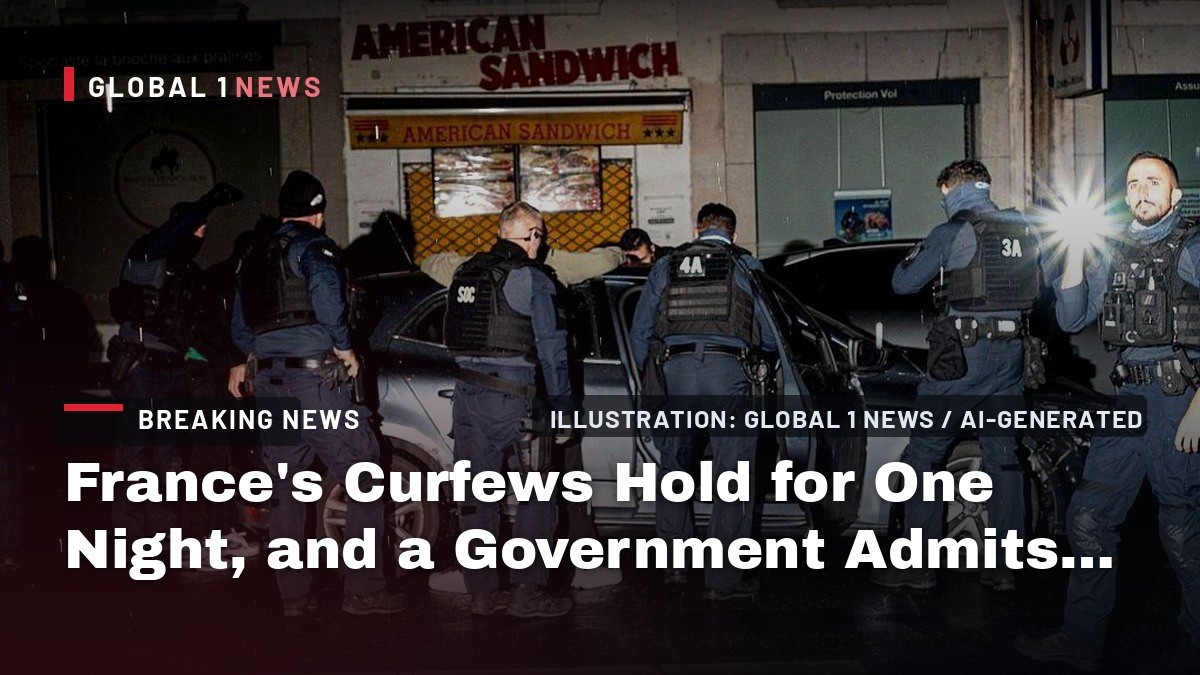
The first night under curfew in France passed without major incidents, and the prime minister was quick to say the restrictions did the work. What the calm did not settle is the question that has followed this government since Saturday: how a country that deployed 60,000 officers lost control of its own town halls.
France's Curfews Hold for One Night, and a Government Admits It Lost Control
Paris, France — Targeted curfews closed two districts of central Paris and parts of several other cities overnight, and the streets stayed quiet. But the quiet arrived after an interior minister conceded the state had lost control of some cities, after a president refused that minister's resignation, and with a week of fresh demonstrations already on the calendar.
A Quiet Night, and a Premier Taking Credit for It
Prime Minister Sébastien Lecornu said the curfews imposed on Monday night "contributed to calm overnight", and police confirmed the night passed without major incidents across France. Writing on X, he said: "Targeted curfews have contributed to calm overnight. Tonight new curfews will be decided where the situation requires it. These decisions will be made on the ground, by the prefects, in coordination with the Mayors." He thanked officers and gendarmes for enforcing the measures. Further curfews on Tuesday night would depend on where they are needed, he said, and he is due in Limoges on Friday, where the city hall burned. Lecornu ruled out a blanket curfew across the whole of Paris — "It is out of the question to put all of Paris under curfew" — while refusing to rule out a state of emergency. He called it a "miracle" that nobody was killed, and defended officers who faced what he described as violent groups.
What the Curfews Actually Cover
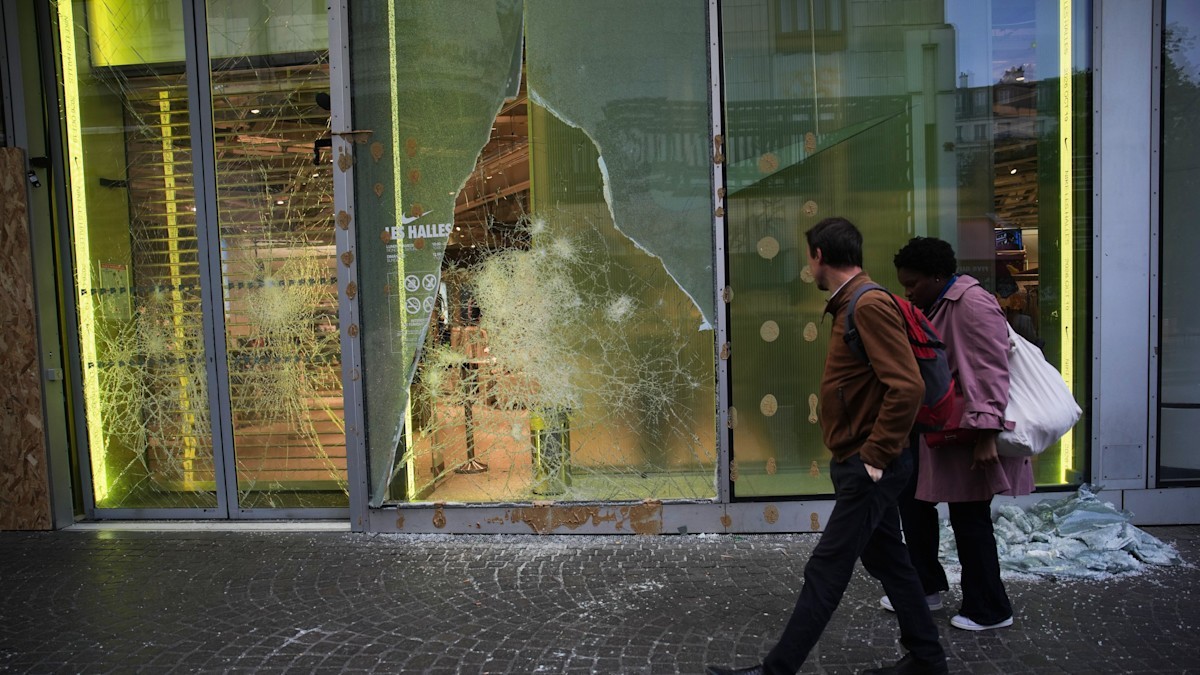
The measures are local, targeted and uneven. In Paris a police prefecture curfew ran from 23:00 on Monday 19 October until 06:00 on Tuesday 20 October, covering the Place de la République, where protesters gathered at the weekend, and the Les Halles shopping district, which was looted. A ban on gatherings and demonstrations ran from 20:00 Monday until 06:00 Tuesday across several parts of the city centre, barring people from carrying weapons, fireworks or dangerous flammables such as petrol, oil and gas. Police said the order was meant to protect "people and property from the violence and looting". Nice imposed a curfew for minors in the city centre from 21:00 to 06:00 each night until Sunday, and Lyon's ran from 21:00 to 06:00. Bordeaux restricted unaccompanied minors from 22:00 to 07:00 until Monday 26 October in areas hit by looting, and Marseille banned gatherings and demonstrations. In the north, under-18s in Lille, Douai, Wattignies and Denain were confined from 20:00 to 06:00 for two nights.
The Numbers That Do Not Agree
The arrest figures do not agree. The Associated Press and ITV News reported more than 2,400 arrests across France; the BBC reported more than 2,500, citing officials; Al Jazeera, citing the interior ministry, reported more than 2,300; France 24 reported 2,513 people taken into custody. The range runs from roughly 2,300 to 2,513 and no outlet reconciles it. In the Paris region, 855 people were arrested and prosecutors said 557 remained in custody. About 1,000 police officers and gendarmes were injured on Saturday, according to the interior ministry. Some 60,000 officers were deployed nationally that day, Interior Minister Laurent Nuñez said, and about 350 people were arrested in Paris on Sunday and overnight. France 24 reported 67 people imprisoned since the weekend. Saturday's turnout was about 550,000 according to authorities and 800,000 according to organisers. The damage figures diverge too: Alain Di Crescenzo, head of France's Chambers of Commerce and Industry, said more than 2,000 businesses were directly affected and put the cost at "hundreds of millions of euros", while the BBC's Paris correspondent reported that some 3,000 stores were vandalised or looted on the Saturday night alone.
Macron Refuses His Interior Minister's Resignation
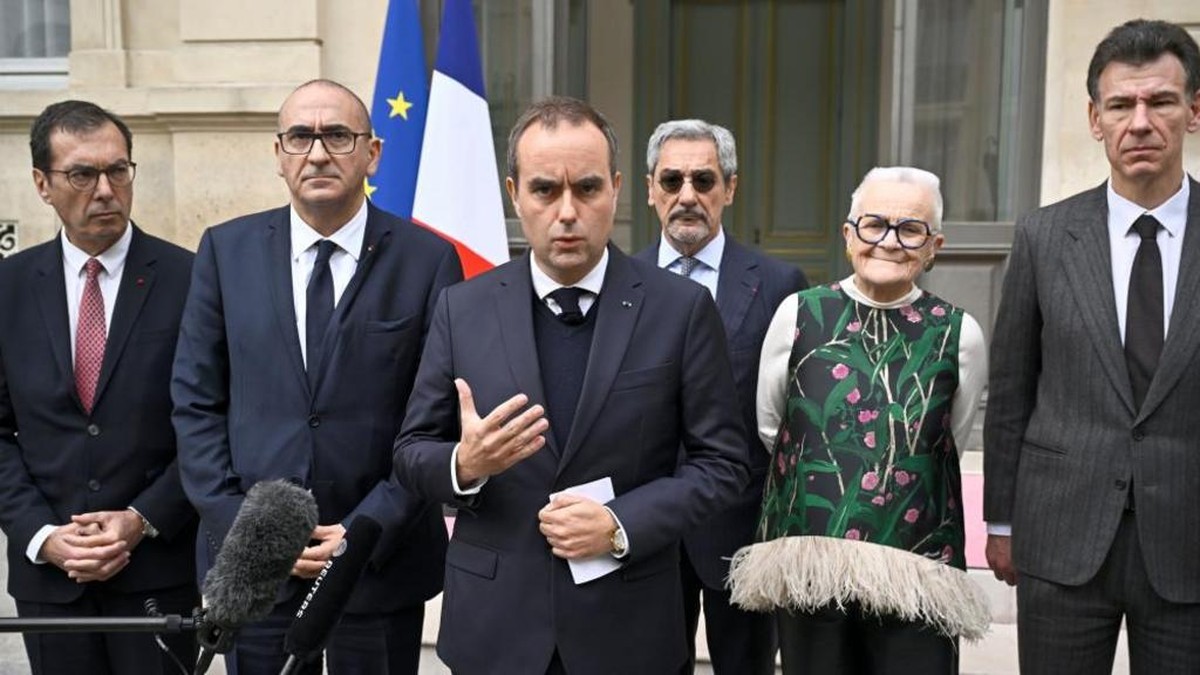
Interior Minister Laurent Nuñez offered his resignation to President Emmanuel Macron on Sunday 18 October. The Élysée Palace said: "The Minister of the Interior submitted his resignation to the President of the Republic on Sunday. Given the need for continuous command of the law enforcement forces in the current context, the President of the Republic refused it." Macron instructed Nuñez "to take all necessary steps to ensure full transparency about the failures in planning and intelligence-gathering that led to the violence", and to install "new operational methods for security forces". He described "intelligence and foresight failings". Nuñez told France Inter radio: "I submitted my resignation because I am responsible for everything that is happening." He added: "Now, the real issue is ensuring that this doesn't happen again. We obviously need to be better at anticipating the kind of mobilisation that is unfolding." Nuñez said 200 investigators were analysing CCTV footage to identify possible ringleaders.
An Admission No French Minister Makes Lightly
Nuñez acknowledged that police had "lost control" in some cities on Saturday. "You can't look shopkeepers in the eye when hundreds of businesses have been looted and say we haven't lost control in some of these major cities. Obviously," he said. He blamed "hordes of troublemakers and looters" and "far-left activists", and said police strategy needs adapting "in the face of extremely mobile groups". The admission landed beside a promise from Macron: "Those who looted will have to pay back for the damage, and those who sought to bring down the Republic will be held accountable." Macron met senior officials on Sunday and told prefects to work with mayors to protect public buildings and businesses, including by banning protests where necessary. Lecornu said the state would fund recovery and then recover the money from those responsible: "There will be a law that will be put in place to find ways of making sure that those who have damaged properties will have to pay."
Limoges Burns, and a Weekend of Looting
Flames engulfed the 19th-century city hall in Limoges, central France, collapsing its roof and nearly destroying the building; its bell tower came down on Saturday after protesters set it alight. Mayor Guillaume Guérin criticised police for "backing down" before rioters, "in Limoges as in other cities". Groups dressed in black, many masked or in balaclavas, burned cars and buildings and looted shops in Paris, Marseille and smaller towns. In Bordeaux the clashes were especially violent: the prefect's official residence was ransacked and elite RAID units were called in. On Sunday evening, groups fired bins and bicycles and looted businesses in Paris, Lyon and Marseille. Hundreds gathered again at the Place de la République in Paris, where officers used tear gas. One demonstrator's hand was blown off by a police crowd-control grenade, AFP reported.
Who Gets the Blame, and Who Gets the Election
Lecornu said the unrest had been driven by "ultra-left radical groups" hoping to "create chaos" before the 2027 presidential election. Jean-Luc Mélenchon, the hard-left candidate, retorted "show me the evidence" and said the government had created the mess. Marine Le Pen, the far-right leader leading the polls, said "legitimate social grievances have, yet again, been held hostage by the far left". The BBC's Paris correspondent noted she stands to gain from a law-and-order backlash. The protests began last month with students demanding better school conditions — dilapidated buildings and teacher shortages — then broadened into the cost of living and deteriorating public services, with unions and other groups swelling the crowds. Looted goods appeared on resale platforms; a Vinted spokesperson said selling stolen goods was "strictly prohibited" and that listings had been removed.
The Next Protest Is Already on the Calendar
Student organisations have called demonstrations for Thursday and Saturday. The National High School Student Coordination group urged young people to "take to the streets" and backed continued blockades. Activists seeking to revive the 2018 "yellow vest" movement announced nationwide marches for Saturday under the slogan "Macron must go", and unions have called rallies for 5 November. Sport continues under guard. The Champions League match between Paris Saint-Germain and Barcelona will go ahead as planned on Tuesday at the Parc des Princes, Nuñez confirmed, after officials discussed whether to call off fixtures. Lille against Galatasaray in the northern city on Wednesday is also unaffected. PSG coach Luis Enrique said the unrest would not affect his team and that he was not scared. The NFL's first regular-season game in Paris, Pittsburgh Steelers against New Orleans Saints on Sunday at the Stade de France, remains scheduled.
Europe Is Having the Same Autumn
The pattern is not only French. In Italy, Prime Minister Giorgia Meloni convened an emergency cabinet meeting and weighed curfews after rioting in Milan, Turin and Bologna. On Milan's cathedral square, masked youths smashed shop windows and looted supermarkets; at least 14 security personnel were injured, prosecutors spoke of "rare violence", and more than 270 people were detained, most of them minors. Luxury stores in central Milan stayed shut on Monday, and Italian elections fall next year. In Albania, Prime Minister Edi Rama said protesters crossed a "red line" after a police station was set ablaze in Tirana. "Protests are a right, whereas violence is a crime," he wrote, calling for that line to be drawn "at this critical stage of our democratic development". Fresh clashes followed on Monday evening, with Molotov cocktails thrown at the interior ministry and police answering with water cannon, tear gas and rubber bullets. Around 300 people have been injured, more than half of them officers.
Travel Warnings and an American Echo
At least eleven governments have told citizens to take care in France. The United States, China, Malaysia, Germany, the Czech Republic, the Netherlands, Poland, Denmark, Sweden, Finland and Norway advised avoiding protest areas, and Malaysia suggested postponing non-essential trips. The US State Department warned Americans away from demonstrations in major cities. In Kansas, President Donald Trump told a rally for a Republican Senate candidate that France had been "conquered, looted, and burned to the ground by migrants, jihadists and communists", adding: "When you see burning steeples and raging fires in France, just remember that is what the radical Dumocrats want to do to America." He offered no evidence. Vice President JD Vance said the unrest came because "Western liberals imported the third world into France". At home, the government faces demonstrations on Thursday and Saturday, a prime ministerial visit to Limoges on Friday, and curfews decided one night at a time.
By Jessica Ali, Staff Writer
This article was produced with AI-assisted research and editorial support. Sources: BBC, Reuters, Associated Press, France 24, Deutsche Welle, Al Jazeera, ITV News. Photographs: AFP via Getty Images (cover), EPA/Shutterstock and AP via ITV News.
What's Your Reaction?
 Like
0
 Dislike
0
 Love
0
 Funny
0
 Wow
0
 Sad
0
 Angry
0

Editor-in-Chief at Global1.News. Atlanta-based journalist who cuts through the BS and tells it like it is. Lead anchor, host, and the voice you hear when the spin stops and the truth starts.









Comments (0)