
Kim Jong Un Death Rumors Spread as His Sister Speaks Only of the Border
Unverified social media claims that Kim Jong Un suffered a brain hemorrhage and died spread across four continents. No government has confirmed them, and the only senior North Korean voice heard on 19 October spoke about the border.
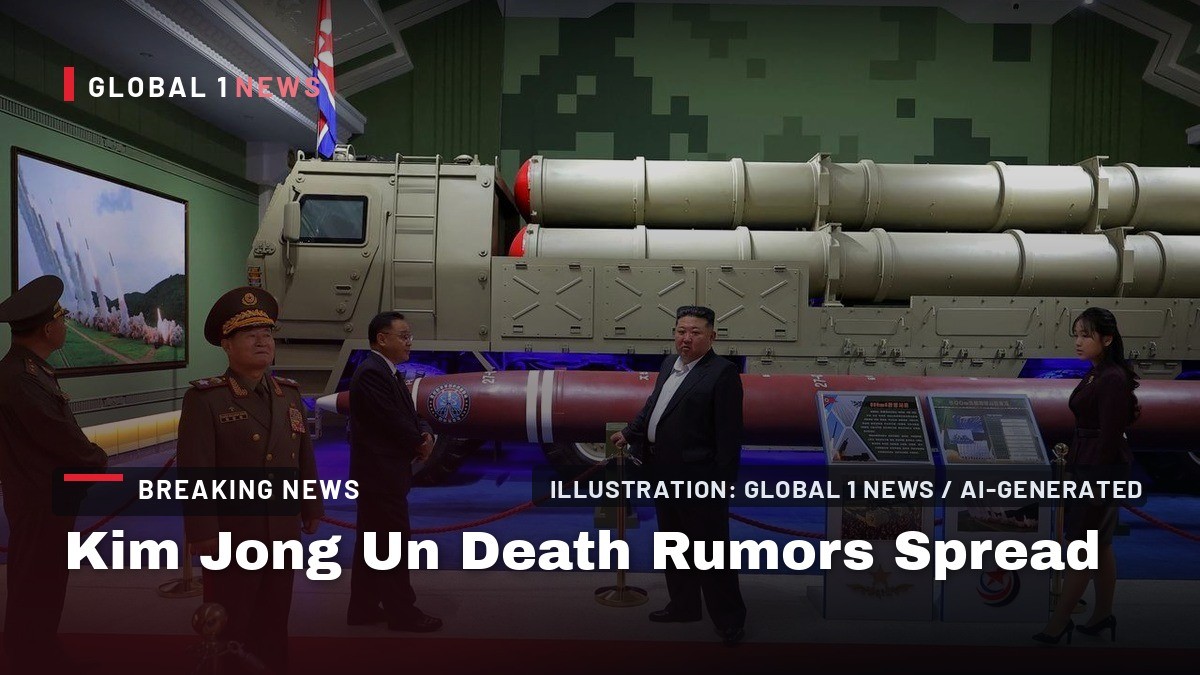
Kim Yo Jong, the North Korean leader's sister and a department director of the ruling party's Central Committee, spent Monday 19 October talking about warning shots, loudspeakers and land mines. On the same day, a very different story about her brother was moving across four continents.
Kim Jong Un Death Rumors Spread as His Sister Speaks Only of the Border
Seoul, South Korea - Kim Yo Jong's statement on the inter-Korean border arrived as social media claims about Kim Jong Un's health reached their loudest volume. The two conversations never touched. What follows separates what is alleged from what is established.
What Is Actually Being Claimed
The claims now spreading across social platforms are specific and grave. They allege Kim Jong Un suffered a severe cerebral hemorrhage, fell into a coma, was flown to China for emergency treatment and died. No official confirmation exists from North Korea, China or South Korea for a hemorrhage, a coma, a hospital transfer or a death. No hospital records, photographic evidence, independent medical source or verified intelligence assessment has been produced to support any element of the account.
British tabloid The Sun reported the claims while framing them as unverified internet speculation. That framing matters, because it did not survive the relay. Stripped of the caveat, the allegations read as established fact across much of the amplification, and the amplification is where most readers met them. The absence of confirmation is the story.
Where the Claim Came From
The central claim originated in posts on X by Wanjun Xie, chairman of the China Democracy Party. Xie alleged that a team of medical experts from Peking Union Medical College Hospital in Beijing was dispatched to North Korea, that Kim was then transferred to Beijing for emergency surgery, that doctors failed to save him because his condition was too severe and the window for treatment had passed, that his body was returned to North Korea, and that the announcement of death is being withheld.
His posts also carried material that is verifiably real. Xie cited 201 warning shots and a threatened upgrade of North Korea's tactical strike capabilities. Both figures appear in Kim Yo Jong's KCNA statement of 19 October. That is what makes the episode instructive rather than merely noisy: a fabricated core wrapped in authentic detail travels further than invention alone, because the checkable parts check out.
Xie separately alleged that Chinese President Xi Jinping suffered a stroke in September while attending the BRICS summit in India, and that Xi was treated and underwent cardiovascular surgery in Beijing. That claim is also unconfirmed.
The One Voice That Did Speak
Kim Yo Jong, 38, is a department director of the Central Committee of the Workers' Party of Korea and the leader's sister. Her statement, issued Monday 19 October and carried by KCNA, addressed the border exclusively. She said "Now the situation of the southern border is very unstable" and that "A grave situation is prevailing along the southern border due to the reckless behavior of the ROK military gangsters."
She said Seoul carried out 2,870 rounds of loudspeaker warnings and fired 201 warning shots between 1 August and 17 October, which had "gone beyond the red line." She added that the military leadership is "examining the issues of deploying more tactical strike means along the southern border as a pre-emptive and suppressive measure." The statement made no reference to her brother's health, whereabouts or the succession, and did not name him.

What Pyongyang Has Not Said
North Korean state media has published nothing addressing the death claims. There has been no denial, no medical bulletin, no photograph released to rebut them, and no statement of any kind from the leadership. China's government has been equally silent. South Korea's government has not confirmed the allegations either.
This is the factual core of the episode: three governments with every reason and every capability to speak have not. Reuters reported that South Korea's defense ministry was not immediately available to comment on Kim Yo Jong's border statement. Seoul has not disclosed data on its own activities near the border, so the loudspeaker and warning-shot figures cited in Pyongyang cannot be independently checked.
Even the outlets that amplified the story hardest reached the same conclusion. Times Now and Geo News both carried the claims and both stated plainly that no evidence had been provided, that the alleged hospitalization in China remained unconfirmed, and that the account rested on anonymous social media posts. The caveat was there in both, a few sentences below the headline.
Why Silence Is Normal Here
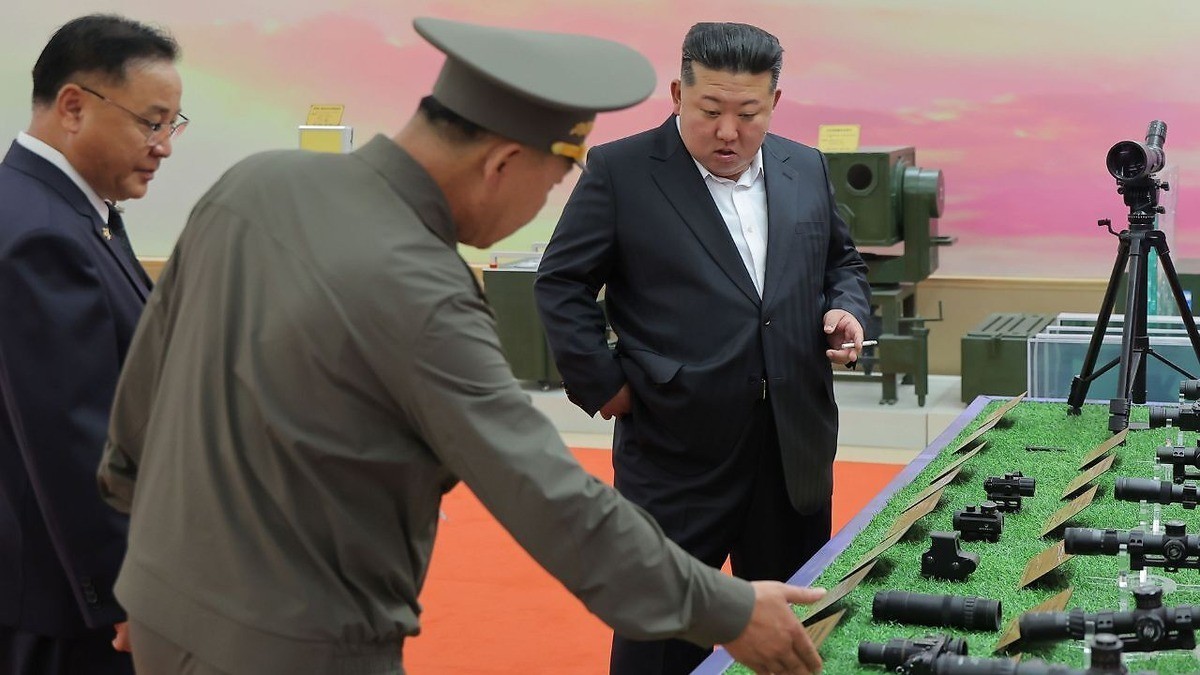
Pyongyang does not run a rapid-response denial operation. It does not issue health updates, and it does not treat foreign social media speculation as something requiring an answer. The last confirmed public appearance by Kim Jong Un was on 11 October 2026, when he opened and toured the new National Defense Revolution Museum in Pyongyang, accompanied by his wife Ri Sol Ju and daughter Kim Ju Ae. North Korean state media published photographs of the visit on 13 October 2026.
The museum displayed weaponry from drones to the Hwasong-20 intercontinental ballistic missile. The South Korean intelligence assessment submitted on 30 September recorded 121 public events for Kim so far this year, an increase of about 30 per cent on the same period in 2025. Absence from view is not, by itself, evidence of anything.
What Seoul's Spies Actually Said
The most recent formal assessment available predates the rumors. The National Intelligence Service submitted its evaluation to lawmakers on Wednesday 30 September 2026. It put Kim's weight above 140 kg and his height at about 170 cm, classifying him as severely obese and at high risk of cardiovascular disease.
It said that despite those risk factors his condition shows no abnormality under round-the-clock monitoring by a dedicated medical team, and that he can move freely, including climbing stairs with ease. Lawmaker Youn Kun-young relayed the briefing. That is a picture of a man with serious long-term health risks and no acute crisis, assembled in Seoul before any of the claims began to spread. It is also the only formal medical judgment any government has put on the record.
The 2020 Precedent
This is not the first cycle of its kind. In April 2020 Kim disappeared from public view for roughly three weeks, and rumors of grave illness or death circulated widely around the world. He subsequently reappeared in state media. The pattern then resembles the pattern now: an unexplained absence, a vacuum filled by speculation, and eventual visual confirmation that closed the matter without any official explanation ever being offered.
Benedict Rogers, a North Korea analyst, told The Sun's YouTube channel From The Newsroom: "There have been rumours before of his death. He doesn't look a well man, he's extremely overweight." Rogers also set out what a genuine death announcement would look like from the inside, which is the most useful checklist anyone has offered.
The 2020 episode followed a similar script in its details. A former diplomat claimed at the time that Kim was in a coma and preparing to hand over power to his sister. Those claims were never confirmed. He reappeared, and the story collapsed without a correction from anyone who had promoted it.
The Succession Question Behind the Rumor
Kim Ju Ae is 13. Her first known public appearance was in November 2022 at a missile launch, and she accompanied her father on a state visit to China last year. She has not been officially designated as successor. On 30 September the NIS described her for the first time as the likely successor and said her status appears to be steadily consolidating. That is an intelligence assessment, not a designation.
Xie alleged Kim Yo Jong has taken control of the regime instead of Kim Ju Ae, and that 9,000 Chinese troops were sent to Pyongyang to help Kim Ju Ae stabilize her position. He also alleged the People's Liberation Army's Northern Theater Command was placed on heightened alert. Those are Xie's allegations and remain unconfirmed by any government. Analysts have long described Kim Yo Jong as a plausible interim figure if her brother died, which is why the claim found an audience primed to believe it.
How a Real Transition Would Read
The strongest evidence of a leadership change in North Korea is not social media but observable changes in state media, elite public behavior, military posture and official mourning rituals. The historical pattern after a supreme leader's death runs through abrupt changes to state broadcasting, organized public grief ceremonies and an eventual succession announcement.
Kim Jong Un took power after the death of his father Kim Jong Il, who ruled from 1994 until 2011. In 2013 Kim had his uncle Jang Song Thaek executed by firing squad. None of the markers of transition had appeared as of 19 October 2026. Rogers said: "What's happened in the past when the supreme leader dies is that there's an orchestrated outpouring of public grief. People are in the streets wailing and crying. Newsreaders are sounding very emotional. We haven't seen anything like that yet."
What Comes Next
The border remains the live file, and it is where the next real signal will probably come from. On 12 October 2026 North Korea test-fired a tactical ballistic missile, saying it confirmed a successful technical upgrade of an unspecified key component; South Korea's military said the North fired multiple ballistic missiles towards the sea off its east coast. It was Pyongyang's fourth launch in a month.
South Korea's military said on 5 October that the North had deployed as many as 7,000 workers this year to install mines and fences, with about 50 incidents of crossing the border. A blast on 21 September wounded South Korean soldiers inside the Demilitarized Zone; a joint Seoul-UN Command investigation blamed North Korean mines, and Pyongyang denies involvement.
Lim Eul-chul, a professor at Kyungnam University's Institute for Far Eastern Studies in Seoul, said: "The South Korean military has been on high alert on North Korea's fortification works, firing warning shots and conducting loudspeaker broadcasts. And Pyongyang seems to be worrying that such warning activities by Seoul might escalate tensions near the border or cause a military conflict." Kim Yo Jong closed with a warning of her own: "Seoul will surely regret and face uncontrollably terrible danger."
By Jessica Ali, Staff Writer
This article was produced with AI-assisted research and editorial support. Sources: Reuters, Xinhua, KCNA, Korea JoongAng Daily, Turkiye Today, Times Now, Geo News, The Economic Times and The Daily Star. Photographs: AFP/KCNA handout via Turkiye Today; Jorge Silva/Reuters via Internazionale; AP via Times Now.
What's Your Reaction?
 Like
0
 Dislike
0
 Love
0
 Funny
0
 Wow
0
 Sad
0
 Angry
0

Editor-in-Chief at Global1.News. Atlanta-based journalist who cuts through the BS and tells it like it is. Lead anchor, host, and the voice you hear when the spin stops and the truth starts.














Comments (0)