
Kim Jong Un Crosses Into China on a Bridge That Waited Twelve Years
Kim Jong Un crossed into Dandong, China, on Saturday via the newly opened New Yalu River Bridge, South Korea's Unification Ministry said, in a visit timed to the Korean War anniversary that neither Beijing nor Pyongyang has confirmed.
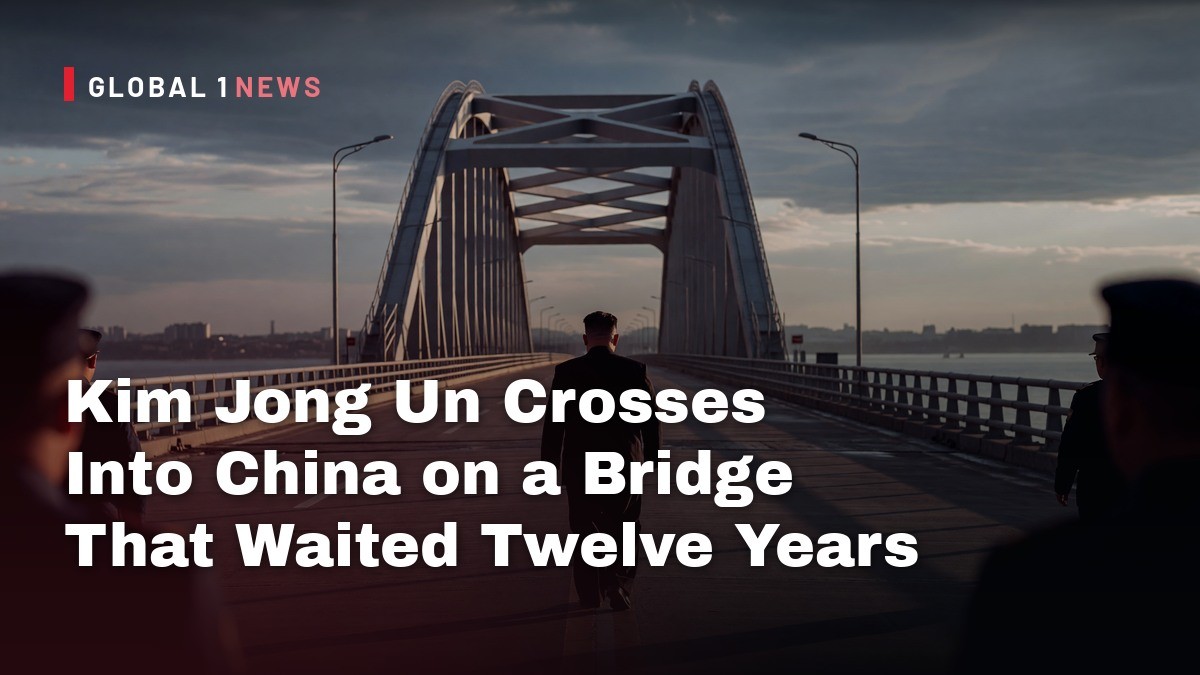
North Korea's leader crossed a river into China on Saturday morning, and so far almost nothing about the trip is officially confirmed. The New Yalu River Bridge he used opened nine days ago, after twelve years of standing finished but unused. Kim Jong Un is reported to have crossed it. Neither Beijing nor Pyongyang has said a word about the visit, and the purpose of the journey has not been disclosed.
Kim Jong Un Crosses Into China on a Bridge That Waited Twelve Years
SEOUL — A land crossing, a harvest of trade figures and an anniversary of the Korean War sit behind one unconfirmed morning in Dandong.
The Crossing, and What Seoul Actually Said
Kim arrived in Dandong, Liaoning Province, via the new Yalu river bridge, South Korea's Unification Ministry said, as carried by Korea JoongAng Daily and Financial News. Yonhap first reported the crossing, citing an unidentified government source who said Kim arrived "earlier in the day" and who spoke on condition of anonymity because they were not authorised to speak publicly. Reuters, reporting at the same time, said a Unification Ministry spokesperson did not have an immediate comment, and South Korea's presidential office did not immediately confirm the report. China's foreign ministry did not immediately respond to a request for comment, and neither North Korean nor Chinese state media reported a visit by Kim. Neither capital has confirmed the crossing. The purpose of the visit has not been disclosed, and South Korea's government told AFP it could not confirm his itinerary.
The Bridge That Waited Twelve Years
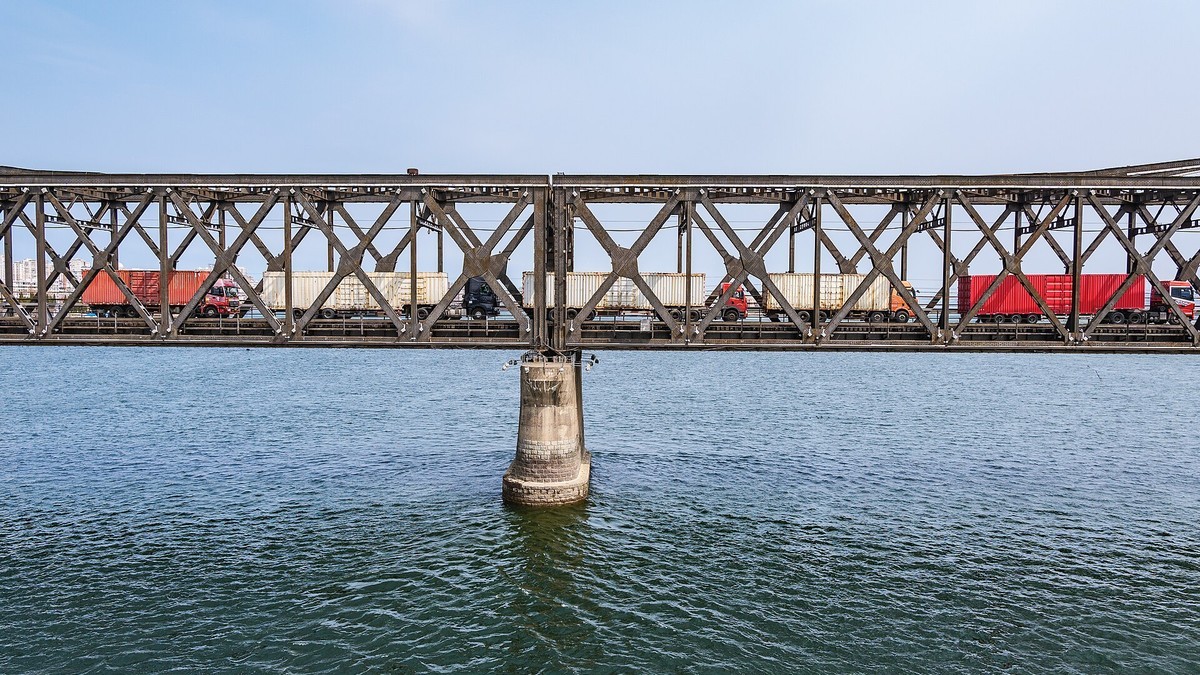
The New Yalu River Bridge, also called the New Amnok River Bridge, carries four lanes across 3,026 metres and links Sinuiju in North Korea's North Pyongan Province with Dandong in Liaoning Province. It was completed in 2014, with Chinese investment of about US$310 million, but its opening was held back for 12 years because North Korea did not finish the connecting roads and customs compound on its side. It opened to traffic on Thursday 15 October 2026, with a joint ceremony on both banks. Chinese Premier Li Qiang said in a video address that bilateral relations were "entering a new stage and opening a new chapter," and that the bridge would "strongly promote" economic and trade cooperation. Chinese Foreign Ministry spokesperson Mao Ning had said a day earlier that the crossing was an important facility for connectivity. The new structure effectively replaces the older Yalu River Bridge, also called the China-DPRK Friendship Bridge, which sits about 9 km upstream with one vehicle lane, a 20-tonne freight cap and a single-track railway.
A Visit Timed to an Anniversary
Kim's arrival came a day before North Korea and China observe 25 October as the anniversary of Chinese troops' entry into the 1950-53 Korean War, the day Chinese soldiers first fought United Nations forces. This is the 76th anniversary. A government source told the JoongAng Ilbo: "The visit appears to have been timed to coincide with Oct. 25, when North Korea and China commemorate the entry of Chinese troops into the [1950-53] Korean War." A Chinese Ministry of Veterans Affairs delegation, led by Vice Minister Hong Zongming, arrived by train in Pyongyang on Thursday, KCNA reported Friday. Xi Jinping and other top Communist Party officials meet in Beijing on Monday for the fifth plenary session of the Central Committee. Yonhap said it was Kim's sixth visit to China. His last known visit was September 2025, for the 80th Victory Day parade, when he stood on the Tiananmen rostrum beside Xi and Vladimir Putin and held a separate summit with Xi the next day.
The Greeting Nobody in Beijing Has Confirmed
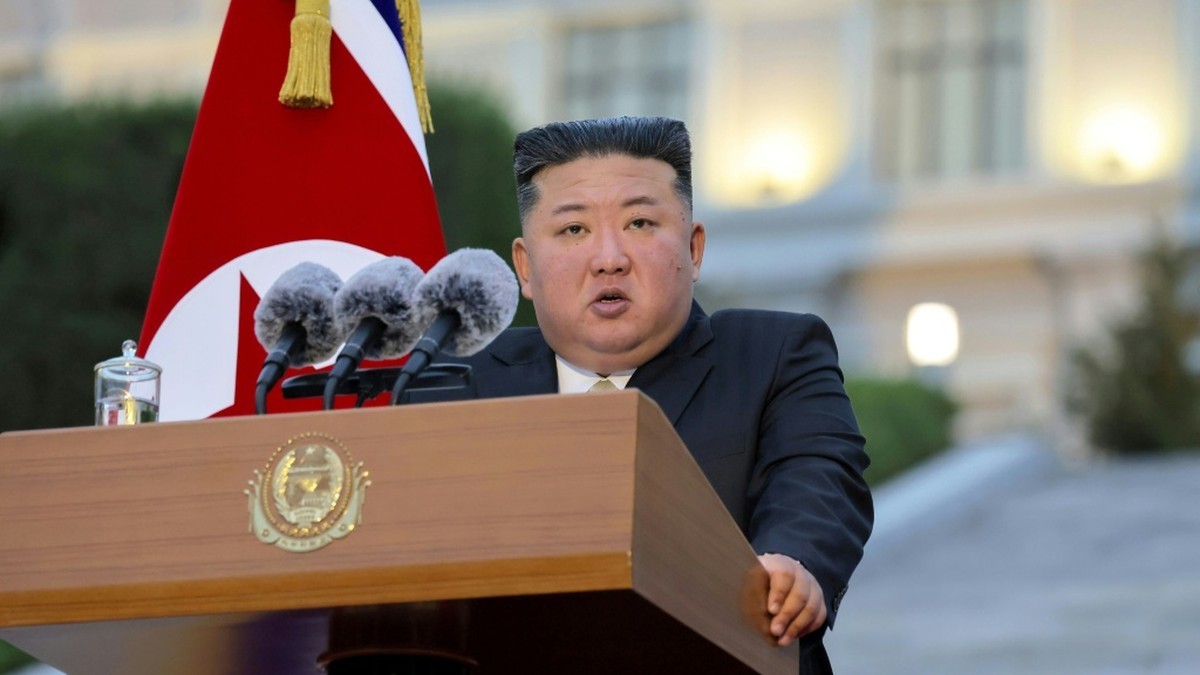
Li Qiang "was said to have traveled to Dandong," according to Yonhap. A government source told the JoongAng Ilbo that Li greeted Kim on arrival. Yonhap reported that Li met Kim in the border city. No Chinese or North Korean official statement has confirmed that any meeting took place. It is also not confirmed whether Kim will stay in Dandong or travel on to another city such as Beijing. Maeil Business reported that Kim is expected to visit the Anti-U.S. Aid Memorial in Dandong, a site commemorating China's entry into the Korean War, and that he is expected to hold a summit with Xi in Beijing. Those are expectations, not a disclosed schedule. Yonhap later carried an urgent item, citing a ruling-party source, that Kim "appears to be planning to return home Saturday." He has not been reported as having returned. Kyodo News reported earlier on Saturday, citing diplomatic sources, that strict traffic restrictions had been imposed in parts of Dandong.
The Trade Corridor Behind the Handshake
Dandong handles about 80 per cent of North Korea-China trade, according to Korea JoongAng Daily. CNN put the Dandong-Sinuiju corridor at about 70 per cent of bilateral trade. The two are different estimates rather than a single agreed number. Trade volume reached US$299 million in September 2026, the third-highest monthly figure recorded since the UN Security Council imposed sanctions in 2017, according to Chinese customs figures cited by the American Enterprise Institute's Critical Threats Project. Cumulative trade from January to September 2026 was US$2.3 billion, the highest for that period on record. Bilateral trade had collapsed from about US$200 million a month before the pandemic to US$1.23 million in 2021, and has since rebounded. North Korea and China restored inter-local passenger rail service between Manpo and Ji'an in early September, and resumed passenger rail and commercial air routes between Pyongyang and Beijing in March.
The Trump Question Waiting in Shenzhen
China hosts the Asia-Pacific Economic Cooperation forum in Shenzhen on 18-19 November 2026, and US President Donald Trump is expected to attend. Reuters reported on Friday that US and South Korean officials see fading chances of Trump meeting Kim this year. Trump has expressed hopes of holding talks with the North Korean leader, but Pyongyang has remained unresponsive. Yang Moo-jin, former president of the University of North Korean Studies in Seoul, told AFP that by meeting Li in Dandong, Kim "may have sought to reaffirm the economic cooperation agreed during Xi Jinping's visit to North Korea" earlier this year, and "press China to move more quickly on those commitments." Yang added: "He may also have sought Beijing's active support and cooperation ahead of a possible summit with Trump in Shenzhen." Neither Pyongyang nor Beijing mentioned denuclearisation in its statements around Xi's June visit to Pyongyang, an omission experts read as a sign of China's tacit consent. Analysts say Beijing has appeared to move towards implicit acceptance of North Korea's nuclear status.
A Leader Whose Death Was Being Announced
Recent rumours circulated on social media overseas that Kim had died. South Korea's National Intelligence Service told the parliamentary committee on Friday that the rumours were unfounded. ANI reported that the claims, including from US-based Chinese dissident Wanjun Xie, alleged that Kim had been hospitalised and that China had deployed troops to Pyongyang amid a possible succession crisis, and that the allegations were not accompanied by independently verifiable evidence. Kim's last public appearance before a military conference was a visit to a national footwear and clothing exhibition in Pyongyang on Monday. KCNA reported on Saturday that he presided over the third conference of company commanders of the Korean People's Army, a two-day gathering in Pyongyang, and spoke on "building a strong army in the new era and the duties of company commanders." There he set "developing the world's strongest armed forces" as a priority and a concrete goal for the country's new five-year planning period. Attendees included Pak Jong-chon of the party's Central Military Commission, Defence Minister Kim Song-gi and General Staff chief Ri Yong-gil.
The Border He Left Behind
Two mines exploded inside the Demilitarized Zone on 21 September 2026 during a South Korean operation to clear a route for a joint inspection with the United Nations Command. Three South Korean soldiers were injured, two of them seriously; one lost an ankle. One published casualty figure put the number injured at two. On 5 October South Korea's military announced a final determination, made with the UNC, that the blast was caused by a North Korean plastic antipersonnel mine planted south of the Military Demarcation Line, and that the mines had been buried for at least 12 months. On Friday 23 October, Deputy Defence Minister Kim Hong-cheol formally proposed military talks to "mutually confirm the precise location of the land Military Demarcation Line" and to discuss restoring communication lines and preventing accidental clashes. North Korea has not responded. Kim Yo-jong said on 22 October, in a statement carried by KCNA, that "our new counter means will get into the alert for duty at all the southern border line and the loudspeakers against the ROK will be on standby in a matter of days."
The Russia Counterweight, and the Nuclear Silence
The new Yalu River Bridge opened a little over a month after North Korea and Russia inaugurated their first road bridge, which Pyongyang hailed as a sign of even closer ties after sending troops to assist Moscow's war in Ukraine. North Korea has enshrined its status as a nuclear-armed state in law despite long-running UN sanctions, and its regime repeatedly declares its arsenal permanent and irreversible. South Korea's President Lee Jae-myung suggested in September that Washington seek a freeze of the nuclear programme rather than immediate elimination, in return for sanctions relief. Critics say that risks tacitly accepting North Korea as a nuclear power and would let Pyongyang win relief without giving up its arsenal. The two Koreas remain technically at war because the 1950-53 conflict ended in an armistice, not a peace treaty. South Korea's foreign ministry said on Thursday it planned to send a letter to the president of the UN Security Council over the landmine incident, which it called a "clear violation of the armistice agreement."
What to Watch, and What Is Still Missing
Three things remain unconfirmed. Whether Kim met Li Qiang: Korean outlets reported it, citing unnamed government sources, and neither government has confirmed it. Whether he travels on to Beijing: Maeil Business reported the expectation of a summit with Xi, but no schedule exists. Whether he has returned home: Yonhap reported only that he "appears to be planning" to return on Saturday. Watch the 25 October commemorations, the Central Committee plenum in Beijing on Monday, and APEC in Shenzhen on 18-19 November, where Trump is expected. Watch Seoul's proposed military talks, which North Korea has not answered, and the letter South Korea plans to send the Security Council. And watch state media in Pyongyang and Beijing, which had not reported the visit at the time of writing.
By Jessica Ali, Staff Writer
This article was produced with AI-assisted research and editorial support. Sources: Yonhap News Agency, Reuters, AFP, Associated Press, Korea JoongAng Daily, Financial News, Maeil Business Newspaper, NK News, Al Jazeera, Xinhua and CNN. Photographs: Michael Zhang/AFP (the New Yalu River Bridge at Dandong, 15 October 2026); KCNA via AFP (Kim Jong Un, 1 October 2026); TurnOnTheNight/Wikimedia Commons under CC BY-SA 4.0 (cargo trucks on the Sino-Korean Friendship Bridge, 30 March 2026).
What's Your Reaction?
 Like
0
 Dislike
0
 Love
0
 Funny
0
 Wow
0
 Sad
0
 Angry
0

Editor-in-Chief at Global1.News. Atlanta-based journalist who cuts through the BS and tells it like it is. Lead anchor, host, and the voice you hear when the spin stops and the truth starts.














Comments (0)