
Israel Closes West Bank After Hebron Attack, Sparks Regional Tensions
In a dramatic escalation that reverberates across the occupied West Bank, Israel announced a full closure of the territory following a deadly shooting at a military checkpoint in Hebron that claimed the lives of two Israeli soldiers.
In a dramatic escalation that reverberates across the occupied West Bank, Israel announced a full closure of the territory following a deadly shooting at a military checkpoint in Hebron that claimed the lives of two Israeli soldiers. The move, detailed in Al Jazeera English’s latest video report, has sealed nearly a thousand checkpoints and gates, turning cities and villages into what Palestinian officials describe as “small prisons.” As the region braces for a possible large‑scale operation, the closure threatens to choke health care, education and commerce for millions of Palestinians, while also feeding into a volatile political climate ahead of Israel’s upcoming elections.
The Hebron Shooting and Immediate Military Response
The incident that triggered the sweeping closure took place at a military checkpoint in Hebron, a city long marked by friction between Israeli forces and Palestinian residents. According to the Al Jazeera footage, two Israeli soldiers were shot dead by gunmen, prompting an immediate response from the Israeli Defence Forces (IDF). The IDF reported that it had killed two Palestinian suspects in the aftermath, presenting the operation as a swift act of self‑defence.
Prime Minister Benjamin Netanyahu, speaking shortly after the attack, framed the incident as a catalyst for a “large‑scale operation” in the West Bank. While he did not elaborate on the specifics of the planned operation, his remarks signalled a hardening of Israel’s security posture and an intention to intensify military activity in the area.
In the same broadcast, former Israeli ambassador Alon Pinkas offered a political lens on the response, noting that Israel’s actions are intertwined with the looming national elections scheduled in four days. Pinkas suggested that the current security measures are as much about domestic politics as they are about deterrence, implying that the closure may be a strategic signal to the Israeli electorate.
The Scope of the Full Closure
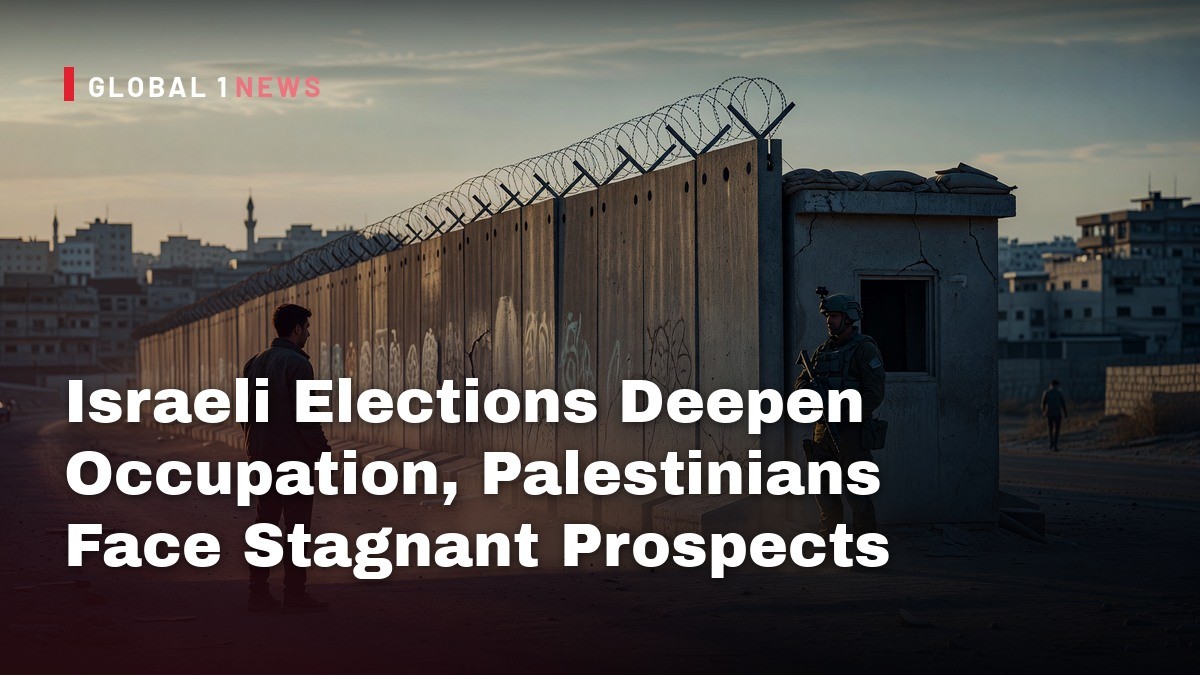
The closure announced by the Israeli government is extensive. Al Jazeera’s report states that nearly one thousand checkpoints and gates across the West Bank will be shut, effectively sealing off the territory. This blanket approach differs from previous, more targeted closures that typically focused on specific towns or routes following security incidents.
For Palestinians, the closure translates into a daily reality of restricted movement. Families in Hebron, for instance, were given merely five minutes to gather personal belongings before Israeli bulldozers demolished a three‑storey building in the city. The rapid demolition underscores the speed and severity of the enforcement measures accompanying the closure.
Mustafa Barghouti, Secretary General of the Palestinian National Initiative, warned that the closure turns every city and village into “a small prison.” He highlighted how the network of checkpoints and gates blocks essential services, including health care, the economy and education. Barghouti’s remarks echo long‑standing Palestinian grievances that collective punishment undermines civilian life and fuels further unrest.
Humanitarian Implications for Health, Education and the Economy
The impact of sealing off the West Bank extends beyond the immediate security calculus. By shutting down the extensive web of checkpoints, the Israeli authorities effectively halt the flow of people, goods and services that sustain daily life. Health care, already strained by periodic closures, faces new hurdles as patients are unable to reach hospitals in major cities such as Ramallah or Bethlehem.
Education suffers as well. Schools that rely on transport routes crossing multiple checkpoints risk prolonged interruptions, jeopardising the academic year for thousands of students. Barghouti’s description of the closure as a “small prison” captures the broader social cost of restricting movement, a cost that reverberates through families and communities.
Economically, the closure threatens to cripple the already fragile West Bank market. Small traders and laborers who depend on daily commutes to work sites or markets find themselves cut off, potentially leading to a sharp rise in unemployment and loss of income. While the Al Jazeera report does not provide specific figures, the qualitative assessment points to a significant contraction of economic activity across the occupied territories.
Political Context: Elections and Regional Dynamics
The timing of the closure is notable. With Israeli national elections slated for early November, the security situation in the West Bank has become a potent political lever. Alon Pinkas, speaking to Al Jazeera, emphasized that the current government’s response is heavily influenced by the electoral calendar, suggesting that hard‑line security measures may be aimed at consolidating support among right‑wing constituencies.
Barghouti, on the other hand, warned that the rhetoric of far‑right Israeli ministers is inflaming tensions, describing it as “incitement” that worsens the situation. This clash of narratives reflects a broader contest over the future of the occupied territories, where security policies are increasingly used as bargaining chips in domestic political battles.
Regionally, the closure could have ripple effects across neighboring countries that host large Palestinian diaspora communities. The heightened tension may influence diplomatic engagements, humanitarian aid flows and the broader discourse on the Israeli‑Palestinian conflict within African and Arab forums. While the Al Jazeera video does not detail these external reactions, the pattern of regional concern over West Bank developments is well‑established.
International Reactions and Legal Concerns
Although the Al Jazeera report does not enumerate specific international statements, the closure’s scale raises questions under international humanitarian law. The collective nature of the punishment – affecting millions rather than targeting only the perpetrators – could be scrutinised by human rights organisations and foreign governments.
Barghouti’s warning that “collective punishment will lead to explosions” hints at the potential for escalated violence as a response to perceived injustices. Historically, similar closures have been met with protests, clashes and, at times, a surge in attacks against Israeli forces. The prospect of a “large‑scale operation” as mentioned by Netanyahu further amplifies the risk of a broader confrontation.
In the diplomatic arena, the upcoming Israeli elections may limit the scope for immediate policy shifts, as noted by Pinkas. Nonetheless, the international community’s monitoring of the situation is likely to intensify, especially as humanitarian concerns mount and the closure persists.
Looking Ahead: Potential Scenarios and the Path Forward
What lies ahead for the West Bank remains uncertain. If the closure persists, the cumulative pressure on Palestinian civilians could deepen grievances, potentially fueling a cycle of violence that undermines any prospects for dialogue. Conversely, a swift de‑escalation—perhaps prompted by diplomatic pressure or internal Israeli political calculations—could mitigate some of the humanitarian fallout.
The “large‑scale operation” hinted at by Netanyahu could range from intensified security patrols to broader military incursions. Such an operation would likely trigger heightened security alerts, further restrictions and possibly more demolitions, as seen with the three‑storey building in Hebron. The rapid demolition underscores how quickly Israeli authorities can act once a security decision is made.
For the Palestinian population, the closure represents a stark reminder of the fragility of daily life under occupation. Barghouti’s vivid description of cities and villages turning into “small prisons” captures the lived reality of a people whose movement is now heavily curtailed. The international community, regional actors and civil society groups will need to watch closely, advocate for the protection of civilians and push for avenues that can break the cycle of retaliation and collective punishment.
By Sarah Okafor, Staff Writer
This article was produced with AI-assisted research and editorial support. Reporting is based on the source material cited below. Sources: Al Jazeera English video report (24 October 2026); Al Jazeera English; Global1.News
What's Your Reaction?
 Like
0
 Dislike
0
 Love
0
 Funny
0
 Wow
0
 Sad
0
 Angry
0

Africa Correspondent at Global1.News. Based in Lagos, covering politics, business, technology, and culture across the continent. Focused on telling African stories beyond the headlines — the innovation, entrepreneurs, and communities shaping the region's future.









Comments (0)