
Intel gets waiver after worries fuzzy US ban on foreign-made robots may hit fabs
Intel’s recent waiver from the FCC over foreign‑made automated guided vehicles (AGVs) is a textbook case of why founders need to keep an eye on regulatory drift.
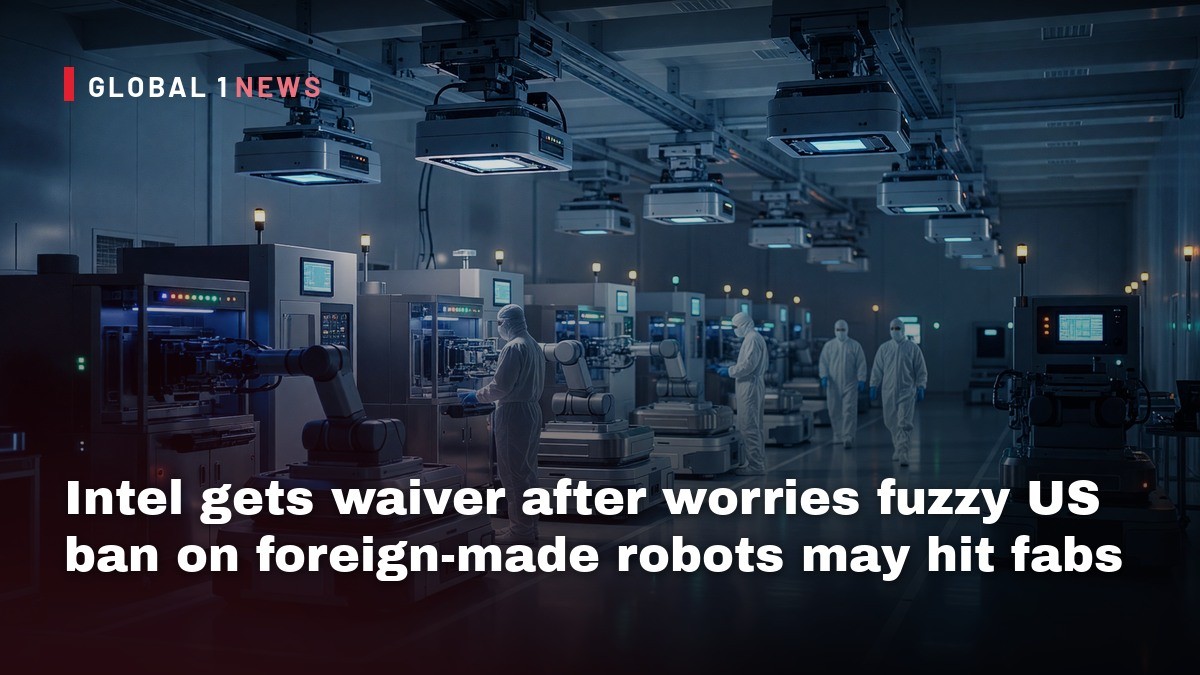
Intel’s recent waiver from the FCC over foreign‑made automated guided vehicles (AGVs) is a textbook case of why founders need to keep an eye on regulatory drift. The chip giant asked for, and got, a one‑year exemption “out of an abundance of caution” after the agency’s new ban on certain imported robots threatened to choke the flow of material‑handling equipment in its U.S. fabs. The whole episode underscores a broader truth: when Washington starts policing the nuts and bolts of a production line, the cost of compliance can eclipse the price of the hardware itself.
Why Intel had to ask for a waiver
The FCC’s order on October 22, 2026, gave Intel permission to keep using its AGVs for a year. Those vehicles run on fixed tracks or predefined paths and still need an operator to supervise them, according to Intel’s own description. They are the workhorses that shuttle wafers, chemicals and tooling across the sprawling floor of a semiconductor fab. Without them, a chip plant can grind to a halt – a risk Intel could not afford.
Intel’s waiver request was blunt: the company was “unclear” whether its AGVs fell under the new ban, and it wanted relief “just in case.” The language shows a founder’s mindset – assume the worst, protect the line, then negotiate. Intel also asked for the right to make “certain hardware, software, and firmware changes” to keep the robots humming, a move that signals the company’s willingness to adapt its stack rather than replace the whole system.
The FCC ban and its blind spots
The FCC’s restriction targets “new models of mobile robots,” especially humanoid units and robot vacuums, while still allowing imports of robots that were already approved for U.S. sale. The rule also bars “major modifications” to previously authorized devices. In practice, that means any AGV that was not on the pre‑approval list – even if it’s a Japanese‑made Daifuku or Murata unit – could be caught in the cross‑fire.
What the agency didn’t clarify is whether a guided‑vehicle that operates on a fixed path and requires human oversight counts as a “mobile robot” under its definition. That ambiguity forced Intel to seek a waiver, and it forced every independent fab operator to wonder whether their own material‑handling fleet might be next.
Supply‑chain reality: No U.S. alternative
Intel’s argument to the FCC was simple: there are no U.S.–made alternatives that meet its performance and reliability standards. The AGVs in question are typically sourced from Japanese firms like Murata Machinery and Daifuku Co., a fact reported by Bloomberg News. Those companies have spent decades perfecting high‑throughput, clean‑room‑compatible transport systems. A domestic substitute would have to match their precision, uptime, and integration with Intel’s custom software stack – a tall order for any startup.
This supply‑chain lock‑in is a reminder to founders that not every component can be swapped out on a whim. When a critical piece of equipment comes from a handful of specialized vendors, regulatory risk spikes. The prudent move is to map those dependencies early and build contingency plans, whether that means stocking spare parts, licensing backup firmware, or even designing a fallback manual process.
Government stakes and political pressure
The waiver’s speed – filed on October 16 and granted within a week – reflects Intel’s strategic importance to the U.S. government’s chip reshoring agenda. The Trump administration’s $8.9 billion equity stake in Intel, noted in the source, adds a political layer to the regulatory dance. When a company is part‑owner of the nation’s chip champion, the agency’s “abundance of caution” becomes a de‑facto policy lever.
For independent hosting providers or smaller fabs, the lesson is clear: the louder the political megaphone behind a player, the more likely regulators will bend the rules in its favor. That creates an uneven playing field where the little guy must either align closely with policy goals or risk being sidelined by a blanket ban.
Industry ripple effects
The FCC ban is not just a Intel problem. The broader U.S. robotics sector is scrambling to replace Chinese‑origin components that dominate the market. One distributor, cited by Ars Technica, has pivoted from importing China’s humanoid robots to opening a U.S. manufacturing facility for its own designs. That kind of rapid re‑tooling illustrates how a regulatory shock can force firms to reinvent supply chains overnight.
Analysts warn that the rule could slash U.S. revenue from deploying humanoid robots by a substantial margin by 2030, according to International Data Corporation. While the exact figure is not disclosed in the source, the implication is that the ban could shrink market growth dramatically, a risk that reverberates through any business that relies on robot‑enabled automation.
Practical takeaways for founders
First, audit every piece of critical equipment for regulatory exposure. If a component is sourced from a country now under import restriction, you need a documented mitigation plan. Second, build flexibility into your hardware stack. Intel’s request to make “hardware, software, and firmware changes” shows that a modular approach can buy you time while you hunt for alternatives.
Third, keep a line of communication open with regulators. Intel’s proactive waiver request avoided a production halt; a passive “wait and see” stance could leave you stranded. Finally, diversify suppliers where possible. Even if you can’t replace a Japanese AGV today, having multiple vendors for ancillary parts (sensors, controllers, spare drives) can reduce the impact of a single‑source shock.
Bottom line: regulatory risk is a production risk
The FCC’s robot ban may look like a niche policy tweak, but its effect on Intel’s fab operations proves it is a production risk that can cascade through the entire supply chain. For founders running real hosting infrastructure, the story is a cautionary tale: when Washington starts policing the nuts and bolts of your line, the cost of compliance – in time, engineering effort, and potential downtime – can far outweigh the price of the equipment itself.
Stay ahead of the curve by mapping dependencies, building modularity, and engaging regulators early. In a world where a single regulatory footnote can halt a billion‑dollar fab, those habits are the difference between keeping the lights on and watching a production line idle.
— Allan Ali, Founder
This article was produced with AI-assisted research and editorial support. Reporting is based on the source material cited below. Sources: Ars Technica; arstechnica.com; Global1.News (23 October 2026).
By Allan Ali, Global1.News
What's Your Reaction?
 Like
0
 Dislike
0
 Love
0
 Funny
0
 Wow
0
 Sad
0
 Angry
0

Publisher of Global1.News. Automation architect, systems builder, and the guy making sure the truth gets published.















Comments (0)