
Germany Holds a Ukrainian Accused of Mapping Its New Lithuania Brigade for Russia
A 53-year-old Ukrainian man is being held in Germany on suspicion of spying for Russia, accused of gathering intelligence on armoured-vehicle production and the Bundeswehr's new Lithuania Brigade. Prosecutors say the channel to Moscow ran through an intermediary.
A 53-year-old Ukrainian man is in pre-trial detention in Germany, accused of spending more than a year mapping the factories, the ammunition lines and the soldiers of the army NATO has staked its eastern flank on — and handing the picture to a Russian intelligence service. He was arrested on Thursday in a small town on the Oder river. On Friday, a judge in Karlsruhe ordered him held.
Germany Holds a Ukrainian Accused of Mapping Its New Lithuania Brigade for Russia
BERLIN — The Federal Public Prosecutor's Office named him only as Vadym Y., the form German privacy law demands. What prosecutors say he did has a very specific shape, and that shape is the story: he was not chasing headlines or troop movements in the east. He was chasing the paperwork of German rearmament.
What Karlsruhe Actually Charged Him With
The Federal Public Prosecutor's Office in Karlsruhe announced the arrest on Thursday. Vadym Y. is "strongly suspected" of having worked for the intelligence service of a foreign power, an offence under Section 99(1) number 1 of the German Criminal Code. That is the agent-activity provision, not the treason provisions, and the distinction is deliberate in German practice: prosecutors allege he was the hands, not the architect.
The warrant was executed by officers of the Federal Criminal Police Office, the Bundeskriminalamt, rather than state police. Prosecutors said he would be brought before the investigating judge of the Federal Court of Justice, who would open the warrant and rule on detention. On Friday that judge put the warrant into effect, and he remains in custody. He has not been convicted of anything, and the presumption of innocence applies until a verdict.
A Warrant Signed a Week Before the Arrest
The dates are worth reading slowly. The arrest warrant was issued by the investigating judge of the Federal Court of Justice on 15 October 2026. The arrest itself came on 22 October — seven days later, in the Oder-Spree district of Brandenburg.
That week-long gap tells you what kind of case this is. Warrants in espionage matters are not signed on a hunch and executed the same afternoon. They are signed when a file is already built, when the surveillance is finished, and when the officers know which door to knock on. German broadcasters rbb and the Süddeutsche Zeitung reported that he lives in Eisenhüttenstadt, a town of around 25,000 on the Polish border, and Der Spiegel put his age at 53.
The Target Was the Lithuania Brigade
According to the prosecutors' statement, the material he is accused of gathering covered "the production of armoured vehicles, ammunition and explosives, as well as personnel and military facilities at locations intended to secure NATO's eastern flank." Der Spiegel reported that one subject in particular drew his interest: Panzerbrigade 45, the formation the Bundeswehr calls the Litauen-Brigade.
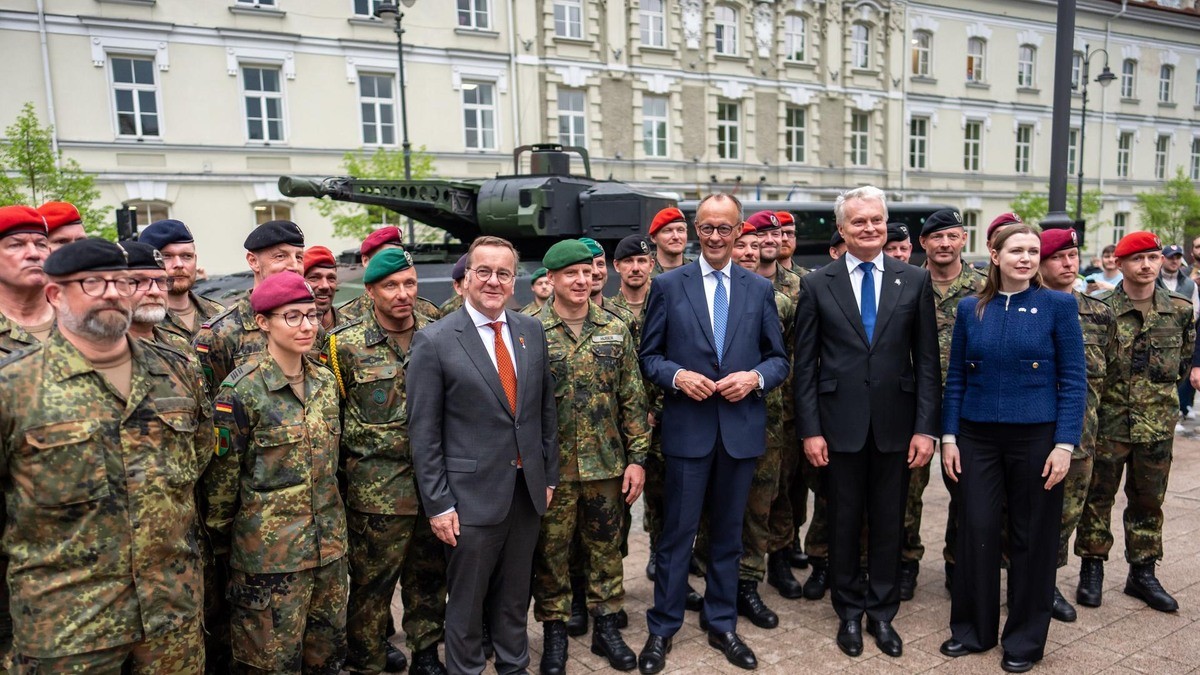
That brigade is not a routine unit. The Bundeswehr says it was brought into service at a ceremony on 1 April 2025, with a formal activation parade in Vilnius on 22 May 2025, and that its three combat battalions were subordinated at the end of January and the start of February 2026, including Panzergrenadierbataillon 122 from Oberviechtach in Bavaria. It is due to be fully stationed in Lithuania and combat-ready next year. A permanent German combat brigade on Lithuanian soil is a different commitment from the rotating battlegroups of the past decade, which is exactly why its locations, equipment and command structure are worth stealing.
Tapping the Arms Industry, Not Just Google
Prosecutors drew a careful line through the allegations. "Some of the information was publicly available," the statement said, but for other details "the accused specifically tapped people from the European arms industry." That second clause is the heart of the case. Reading a defence company's press releases is legal. Cultivating its employees is not.
Prosecutors say the channel to Moscow ran through an intermediary, and that contact with a Russian intelligence service existed at the latest from July 2025 — roughly fifteen months before the arrest. That structure is standard tradecraft. A handler who never meets the source cannot be photographed meeting the source, and an intermediary gives an intelligence service a layer it can cut loose if the operation starts to leak.
Merz: "As Intense as Ever"
Chancellor Friedrich Merz was in Montenegro on Thursday when the arrest was announced, and he did not treat it as a one-off. "It is a success today that this case was uncovered," he said. "But let's not fool ourselves. The activities of the Russian intelligence service in Germany remain as intense as ever."
He went further, saying Germany should expect more such cases "in the coming months and years." Reuters reported that Merz regards Moscow's hybrid campaign — espionage, sabotage and disruption — as the biggest threat to German security, and that Berlin has stepped up its countermeasures accordingly. Deutsche Welle reported that Merz said he was not surprised by the arrest. In a chancellery that has spent two years arguing that Russian intelligence is a structural problem rather than a series of incidents, Thursday's arrest fit an existing argument perfectly.
The Pattern: A Year of Arrests
This case does not stand alone, and the list prosecutors and German media have assembled is the context that makes it legible. In January, the federal prosecutor's office had a German-Ukrainian woman arrested in Berlin, accused of obtaining information for an intelligence officer at the Russian embassy and helping him build contacts; an indictment has since been filed at the Kammergericht in Berlin.
Later in the first half of the year came further arrests. A Romanian woman and a Ukrainian man were accused of spying on a person who supplied drones and components to Ukraine from Germany. Another suspect was accused of spying on a former Ukrainian serviceman living in Germany. In April, a man was arrested in Berlin over allegations he passed information on German military support for Ukraine, on defence companies and on military convoys to a Russian service. Moscow has denied all of it.
Why the Hanning Case Is Not This Case
Sixteen days before this arrest, Germany was already digesting a much bigger scandal, and it is important not to fold the two together. On 6 October, federal prosecutors had August Hanning arrested — the president of the Federal Intelligence Service, the BND, from 1998 to 2005 — alongside a former chief of staff identified as Manfred D. Prosecutors allege the two agreed in spring 2010 that Manfred D., who remained at the BND until March 2026, would pass his old boss some 2,000 documents, many classified, in exchange for payment.
Hanning, 80, denies wrongdoing; his lawyer has called the allegation that he passed on information to Germany's detriment "unfounded." Crucially, prosecutors did not name the foreign service involved, and investigative reporting by WDR, NDR and the Süddeutsche Zeitung found the Hanning case does not concern Russia. Two spy stories in one month, two different services, two different alleged motives — money in one, and prosecutors have not attributed a motive in the other.
The Domestic Intelligence Tip That Started It
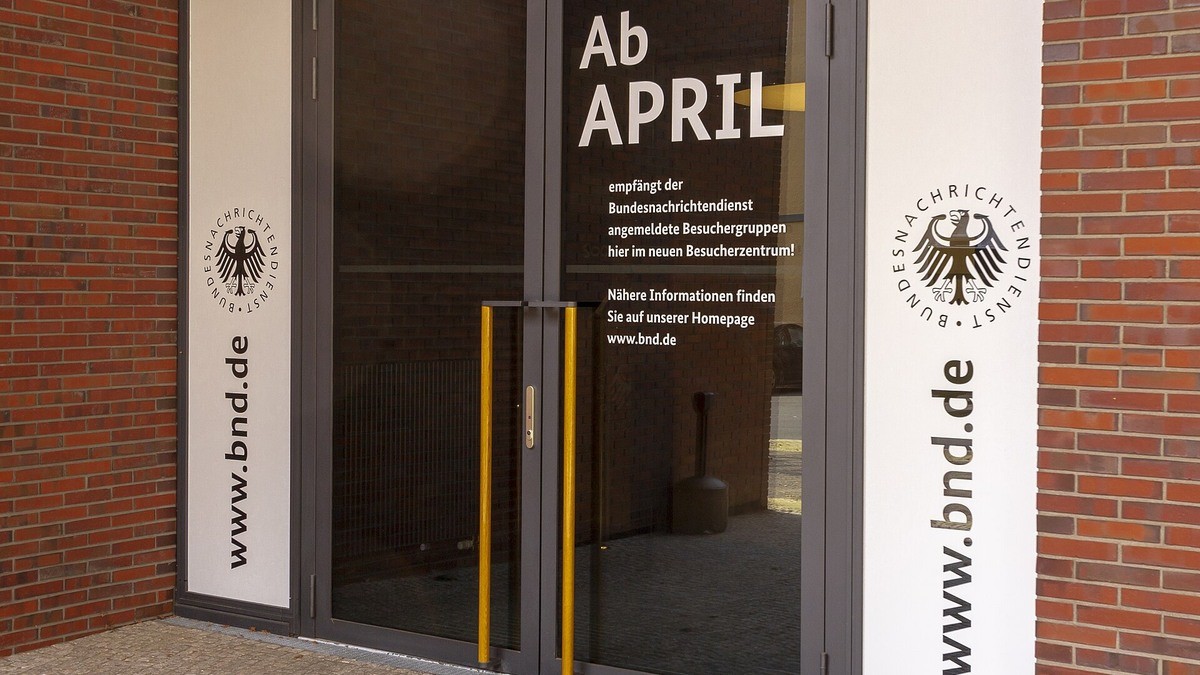
One line in the prosecutors' statement explains how the case began. The proceedings, it said, go back to intelligence reports from the Federal Office for the Protection of the Constitution — the BfV, Germany's domestic security service — and the Bundeskriminalamt was tasked with the police investigation.
That matters because the BfV is the agency that watches foreign intelligence activity inside Germany. A case that begins with a BfV tip is not a case that begins with a suspicious bank transfer or a journalist's phone call. It begins with counter-intelligence officers who already had a picture of a network and were looking for the person who completed it. Prosecutors said the investigation is continuing, and that the precise background and any possible accomplices remain to be established.
Leipzig, the Buried Guns, and the Hybrid War
The atmosphere around this case is set by two earlier discoveries. At Leipzig airport, an explosive-laden drone was found near a Ukrainian cargo plane, and Berlin said Moscow was behind the attempted attack. In August, security agencies disclosed that a buried weapons cache had been found in woodland near Berlin's Müggelsee — two handguns, including a replica Makarov, plus ammunition — which the BfV suspected was a Russian dead drop for agents tasked with what officials call kinetic operations.
The suspect in that depot case is a different man: a 24-year-old Ukrainian detained in Romania, identified as Vadym S., not the Vadym Y. arrested this week. Russia's embassy called the depot allegation "an entirely unfounded insinuation." In October the BND's chief, Martin Jaeger, told parliament's intelligence oversight committee that the Russian "shadow war" is escalating and has "taken on a new, more dangerous character," adding: "Germany is at risk of being drawn into a violent conflict with Russia."
What Comes Next
Vadym Y. now waits for a trial that German espionage cases routinely take years to reach. The Federal Prosecutor's Office has not said what it believes the intelligence was ultimately for, and it may never say so publicly. What it has said, through Prosecutor General Jens Rommel in June, is why collection matters: the actions of such spies, he said, "usually serve to prepare further intelligence measures — namely sabotage or possibly even attacks on the targets identified."
Rommel added that the aim often appears to be to undermine German support for Ukraine. That is the thread running through all of this. The Lithuania Brigade is due to be fully in place next year, and someone in Moscow wanted to know where its people sleep, what its vehicles weigh and which factories build its parts. Watch what Berlin does with the BfV's budget and the BND's powers in the next budget round — that is where this case will show up next.
By Jessica Ali, Staff Writer
This article was produced with AI-assisted research and editorial support. Sources: the Federal Public Prosecutor's Office (Der Generalbundesanwalt), Deutsche Welle, Reuters, the Associated Press, Der Spiegel, Süddeutsche Zeitung, rbb, Tagesspiegel, the Bundeswehr, and Euronews. Photographs: dpa/Christoph Schmidt; picture alliance/dpa/Michael Kappeler; Olaf Kosinsky (CC BY-SA 3.0 de).
What's Your Reaction?
 Like
0
 Dislike
0
 Love
0
 Funny
0
 Wow
0
 Sad
0
 Angry
0

Editor-in-Chief at Global1.News. Atlanta-based journalist who cuts through the BS and tells it like it is. Lead anchor, host, and the voice you hear when the spin stops and the truth starts.















Comments (0)