
EDCOM 2 cites gaps in classroom allocations
The Second Congressional Commission on Education, known as EDCOM 2, has sounded the alarm on glaring gaps in how classroom allocations are being distributed across the Philippines.
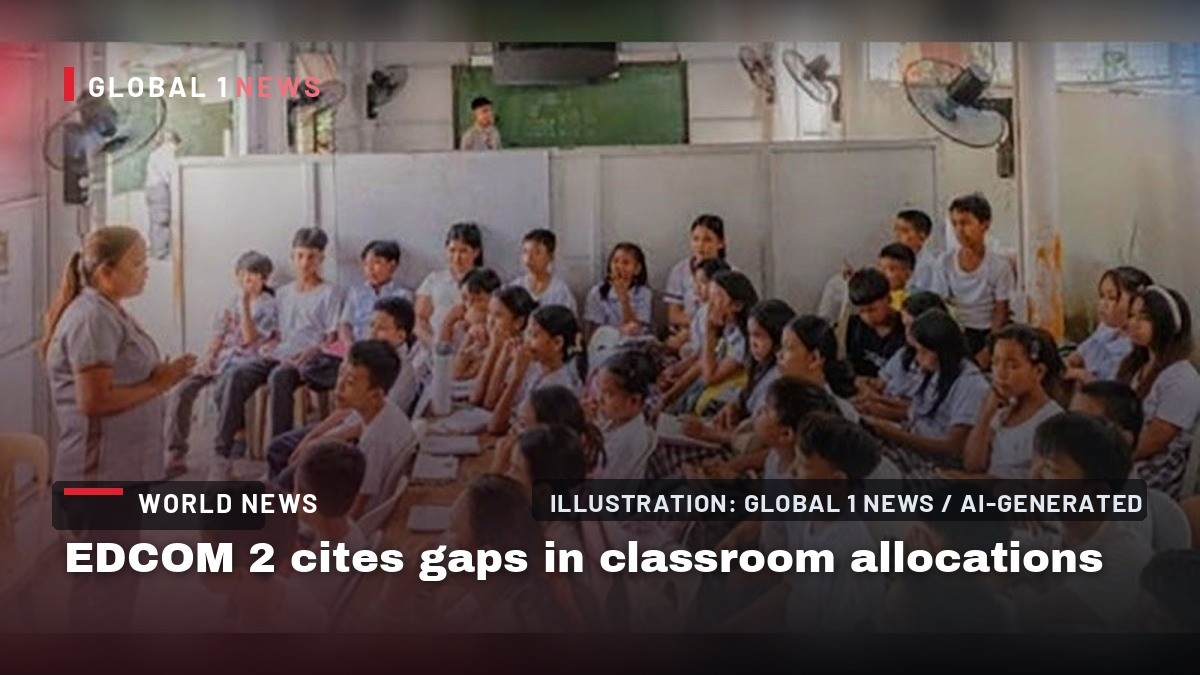
The Second Congressional Commission on Education, known as EDCOM 2, has sounded the alarm on glaring gaps in how classroom allocations are being distributed across the Philippines. During a Senate finance committee hearing on October 16, the commission highlighted that many of the municipalities with the most acute classroom shortages are not receiving the support they need. This discrepancy raises concerns not only about the fairness of the allocation process but also about the broader impact on learners who are already facing overcrowded or inadequate learning spaces.
Uneven Allocation Amid Widespread Shortages
EDCOM 2’s analysis of the Department of Education’s 2026 classroom allocation revealed that only 45.2 percent of the 332 local governments identified with the largest estimated classroom shortages were among the top recipients of planned classroom allocations. In other words, more than half of the areas most in need were left out of the priority list, a finding that underscores a mismatch between need and distribution.
Senator Bam Aquino, co‑chairman of the commission, urged both DepEd and the Department of Public Works and Highways to accelerate construction and to ensure that the allocated funds translate into completed classrooms. Without a more strategic approach, the gaps could widen, leaving thousands of Filipino students in substandard conditions.
Case Studies: Cavite’s Over‑ and Under‑Allocation
The commission’s report spotlighted three municipalities in Cavite to illustrate the unevenness. Maragondon was allocated 272 classrooms despite an estimated shortage of just 64, suggesting an over‑allocation that could divert resources from more pressing needs. Conversely, Tanza received 448 classrooms while its shortage stood at a staggering 869, and Naic was allotted 356 classrooms against a deficit of 631. These figures paint a picture of misaligned priorities that could leave many learners without the space they need to learn effectively.
Such disparities are more than numbers; they affect daily life in barangays where schoolchildren may have to share cramped spaces, and teachers struggle to manage classes that exceed optimal size. The resulting strain can compromise the quality of instruction and erode the sense of community that is central to Filipino education.
DepEd’s Push for Rapid Classroom Construction
In response to the mounting pressure, DepEd announced a multi‑pronged effort to speed up classroom construction for 2026, targeting the completion of 18,950 new classrooms. The department has enlisted the help of DPWH, provincial and city governments, civil society groups, and public‑private partnership programs. This collaborative approach reflects an understanding that no single agency can solve the crisis alone.
Executive Director Karol Mark Yee praised these “extraordinary efforts” but cautioned that the speed of construction must be matched by strategic allocation. He emphasized the need for “responsive allocations” to ensure that resources reach the areas where they are most needed, echoing the concerns raised by EDCOM 2.
Delays and Funding Gaps in DPWH‑Led Projects
Despite the ambitious targets, the commission flagged significant delays in DPWH‑led classroom projects. Of the P21.45 billion earmarked for 6,000 DPWH‑managed classrooms in FY 2026, only P1.87 billion—covering 533 classrooms—had reached the award or near‑award stage at the time of the hearing. An additional P7 billion, intended for roughly 2,000 classrooms, was still in the procurement advertising phase.
DPWH Undersecretary Lara Esquibil attributed the setbacks to failed biddings and rising construction costs, especially as fuel prices climbed. These operational challenges highlight the complexities of translating budget allocations into tangible structures on the ground, and they underscore the need for more efficient procurement and project management mechanisms.
Transparency Measures: The Classroom Tracker
To address concerns over fund tracking and to promote accountability, EDCOM 2 is developing a classroom tracker. This tool aims to provide a transparent view of where allocations are being spent, enabling stakeholders—including local officials, parents, and civil society—to monitor progress and flag irregularities.
Such transparency is vital in a democratic context where public funds must be stewarded responsibly. By making allocation data publicly accessible, the tracker could empower barangays to advocate more effectively for the classrooms they need, reinforcing the spirit of bayanihan that underpins many community initiatives.
Budget Outlook for 2027
Looking ahead, the National Expenditure Program proposes a substantial increase in funding for classroom construction. The 2027 budget includes a request of P30.55 billion for classroom projects, with DepEd seeking an additional P23.5 billion to build 2,385 new classrooms, 69 “Last Mile” school buildings, 500 Learning Continuity Spaces, and to repair 3,500 existing classrooms.
If approved, these funds could significantly expand capacity, but the commission’s findings suggest that simply increasing the budget will not solve the allocation puzzle. Strategic distribution, timely execution, and rigorous oversight will be essential to ensure that the additional resources translate into real improvements for learners across the archipelago.
Implications for Filipino Learners and Communities
The gaps in classroom allocation have direct, human‑scale consequences. In many barangays, overcrowded classrooms force teachers to split attention among too many students, while learners contend with limited desk space, inadequate ventilation, and the constant threat of disruptions. Such conditions can dampen enthusiasm for learning and widen educational inequities, especially in rural and underserved areas.
For parents, the shortage often means longer commutes to schools with available space, adding financial and logistical burdens to already tight household budgets. For OFWs sending remittances home, the hope that their contributions will help secure better education for their children can be undermined by systemic allocation flaws. Addressing these issues is not merely a policy exercise; it is about safeguarding the future of Filipino children and honoring the collective commitment to education as a cornerstone of national development.
This article was produced with AI-assisted research and editorial support. Reporting is based on the source material cited below. Sources: Philstar.com; Global1.News (21 October 2026).
By Bella Reyes, Staff Writer
What's Your Reaction?
 Like
0
 Dislike
0
 Love
0
 Funny
0
 Wow
0
 Sad
0
 Angry
0

Philippines/Southeast Asia Correspondent at Global1.News. Manila-based journalist covering Philippine politics, environment, maritime security, and social issues. Passionate about marine conservation and the communities protecting the Philippines' natural heritage.













Comments (0)