
ZTE unveils data center module designed for AI workloads
ZTE just dropped a new data‑center module that promises to make AI workloads feel like a walk in the park. What ZTE is actually selling The M8000 is marketed as an “integrated data centre module” that can handle AI workloads.
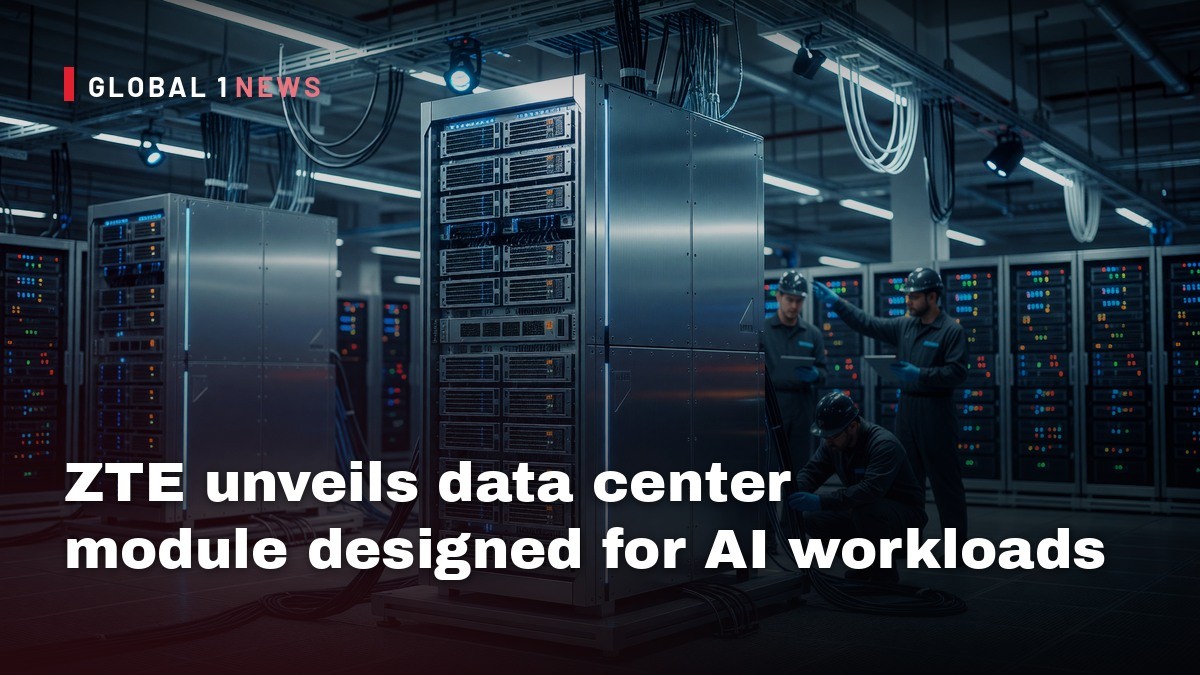
ZTE just dropped a new data‑center module that promises to make AI workloads feel like a walk in the park. The ZXEDC M8000 Intelligent Computing Micro‑Module, unveiled at Data Center World Asia, is a one‑stop shop that bundles everything from cold‑aisle enclosures to liquid‑cooled racks, high‑voltage DC power and even fire‑linkage. On paper it looks slick, but as a founder who has spent a decade wrestling with real‑world power bills and cooling failures, I’m more interested in what the numbers mean for independent hosting shops that can’t afford to chase every hype‑cycle.
What ZTE is actually selling
The M8000 is marketed as an “integrated data centre module” that can handle AI workloads. It packs an enclosed cold aisle, liquid‑cooled racks, a cold‑plate liquid‑cooling CDU, secondary‑side piping, 800 V HVDC power, intelligent busbars, air walls, monitoring, lighting, cabling and fire linkage into a single package. In theory you walk in, plug it up and you’re ready to run anything from a generic server farm to a hybrid AI deployment.
Key specs: rack power is advertised between 20 kW and 60 kW, with a peak of 250 kW per rack. The racks are decoupled from the frame, allowing on‑site retrofits from air to liquid cooling later. ZTE also says the cooling architecture can shift the balance between air and liquid on the fly, giving operators flexibility to tune for cost or performance.
Power and efficiency claims – a reality check
ZTE boasts a PUE as low as 1.15 across all regions, thanks to free cooling, and claims the 800 V HVDC system paired with intelligent busbars can hit up to 98 percent power‑supply efficiency. Those numbers look good on a spec sheet, but the devil is in the deployment details. Free cooling only works when ambient conditions cooperate, and many of our Caribbean sites see humidity and temperature swings that make “all regions” a stretch. Even a modest PUE improvement can be offset by the capital outlay required for the HVDC infrastructure and the specialized busbars.
From a founder’s perspective, the real question is: does the incremental efficiency justify the added complexity? In my own data‑centre, moving from a standard 2 kV AC distribution to a 800 V DC system shaved a few percent off our energy bill, but the conversion required new UPS, transformers and staff training. The promised 98 percent efficiency is only realized if the whole power path – from utility to rack – is built to spec. Miss one link and you’re back to the usual 90‑plus percent losses.
Cooling flexibility – hype or practical advantage?
The M8000’s “shared air‑and‑liquid source” is pitched as a way to balance cost and performance. In practice, you end up with two cooling loops to manage, each with its own set of pumps, sensors and maintenance schedules. For a small‑to‑mid‑size hosting provider, that adds a layer of operational risk. A leak in the liquid loop can shut down a rack in minutes, and while ZTE claims UL system‑level leak‑proof certification – a first for a liquid‑cooling solution – certification is a baseline, not a guarantee against human error or component fatigue.
Our own experience with liquid‑cooled racks shows that the biggest pain point is the retro‑fit path. ZTE says racks are decoupled from the frame so you can retrofit from air to liquid later, but that assumes you have the space, the piping and the skilled technicians on hand. In many carrier‑neutral facilities, the rack footprint is already tight, and adding secondary‑side piping can mean a costly re‑engineer of the whole aisle.
Modular promise vs. real‑world scaling
ZTE’s claim that one architecture can support three generations of IT hardware upgrades sounds appealing. The idea is you buy a module once and keep stacking newer servers without major overhauls. In reality, AI workloads evolve faster than the cooling tech can keep up. The 250 kW peak per rack may be enough for today’s GPU clusters, but tomorrow’s next‑gen accelerators could demand more power density, pushing the limits of the 800 V busbars and the liquid‑cooling capacity.
When you factor in the cost of the module itself – a pre‑engineered container with integrated power, cooling and monitoring – you’re looking at a capital expense that rivals a small data‑centre build. For an independent provider, the ROI hinges on fully loading the module from day one, which is rarely the case. Under‑utilisation drags the economics, especially when you compare against a DIY approach where you can phase in power and cooling as demand grows.
The competition isn’t standing still
ZTE isn’t the first to push a modular, liquid‑cooled solution. Last year they launched the AIDC Prefabricated Container Solution, which also claimed a PUE of 1.15 using chilled‑water wind walls, cold‑ and hot‑aisle separation and cold‑plate liquid cooling. Other vendors – from hyperscalers to boutique chassis makers – are offering similar “plug‑and‑play” modules, often with more transparent pricing and a proven track record in the West.
What sets ZTE apart is its telecom pedigree. The company has been busy with 5G rollouts, partnering with U Mobile, Italy’s EOLO and SLT‑Mobitel for network upgrades, and even completed a proof‑of‑concept of an off‑grid 5G site powered entirely by green energy in Malaysia. That telecom background means they have a supply chain for high‑voltage DC gear, but it also means they’re still learning the nuances of pure data‑centre deployments. Their focus remains on bundling, which can be a double‑edged sword for a hosting provider looking for flexibility.
Business‑risk lens: should independent providers bite?
From a risk‑management standpoint, the M8000 presents three main concerns: capital intensity, operational complexity and vendor lock‑in. The upfront cost of a fully integrated module is steep, and financing it often means taking on debt that can strain cash flow. Operationally, you now have to manage both high‑voltage DC distribution and a dual‑mode cooling system, which expands the skill set required of your ops team. Finally, the module is a proprietary ZTE package – you’re tied to their service contracts for maintenance, firmware updates and spare parts.
If you can secure a bulk‑purchase discount, have a skilled engineering team that can handle HVDC and liquid cooling, and you’re targeting a niche AI market where customers are willing to pay a premium for low PUE, the M8000 could be a differentiator. Otherwise, the safer bet is to stick with a modular approach that lets you upgrade power and cooling in stages, using industry‑standard rack power distribution units and third‑party liquid‑cooling kits as needed.
Actionable takeaways for founders
First, run the numbers. Compare the total cost of ownership of a ZTE module against a phased build‑out of power and cooling using standard components. Include not just CAPEX but the ongoing OPEX of staffing, training and potential downtime from a leak or HVDC fault.
Second, test the cooling flexibility in a pilot environment. Deploy a single rack with the shared air‑and‑liquid system and monitor temperature swings, pump reliability and leak detection response times. A short pilot will reveal whether the touted “adjustable ratio” actually translates into measurable cost savings.
Third, negotiate service terms that give you an exit path. Insist on spare‑part warranties that extend beyond the typical 12‑month window and on the right to replace proprietary busbars with third‑party equivalents if needed.
Finally, keep an eye on the broader market. While ZTE’s telecom roots give them a unique supply chain for HVDC gear, the data‑centre ecosystem is rapidly evolving with open‑standard cooling solutions that promise similar efficiency without the vendor lock‑in. Stay nimble, stay pragmatic, and don’t let a glossy brochure dictate your infrastructure roadmap.
— Allan Ali, Founder
This article was produced with AI-assisted research and editorial support. Reporting is based on the source material cited below. Sources: Data Center Dynamics; datacenterdynamics.com; Global1.News (23 October 2026).
By Allan Ali, Global1.News
What's Your Reaction?
 Like
0
 Dislike
0
 Love
0
 Funny
0
 Wow
0
 Sad
0
 Angry
0

Publisher of Global1.News. Automation architect, systems builder, and the guy making sure the truth gets published.











Comments (0)