
What to know about Brazil's run-off as Lula and Flávio Bolsonaro face off
Brazil’s electorate will head to the polls this Sunday for a decisive run‑off that pits the veteran left‑wing president Luiz Inácio Lula da Silva against right‑wing senator Flávio Bolsonaro, the son of the convicted former president.
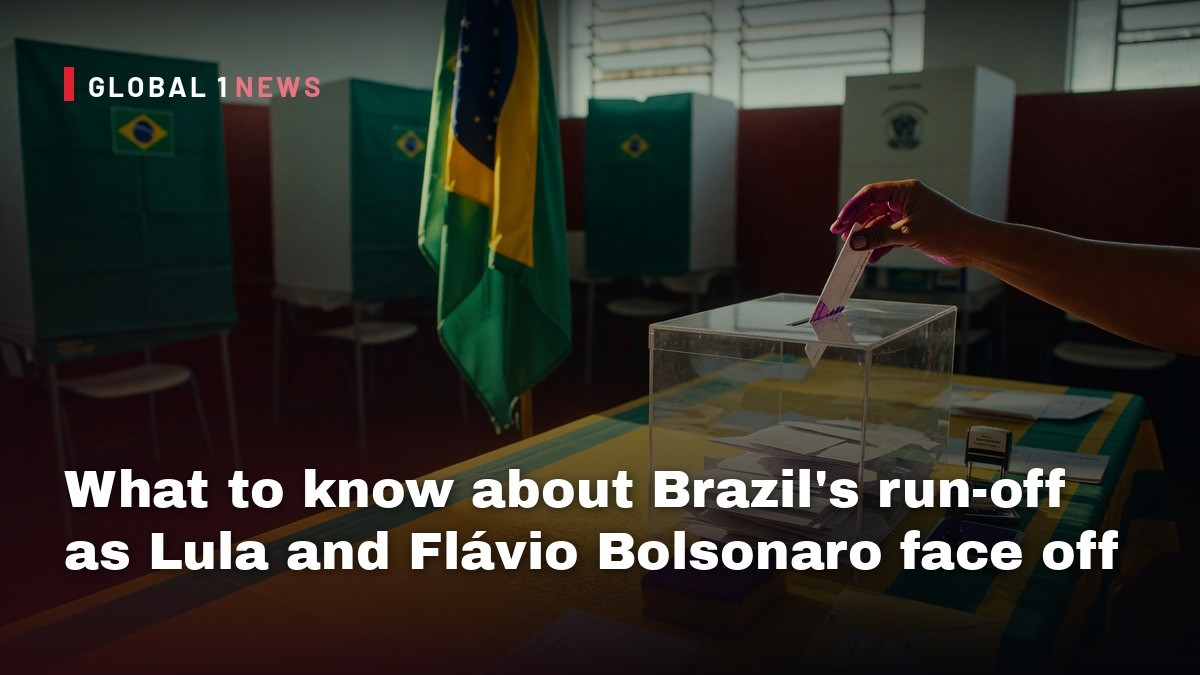
Brazil’s electorate will head to the polls this Sunday for a decisive run‑off that pits the veteran left‑wing president Luiz Inácio Lula da Silva against right‑wing senator Flávio Bolsonaro, the son of the convicted former president. The contest is more than a personal rivalry; it is being framed by both camps as a battle for the soul of Brazil’s democracy, its sovereignty and its capacity to confront entrenched criminal networks.
The road to the run‑off
In the first round on 4 October, Flávio Bolsonaro edged out Lula by a narrow margin but failed to reach the 50 percent threshold required for an outright victory. That shortfall triggered the second round, with polls placing the two candidates virtually neck and neck. While twelve candidates contested the opening ballot, the contest quickly narrowed to the familiar Lula‑Bolsonaro rivalry that defined the 2022 run‑off, when Lula defeated his father by a slim 1.8 percentage points.
The high‑stakes nature of the race has drawn attention far beyond Brazil’s borders. Observers in the United States and across Latin America see a potential Bolsonaro win as a possible alignment with the Trump administration’s “Donroe doctrine,” a strategy that emphasizes U.S. dominance in the Western Hemisphere. Conversely, Lula’s camp warns that a Bolsonaro victory could tether Brazil’s foreign policy to a foreign agenda, undermining the nation’s independence.
Both candidates are leveraging the legacy of the 2022 election, where the aftermath saw thousands storm the Supreme Court, the presidential palace and Congress in Brasília, only to be repelled by security forces. Those events, followed by Jair Bolsonaro’s conviction for plotting a coup and a sentence of more than 20 years, continue to cast a long shadow over the current campaign.
Democracy on the line
Lula’s Workers’ Party (PT) has cast the run‑off as a “battle for democracy,” arguing that the conviction of Jair Bolsonaro proves that Bolsonarismo threatens Brazil’s democratic institutions. Lula positions himself as the guarantor of sovereignty, warning that a vote for Flávio, who advocates closer ties to the United States, would erode Brazil’s independence.
Flávio Bolsonaro, while less confrontational than his father, embraces many of the same themes. He frames his candidacy as a continuation of his father’s agenda, promising to restore state authority in regions dominated by powerful criminal gangs such as Comando Vermelho (CV) and Primeiro Comando da Capital (PCC). He argues that cooperation with the United States to combat these gangs will reclaim sovereignty for ordinary Brazilians.
The rhetoric has hardened the political climate, contributing to a record 21 percent of eligible voters abstaining in the first round despite mandatory voting laws. The high abstention rate signals a growing disenchantment that both sides will need to address if they hope to mobilize the electorate for the final showdown.
Criminal gangs and security policy
Security has become a central pillar of Flávio Bolsonaro’s platform. As a trained lawyer and senator since 2019, he has championed tougher sentences and looser gun regulations, arguing that “decent citizens” must be able to defend themselves against criminal threats. He successfully lobbied the United States to label the CV and PCC gangs as Foreign Terrorist Organizations, a move Lula opposed as potentially damaging to Brazil’s diplomatic autonomy.
Lula, meanwhile, has highlighted his administration’s efforts to curb gang influence through social programs and law‑enforcement reforms, but acknowledges that the gangs still wield “immense power” in parts of the country. The contrasting approaches underscore a deeper debate over whether security can be achieved through militarized measures or through broader social investment.
The stakes are high for communities caught in the crossfire of gang violence. Both candidates promise to restore order, yet their divergent strategies reflect the broader ideological divide: a hard‑line, security‑first stance versus a more holistic, development‑oriented approach.
Economic promises and regulatory reform
Flávio Bolsonaro has appealed to Brazil’s powerful agricultural sector and evangelical voters by pledging to cut “unnecessary regulations” and “get the state off farmers’ backs.” He frames deregulation as a path to economic growth and a way to free the country from what he describes as bureaucratic overreach.
Lula, on the other hand, emphasizes the need for state‑led investment in social programs and infrastructure, while also defending his administration’s fiscal policies that rely on oil revenues to fund the transition to clean energy. He argues that Brazil’s oil earnings are essential for financing renewable projects and social safety nets.
The economic narrative is further complicated by Lula’s recent environmental decisions. While he has been praised for reducing Amazon deforestation—satellite data shows the first half of 2026 recorded the lowest deforestation in a decade—his support for exploratory offshore oil drilling near the Amazon’s mouth has drawn criticism from environmentalists. This tension illustrates the balancing act Lula faces between economic development and ecological stewardship.
Social welfare and the legacy of past presidencies
Lula’s legacy is inseparable from his early‑term achievements, notably the Bolsa Família cash‑transfer program that lifted millions out of poverty and earned him approval ratings above 80 percent at the end of his second term. However, his later years have been marred by corruption scandals that tarnished the PT’s image and fueled voter fatigue.
Supporters lament the absence of a younger, dynamic PT candidate, noting that Lula, who will turn 81 two days after the election, is running again despite having pledged his third term would be his last. This has sparked internal debate within the party about renewal and succession, especially as younger voters seek fresh leadership.
Flávio Bolsonaro’s campaign taps into the lingering resentment among Bolsonaro supporters who never accepted Lula’s 2022 victory. The younger Bolsonaro’s promise to continue his father’s legacy, combined with his evangelical outreach, aims to consolidate that base while attracting new voters disillusioned with the PT’s perceived corruption.
International implications and Brazil’s foreign policy
The run‑off carries weight far beyond Brazil’s borders. A Bolsonaro win could bring Brazil closer to the United States, aligning with the “Donroe doctrine” that asserts U.S. dominance in the hemisphere. Lula has repeatedly warned that Brazil “does not fit into anyone’s backyard,” positioning his foreign policy as a counterweight to external interference.
Relations between Lula and the current U.S. administration have been rocky, reflecting divergent visions for regional cooperation. While Bolsonaro’s camp embraces a partnership with Washington to combat organized crime, Lula’s administration has resisted what it sees as overreach, especially regarding the designation of Brazilian gangs as terrorist groups.
The outcome will shape Brazil’s role in Latin America’s political landscape, influencing trade, security cooperation and environmental policy. As the largest economy in the region, Brazil’s direction will affect neighboring countries grappling with similar challenges of crime, development and democratic backsliding.
What the run‑off means for ordinary Brazilians
For many citizens, the run‑off is less about ideology and more about daily survival. The promise of safety from gang violence, the hope for economic stability and the desire for a government that protects social gains are at the heart of the electorate’s concerns. The high abstention rate in the first round signals a weariness with political theatrics and a yearning for concrete results.
Lula’s narrative emphasizes his track record of poverty reduction and environmental stewardship, while acknowledging the criticism over recent oil exploration. Flávio Bolsonaro counters with a message of security, deregulation and a return to the Bolsonaro brand of populist nationalism.
As Brazil heads to the polls this Sunday, the nation stands at a crossroads. The choice will determine whether the country continues down a path of left‑leaning social investment and cautious foreign autonomy, or pivots toward a right‑wing agenda that prioritizes security, deregulation and closer alignment with the United States. The result will reverberate through the streets of Brasília, the favelas of Rio, the farms of the South and the rainforests of the Amazon, shaping Brazil’s future for years to come.
This article was produced with AI-assisted research and editorial support. Reporting is based on the source material cited below. Sources: BBC News Latin America; bbc.co.uk; Global1.News (22 October 2026).
By Elena Vasquez, Staff Writer
What's Your Reaction?
 Like
0
 Dislike
0
 Love
0
 Funny
0
 Wow
0
 Sad
0
 Angry
0

Latin America Correspondent at Global1.News. Based in Mexico City, covering politics, economics, energy, and culture across the region. Brings an on-the-ground perspective to stories spanning from the Rio Grande to Patagonia.











Comments (0)