
US envoy says ground intervention in Yemen ‘appears pointless,’ urges regional alliances
At the 8th Global Security Forum in Doha, U.S. special envoy Tom Barrack delivered a stark assessment of America’s role in the Middle East, particularly in the protracted war in Yemen.
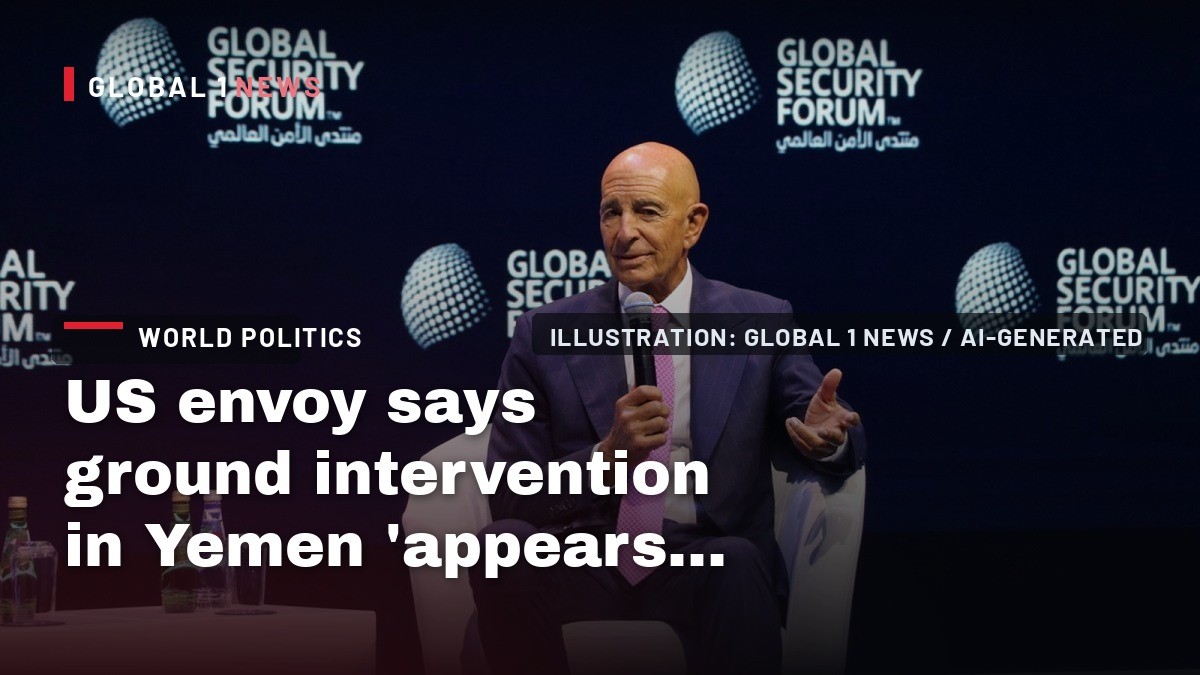
At the 8th Global Security Forum in Doha, U.S. special envoy Tom Barrack delivered a stark assessment of America’s role in the Middle East, particularly in the protracted war in Yemen. While reaffirming logistical support for Saudi Arabia, Barrack warned that a U.S. ground intervention against the Houthi rebels “appears pointless,” and he called on regional states to forge their own security alliances rather than depend on Washington. His remarks, delivered on 20 October 2026, underscore a shifting U.S. strategy that places diplomatic engagement and regional burden‑sharing at the forefront, even as the humanitarian catastrophe in Yemen deepens.
Washington’s logistical backing and the limits of intervention
During his speech, Barrack clarified that the United States continues to provide logistical assistance to Saudi Arabia, a key partner in the coalition fighting the Houthi movement. This support, however, stops short of committing U.S. ground forces to Yemen’s battlefields. “A ground intervention … appears pointless,” he told the audience, echoing concerns that direct American military involvement would add little to the coalition’s air campaign while risking further entanglement.
By emphasizing logistical aid, Barrack signaled a calibrated approach: the United States remains a reliable supplier of intelligence, refueling and transport capabilities, but it is unwilling to shoulder the heavy cost of boots on the ground. This stance reflects a broader recalibration of U.S. policy, moving away from the “direct control and intervention” that characterized earlier decades of American engagement in the region.
Calls for regional alliances over reliance on the United States
Central to Barrack’s message was an appeal to Middle Eastern states to build their own security frameworks. He urged countries to “establish regional alliances rather than rely on Washington to resolve their problems,” positioning regional cooperation as the cornerstone of a sustainable peace architecture. In doing so, he highlighted the need for Arab and Muslim-majority nations to assume greater responsibility for their collective security, a shift that could reduce the perception of the United States as the default guarantor of stability.
The envoy’s call resonates with ongoing diplomatic initiatives led by Qatar, Oman, Pakistan and Switzerland, which have been mediating between Saudi Arabia, the Houthis and other regional actors. By foregrounding these efforts, Barrack suggested that a multilateral, region‑centric approach could create the trust needed to move beyond the stalemate that has plagued Yemen for years.
The human toll of the Yemeni conflict
While Barrack’s remarks focused on strategy, the human cost of the war remains stark. The United Nations has reported that more than 230,000 people have been displaced since August, a figure that underscores the scale of suffering endured by civilians caught in the crossfire. Displacement, loss of livelihoods and the constant threat of airstrikes and missile attacks have rendered daily life “horrible,” as the envoy himself described the situation resulting from the broader regional conflict.
These humanitarian realities amplify the urgency of pursuing diplomatic avenues. Barrack highlighted that negotiations involving Saudi Arabia, the Houthis and regional mediators “offer a better alternative” to continued military escalation. The implication is clear: a negotiated settlement could halt the cycle of displacement and allow aid agencies to address the pressing needs of millions of Yemenis.
U.S. diplomatic overtures toward Iran
In parallel with the Yemen discussion, Barrack addressed the strained relationship between Washington and Tehran. He noted that President Donald Trump remains “willing to negotiate with Tehran,” emphasizing a desire for a diplomatic solution rather than further military escalation. The envoy pointed to a “modified version of the Islamabad understanding” as a possible framework for renewed talks, which could include a ceasefire, the reopening of maritime routes and measures to ease economic pressure on Iran.
Nevertheless, Barrack acknowledged a “lack of trust” between the United States and Iran’s Islamic Revolutionary Guard Corps, identifying it as a major obstacle to progress. By stressing that Iran’s political future should be determined by Iranians themselves, he reinforced a principle of non‑interference that aligns with broader international legal norms respecting state sovereignty.
Reflection on past U.S. regime‑change attempts
Barrack’s speech also turned a reflective eye on America’s historical record of intervening to change governments across the Middle East. He cited involvement in 23 regime changes, noting that none produced the intended outcomes. “Every time we try and intervene, change the person or the regime, it seems to have been a mistake,” he warned, suggesting that past experiences should inform current policy choices.
This candid admission underscores a growing recognition within U.S. circles that military solutions often fail to deliver lasting stability. By acknowledging the unintended consequences of past interventions, Barrack reinforced his broader argument that the United States must shift from a “do‑it‑all” posture to one that supports regional partners in managing their own security challenges.
Regional dynamics: Saudi‑Houthi hostilities and broader tensions
The escalation between Saudi Arabia and the Houthi movement remains a central flashpoint. Saudi‑led coalition airstrikes continue to target Houthi positions, while the rebels respond with missile and drone attacks against the kingdom. This tit‑for‑tat dynamic fuels a cycle of retaliation that endangers civilian populations on both sides of the Red Sea.
Compounding the Yemen crisis are the lingering tensions between the United States and Iran following their recent military confrontation. Diplomatic efforts aimed at reaching an agreement have stalled, and the lack of progress threatens to spill over into other theatres, including the Gulf and the broader Red Sea corridor. Barrack’s emphasis on mediation by Qatar, Oman, Pakistan and Switzerland reflects an attempt to break this deadlock through neutral channels.
Looking ahead: Prospects for peace and regional self‑reliance
In concluding his remarks, Barrack stressed that the United States is not abandoning its partners but is redefining its role. By shifting from direct control to supportive partnership, Washington hopes to empower regional actors to take ownership of their security and political futures. This approach, if embraced, could pave the way for a negotiated settlement in Yemen that halts displacement, restores maritime commerce and reduces the humanitarian burden.
For the people of Yemen, the promise of peace hinges on the willingness of Saudi Arabia, the Houthis and their mediators to move beyond military calculations and engage in genuine dialogue. The international community, including the United Nations and humanitarian agencies, must continue to monitor the situation and press for the protection of civilians under international humanitarian law. As the Global Security Forum highlighted, the future of alliances in the Middle East may well depend on the region’s ability to resolve its own conflicts, with the United States serving as a logistical and diplomatic facilitator rather than a primary combatant.
This article was produced with AI-assisted research and editorial support. Reporting is based on the source material cited below. Sources: Middle East Monitor; middleeastmonitor.com; Global1.News (21 October 2026).
By Fatima Al-Rashid, Staff Writer
What's Your Reaction?
 Like
0
 Dislike
0
 Love
0
 Funny
0
 Wow
0
 Sad
0
 Angry
0
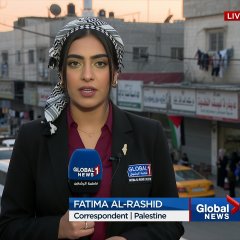
Gulf/MENA Correspondent at Global1.News. Based in Doha, covering Gulf politics, energy markets, diplomacy, and development across the Middle East and North Africa. Tracks the economic transformation of the Gulf states.













Comments (0)